


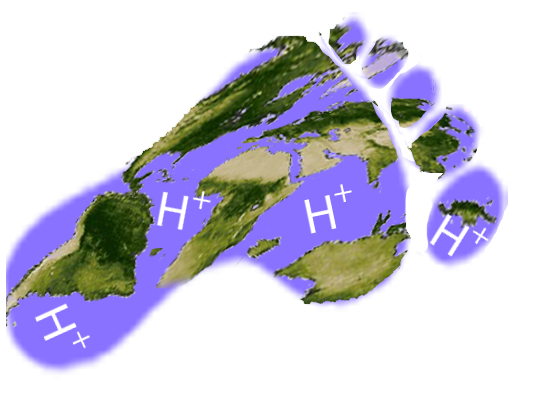
In addition to the famous impacts of atmospheric carbon on global warming, there is an equally worrisome effect of carbon dioxide on the oceans: ocean acidification (or OA for short). Here at I2SEA we have a series of resources about OA, including Our Acidifying Ocean, which is an introductory activity and virtual lab (note: now mobile compatible!).
A student suggested that we start a conversation topic about OA, and here it is! Have you heard about Ocean Acidification? If so, are you worried about it? How do you think we can best raise awareness about it among your fellow students and the general public? Have you seen particularly good links or films about OA that you would like to share? What are you doing to address the problem?
Ocean Acidification >
How Ocean Acidification will Affect the food chains! (sharks)

Ocean acidification can affect many underwater animals specifically sharks. OCean acidification can weaken their scales causing them to be slower. When they swim slower they starve and cant catch their food. Tuna for example is what sharks are more commonly eating. If ocean acidification continues Sharks will go instinct and the will be a tuna over population. And whatever the tuna eat will go instinct because there is too much tuna and not enough small fish (what tuna eat). Not only does it make sharks slower but it also weakens their teeth. You can look at is this way or many other perspectives because it doesn't make only shark scales weaker it makes fish scales weaker too!

Very true, the most effective way to limit ocean acidification is to act on climate change implementing solutions to dramatically reduce the use of fossil fuels. If dramatically cut our global warming emissions and limit future warming we can significantly reduce the harm to marine ecosystems.
Definately agree, ocean acidification is already posing major risks to organisms such as shellfish that use carbonate to make their shells. This carbonate is dissolving, harming young shell and leaving them underdeveloped and more likely to perish. This is not only posing a major threat to oceanic biodiversity but also industries that rely on it, like the shellfish industry in places such as Canada, Washington, and Maine. If something isn't done soon, this problem will only get worse with time
I agree. Ocean acidification also affects the organisms at the bottom of the food chain because many marine animals rely on small shelled organisms for food. Those shells are made from calcium carbonate and can break down when the ocean becomes to acidic. In fact, this is already happening. For example, pteropods are small ocean snails that many other marine animals eat. Researchers have taken samples of their shells and it is obvious they have become thinner and sometimes beginning to melt at the edges. This shortage of food eventually ripples all the way up the marine food chain, and even for terrestrial food chains.
Indeed, the most successful way to minimize the acidification of the seas is to adapt to climate change by introducing strategies to significantly reduce the use of fossil fuels. We will drastically reduce the damage to aquatic habitats by substantially lowering our global warming emissions and reducing potential warming. The rising amount of carbon dioxide we create is causing ocean acidification.