July 7, 2026
Project Highlight: Forest Restoration and Research to Benefit Tinian Monarch and Protected Species on the Tinian Military Lease Area
By Kylie Baker
Restoring Forests, Sustaining Futures: University of Washington Researchers Support Native Forest Recovery on Tinian
East of the Philippines and south of Japan lies the 39-square-mile island of Tinian, part of the Commonwealth of the Northern Mariana Islands (CNMI). Despite its small size, Tinian has a complex and layered history. Initially settled by the Chamorro people, it was later colonized by Spain in the late 1600s, received Caroline Islands settlers in the 1800s, was sold to the German Empire in 1899, and was captured by Japan during World War I before being formally administered under a League of Nations mandate. Under Japanese administration, the island became a major hub for sugarcane production. In July 1944, U.S. forces seized the island, constructing what was then the world’s largest airbase — North Field — from which B-29 bombers launched missions that helped bring World War II to an end.
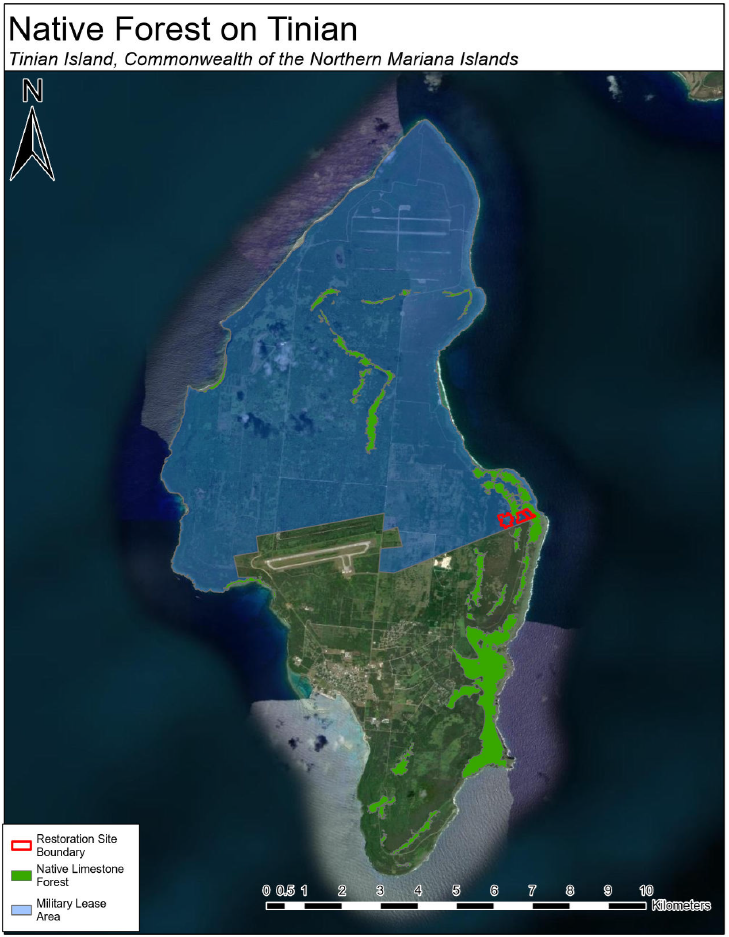
Tinian’s human history is rich, but so is its ecological one. Native limestone forests once dominated the island, supporting a diversity of endemic species. Today, however, only about four percent of Tinian’s forest remains dominated by native plants, the result of centuries of agricultural clearing, wartime destruction, the introduction of invasive species, and ongoing land-use pressures. These remaining forest patches are critical habitat for some of the island’s most sensitive wildlife, including the Tinian monarch. Locally known as chichirikan tinian, scientifically known as Monarcha takatsukasae, the single-island endemic bird species is now classified as Near Threatened by the International Union for Conservation of Nature (IUCN).
Supported by the Department of the Navy (principal contact Jill Liske-Clark) and coordinated through the Pacific Northwest Cooperative Ecosystem Studies Unit (PNW CESU), this project brings together researchers from the University of Washington (UW) — Beth Gardner, Jonathan Bakker, Kaeli Swift, Fletcher Moore, Ellie Roark, and Celine Boillat — alongside local partners. Together, they are working to better understand how restoring native forests can support forest birds and other protected species, while building local capacity to sustain this work into the future.
An Evolving Project Rooted in Conservation and Change
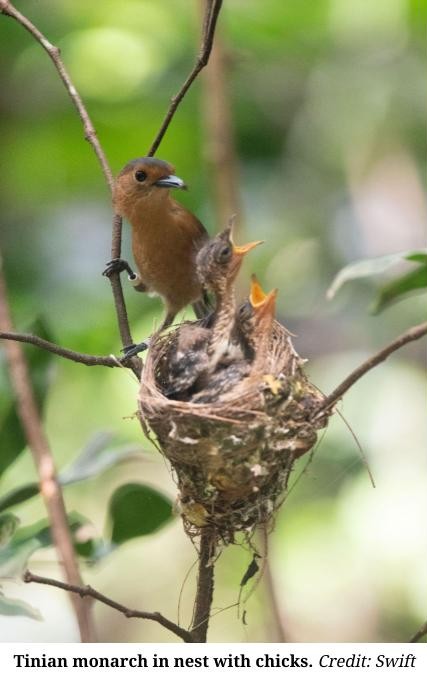
The origins of the project stem from long-standing concerns about forest bird conservation on Tinian, particularly the Tinian monarch. Although the species was delisted from the Endangered Species Act in 2004, it continues to be monitored under a post-delisting plan. Over time, population surveys have produced variable estimates, raising questions about long-term stability.
The fate of birds on neighboring Guam underscores the urgency of this work. Brown treesnakes, which lack natural predators in the region, devastated Guam’s native bird populations after establishing a foothold there — they also cause frequent power outages and attack pets. More than two decades of sustained biosecurity efforts have kept the brown treesnake from gaining a foothold in the Northern Mariana Islands, with no established population detected despite years of risk from neighboring Guam. Protecting intact forests and bird communities on Tinian is essential to ensuring that story is never repeated there.

At the same time, Tinian is undergoing renewed military development, placing additional pressure on already limited native habitats. Much of this pressure stems from the military lease area, which covers two-thirds of the island and is managed by the Department of the Navy — hence their central role in supporting this research. Understanding how wildlife responds to land-use changes within and around the lease area — and how restoration efforts can help offset impacts — has become increasingly important for federal and local agencies alike.
UW researchers first began working on Tinian more than five years ago through monarch-focused research. Early efforts centered on understanding the species’ natural history, including nest site selection, nest success, and identifying key nest predators. As the research progressed, new questions emerged. Findings revealed that invasive rats and feral cats are the most common nest predators, prompting further investigation into predator distribution, occupancy, and potential management strategies.
This foundational work laid the groundwork for the current CESU-supported project, which expands beyond the Tinian monarch to include the broader forest bird community. Today, the research examines how ongoing land-use change interacts with forest structure and quality, and how restoration efforts may improve habitat for a suite of sensitive species — including the fanihi (Mariana fruit bat), totut (Mariana fruit dove), sihek (Mariana kingfisher), and other forest-dependent birds.
Researchers are also working to better understand how birds use different forest types. Even in areas dominated by invasive vegetation, small pockets of native or secondary forest can provide valuable habitat, highlighting the importance of recognizing and preserving these nuanced landscapes.
Why Native Limestone Forest Matters
Island ecosystems are inherently constrained by space, and on Tinian, every acre of habitat carries added significance. Native limestone forest is critical to Tinian because it serves as the primary habitat for forest birds, acts as a barrier against invasive plant species, maintains critical water quality, provides resilience against climate change and severe weather, and supports native biodiversity — ecological functions that introduced forests often cannot fully replace.
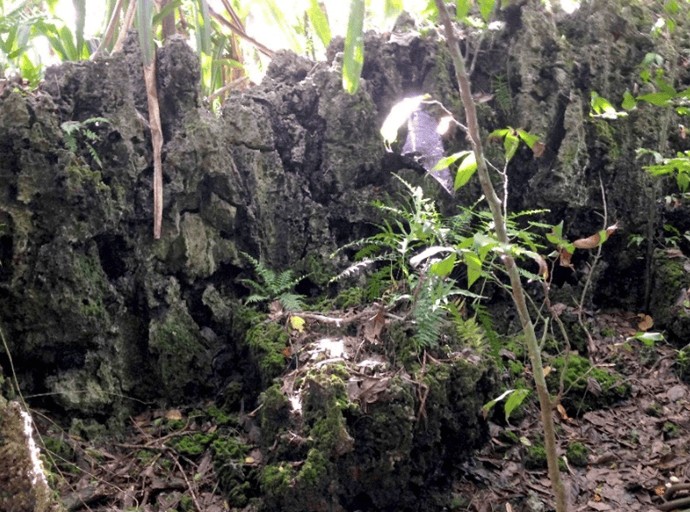
Understanding where and how birds use these habitats is key to building ecological resilience. Strong, well-supported populations are better able to withstand disturbances such as typhoons, wildfires, and other environmental or human-driven events. Improving habitat quality, therefore, is not just about conservation; it is about ensuring long-term stability in the face of change.
Despite centuries of disturbance, Tinian’s birds have demonstrated remarkable resilience. But resilience has its limits. With so little native forest remaining, restoration and enhancement efforts are critical — not only for wildlife, but also for the cultural and ecological identity of the island.
Linking Restoration and Wildlife Research
The project is layered and complex, integrating active forest restoration with wildlife monitoring. Jonathan Bakker contributes to restoration leadership, while Ellie Roark coordinates on-the-ground efforts — planting native trees, documenting plant diversity and abundance in vegetation plots, and managing invasive vegetation. Fletcher Moore, whose earlier work contributed to restoration, is now focused on his thesis research. Meanwhile, Beth Gardner and Kaeli Swift lead efforts to understand how wildlife responds to these changes.
A central tool in this work is the use of acoustic recorders, which capture bird calls and other environmental sounds. These devices allow researchers to monitor species presence and activity over time, providing a powerful, non-invasive way to assess changes before and after restoration. In addition to birds, acoustic data may also offer insights into insects, overall forest soundscapes, and even anthropogenic noise associated with increased human activity.
The team is also studying invasive predators — particularly rats and feral cats — which pose significant threats to nesting birds. Understanding how these predators use the landscape, and how their presence shifts as habitats change, is a critical component of the project.
Collaboration Beyond the Lab
A defining strength of the project is its emphasis on collaboration. UW researchers work closely with the Department of the Navy, the CNMI Department of Lands and Natural Resources, the CNMI Division of Fish and Wildlife, Northern Marianas College, and local agencies on Tinian, including the Mayor’s Office.
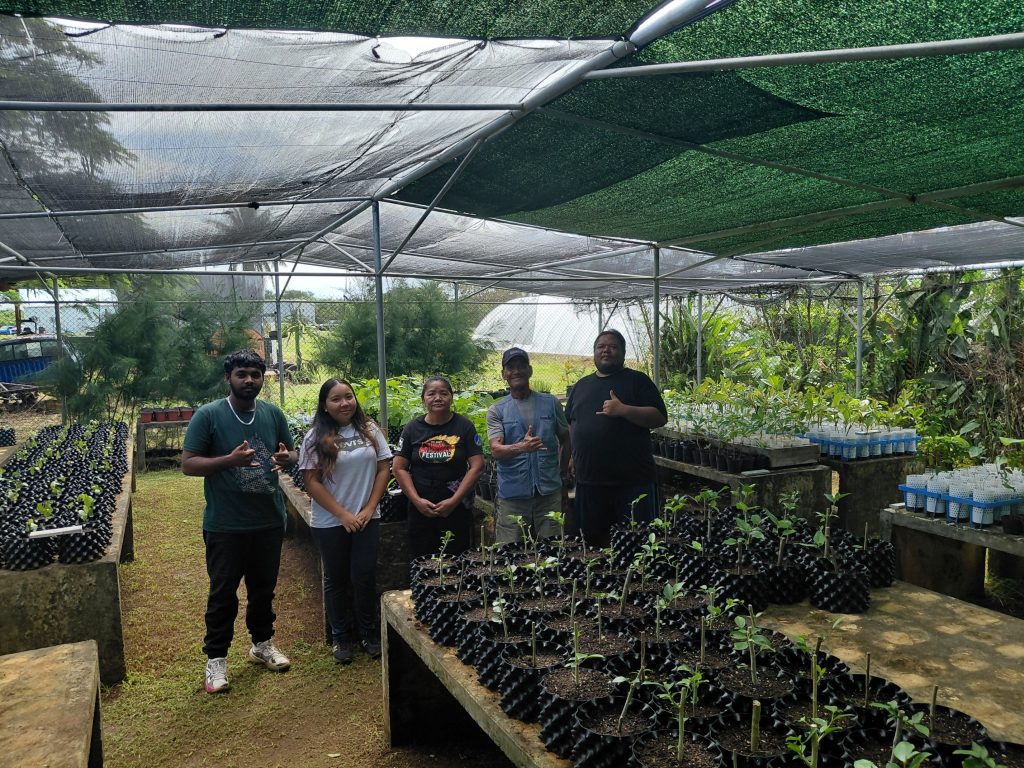
Notably, this effort represents the first large-scale, targeted forest restoration project on Tinian — an island without a formal forestry program. Through subawards and on-island partnerships, the project is helping to build local capacity, support the production of native plants on the island, and invest directly in local expertise and leadership.
The team has also been intentional about avoiding “parachute science.” By sharing findings openly, engaging with local agencies and schools, and co-developing research priorities, they are ensuring that the science produced is both accessible and directly applicable to on-the-ground management. In partnership with Northern Marianas College, the University of Guam’s Compass program, and the CNMI Bureau of Environmental and Coastal Quality, the project also provides paid internships for local students, creating opportunities for hands-on involvement in research and restoration.
Working in a Remote Landscape
Conducting research on Tinian presents unique challenges. Equipment can take months to arrive. Supplies are limited. Coordinating across a 17-hour time difference requires flexibility. The hot, humid climate adds physical demands to fieldwork, and even basic restoration work is complicated by the presence of unexploded ordnance, which limits where digging can occur.
Field conditions themselves can be unpredictable. Typhoons, cattle trampling restoration plots, and fires set nearby as part of local hunting practices all add layers of complexity. These realities require researchers to adapt, problem-solve, and embrace a level of uncertainty not always present in more controlled environments.
The risks of working in this environment became vividly clear in April 2026, when Super Typhoon Sinlaku — one of the strongest early-season storms recorded in the past 75 years — swept through the Mariana Islands with gusts reaching 130 miles per hour. The storm sat over Tinian and neighboring Saipan for nearly 50 hours, causing widespread destruction across the islands. The project’s native plant nursery lost its shade cloth, and plants were damaged by high winds and flooding. The restoration site where roughly 300 trees had been planted in the preceding months became temporarily inaccessible. Island infrastructure suffered broadly, including the team’s field house. In July 2026, Typhoon Bavi struck the island as well, with the full extent of its impacts still being assessed. While the island’s wildlife is adapted to typhoons — and scientists see opportunity in studying how animals respond and recover — storms of this intensity are projected to become more frequent in the region, adding urgency to the work of building resilient forest habitats before the next one arrives.
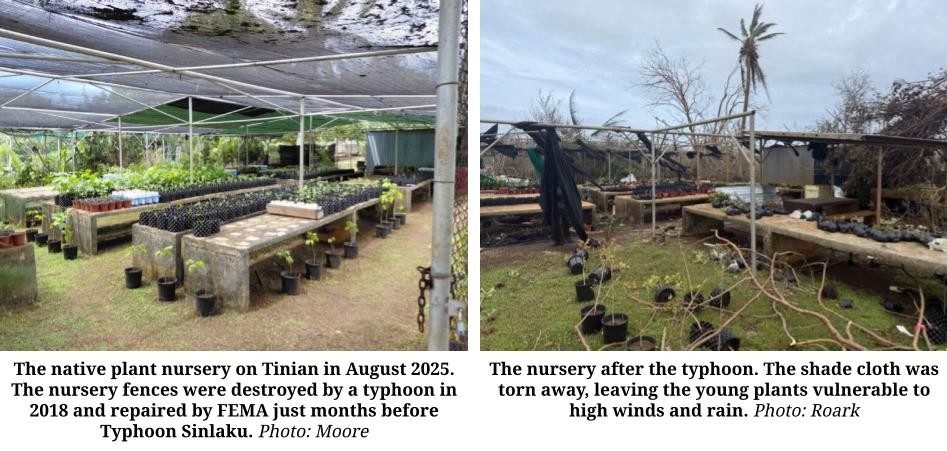
Despite these challenges, UW researchers and technicians have built a strong and sustained presence on the island. Their ability to adapt — and their commitment to collaboration — has been essential to building trust and ensuring the project’s success.
Measuring Success Over the Long Term
For the UW research team, success is not defined by a single dataset or publication. Instead, it is measured by long-term sustainability.
This includes creating conditions where restored forests can regenerate naturally, supporting wildlife populations that, in turn, help propagate native vegetation. It also means building tools and systems — such as acoustic monitoring pipelines — that local agencies can continue to use independently.
Beyond Tinian, the project aims to support broader monitoring efforts across the northern Mariana Islands, helping researchers and managers better understand how birds use different landscapes and respond to environmental change.
Ultimately, the goal is to ensure that this work continues long after the project ends — driven by local knowledge, capacity, and leadership.
A Model for Collaborative Conservation
The impact of this project extends far beyond a single island. It represents a model for collaborative, community-engaged conservation — where research, restoration, and local partnership are deeply intertwined.
At its core, this work reflects the mission of the CESU network: bringing together agencies, universities, and communities to address complex environmental challenges through science and collaboration.
On Tinian, that collaboration is helping restore the limestone forests that define the island’s ecological character, recover bird populations that have persisted through centuries of upheaval, and build a generation of local scientists and stewards with the tools to carry this work forward.