Project Highlights
July 7, 2026
Project Highlight: Forest Restoration and Research to Benefit Tinian Monarch and Protected Species on the Tinian Military Lease Area
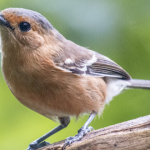
Led by the University of Washington in partnership with the Department of the Navy and local CNMI agencies, this project combines active forest restoration with wildlife monitoring on the island of Tinian. Through acoustic recording, predator research, and native planting, the team is rebuilding habitat for the Tinian monarch and other sensitive species while developing lasting local conservation capacity.
November 24, 2025
Project Highlight: North Coast and Cascades Network Bat Population Monitoring and White-Nose Syndrome Surveillance
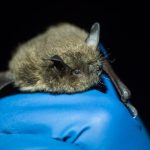
Led by USGS and the National Park Service, this project tracks the spread of white-nose syndrome while building long-term understanding of bat populations across the Pacific Northwest. Through acoustic monitoring, disease surveillance, and genetic studies, the team is improving early detection and guiding conservation strategies to protect the region’s bats.
October 8, 2025
Project Highlight: Pygmy Rabbits in Idaho – Using Genetic Analyses to Estimate Occupancy
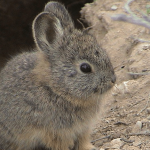
Led by the University of Idaho in collaboration with the U.S. Fish and Wildlife Service, this project uses genetic tools and large-scale field surveys to understand pygmy rabbit distribution across Idaho and Montana. With over 100 biologists involved, findings are informing habitat management and climate resilience planning for this elusive sagebrush steppe species.
October 2, 2025
Project Highlight: Balancing Fuels Reduction and Wildlife Conservation – Monitoring of Fisher and NSO Response to Fuels Management in Northern California Forests
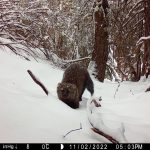
Led by Oregon State University and the U.S. Fish and Wildlife Service, this long-term research examines how fuels reduction treatments affect sensitive species like the Pacific fisher and Northern Spotted Owl. Drawing on two decades of monitoring in the Klamath-Siskiyou region, the project demonstrates how federal, private, and tribal partners are balancing wildfire resilience with wildlife conservation.
May 28, 2025
Project Highlight: Digital Asset Management and Community Engagement to Enhance Understanding of Park Resources
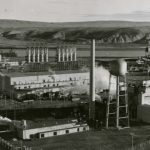
This project spotlights a collaboration between the National Park Service and Washington State University to build a digital infrastructure for the Manhattan Project National Historical Park. Through virtual tours, oral histories, and student-driven story maps, the effort broadens access to underrepresented histories and physically restricted sites—a strong example of what CESU partnerships make possible.
May 15, 2025
Project Highlight: Underground Cultural Landscape Report and Monitoring Plan
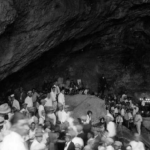
Led by researchers at the University of Oregon in partnership with the National Park Service, this study documents and proposes management strategies for the underground cultural landscape of Carlsbad Caverns National Park. The work integrates historical preservation, accessibility planning, and environmental stewardship within a uniquely complex subterranean setting.
May 13, 2025
Project Highlight: Comparison of Wolf Densities and Diets Across the Prince of Wales Island Complex
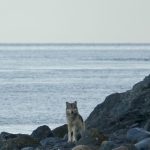
Researchers from the Alaska Department of Fish and Game and Oregon State University are using genetic techniques, non-invasive sampling, and scent detection dogs to study how coastal wolves adapt to shifting prey availability—including reliance on marine mammals. The project is also improving population estimates across remote island landscapes.
April 16, 2025
Project Highlight: Western Snowy Plover Nest Monitoring and Protection
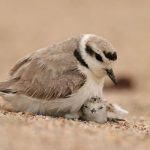
This article highlights the decades-long effort to recover the western snowy plover along Oregon’s coast. Through predator control, invasive species management, and flexible stewardship strategies, ongoing coordination has helped snowy plovers make a remarkable comeback—while underscoring the continued need for conservation along the West Coast.
December 12, 2024
Project Highlight: Collaborative Native Seeds and Plants Propagation Program through a National Parks and Protected Areas Cooperative Studies Program
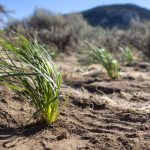
The East Cascades Native Plant Hub brings together federal agencies, tribal nations, universities, and private landowners to restore ecosystems and build workforce capacity. Notable successes include training undergraduate and tribal youth in native seed collection and restoration practices, advancing efforts aligned with the National Seed Strategy and driving meaningful ecosystem resilience.
October 29, 2024
Project Highlight: Willamette Valley Prairie Pollinator Studies
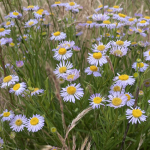
Since 2019, the Institute for Applied Ecology and the U.S. Army Corps of Engineers have partnered to restore pollinator communities critical to endangered plant species in Oregon’s Willamette Valley prairies. Findings reveal the essential role of bees, flies, and butterflies in supporting plants like the Willamette daisy and Kincaid’s lupine, helping refine prairie restoration practices.
Next page