October 8, 2025
Project Highlight: Pygmy Rabbits in Idaho – Using Genetic Analyses to Estimate Occupancy
By Kylie Baker
Mapping the Hidden World of Pygmy Rabbits: Genetic Tools and Collaborative Surveys in Idaho’s Sagebrush Steppe
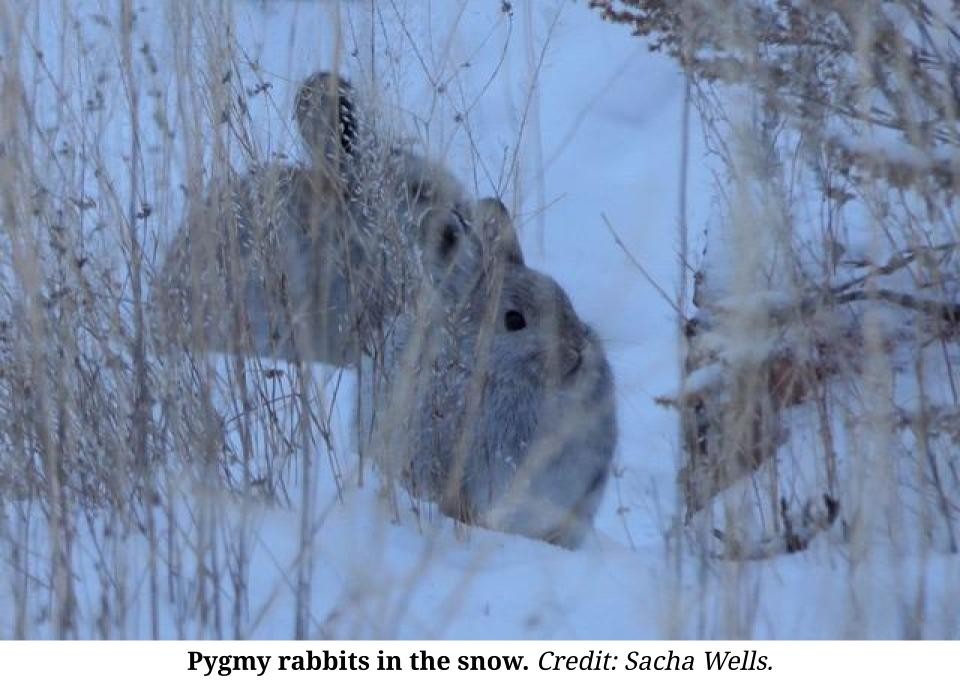
In the arid expanses of the sagebrush steppe, an elusive burrower quietly reshapes the landscape in profound ways: the pygmy rabbit. As the smallest rabbit species in the world, pygmy rabbits (Brachylagus idahoensis) are sagebrush obligates, meaning they rely on this plant for both food and shelter. Notably, they’re one of the very few vertebrate species able to subsist almost entirely on sagebrush, a plant rich in toxic compounds designed to deter browsing. This makes them a biological anomaly and an essential indicator of sagebrush ecosystem health.
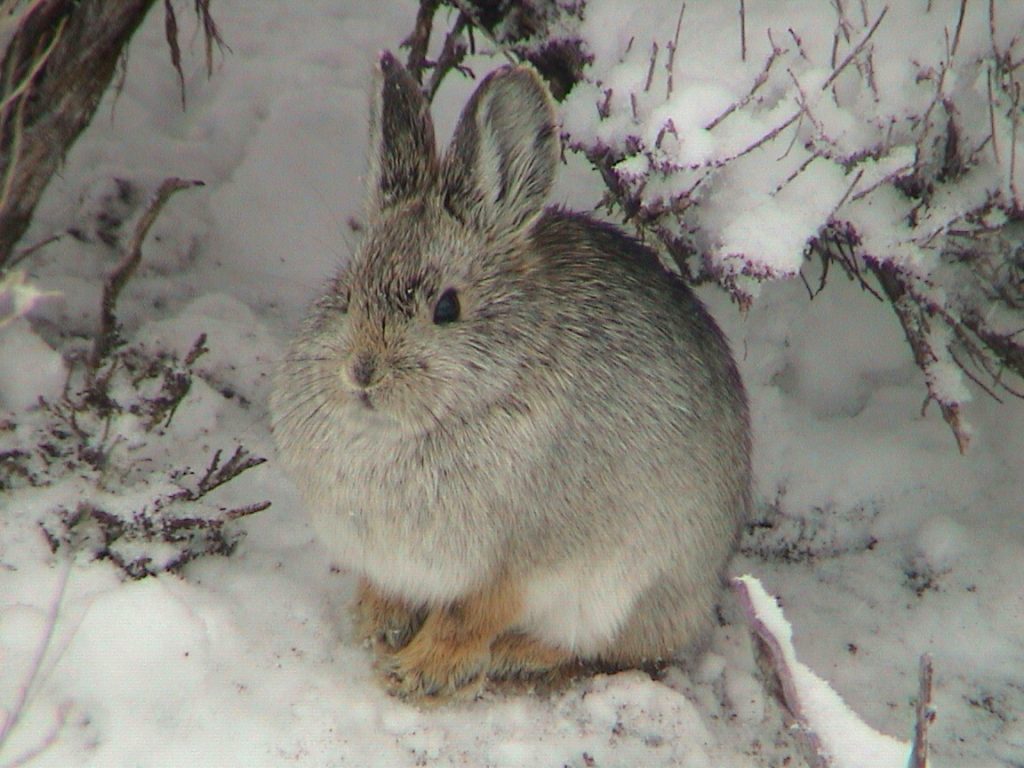
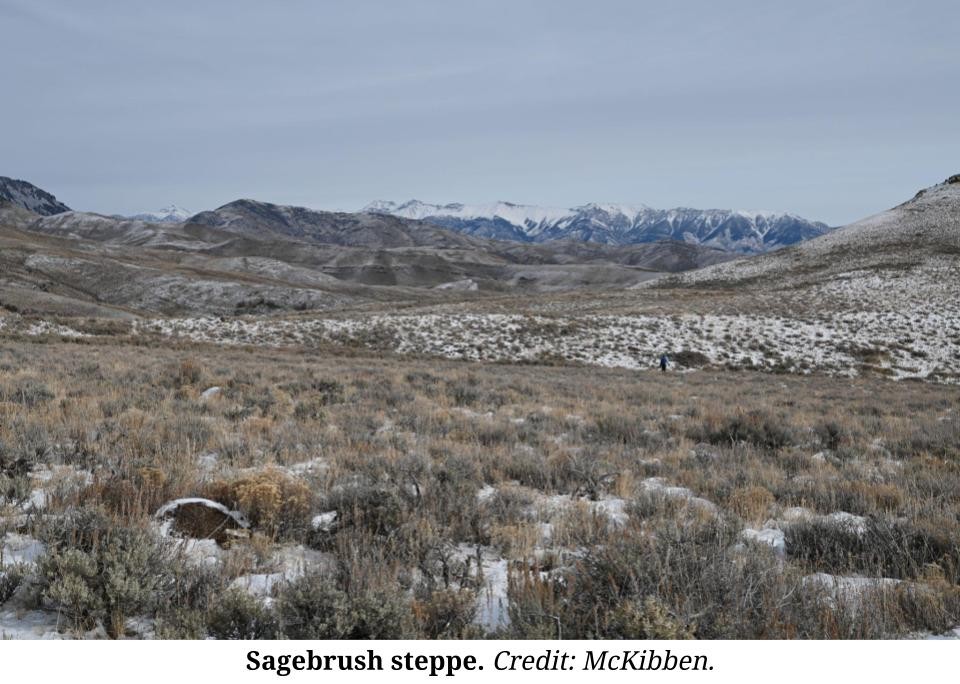
Many do not appreciate the importance of pygmy rabbits. Sagebrush habitat conservation largely centers on the sage-grouse, leaving little attention or credit to the powerful pygmies. However, pygmy rabbits are considered ecosystem engineers; they play a vital role in the sagebrush steppe ecosystem. Their burrowing activity aerates soil, improves water infiltration, and enriches the soil with nutrients—all of which boost sagebrush reproduction. Their burrows create microhabitats that support a range of other species, from birds to insects. They’re inconspicuous, but their impact is profound.
Despite their ecological significance, pygmy rabbits are rarely seen and are notoriously difficult to study, making it a challenge for scientists and land managers to understand where they persist, how populations are changing, and how best to protect them. A Pacific Northwest Cooperative Ecosystem Studies Unit (PNW CESU) multi-partner collaboration led by Dr. Janet Rachlow at the University of Idaho and supported by the U.S. Fish and Wildlife Service addresses these knowledge gaps. Their project combines traditional field surveys with genetic analysis to better map pygmy rabbit occupancy across Idaho and parts of Montana. This new effort builds on a prior Bureau of Land Management-funded project focused on refining maps of priority pygmy rabbit habitat. With a renewed potential listing for pygmy rabbits under the Endangered Species Act (ESA), it is crucial now more than ever for researchers to have a baseline of pygmy rabbit occupancy to determine any population changes.
Improving Survey Accuracy Through Occupancy Modeling and DNA Analysis
Previous surveys of pygmy rabbits often relied on field observations of burrow systems and pellet identification, with the assumption that if no evidence was found, the rabbits weren’t present. But as Dr. Rachlow noted, “They’re wily. They may be there and go undetected.” Occupancy modeling offers a solution. This statistical approach accounts for the possibility of false absences by calculating the probability of detection, giving researchers a much clearer picture of where pygmy rabbits are actually present, even when signs are sparse.
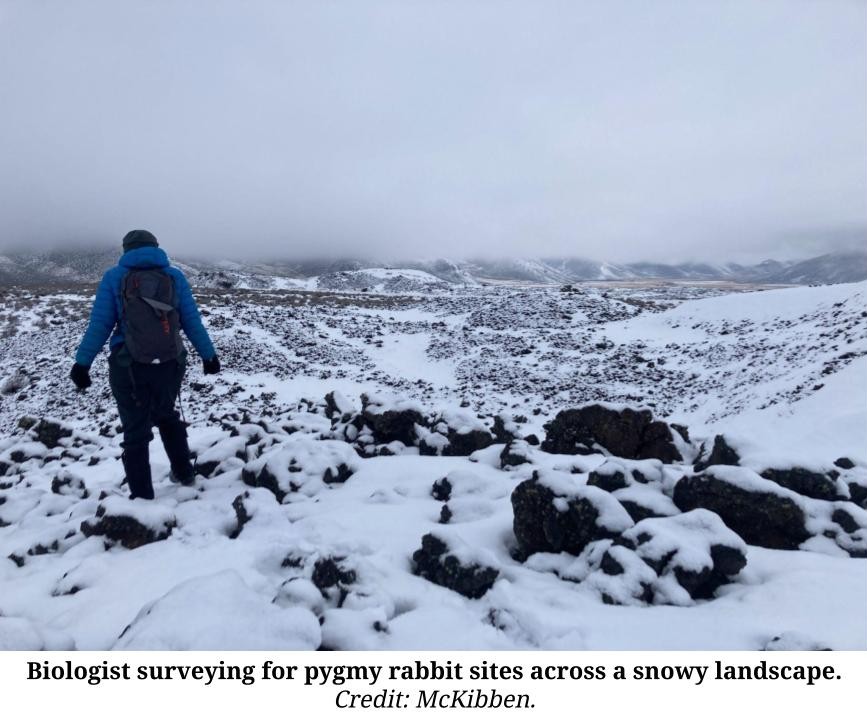
To ensure accurate species identification, the team is supplementing field observations with genetic confirmation. Pygmy rabbit pellets—collected from snow-covered burrow sites during winter surveys—are analyzed in the lab to confirm species. This is crucial because juvenile cottontails, which overlap with pygmy rabbits in some areas, leave behind similarly sized pellets and can easily be mistaken in the field.

Support from the U.S. Fish and Wildlife Service funds this genetic work, strengthening the validity of survey results and providing a clear foundation for habitat modeling. Together, these tools allow for a far more accurate picture of pygmy rabbit occupancy across their range.
A Rare, Large-Scale Collaboration
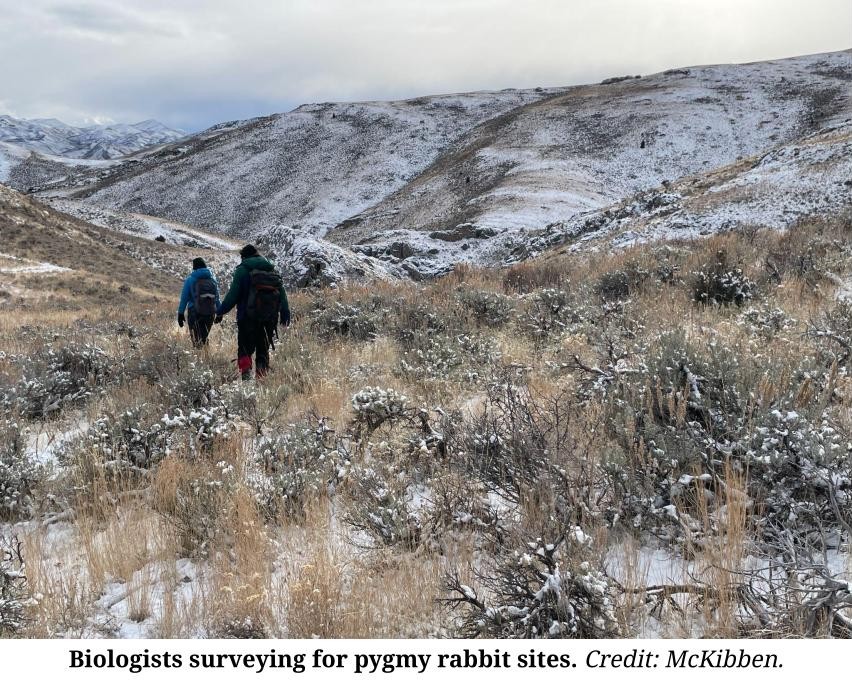
The broader survey effort has mobilized more than 100 biologists from federal and state agencies across Idaho and neighboring Montana, an impressively large and coordinated undertaking for a single small mammal species. “It was a huge collaborative effort,” said Rachlow. Her PhD student, Fiona McKibben, led the logistical coordination, developing an internal website to streamline data collection, share training materials, and assign survey routes.
Since the pygmy rabbit habitat spans across borders, the joint effort from biologists at the Idaho Department of Fish & Game and the Montana Department of Fish, Wildlife & Parks was critical. This collaboration ensures consistency and a unified regional approach to data collection. It is especially valuable now that pygmy rabbits are under renewed consideration for listing under the ESA.
The scale of this effort is striking in its own right. Mobilizing this many field biologists across such a vast and rugged landscape speaks not only to the technical demands of pygmy rabbit detection but also to the growing recognition of the species’ importance as a marker for sagebrush ecosystem health. Few wildlife projects of this scope can claim such a wide and united field network, let alone for a rabbit most people will never see.
Early Results
Over the course of two winters, survey teams visited more than 500 sites across Idaho and adjacent portions of Montana, marking one of the most extensive pygmy rabbit survey efforts to date. Of those sites, 197 were identified in the field as having pygmy rabbit presence. To date, 131 fecal samples have undergone genetic testing, with approximately 70% confirmed as pygmy rabbits and about 30% misidentified as cottontails. This greatly underscores the importance of DNA confirmation in occupancy work, especially when data are collected from a variety of locations, researchers, and dates.
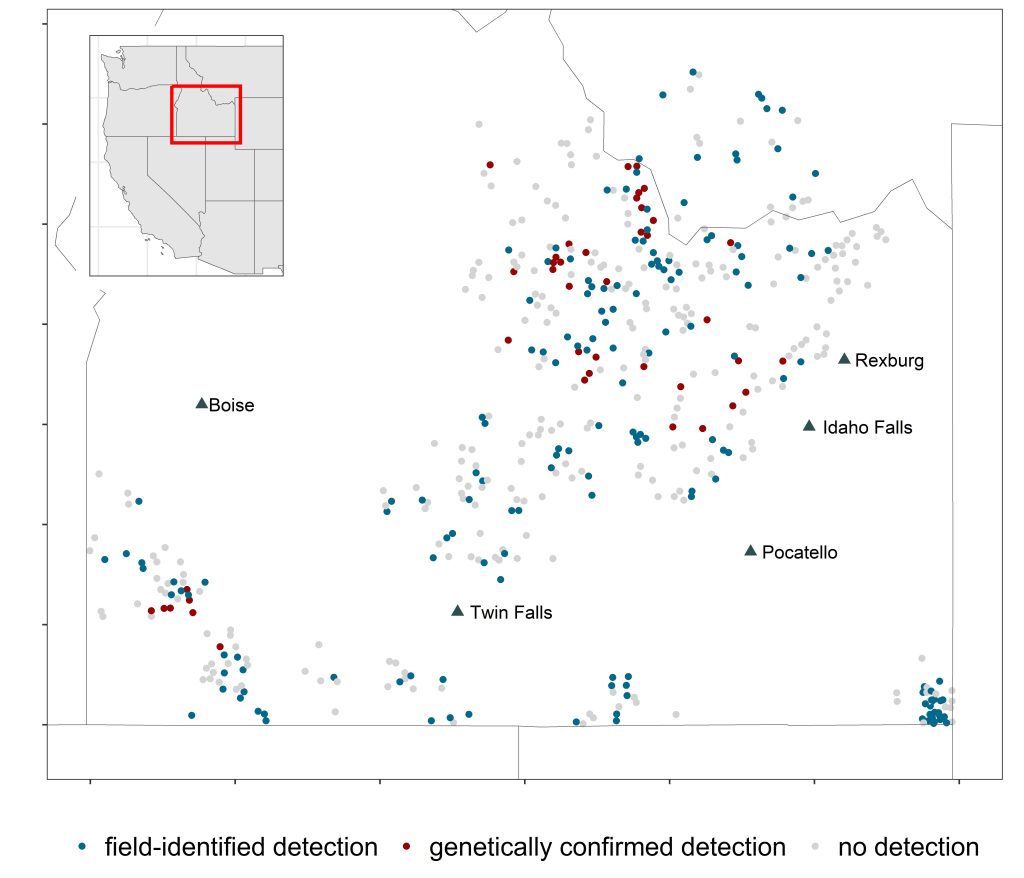
Fortunately, the team is having great success extracting viable DNA from the samples. Nearly all were usable, due in large part to optimal collection conditions—fresh pellets on snow, kept frozen. These data are now being used to update occupancy models and refine range maps, which will inform ongoing conservation efforts.
Why It Matters: Conservation Implications
This project has gained new urgency in light of a recent ESA listing petition, following a previous petition nearly 20 years ago. “Back then, we didn’t even have a baseline distribution map,” said Rachlow. That changed in 2019 when her team published the first range-wide species distribution model, using available data from across the West. “Now, we have a baseline to compare against,” she added. “We can start to ask: are they increasing or decreasing, and why?”
Importantly, the data also allow land management agencies to make more informed decisions when planning roads, firebreaks, or energy infrastructure. The goal is not to halt development, but to do it smartly. Knowing where sensitive species occur allows you to avoid those areas or take appropriate precautions. It’s about maintaining intact, functioning landscapes, where humans and wildlife can co-exist.
Next Steps: Looking Ahead with Climate Projections and Trend Analysis
Looking forward, the research team plans to use these data to evaluate habitat characteristics, identify key predictors of occupancy, and model how those patterns may shift under future climate scenarios. Climatic variables such as temperature extremes and precipitation levels will be tested against occupancy data to determine their influence on pygmy rabbit distribution. This could ultimately allow researchers to forecast how suitable habitats may expand, contract, or shift over the coming decades.
Additionally, by comparing new survey data with results from a similar study conducted during 2009-2012 by the Idaho Department of Fish & Game in southeast Idaho, the team hopes to detect long-term trends in occupancy in parts of the State. While early impressions suggest pygmy rabbit distribution may not have changed drastically, this comparison will offer one of the first rigorous evaluations of population trends over time.
Meanwhile, the threat of Rabbit Hemorrhagic Disease Virus (RHDV2)—a highly infectious and often fatal virus affecting wild and domestic rabbits—adds urgency to the work. Documented in pygmy rabbits in Nevada, the disease represents a major risk and adds urgency to ongoing monitoring and habitat protection.
The Bigger Picture: Resilience, Interconnection, and Hope
In total, this work is providing much-needed clarity about the pygmy rabbit’s current status and future prospects. And while the project focuses on a single species, its broader impact ripples across the sagebrush steppe—a diverse and increasingly vulnerable ecosystem that supports more than 350 species of vertebrates and plays a key role in Western livelihoods, recreation, and watershed health.
If we want to conserve wildlife, it starts with habitat—and understanding that these ecosystems are complex, dynamic, and deeply interconnected. Every organism, no matter how small, plays a role in maintaining the health of our landscapes. By mapping pygmy rabbit presence and protecting the habitats they depend on, researchers and land managers are doing far more than conserving a single species—they’re laying the groundwork for protecting an entire ecosystem.
In many ways, the pygmy rabbit is an ideal symbol of resilience in the face of habitat fragmentation, disease, and climate change. Small but mighty, hard to find but essential, they remind us that unassuming creatures often carry great ecological weight.
And as this extraordinary collaborative effort shows, protecting them requires a similarly determined and coordinated response. I can’t think of a better mascot to champion resilience in the face of habitat and climatic changes, and I aspire to remain as dedicated as the mighty pygmy rabbits.
A special thank you to Dr. Janet Rachlow, Fiona McKibben, Dr. Leona Svancara with the Northwest Climate Adaptation Science Center, the University of Idaho, U.S. Fish and Wildlife Service, Bureau of Land Management, National Park Service, U.S. Forest Service, Idaho Fish & Game, Idaho National Laboratory, the Montana Department of Fish, Wildlife & Parks, and the many biologists who helped contribute to these impactful projects!