Relationships in the Media
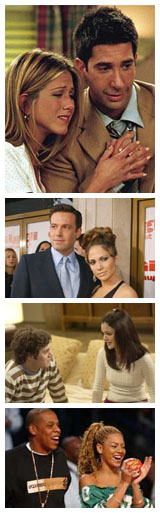
Whether scripted to perfection for the screen, or glimpsed only through the tabloid lense, couples in the media influence the way we view relationships. Recent romantic history: Ross and Rachel from Friends, Ben Affleck and Jennifer Lopez on the red carpet, Seth and Summer from The O.C., and Jay-Z with Beyonce out at a game.
Level: Middle / High School
Overview:
After brainstorming a list of favorite couples from the media, participants are asked to explore the dynamics of fictional relationships, including issues of trust and intimacy, as well as sexuality. Youth also create a questionnaire for their peers about couples in the media they admire, and administer the survey in order to explore different kinds of relationships teens find admirable, and why.
Objectives:
- Examination of relationship dynamics as portrayed by the media, especially emotional intimacy
- Understanding of how certain dynamics, while dramatic to watch, may have serious repercussions on real life relationships
Time: 1 class period, plus conducting a survey
Preparation and Materials:
- Paper and pens
- Blackboard or flip chart
Procedures:
- Introduce the lesson by asking students to brainstorm a list of famous couples. Couples may include famous examples from history or literature, or couples from the media. Responses may include: Romeo and Juliet, Ben and J-lo, Britney and Justin, Ross and Rachel. Record responses on the board or a flip chart.
- Ask students to discuss each one of the couples listed. Why are the couples famous? Do they have a good relationship? Did they have a messy breakup? Are they a real life couple, or fictional characters? Would students like to have a relationship like a particular couple? Why or why not?
- Ask students to choose a fictional couple from the list that they are all familiar with to discuss in depth, like Ross and Rachel from Friends, Summer and Seth from The O.C., or Clark and Lana from Smallville. Ask:
- How did the two characters become a couple? What brought them together? (For example, a shared experience, shared interests, growing attraction, etc.)
- Did one person have a crush on the other before feelings were declared?
- As a viewer, do you have more sympathy for one character than the other? Why or why not?
- Describe the couple’s relationship. Do they trust, support, and respect each other? Were they friends before becoming romantically involved? If so, how does this affect their relationship?
- Would you consider this to be a healthy relationship? Why or why not?
- Do you think the relationship will last? Why or why not? Does the fact that a relationship may not last make it less romantic, or admirable? Why or why not?
- Ask students how relationships are defined differently in the movies and on TV. Are TV romances more developed? Do they seem more substantial because you get to see the characters interact over numerous episodes, as opposed to movie couples that only interact for the 2 hours they’re on screen together? Ask students to discuss some examples of relationships in film that they think are admirable.
- Ask the class to discuss how much of a role sexual activity plays in the relationship of their favorite fictional characters from TV or film. Are the characters engaging in sexual activity? Did the characters become physically involved before, or after they developed feelings for one another? How did physically intimacy affect their relationship? How much of their relationship is about physical attraction? (Put another way: if the characters were not physically involved, would they be as interesting to watch?)
Activity:
Part One:
Have the class break into groups. Have each group create a questionnaire for their peers about couples in the media. Tell students that the goal of the questionnaire is to find out which couples in the media their peers look up to, and how these relationships differ from real life role models. Questions may include, but are not limited to:
- Who is your favorite couple in the media? Why?
- Name your favorite fictional couple from TV or the movies. Why do you like this couple? What about their relationship is fun to watch? Are they funny, serious, passionate, etc.?
- How do respect, support, and trust factor into the relationship of this couple?
- Do you know any real life couples like your favorite fictional couple? Does that kind of relationship exist in real life? Why or why not?
- Would you want that kind of relationship? Why or why not?
- Does your favorite couple engage in physical intimacy? Would their relationship be believable, or fun to watch, without sexual involvement? Why or Why not?
After students have created the questionnaire, ask each group to administer their survey to their peers, then summarize their findings for the class. Students may choose to create a written version of the survey to pass out to schoolmates, or to collect responses on audiotape.
As a discussion, explore with your students the fact that fictional relationships have a lot of ups and downs to keep viewers interested. Have the class brainstorm a list of events that have happened to favorite fictional couples that would have serious repercussions in real life (i.e., accidental pregnancy, violent accidents or situations, cheating, etc.) Do these events add to the appeal of the fictional couples? Why or Why not? If a real life couple experienced the same events, what would be some of the emotional consequences they might have to deal with?
Part Two:
Have students bring the survey results to class. Break into small groups and compile the results (e.g., list favorite couples, number of times each was mentioned, list answers given to some of the why/why not questions, tally the number of “yes” and “no” responses given for certain questions). Reconvene as a large group to discuss survey findings. Have each group report their findings at this time, and then compare the findings across groups.
Discussion:
Did their peers have strong opinions on the subject of couples in the media? How might these media relationships influence feelings about relationships in the real world?
Assessment:
Students’ contribution to discussion about survey findings. |