Decolonization in global health has gained popularity as a trendy topic, but the language of equity and justice falls short when it comes to practice. Richard Horton’s “Offline: The case for global health” (Lancet, May 2023) pushes us to struggle against deeper issues in our field, including power and money imbalances, unearned privileges, racism, and the omniscience to decide the narrative and tell the global south what it needs. While global health professionals engage in internal battles, the true adversaries…
Tag: decolonization
Fossil Fuel Shackles: How Wealthy Nations Hook Developing Ones

Introduction In the realm of global environmental justice, a disconcerting phenomenon has gained prominence in recent times: the entrapment of impoverished nations by their wealthier counterparts into a relentless dependence on fossil fuels. (1) This practice, though obscured by economic negotiations, perpetuates a cycle of environmental degradation and inequality. By examining pertinent examples and evidence, this essay aims to illuminate the detrimental consequences of this pattern, exposing how such actions hinder both sustainable development and the global fight against climate…
Are we training students to be white saviors in global health?
Ananya Tina Banerjee and co-authors just published an excellent piece in The Lancet on white saviorism in global health. They remind us that global health leadership and power continues to be dominated by the global north – and that 85% of all global health organizations are headquartered in Europe and North America. They point out that, despite our decolonizing efforts, that there is limited discussion of acknowledging the colonial foundations of global health or the need for reparations for colonial…
[VIDEO] Madhu Pai Lecture on Global Health Decolonization
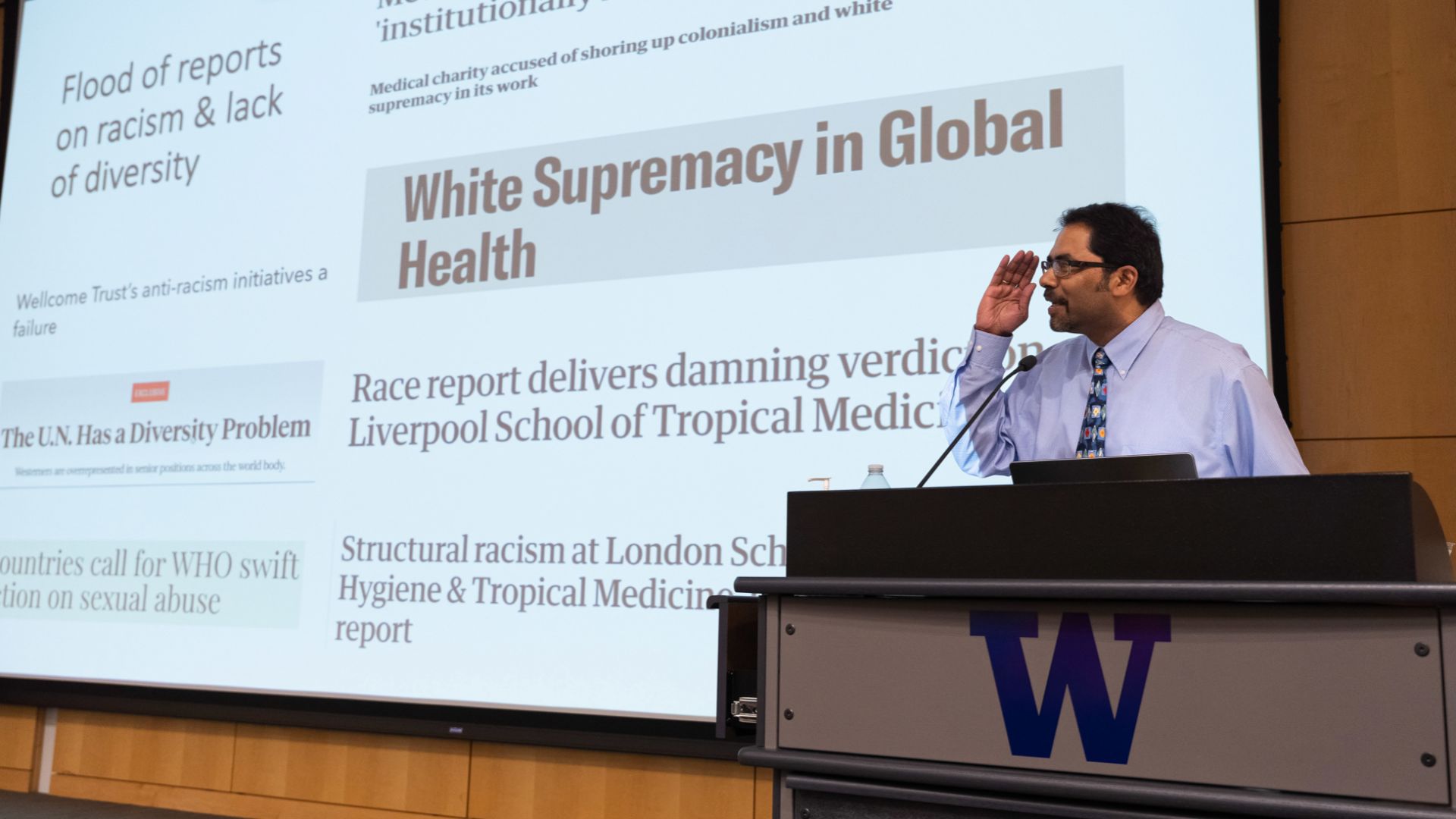
It is now fashionable to talk about decolonization in global health, but the landscape of global health continues to be dominated by those with power and privilege. Many who espouse decolonialization make little effort to transform the power and dominance from the global north that pervades global health activities. Madhu Pai has written and spoken extensively about the challenges of genuine decolonization, and spoke as the Stephen Stewart Gloyd Endowed Lecturer on May 16 at the UW about how we…
[BOOKS] on Decolonization
Here are book recommendations on decolonizing the global health space: “Wretched of the Earth” by Frantz Fanon (1961) Fanon’s seminal work on decolonization explores the psychological and sociopolitical effects of colonialism, offering critical insights into the process of liberation and self-determination. “The Colonizer and the Colonized” by Albert Memmi (1957) Memmi’s analysis delves into the complex dynamics between colonizers and the colonized, providing a nuanced examination of power and resistance during the process of decolonization. “Black Skin, White Masks”…