Welcome to the Global Health Justice Website!
We aim to advance the struggle for global health justice by providing a platform and resources that explore fundamental drivers of health that are often absent in the conventional global health discourse. We recognize that global and national structures of domination, exploitation, and oppression play a crucial role in perpetuating poverty, disenfranchisement, and inequality – all of which have a profound impact on global health. Our goal is to expand our conversations to identify and better understand how injustice is perpetrated – and to work to transform power dynamics toward a fairer world.
By shedding light on these issues, we hope to promote a deeper understanding of the social and political determinants of health. To this end, we prioritize the perspectives and voices of those from the Global South, whose lived experiences and insights are essential for a truly comprehensive understanding of health justice. We welcome contributions to the website, including relevant articles, videos, and artistic expression (eg, songs, poetry) to further explore these issues. We encourage our UW Global Health alumni to contribute to increase our collective awareness of the situation around the world. Our website is a collaborative effort of faculty, staff, students, and alumni of the University of Washington Department of Global Health.
Global Theft
UN global tax negotiations – encouraging?

August 30, 2026
Fair taxation is essential for optimizing global health and equity. Dr. Dereje Alemayehu of the Global Alliance for Tax Justice (GATJ) was encouraged by the August 2026 UN Tax Convention, stating “The negotiations for a Framework Convention on tax get to the heart of the issues of our broken global tax rules: fairly sharing between countries the ability to tax multinational corporations, effectively taxing the rich, ensuring a transparent international tax system….the debate is open and moving forward.” The UN…
Reimagining Aid
Unmasking Global Health in 2025: Aid Disruption, Dependency, Sovereignty, and Reform

July 6, 2026
This episode of Global Health Unfiltered examines what the upheavals of 2025 revealed about power, dependency, and accountability in global health. Through reflections from Dr. Luchuo Bain, Dr. Seye Abimbola, Dr. Boghuma Titanji, Dr. Madhu Pai, Dr. Mohamed Aburawi, and Sitawa Wafula, the episode considers the consequences of the United States’ withdrawal from the World Health Organization, the dismantling of USAID, and the emergence of controversial bilateral agreements. The contributors explore the human consequences of abrupt aid cuts, the relationship…
Decolonization
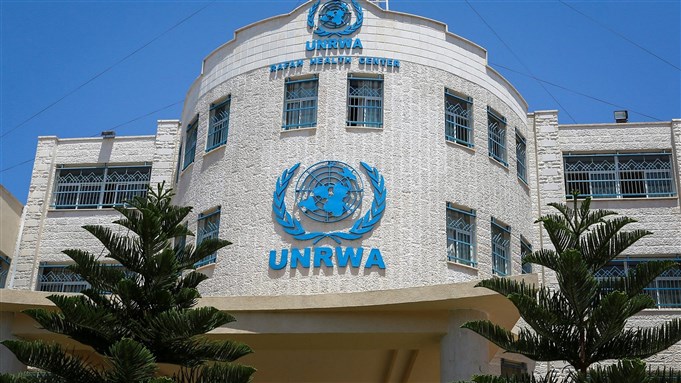
Humanitarian Aid Substituting for Justice? Rethinking UNRWA
August 6, 2026
For over seven decades, humanitarian aid has sustained millions of Palestinian refugees, but it has also quietly replaced the political solution they were promised. What began as emergency relief has evolved into a system that risks managing, rather than resolving, one of the world’s longest-running refugee crises. The 1948 Arab–Israeli War displaced roughly 700,000 Palestinians, creating a humanitarian emergency that led to the establishment of the United Nations Relief and Works Agency for Palestine Refugees, UNRWA, in 1949.1,2 Intended as…
War/ Militarism
A Weapon of War: OHCHR’s Latest Findings on Conflict-Related Sexual Violence in Sudan

July 31, 2026
Since the outbreak of civil war between the Sudanese Armed Forces (SAF) and the Rapid Support Forces (RSF) on 15 April 2023, Sudan has descended into one of the world’s most severe humanitarian crises, marked by mass displacement, urban warfare, and the collapse of basic protection systems for civilians. A new Office of the United Nations High Commissioner for Human Rights (OHCHR) report documents how conflict-related sexual violence has been a central and devastating feature of this war. Over the…
Structural Violence
Rights Promised vs. Rights in Practice
April 11, 2026
This article from Women in Global Health examines the persistent gap between legal rights and lived realities for women, highlighting how shortcomings in implementation, access, and accountability continue to shape health outcomes. Drawing on global examples, it points to structural and institutional barriers, such as stigma, weak enforcement, and inequitable service delivery, that prevent rights from being realized in practice. It underscores that advancing women’s health requires moving beyond formal policy commitments toward systems that can meaningfully deliver on those…
Medical Apartheid
Snake Oil for the Poor Causes Silent Deaths: The Neglect of Snakebite, a Disease of Poverty

July 23, 2026
Authors: Chloe Vasquez and Hope Minor “Dad! A viper bit me!” Ibrahim heard his son’s cry and wove through the sugarcane field toward him. He found the boy on the ground, clutching his rapidly swelling leg. Lifting him into his arms, Ibrahim rushed to the nearest clinic. He arrived breathless after half an hour… it was closed. Desperate, they paid a passing motorcyclist for a ride to the hospital. When they arrived, there was no antivenom in stock. The boy’s…
Alumni Contributions
Videos
Podcasts
Newsletter Signup
We are working on it. Check back soon to sign-up.