Research
December 19, 2025
MIND study collaborators convene at UW to discuss future directions for childhood neurodevelopment research
Categories: Children, HIV and Co-Infections, Implementation Science, Research

MIND meeting collaborators at the University of Washington
Earlier this month, the Drug, microbiome, and immune determinants of birth and neurodevelopmental outcomes in children with exposure to HIV infection (MIND) study collaborators based at the University of Washington convened for a day of knowledge sharing and discussions on projects focusing on adverse birth and neurodevelopmental outcomes in young children exposed to HIV but are uninfected (CHEU). (more…)
Spotlight on Dr. Arianna Means named in Top 10 UW public health stories of 2025
Categories: Gut Health and Child Survival, Research

Photo credit: Elizar Mercado
A spotlight on Dr. Arianna Means’s (Associate Professor, UW Global Health and implementation scientist) contributions to prevent childhood illnesses around the world was named in the UW School of Public Health’s top 10 public health stories of 2025. Congratulations to Dr. Means on this recognition!
Read the May 2025 spotlight: Arianna Means shares why preventing childhood illnesses is imperative for global health
December 5, 2025
Researchers receive major grant to study impact of HIV/ART exposure on child neurodevelopment
Categories: Awards, HIV and Co-Infections, Implementation Science, Research

Multiple Principal Investigators Grace John-Stewart, Dalton Wamalwa, Kathleen Powis, and Andrew Prendergast leading the newly awarded U19 RISE Project
An international research team with Global WACh and partners in the U.S., Kenya, Zimbabwe, and Botswana received a five-year long $36 million dollar grant from the National Institute of Health to better understand how HIV or antiretroviral (ART) exposure in utero influences child health outcomes, including neurodevelopment.
“Researching Interventions and Implementation Strategies to Evaluate the Health and Development of Children Affected by HIV (RISE)” is a large NIH-funded U19 Program to evaluate tools for screening children for neurodevelopmental delays and to identify interventions to optimize neurodevelopment among children with and without in utero HIV/ART exposure. The RISE Program includes three distinct research Projects and three Cores that provide shared resources, focusing on scientific administrative support, data management and analysis, and dissemination and stakeholder engagement, to facilitate the Projects.
(more…)
December 4, 2025
Dr. Keshet Ronen receives award to assess inclusion in digital community health services in Kenya
Categories: Awards, mHealth, Research

Congratulations to Dr. Keshet Ronen, Assistant Professor in Global Health, for receiving funding for “Empowering Women through Digital Connectivity: Advancing Community Health in Kenya” that leverages the ongoing CHV-NEO (Community-based digital communication to support neonatal health) trial activities. CHV-NEO uses text messaging, integrated into Kenya’s national electronic community health information system (eCHIS), to remotely connect mothers of newborns with community health workers for enhanced care during the high-risk neonatal period. CHV-NEO has the potential to reduce neonatal mortality and improve coverage of community-based perinatal preventative care in medically underserved communities in Kenya. (more…)
December 1, 2025
Global WACh Certificate Student Elizabeth Momoh investigates anthropometric recovery to improve health outcomes for malnourished children
Categories: Certificate Program, Gut Health and Child Survival, Research, students
 As part of the Global WACh Graduate Certificate Program’s required 90-hour capstone, Elizabeth Momoh, a 5th year PhD Candidate in the Department of Chemistry and Global WACh Graduate Certificate Student, is investigating how children’s anthropometric recovery from severe acute malnutrition aligns with the recovery of their immune system. In malnourished children, regaining physical growth and development (typically measured by weight and height) often happens faster than regaining their body’s ability to fight infectious diseases. It is critical for researchers to understand whether children who appear nutritionally recovered still have hidden immune problems that could put them at higher risk of becoming malnourished again.
(more…)
November 17, 2025
Dr. Anna Larsen receives NIH Research Scientist Development Award to develop a mobile health parenting support intervention aimed at improving father-child mental health in Kenya
Categories: Awards, Mental Health, mHealth, Research

Congratulations Dr. Anna Larsen (Acting Assistant Professor, UW Psychiatry & Behavioral Sciences) for receiving a National Institute of Health Research Scientist Development Award to fund “Improving fathers’ mental health, parenting, and familial engagement through an mHealth intervention in Kenya.” This five-year award supports an intensive, mentored research career development experience contributing to Dr. Larsen’s path to become an independent researcher.
This study addresses high mental health burden among men in Africa and aims to identify mental health needs, parenting challenges, and preferences for mobile health (mHealth) approaches among Kenyan fathers in a mixed methods approach. Fathers play a pivotal role in early child health development with impact on mental, social, and financial well-being throughout a child’s lifespan. One in ten fathers experience severe mental health challenges due to the stressors of parenting. Fathers’ poor mental health adversely impacts their relationships with partners, parenting behaviors and families’ health and safety, yet mental health services for fathers are scarce. (more…)
November 14, 2025
Dr. Arianna Means receives award to support facilities strengthen organizational culture of learning and improvement to reduce maternal and perinatal mortality
Categories: Awards, Gut Health and Child Survival, Implementation Science, Research

Principal Investigator Dr. Arianna Means; Co-Principal Investigators, Dr. John Kinuthia and Dr. Unger; Research Scientist Dr. Sarah Hicks
Congratulations to Dr. Arianna Means (Associate Professor, Global Health) for receiving a National Institutes of Health award for the AMANI (Accelerating Maternal And Neonatal survIval) trial that will test a practice facilitation package (of training materials, tools, and other resources) that could help stakeholders better understand the circumstances surrounding maternal and perinatal deaths, leading to improved quality of care and reduced mortality among mothers and infants. Study collaborators include Dr. John Kinuthia (Kenyatta National Hospital), Dr. Jennifer Unger (Brown University), and Dr. Sarah Hicks (Research Scientist, Global WACh).
AMANI builds on prior research identifying critical issues contributing to neonatal deaths during health facility delivery and identifying factors influencing guideline adherence, which led to the development of a practice facilitation package designed to strengthen facilities’ capacity to address care quality and implementation gaps. (more…)
November 13, 2025
Dr. Dickens Onyango receives Fogarty Emerging Global Leader Award to support research career development in TB prevention among people living with HIV
Categories: Awards, HIV and Co-Infections, Research, Youth
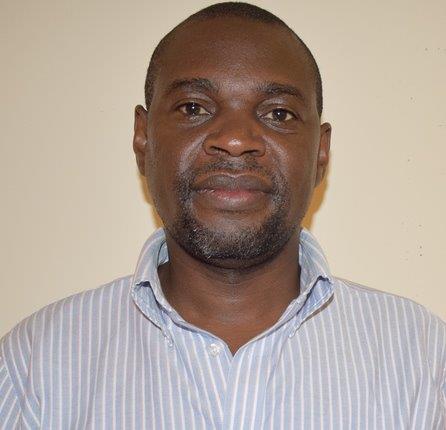 Congratulations to Dr. Dickens Onyango (Deputy Director of Medical Services, Kisumu County Health Department and visiting research scientist at Kenyatta National Hospital, Kenya) for receiving a National Institute of Health Fogarty Emerging Global Leader Award for “Enhancing Adherence and Completion of the Three-Month Isoniazid with Rifapentine (3HP) Tuberculosis Preventive Therapy Regimen Through Biomarker-Guided Adherence Counselling (ACT-TPT).” Collaborating institutions include the Kisumu County Department of Health, Kenyatta National Hospital, and University of Washington.
The award supports an intensive, mentored research career development experience that will allow Dr. Onyango to further develop and expand skills in qualitative research, human-centered design, randomized controlled trials, and advanced implementation science methods to evaluate multicomponent interventions while growing in his career in tuberculosis (TB) prevention among people living with HIV (PLHIV). Click here to watch Dr. Onyango’s ‘Breakfast with WACh’ lecture from March 2025 that summarizes prior research that this project builds upon. (more…)
November 6, 2025
Global WACh visits Seattle Children’s Hospital for sepsis research lecture and networking
Categories: Gut Health and Child Survival, Research, Talks and Events
On October 23rd, the UW Pediatrics Global Health Collaborative (GHC) invited Global WACh team members to Seattle Children’s Hospital for an engaging morning of knowledge-sharing and networking. We value these interactions with other researchers for opportunities to share our work, find potential collaborators, and stay current within our fields of study.
The hospital’s Provider Grand Round lecture series invited a distinguished pediatric healthcare expert to present their work and future directions to improve childhood health outcomes.
“From Bedside to Bench to Back: Pediatric Sepsis in Resource-Constrained Settings” (Click here to watch)
Dr. Teresa Bleakly Kortz, MD, MS, PhD
Associate Professor of Clinical Pediatrics in Critical Care Medicine
Director of the Institute for Global Health Sciences Affiliate Program
Director of the Pediatric Global Health Scholars Pathway at the University of California, San Francisco
October 27, 2025
Dr. Irene Njuguna and Dr. Grace John-Stewart lead new study on the effects of HIV and environmental exposures on pediatric neurodevelopmental outcomes
Categories: Awards, HIV and Co-Infections, Research
 The population of children who are HIV-exposed but uninfected (CHEU) is growing, and the majority live in Eastern and Southern Africa where exposure to environmental toxins (lead, heavy metals, and pesticides) is high. Understanding the combined impact of HIV and environmental exposures on child health outcomes is critical to identify approaches to mitigate risks and provide treatment for CHEU.
Global WACh Co-Directors, Dr. Irene Njuguna and Grace John-Stewart, are Multiple Principal Investigators of a new five-year National Institutes of Health award for “Impact of HIV and toxic metals exposure on neurodevelopment at school age (HOPE-X).” The study leverages an existing cohort of Kenyan children (HOPE) who were enrolled at 6 weeks of age and followed to 3 years, enabling the research team to extend follow-up to 8 years old to study the longer-term impact of HIV and environmental exposures on neurodevelopmental outcomes. The team will also explore the concentrations of pesticides and other toxic metals (mercury, cadmium, manganese and arsenic) in biological samples. (more…)
Next page