Research
June 6, 2023
Global WACh Student Poster Symposium celebrates student achievements
Categories: Certificate Program, Research, students
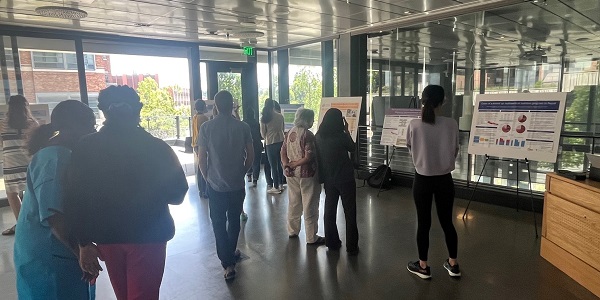
Members of the UW global health community gathered at the poster symposium in the Hans Rosling Center.
On June 1st, Global WACh hosted its first Student Poster Symposium to showcase scientific results by affiliated graduate student researchers and celebrate their achievements over the academic year.
This hour-long event provided an opportunity for current students to share project summaries related to academic requirements (e.g. dissertation, capstone) or as Research Assistants supporting ongoing projects. Some posters were created for the event, while others were previously featured at other scientific conferences and could be accessible to the UW global health community.
Faculty, staff, and students attended to view the posters and chat with the students to learn more about their contributions that help advance Global WACh’s science in collaboration with partner organizations. (more…)
June 1, 2023
Global WACh PhD trainees defend dissertations
Categories: Research, students
This Spring Quarter, three doctoral students who have spent their PhD journeys with Global WACh, defended their dissertations leveraging research conducted in collaboration with partner institutions in Kenya. We are thankful for their contributions to advance our science and for the privilege to provide them with mentorship and training support. Congratulations to all! (more…)
May 26, 2023
Global WACh participates in the DGH LAPIS Symposium
Categories: Conferences, Family Planning, Gut Health and Child Survival, Implementation Science, PrEP, Research
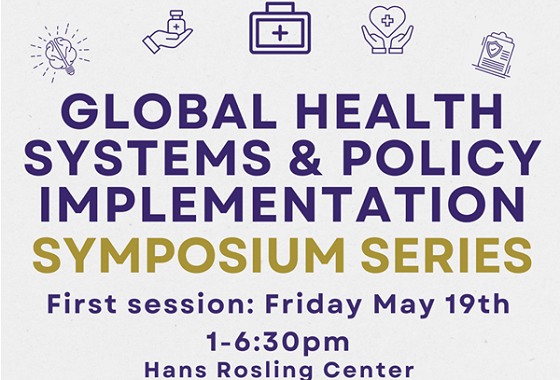
On May 19th in the Hans Rosling Center, the Learning for Action in Policy Implementation and Health Systems (LAPIS) Initiative held its first event in the Global Health Systems and Policy Implementation Symposium Series.
Multiple centers, programs, and initiatives of the department, including Global WACh, participated in the symposium to showcase their efforts in health systems strengthening, policy implementation research, and education and training. The event included lightning talk sessions, poster abstract sessions, and opportunities for networking. (more…)
May 23, 2023
New grant explores pathways associated with growth outcomes in HIV-exposed uninfected infants
Categories: Awards, HIV, Research

(Top row) Drs. David Taylor Hendrixson and Christine McGrath.
(Bottom row) Drs. Grace John-Stewart and Benson Singa.
Dr. David Taylor Hendrixson, Assistant Professor of Pediatrics – Divisions of Neonatology and Pediatric Infectious Diseases, received a two-year Pilot and Feasibility (P&F) Research Awards supported by the UW Medicine Diabetes Institute, Diabetes Research Center, and Nutrition and Obesity Research Center.
The project is in collaboration with Drs. Christine McGrath and Grace John-Stewart (UW Department of Global Health), Dr. Benson Singa (UW-KEMRI), and the UW Northwest Metabolomics Research Center. (more…)
May 19, 2023
Predoctoral researcher Tessa Concepcion receives award to support integration of long-acting PrEP methods into antenatal care in Kenya
Categories: Awards, HIV, Research, students
 Tessa Concepcion, a second-year PhD student in the Global Health Implementation Science Program, recently received a National Institutes of Health grant to fund her predoctoral research with Global WACh at UW and Kenyatta National Hospital (KNH) in Kenya.
The three-year grant titled, “Planning for delivery of novel PrEP formulations to pregnant and postpartum women in Kenya,” leverages the ongoing mWACh-PrEP randomized trial (MPIs: John Kinuthia, KNH and Jillian Pintye, UW)—a SMS-based support intervention to enhance PrEP adherence during pregnancy through the postpartum period—to identify pregnant and postpartum women’s preferences for novel PrEP agents and identify early process indicators for implementing these options in MCH systems. This proposal was guided by the Exploration, Preparation, Implementation and Sustainment (EPIS) framework to answer questions related to implementation of LA-PrEP for pregnant and postpartum women in Kenya. (more…)
March 31, 2023
Sikiliza Mama study centers patients’ needs to inform perinatal mental health services
Categories: HIV, Mental Health, Research
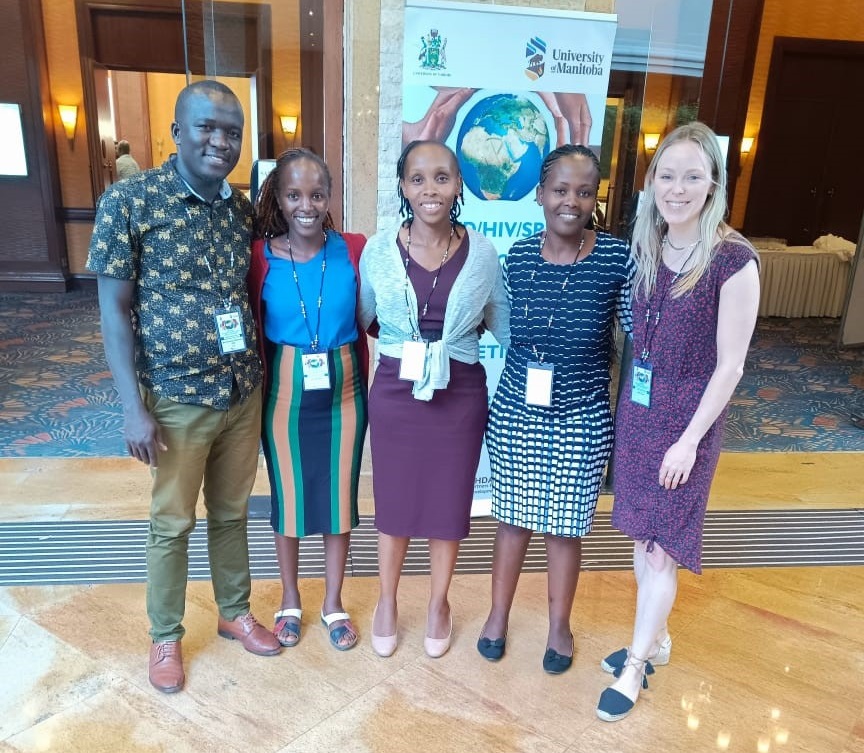
Sikiliza Mama study team members from left to right: Ben Ochieng, Joan Mutahi, Helen Moraa, Winnie Atieno, Anna Larsen
The Sikiliza Mama (Kiswahili for “Listen to Mama”) study, funded by a UW Behavioral Research Center for HIV (BIRCH) Community Centered Pilot AIDS Research Center (C-PARC) award, recently initiated qualitative data collection.
The team is using a human-centered design approach to conduct in-depth interviews among perinatal women with likely depression and/or anxiety to evaluate acceptability of existing formal and informal mental health services.
The findings can help inform patient-centered perinatal mood and anxiety disorders (PMAD) services for women at risk for HIV and women living with HIV and result in better maternal and infant outcomes. (more…)
March 9, 2023
Researchers attend CROI 2023 in Seattle
Categories: Conferences, HIV and Co-Infections, Research
This year, the annual Conference on Retroviruses and Opportunistic Infections (CROI) was held in Global WACh’s hometown of Seattle, WA from February 19-22, 2023.
CROI is the premier annual scientific conference for the epidemiology and biology of human retroviruses and associated diseases. For the past 30 years, CROI has been a global convening of leading scientists, clinicians, public health experts, among others, where discoveries have been presented that have helped to accelerate progress in HIV/AIDS research.
We’ve compiled a list of 12 accepted poster abstracts with contributions by Global WACh researchers and collaborators. Click on the titles to read the poster. (more…)
March 3, 2023
Researchers convene in Nairobi, Kenya on future childhood development research
Categories: Awards, Children, HIV and Co-Infections, Research
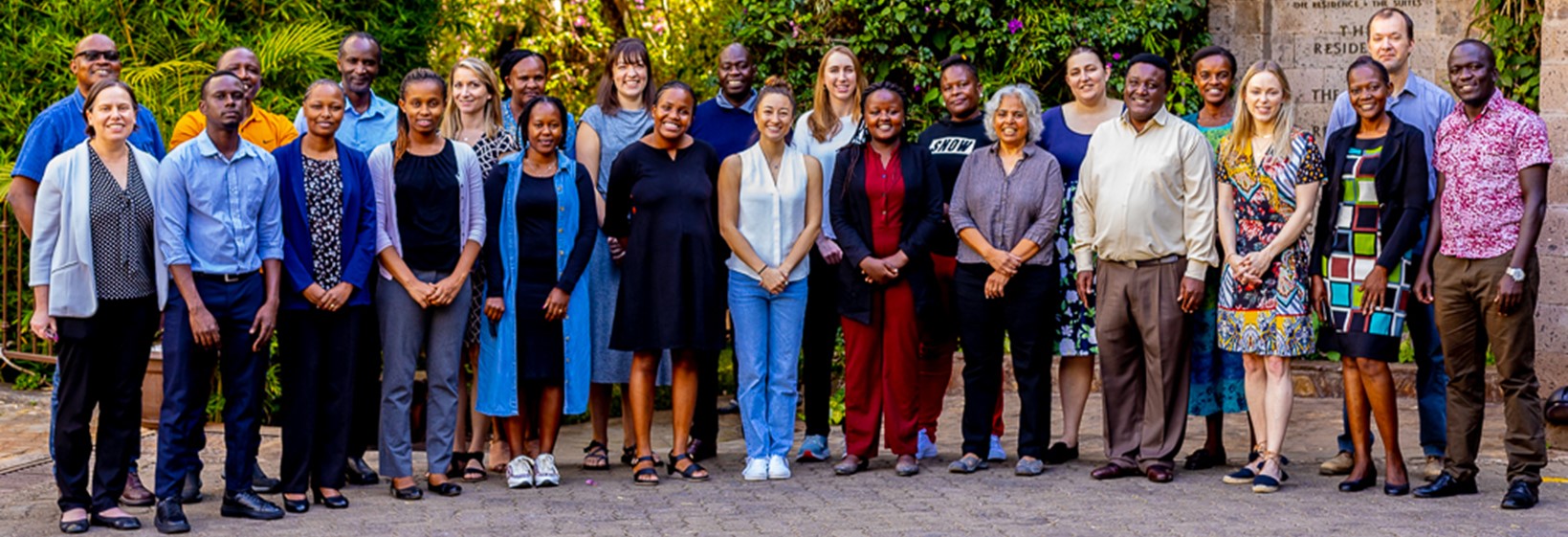
A two-day convening in January in Nairobi, Kenya brought together over 30 investigators from a variety of Kenyatta National Hospital, University of Nairobi, and University of Washington studies that include components of assessing childhood neurodevelopment and mental health. This meeting provided a forum to understand how to leverage the recently awarded Impact of Microbiome, Immune Activation and Drug on Neurodevelopment (MIND) Program for ongoing and future childhood development research. Over the course of the meeting, attendees discussed and prioritized the activities for a new MIND Center of Excellence (CoE) that builds off the program. To briefly summarize, the activities include: (more…)
March 2, 2023
New study focuses on immune function to improve treatment of severely malnourished children worldwide
Categories: Awards, Children, Nutrition, Research
 Severe acute malnutrition (SAM) remains a global public health emergency, especially among young children in limited resource settings who are not consuming enough energy, fat, protein, and other nutrients to maintain healthy bodily functions. This places children at high risk of life-threatening infectious diseases, such as diarrhea and pneumonia. Severely malnourished children are often treated at inpatient and outpatient hospital clinics or feeding centers, using protocols promoted by the World Health Organization (WHO). Treatment currently focuses on initial recovery as defined by anthropometric standards without adequately addressing the health of children after discharge from treatment programs. (more…)
February 10, 2023
New CHAIN Network research integrate machine learning to strengthen efforts to identify high-risk children during paediatric hospitalizations
Categories: Gut Health and Child Survival, Publication, Research
New research from the Childhood Acute Illness and Nutrition Network (CHAIN) Network published in the Lancet’s discover series, eClinicalMedicine, applied machine learning algorithms to data collected on hospitalized children from six countries in sub Saharan Africa and Asia. The data showed that children with severe wasting, nutritional oedema, signs of sepsis, or evidence of renal insufficiency experienced extremely high rates of mortality. The authors concluded that developing novel interventions to treat these common comorbidities is a potentially important alternative to continued investment in incremental changes to the current WHO syndromic management approach. Click here to read the publication titled, “Characterising paediatric mortality during and after acute illness in Sub-Saharan Africa and South Asia: a secondary analysis of the CHAIN cohort using a machine learning approach.”
Previous page Next page