News
September 20, 2018
ATTACH study hosts a workshop to strategize improving pediatric to adult HIV care transition
Categories: HIV
This week, the “Transitioning from Pediatric to Adult HIV Care in Kenya (ATTACH)” study team held a workshop in Nairobi, Kenya to discuss strategies to improve transition of adolescents into adult HIV care. Dr. Kristin Beima-Sofie, Global WACh co-investigator for ATTACH, traveled to Kenya with UW student researchers, Dr. Irene Njuguna (Infectious Disease Researcher from Kenyatta National Hospital in Kenya; current Epidemiology PhD student) and Danae Black (Epidemiology PhD Student). (more…)
August 10, 2018
Global WACh Attends 2018 AIDS
Categories: Conferences, HIV, Research
The International Aids Society hosted the 22nd International AIDS Conference (AIDS 2018) in Amsterdam from July 23-27, 2018.
This year, the conference objectives focused on advancing knowledge of HIV through research findings, promoting evidence-based HIV responses tailored to key populations, activating and galvanizing political commitment and accountability, addressing gaps in and highlighting the critical role of HIV prevention, as well as spotlighting the epidemic and HIV response in Eastern Europe and Central Asia.
Global WACh faculty, staff, student research assistants, and international collaborators had a strong presence at the conference to share and discuss a number of selected abstracts. In total, 12 members attended, with four selected abstracts for oral presentations and seven poster abstracts at AIDS 2018. Some members participated in the pre-conference event, the 10th Workshop on HIV Pediatrics from July 20-21, where eight selected poster abstracts were featured.
July 19, 2018
Dr. Brandon Guthrie receives award for mHealth intervention supporting pediatric to adult HIV care transition
Categories: Awards, HIV, Youth
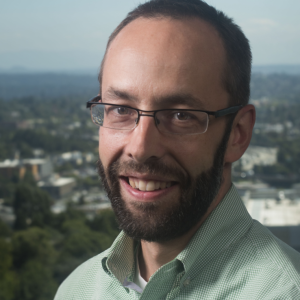 Congratulations to Dr. Brandon Guthrie, PhD, MPH, Assistant Professor of Global Health and Epidemiology, who received a NIH R34 Clinical Trial Planning Grant award to develop and test a mobile health technology (mHealth) based intervention to support youth transitioning from pediatric to adult HIV care in Kenya!
He is leading a team of researchers from the University of Washington, including Drs. Jennifer Unger, PhD (Assistant Professor, Obstetrics and Gynecology), Keshet Ronen, PhD (Research Scientist, Global Health), and Kristin Beima-Sofie, PhD (Research Scientist, Global Health).
The team is also partnering with Dr. Megan Moreno, MD, from the University of Wisconsin School of Medicine and Public Health Pediatrics Department, and with long-time collaborators from Kenyatta National Hospital. (more…)
July 18, 2018
SCOPE trains community leaders and health workers as Maternal Health Advocates for FLAME study
Categories: Uncategorized
In June, the SCOPE program held a training for their FLAME study in Gondar, Ethiopia. FLAME, which stands for Faith Leaders Advocating for Maternal Empowerment, is testing an intervention that brings communities together to improve access to antenatal and delivery care for women in rural Ethiopia.
The training brought 122 community leaders and health workers from across the North Gondar region who will be change agents in their community and promote safe pregnancy and delivery. (more…)
Congratulations to Global WACh Certificate Students, Class of 2018
Categories: Certificate Program, students
This year, Global WACh graduated its largest class ever of Certificate Program students. Nine students from the Schools of Nursing, Public Administration, Public Health, and Social Work presented their capstone project posters at the “Next Big Thing” annual year-end celebration in May at the UW HUB Lyceum.
July 10, 2018
Dr. Jillian Pintye receives award to measure HIV exposures in mothers and infants using hair samples
Categories: Awards, HIV, Research
 Dr. Jillian Pintye, PhD, RN, MPH, Senior Fellow and Trainee with Global WACh and the Department of Global Health, is a recipient of a NIH R21 Exploratory/Developmental Research Grant Award!
Dr. Pintye’s project entitled “Assessing Mother and Infant Antiretroviral Exposure Using Hair Measures” is a two-year grant that will begin in the coming weeks and end during summer 2020. She is serving as one of two Primary Investigators with Dr. Monica Gandhi from the University of California, San Francisco (UCSF), who is a leader in the field of HIV and women, and biomarkers for antiretroviral therapy exposure. (more…)
May 15, 2018
The mCUBE study, funded by Grand Challenges Explorations, seeks to understand women’s contraceptive preferences and behaviors in Kenya
Categories: Awards, Contraception
Written by Alison Drake, Assistant Professor of Global Health, and Claire Rothschild, Epidemiology PhD student and mCUBE Research Assistant
As mobile phone ownership is rapidly growing around the world, crowdsourcing – asking questions to solicit information from large groups of people – is an increasingly attractive way to conduct global health research. In Kenya, nearly 90% of the population has access to a mobile phone,[1] and capturing data through mobile phones may provide a low-cost and effective solution for tracking health outcomes over time.
In 2017, Global WACh’s Dr. Alison Drake, Assistant Professor of Global Health, was awarded a Gates Grand Challenges Explorations grant to explore this idea – how mobile phones might be used to understand Kenyan women’s experience using family planning over time. Women and girls face major challenges using family planning, including side effects, stigma, cost, and barriers to access.
Overall, 1 in 3 women starting a modern method of contraception stop using it within 1 year, and over half stop within 2 years.[2] This phenomenon is called the “leaking bucket”[3] in family planning coverage, making efforts to achieve universal access to family planning worldwide extremely difficult. (more…)
May 3, 2018
You’re invited to Global WACh’s annual end-of-year celebration!
Categories: Uncategorized
THURSDAY, MAY 17TH
4 – 6 PM
University of Washington Husky Union Building Lyceum
4001 Stevens Way NE, Seattle, WA 98115
Join us in celebrating our achievements this year in research, training, and service! Dr. Amita Gupta, MD, MHS of Johns Hopkins University will present the keynote address for our exciting one-hour program featuring speakers leading in the field of preventing mother-to-child pathogenic transmission.
Following the program, come network with Global WACh researchers and community members at our reception and poster session. We are pleased to feature capstone projects of graduating students from the Global WACh Certificate Program. Light refreshments will be served. (more…)
March 8, 2018
International Women’s Day 2018: Celebrating Women in Science
Categories: HIV and Co-Infections, Research
On International Women’s Day, we celebrate women in science who dedicate their knowledge and expertise to improve the health of women throughout all stages of life. Women and girls can build a healthier future for generations to come and it is important nourish, educate, and empower them. Today, we are pleased to feature a story of one researcher’s journey to self-empowerment through her research explorations.
In March and September of 2017, Global WACh highlighted Dr. Linnet Masese (then a Postdoctoral Fellow at the UW Department of Medicine and Clinic Section Head at the UW/University of Nairobi Research) and three published manuscripts from her study supported by Global WACh seed grant funding in 2011. (more…)
January 16, 2018
Spotlight on Global WACh Certificate Students: Elizabeth Karman and Sheldon Halstead
Categories: Certificate Program, students
Second year MPH students, Elizabeth and Sheldon recently returned from a six-month stay in Gondar, Ethiopia as SCOPE Fellows. Both students provided invaluable support on the Faith Leaders Advocating for Maternal Empowerment (FLAME) study, which aims to validate SCOPE’s strategy of integrating local Orthodox Priests into community-level health promotion. Elizabeth visited rural health centers to assess the maternity care services available, and worked with an interdisciplinary team of Ethiopian providers and researchers to analyze and map the data collected. Sheldon assisted a University of Gondar study team with the development and implementation of qualitative baseline data collection, namely focus group discussions with religious leaders, pregnant women, and male partners. Elizabeth’s assessment data and Sheldon’s results from the discussions will be used to inform and optimize the FLAME intervention. (more…)
Previous page Next page