Uncategorized
July 13, 2026
AMANI trial prepares to launch, supporting Kenyan health facilities to reduce maternal and perinatal mortality
Categories: Uncategorized
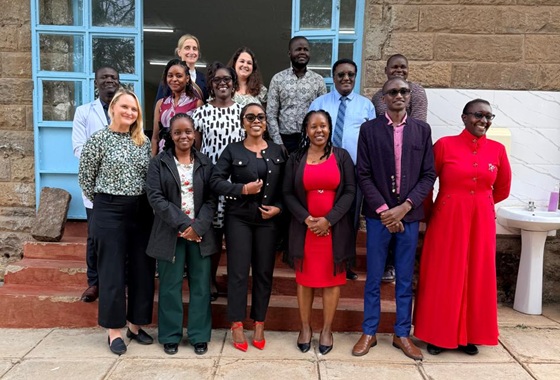
AMANI study team members in Nairobi, Kenya
(more…)
March 29, 2022
New publication on implementation of HIV retesting guidelines for pregnant and postpartum women in Kenya
Categories: HIV, Publication, Uncategorized
 The February 2022 edition of Global Health: Science and Practice features a new publication by UW Global WACh students, Monalisa Penumetsa (DGH MPH alumni) and Epidemiology PhD student Jillian Neary, and faculty (Drs. Alison Drake and Grace John-Stewart).
The “Implementation of HIV Retesting During Pregnancy and Postpartum in Kenya: A Cross Sectional Study” they supported aimed to measure the prevalence of maternal HIV retesting in Kenya, and HIV incidence among Kenyan mothers. (more…)
March 9, 2020
Introducing Preston Owiti, UW/UoN Pediatrics Collaborative Research Lab Manager
Categories: Uncategorized
Global WACh welcomes Preston Owiti, the new Laboratory Manager for the University of Washington/University of Nairobi’s Pediatrics Collaborative Research Laboratory in Nairobi, Kenya. The late Brian Khasimwa previously held this position for 10 years.
In this role, Preston is responsible for the management of laboratory operations and coordination of laboratory activities to support several research studies within Global WACh and the Department of Global Health. (more…)
January 2, 2020
Announcing leadership transitions within Global WACh
Categories: Uncategorized
Global WACh is thrilled to begin 2020 with the announcement of two new members of our leadership team.
Dr. Judd Walson will join Dr. Grace John-Stewart as Co-Director of the Center and Dr. Donna Denno will take over as the Center’s Associate Director, representing the Department of Pediatrics.
Dr. Denno will be taking over this role from Dr. Maneesh Batra, who is stepping down after eight years in the position to expand his time working with the Bill and Melinda Gates Foundation. He will continue to be an active Global WACh community member. We thank Dr. Batra for his outstanding contributions of wisdom and insight that have been invaluable to our success as a Center! (more…)
July 18, 2018
SCOPE trains community leaders and health workers as Maternal Health Advocates for FLAME study
Categories: Uncategorized
In June, the SCOPE program held a training for their FLAME study in Gondar, Ethiopia. FLAME, which stands for Faith Leaders Advocating for Maternal Empowerment, is testing an intervention that brings communities together to improve access to antenatal and delivery care for women in rural Ethiopia.
The training brought 122 community leaders and health workers from across the North Gondar region who will be change agents in their community and promote safe pregnancy and delivery. (more…)
May 3, 2018
You’re invited to Global WACh’s annual end-of-year celebration!
Categories: Uncategorized
THURSDAY, MAY 17TH
4 – 6 PM
University of Washington Husky Union Building Lyceum
4001 Stevens Way NE, Seattle, WA 98115
Join us in celebrating our achievements this year in research, training, and service! Dr. Amita Gupta, MD, MHS of Johns Hopkins University will present the keynote address for our exciting one-hour program featuring speakers leading in the field of preventing mother-to-child pathogenic transmission.
Following the program, come network with Global WACh researchers and community members at our reception and poster session. We are pleased to feature capstone projects of graduating students from the Global WACh Certificate Program. Light refreshments will be served. (more…)
January 16, 2018
Dr. Jennifer Slyker Receives Funding Award from National Institute of Health
Categories: Uncategorized

Dr. Jennifer Slyker, PhD, MSc, Assistant Professor of Global Health and Adjunct Assistant Professor of Epidemiology, received a R21 National Institute of Health Exploratory/Developmental Research Grant Award to support on-going research on the risk factors and mechanisms of sexually-transmitted infections (STIs) and HIV/AIDS. Dr. Slyker’s project titled “Cytomegalovirus (CMV) as a cause or co-pathogen in cervicitis” aims to determine whether CMV, a common virus that replicates in cervical tissue, contributes to cases of “non-specific” cervicitis and persistent cervical inflammation.
Cervicitis is usually caused by STIs and if left untreated, can lead to more serious infections of the uterus, infertility, and adverse pregnancy outcomes. Cervicitis attributed to a “specific” bacterial infection can be easily treated. However, up to 40% of women with cervicitis do not have a specific bacterial infection that can be identified. Understanding which bacteria or viruses contribute to these “non-specific” cases will help researchers understand better the basic biological processes of the condition and develop new treatments.
Dr. Slyker and her team plan to use data and specimens from a 20 year cohort of more than 2,000 female sex workers in Mombasa, Kenya led by Dr. Scott McClelland (Professor of Medicine, Epidemiology, and Global Health). This long-term observational cohort has been invaluable in STIs and HIV/AIDS research at the University of Washington. If CMV is found to be an important contributor to cervicitis, clinical trials can determine if antiviral medication is effective in treating non-specific cervicitis and cervicitis that does not respond to conventional treatment.
We congratulate Dr. Slyker for her award and look forward to learning how the study findings could benefit the large percentage of women globally with non-specific cervicitis! The study is expected to end in 2020.