For several of her teenage years in Ireland, Diana Beresford-Kroeger lived in fear of being sent by the government to one of the infamous Magdalene Laundries, where orphans like her and unwed mothers suffered abuse and maltreatment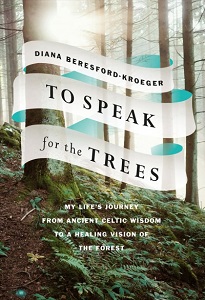 . Her second parent died when she was thirteen, and at first it seemed no one would care for her. Then Uncle Pat relented, leading to wonderful summers in the Irish countryside.
Numerous aged women there chose her as a vessel to receive beliefs, stories, and especially ways of healing, that went back to the Druids. Much of this knowledge had been hidden from the ruling British during what the author calls the penal period. In the process, Beresford-Kroeger learned to affirm herself after her traumatic childhood, and to love and honor nature, especially trees.
Beresford-Kroeger writes winningly about this period of her life. Especially given that her parents had not paid much attention to her when they were alive, she makes clear how much these women were responsible for enabling her to develop into the respected scientist and author she became.
After college in Ireland, Beresford-Kroeger came first to the U.S. for a few years, and then settled in Canada. There she completed at Ph.D. but opted out of an academic career after experiencing much discrimination because she was a woman. Instead, she found success as an independent scholar, though she says she fears the word “success” as associated with greed.
The first 186 pages of this 284-page book tell the above story. It brings together her own amazing history, her botanist’s outlook, and the often mystical understanding of the Druids. The final section is a Celtic alphabet of trees. The Celts assigned trees’ names to each letter of their Ogham alphabet. For example, the letter H was called “Huath,” and the tree is the hawthorn. A drawing of each letter is included, plus a description of the letter:” H is designated as a vertical line met by a single horizontal line to the left” (p. 227).
Along with each letter, Beresford-Kroeger gives information about the tree, the healing properties assigned to it by the Celts, and often, how modern scientists have discovered its medicinal value – sometimes the same as the Celts’, sometimes different. The ancients used extracts from hawthorns for “unspecified weakness.” Today medicines developed from that tree are used for hypertension associated with various heart problems.
Two of Beresford-Kroeger’s previous books – Arboretum America and The Global Forest – are also available at the Miller Library. This one adds background and context to them. About a year after her parents died, she remembers standing outside one of those Magdalene Laundries and smelling fear. This book shows how she channeled that fear into a powerful advocacy.
Published in the Leaflet, June 2022, Volume 9, Issue 6.
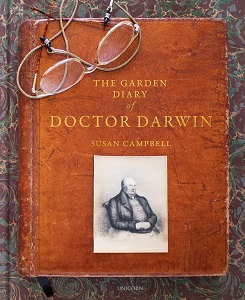 This handsome book presents for the reader the garden diary of Dr. Robert Darwin, father of the famous Charles. Subtitled “A Garden History,” it brings to life the garden Charles knew as a child. As such it has some interest in how the garden might have related to Charles’s thinking about evolution and how he occasionally used the garden for plant experiments. Its primary interest, though, is as a description of a very impressive mid-19th century garden.
 Pacific Northwest horticulturist Riz Reyes worked with illustrator Sara Boccaccini Meadows for his debut children’s book,
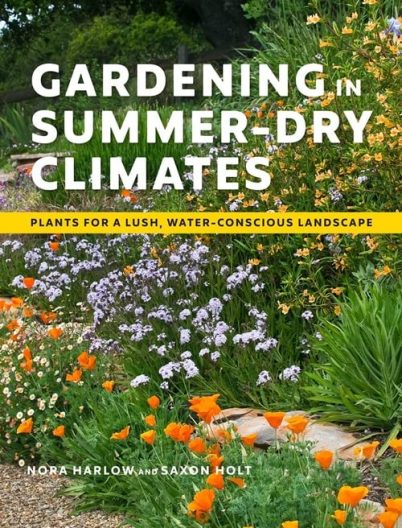 Gardeners are quick to discover that the Seattle area, and most of the coastal areas of the Pacific Northwest, tend to be dry in the summer and wet in the winter, despite our collective rainy reputation. Many popular gardening books are from regions with reliable summer rains. The plant palette these books suggest don’t work here without lots of supplemental water.
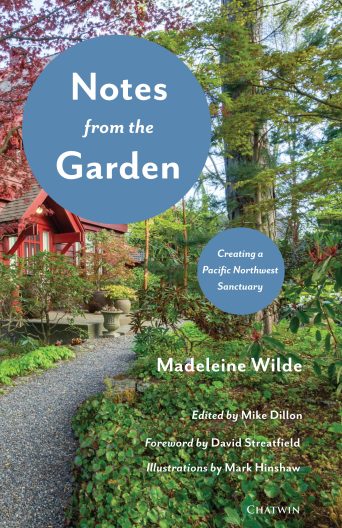 Madeleine Wilde was the author of a gardening column in Seattle’s “Queen Anne & Magnolia News” that ran for over 20 years. Near the end of her life in 2018, she asked her publisher, Mike Dillon, to compile and edit those columns into a book. “Notes from the Garden” has recently been published, a treasure to be cherished by all local gardeners.
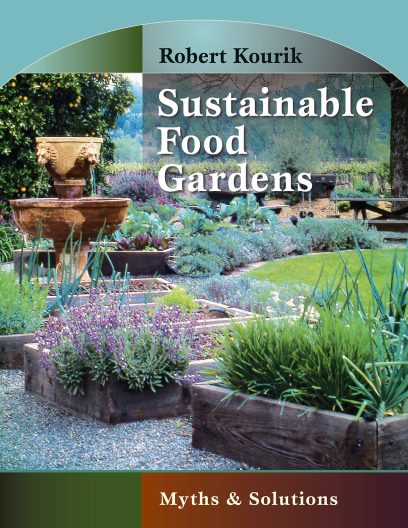 Robert Kourik has eight books in the Miller Library, the earliest from 1986. In all of these, he emphasizes the importance of adopting gardening practices that work with nature. He is especially interested in the root systems of plants and ways to maintain soil integrity while conserving water and nutrients. Based in Santa Rosa, California, at the southern edge of our region, his writing is easily transferable to Pacific Northwest gardeners.
 Typically, I don’t like books that claim to be the “ultimate” in the title as they usually disappoint. I brought this bias to a book from 2016 (but new to the Miller Library) titled “The Ultimate Guide to Urban Farming” by Victoria, British Columbia author Nicole Faires. I can’t claim expertise on urban farming and its many aspects, but I was very impressed by the thoroughness of this manual on the topic.