Seamus O’Brien is another modern day plant explorer. Between 2012-2015, he led four tours of small groups to explore the rich flora of Sikkim, the tiny state of India wedged between Nepal and Bhutan, and butting up against the Himalayas. This landscape creates vast extremes in topography and climate, and an especially rich variety of plants in an area only slightly larger than King County.
Joseph Dalton Hooker (1817-1911) was one of the prominent plant explorers of the 19th century with voyages to Antarctica, the Middle East, Morocco, and western North America. He is arguably best remembered for his three years in and around Sikkim from 1849-1852. At that time, it was an independent kingdom and the crossroads of several distinct cultures.
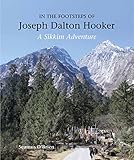 O’Brien wrote “In The Footsteps of Joseph Dalton Hooker” about his trips to Sikkim, skillfully weaving his travel stories around a biography of Hooker’s trip. “Unlike Hooker, our mission was not to collect, but to study and compare places he visited and to record how they had fared and appeared over 160 years later. In some ways Sikkim has changed little over the course of time.”
The main goal of each man was finding plants, and especially rhododendrons. Hooker discovered many, and confirmed and accurately described several other species for science. O’Brien’s group sought many of the same plants in the same locations where Hooker found them. Each was also interested in the people and the animals of Sikkim.
The result is a rich dialogue between two eras. Many of the physical and flora features of Hooker’s day are still there. An example is “Hooker’s Rock,” a gigantic boulder in the Lachen valley, probably deposited by retreating glaciers. Hooker sketched it in great detail and included a circle of seated villagers and a couple of enormous yaks in the foreground. O’Brien includes photos of the same rock, and even captured a large, black yak posed in front! Hooker also adopted a Tibetan mastiff named Kinchin to be his companion and fierce protector. Sadly, Kinchin perished during a river crossing, but O’Brien was able to find similar – if somewhat more placid – dogs of the same lineage.
Seeds of many of the Rhododendrons that Hooker sent home were planted at an estate south of Dublin. Conditions here closely match the climate, soil, and rainfall of Sikkim and the plants are still flourishing. This estate became the National Botanic Garden, Kilmacurragh of Ireland in 1996 (an annex to the gardens at Glasnevin). O’Brien took a position managing these gardens in 2006. The awe he felt for these “Hooker rhododendrons” every spring gave him the incentive to see them in their native land.
Excerpted from the Fall 2019 Arboretum Bulletin.
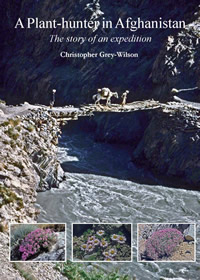 Christopher Grey-Wilson is a major author in the Miller Library collection with twenty-four books he either wrote or edited. Many focus on a specific plant such as cyclamen, pasque-flowers, saxifrages, or poppies of the genus Meconopsis. Others are excellent guides to alpine and rock garden plants. As you read these books, you learn that he has considerable experience as a plant explorer. In “A Plant-hunter in Afghanistan,” he provides a detailed and fascinating account of his nine months of plant exploring through southern Iran and Afghanistan in 1971.
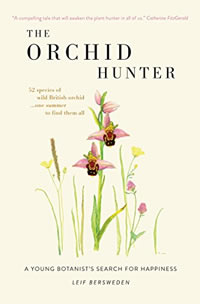 Taking a gap year between college and graduate school is often a time for young students to explore distant parts of the world, perhaps to donate their time to a devoted cause, or to learn a different culture. Very few spend the time botanizing. This is what makes Leif Bersweden’s story so interesting. At age seven, he found his first orchid: “Mum, this flower looks just like a bee.” From this simple beginning, a passion grew, and he decided to spend his gap year tracking down and photographing all 52 native species of Orchidaceae in Great Britain and Ireland. He relates his story in “The Orchid Hunter: A Young Botanist’s Search for Happiness.”
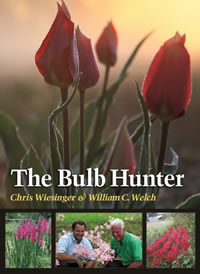 I received at an early age a birthday present of a dozen gladiolus corms. The results – plants taller than I was, with brilliant colors – were enthralling and made me a life-long bulb (more accurately: geophyte) enthusiast. For author Chris Wiesinger, it started with a single red tulip bulb. He planted “his little rock” in his Central Valley of California home and forgot it. The next spring “something magical had occurred; my living rock had turned into the most striking red tulip.”
![[Outdoor Learning Environments] cover](https://depts.washington.edu/hortlib/graphix/outdoorlearningenvironments.jpg)
 Michael Dirr is the guru of woody plants. Beginning in 1975, his “Manual of Woody Landscape Plants” – through six editions as of 2009 – has been required reading for any horticultural student. These books are very technical and rely on line drawings to illustrate their subjects.
![[Pacific Northwest Medicinal Plants] cover](https://depts.washington.edu/hortlib/graphix/PacificNorthwestmedicinalplants400.jpg)
![[My Hair is a Garden] cover](https://depts.washington.edu/hortlib/graphix/myhairisagarden.jpg)
![[Elizabeth and Her German Garden] cover](https://depts.washington.edu/hortlib/graphix/ElizabethandherGermangarden.jpg)
![[Say Yes! to Kids with Disabilities] cover](https://depts.washington.edu/hortlib/graphix/sayyes!tokidswithdisabilities.jpg)