![[book title] cover](https://depts.washington.edu/hortlib/graphix/AbernethyForest.jpg)
Ron Summers writes about a very different ecological history in Abernethy Forest: The History and Ecology of an Old Scottish Pinewood (2018). This is an effort to understand and protect a barely surviving old ecosystem, mostly destroyed by centuries of human activities. This small subject, about 38 square kilometers, or just a bit bigger than Mercer Island, includes the fast-flowing River Spey and Loch Garten, which at 47 hectares is about half the size of Green Lake.
While small, Abernethy includes “the largest of the remaining fragments of the pine forest that once extended across Highland Scotland” and is “incredibly rare in Britain and therefore precious for nature conservation and science.” It is also beautiful, as I have discovered over several visits in the last 20 years, and supports some fascinating animals, including the Capercaillie (the largest member of the grouse family), three species of crossbills that are well-suited for extracting the seeds of pinecones, and the Scottish wildcat, described as resembling a robust domestic tabby.
Published in the December 2018 Leaflet for Scholars, Volume 5, Issue 12.
![[book title] cover](https://depts.washington.edu/hortlib/graphix/Mannahatta.jpg)
What did the island of Manhattan look like on that day, just over 400 years ago (1609) when it was “discovered” by Henry Hudson? Very different from today. It was a rich place with forests, streams, wetlands, and even some hills. Wildlife was abundant, with nearly 400 species of vertebrates likely and another 200 possible. Vascular plant species may have numbered nearly 1,200.
It was also the home to the Lenape people who gave the island its name: Mannahatta. Eric Sanderson headed a decade-long project to try to describe the likely nature of the island before the arrival of Europeans. That project is described in Mannahatta: A Natural History of New York City (2009). He claims that if found today, the island would likely be designated as a national park, but instead, “extraordinary cultural diversity has replaced extraordinary biodiversity.”
Published in the December 2018 Leaflet for Scholars, Volume 5, Issue 12.
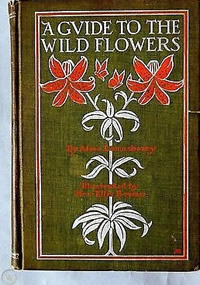 It was on a visit to the United States that Alice Lounsberry (1873-1949) of Boston, some 25 years younger, introduced herself to Australian painter Ellis Rowan. Lounsberry convinced Rowan to travel with her for two years, providing illustrations for three books she wrote on native plants: “A Guide to the Wild Flowers” (1899), “A Guide to Trees” (1900), and “Southern Wild Flowers and Trees” (1901).
At the turn of the 20th century, it was an adventure, especially for two women, to be exploring the rural parts of the southeast. In “Southern Wild Flower and Trees,” Lounsberry writes “Mrs. Rowan and I travelled in many parts of the south, exercising always our best blandishments to get the people of the section to talk with us. Through the mountainous region we drove from cabin to cabin, and nowhere could we have met with greater kindness and hospitality.” The illustrations include plates in color, many black and white diagrams, and some delightful vignettes, typically showing native plants in the context of a larger landscape.
They were a good team. Lounsberry provided detailed botanic structure along with engaging observations of her subjects and their natural history, while Rowan’s artwork found a new audience. Together, their books were very popular.
Excerpted from the Winter 2019 Arboretum Bulletin
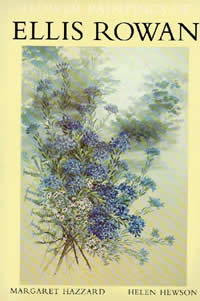 Ellis Rowan (1848-1922) was an Australian painter, specializing in wildflowers in all parts of that country at a time when the native flora was not well-known by European settlers. She was not trained as a botanist, which made her work of limited use in that field. However, the exuberance and abundance (at least 3,000 survive) of her paintings made her very popular. She typically combined flowers with leaves and stems into bouquets, and worked quickly, being able to paint in watercolors and gouache without initial pencil underlay.
In “Flower Paintings of Ellis Rowan,” Helen Hewson wrote that her images “evoke the particular quality of the beauty of the Australian bush, a beauty which is vivid, yet also elusive and vulnerable.” Hewson notes the limitations of Rowan’s work for botanists, but recognizes that “her work is so accurate that the specialist can identify a large proportion of the subjects with considerable reliability.”
Excerpted from the Winter 2019 Arboretum Bulletin
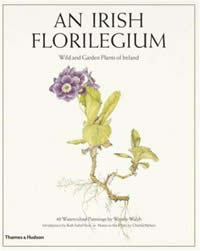 Women botanical artists have made many contributions to horticulture and botany. One of these was Wendy Walsh (1915-2014). English by birth, she also lived in Japan and the United States before settling in Ireland in 1958 at the age of 43. She lived and worked there the rest of her long life, providing illustrations for 33 books, many on Irish gardening and native plants.
Her masterpieces were “An Irish Florilegium,” published in 1983, followed by “An Irish Florilegium II” in 1987. Each contains beautifully printed copies of 48 watercolor paintings that she drew from nature. Roughly, a third of these plants are native to Ireland, while an Irish botanist or plant collector introduced another third. The rest celebrate the cultivars developed by the many fine nurseries and plant hybridizers of that nation.
E. Charles Nelson, a taxonomist with the National Botanic Gardens Glasnevin in Dublin, wrote the extensive plant notes to both volumes and the introduction to the second. Although he was 36 years younger, he and Walsh became fast friends after meeting at the beginning of this project. Their collaboration led to several more books, including three in the Miller Library.
Excerpted from the Winter 2019 Arboretum Bulletin
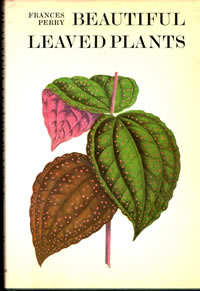 Brent Elliott, retired librarian and historian of the Royal Horticultural Society, declared that Frances Perry’s writing showed “evidence of reading both broader and deeper than that of most garden writers of the time.”
An example of this historical awareness is her book “Beautiful Leaved Plants.” Perry describes 64 house and conservatory plants, popular in the mid-20th century, but chose to illustrate her selections with images by Benjamin Fawcett (1808-1893). Fawcett was a botanical illustrator who used wood engravings, an unusual technique for the time that is particularly effective in capturing the brilliance and subtlety of foliage. The technique is described in a supplemental chapter by Raymond Desmond.
Excerpted from the Winter 2019 Arboretum Bulletin
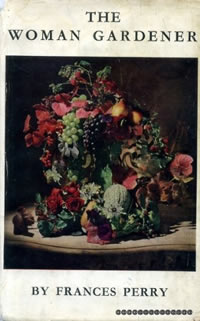 Frances Perry (1907-1993) perceived a lack of gardening information for women in the mid-20th century. As a horticultural lecturer, horticultural advisor (to her county council), and gardening correspondent in England, she noted an ongoing demographic change: more and more women were attending her presentations or writing her letters. Her colleagues, both men and women, had also observed this change.
To address this need, she published “The Woman Gardener” (1955). In addition to general gardening advice, Perry chose topics she thought would have special interest for women. For example, an early chapter is titled “Salads and Quick Return Vegetables” and recognizes that “most housewives will agree that the first requirement of any salad ingredient is that it should be fresh.” Later chapters present miniature gardens in various forms, houseplants, and tips on flower arranging and keeping cut flowers fresh – subjects not typically addressed in other general gardening books of the time. She broke down other barriers of the male hierarchy of British horticulture by becoming the first woman council member of the Royal Horticultural Society in 1968 and, a decade later, vice president of that organization.
Excerpted from the Arboretum Bulletin
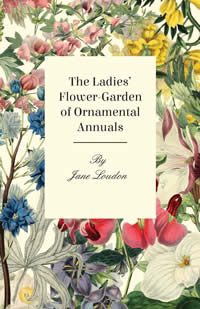 Jane Webb Loudon’s most significant work was “The Ladies’ Flower-Garden,” a multi-volume set with each volume focused on a particular type of plants. The Miller Library has the first volume in this series devoted to annuals. While this book is in the Library’s Rare Book Room and only available to view by appointment, many of the illustrations appear in “Garden Flowers,” a book in the general collection by Robert Gathorne-Hardy. These were noteworthy for the time by including many different species on the same plate, set in loose arrangements that show contrasting features while maintaining scientific accuracy. The illustrations were also a big selling point for “The Ladies’ Flower Garden” because, at the time, they were expensive to produce–and Loudon was able to show a greater number of species in a single book.
Excerpted from the Winter 2019 Arboretum Bulletin.
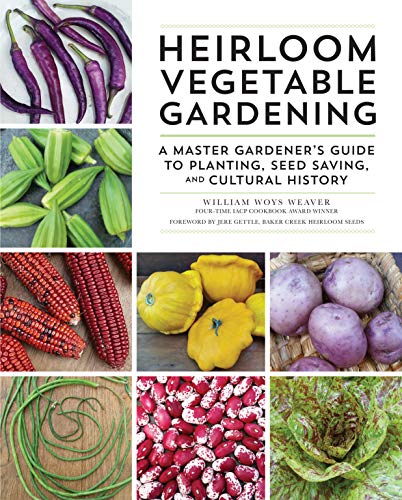 The book “Heirloom Vegetable Gardening” was a classic almost from the moment it was first published in 1997. The author, William Woys Weaver, is a rare scholar of the kitchen garden with a PhD in food ethnography, or the study of cultural eating habits.
Weaver easily could have written a pompous tome. Fortunately, he is a skilled writer and hands-on gardener (and cook, too) who combines dry wit with both practical and historical information. I am not an extensive vegetable gardener, but his stories are compelling and I happily read the encyclopedia of recommend varieties from cover-to-cover.
If you do grow your own veg and enjoy experimenting, this book is an investment that will pay in long-term dividends. Now there is a new (2018) edition. While much of the descriptive material and selection of the varieties is the same as the original, there are minor updates and additions. Both editions are available from the Miller Library.
The author is especially interested in how certain foods have connected different cultures. For example, I learned that lima beans are well named, originating in Peru possibly 7,000 years ago and named in English after that country’s capital city. The Spanish occupiers observed that the indigenous people reserved the crop for the elite of their society.
Is that why the Spanish disseminated these delicious beans to the rest of the world? Perhaps. However, when Weaver was asked to cook a dinner of American foods by friends in Germany, he had trouble finding a source for lima beans. Northern Europeans have not embraced this food like Americans because they are a warm weather crop and don’t thrive north of the Alps.
Weaver references many historical writings and includes a gigantic bibliography of cited sources in his appendices. Many are quite old (dating back to 1591) but still very useful for gardening tips, such as putting out whiskey to discourage crows from corn. “I would use the brand of corn whiskey called Rebel Yell. It seems to fit the remedy and evoke some of the sounds I now associate with the birds at the height of their raucous inebriation. Incidentally, it works.”
Published in Garden Notes: Northwest Horticultural Society, Winter 2019
![[A People's Curriculum for the Earth] cover](https://depts.washington.edu/hortlib/graphix/people'scurriculumfortheearth.jpg)
The current report of the United Nations Intergovernmental Panel on Climate Change (IPCC) draws our attention to the state of scientific knowledge on climate change. The report confirms that humans are the dominant cause of global warming. The situation is grave, but there is hope. There is time for us to move into action now. A People’s Curriculum for the Earth: Teaching Climate Change and the Environmental Crisis, a guide for teachers, is an assemblage of articles written by various authors that include important practical activities and ideas on the value of our earth and the urgency of our situation. It is edited by Bill Bigelow and Tim Swinehart, well-known social studies educators in Portland, Oregon. The book is a Rethinking Schools publication, their mission being “fully committed to equity and to the vision that public education is central to the creation of a humane, caring, multiracial democracy.”
Using a social studies perspective to consider scientific evidence, the approach of the curriculum takes sides on behalf of the earth. It strongly advocates for planet earth, responding to the evidence, alerting students to social and environmental injustice, while searching for explanations and encouraging activism. Groups of people together – schools, neighborhoods, clubs and other associations – can make constructive changes. Two key themes run through this curriculum, the introduction explains:
- “Our curriculum must confront the false dichotomy between the environment and people.”
- “Everyone on earth is affected by the environmental crisis, but we are affected unequally – based on race, class, nationality, or location.”
The guide provides information, insights, inspiration and is an invitation to become actively engaged. It addresses a range of grade levels and audiences. This book calls us to see ourselves “as part of a broader movement to build the kind of society that is clean and just and equal and democratic; one that seeks to leave the world better than we found it.” The earth is humanity’s responsibility. The message is that by working together there is a lot we can do. This book is well worth our immediate attention, particularly in this sometimes skeptical political climate.
Published in the November 2018 Leaflet, Volume 5, Issue 11.