


The Klevit group is dedicated to furthering the human understanding on the complex nature of protein-protein interactions involved in protein quality control and repair. Deleterious mutations in key participants of these intracellular pathways frequently result in the manifestation of cancer, cataracts, myopathy, and many other forms of chronic disease. Members of the Klevit lab are experienced in various biochemical structural techniques, including Circular Dichroism (CD), Solution/Solid-State Nuclear Magnetic Resonance (NMR), Small-Angle X-ray Scattering (SAX), and Analytical Ultra-Centrifugation (AUC). Technical and engineering expertise is also prevalent amongst members of the lab, with many individuals sharing a strong background in computer science and technology.

|
Rachel E. Klevit Principal Investigator Professor of Biochemistry Professor of Chemistry klevit@u.washington.edu |
NMR; protein structure, protein/protein, protein/DNA interactions. |

|
Peter Brzovic Research Faculty brzovic@uw.edu |
BRCA1-dependent ubiquitination, NMR |

|
Ponni Rajagopal Research Scientist ponjan@uw.edu |
Small heat shock protein structure and function. Understanding the structure and mechanism of the deletarious Alpha-B Crystallin mutant, R120G. |

|
Lisa Tuttle Post-Doc tuttlelm@uw.edu | NMR, protein-protein interactions, transcription regulation, protein structure/dynamics |

|
Mikaela Stewart Post-Doc mstew12@uw.edu | Protein function, structure, and dynamics. |

|
Vinayak Vittal Ph.D Candidate vvittal@uw.edu | Protein-protein interactions involving BARD1, the heterodimeric partner of BRCA1. |

|
Scott Delbecq Ph.D Candidate delbes@u.washington.edu | AlphaB-Crystallin, a small heat-shock protein which acts as a molecular chaperone. |

|
Katja Dove Ph.D Candidate kkd5@uw.edu | Structure-function relationship of E2/E3 interactions to understand the underlying mechanisms utilized by specific classes of E3s. |
|
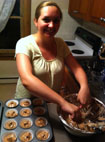
Amanda Clouser Ph.D Student aclouser@uw.edu | Hsp27 phosphorylation and pH dependence. |
|
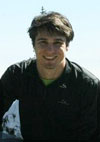
Paul DaRosa Ph.D Student darosapa@gmail.com | Interplay between protein PARsylation and ubiquitination |

|
Matt Cook Ph.D Student cookjmatt@gmail.com | Interests: ____ |

|
Emily Duncan Research Scientist I Lab Technician emilyd8@uw.edu | Ubiquitination |

|
Hezi Ji Undergraduate Lab Assistant hezij@uw.edu |
