On the evening of Wednesday, April 1, 2026, Gregg Gonsalves — global health activist, epidemiologist, ACT UP veteran, and professor at the Yale School of Public Health and Yale Law School — sat down with Students of Color for Public Health, along with CAB members from the Seattle Vaccine Trials Unit, and UW Positive Research for a small dinner and a very open conversation about research, activism, and the future of public health.
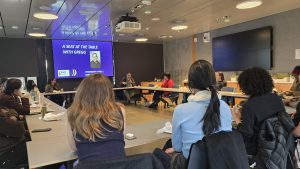
For many in the room, this was not just dinner with a professor — it was dinner with someone whose activism helped change how HIV research is conducted, how communities are included in research, and how public health engages with politics and power.
The conversation moved across history and hard questions. We talked about whether we should still hope for an HIV vaccine (his answer: yes), the kinds of activism academic researchers are finding themselves doing during political attacks on NIH and CDC, the early controversies around PrEP, and the racial realities that have always shaped public health in the United States.
On PrEP, Gregg talked about how what made that moment different was that the resistance was coming from “our side” — including activists and groups like ACT UP Paris — and that it was a rare moment where anti-science views were coming from advocates and activists themselves. In hindsight, he said, we were wrong. It was a powerful reminder that movements, like science, have to be willing to learn, admit mistakes, and change.
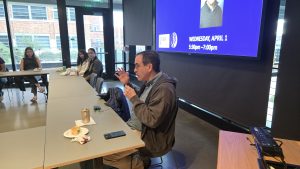
He also talked about the post-Civil War smallpox epidemics that killed enormous numbers of newly freed Black Americans while the country largely did nothing — in part because many people believed Black Americans were going to die out anyway. It was a stark reminder that public health has always been tied to power, politics, race, and whose lives are valued.
Gregg referred many times during his visit to Amy Fairchild’s article “The Exodus of Public Health: What History Can Tell Us About the Future,” which describes how early public health workers were more like campaigners in the public sphere — fighting for clean water, housing, sanitation, and labor reform — and how over time public health shifted from a social reform movement to a science-based profession. In doing so, the field gave up some of its social mission and authority, and the question now is what public health should be again in this moment.
We talked about the existential crisis facing public health now, with some students and community members comparing this moment to the AIDS and COVID crises and asking: What is missing now? Where did we go wrong? Gregg talked about the long political project to undermine public institutions and how, after COVID, many moderates found themselves agreeing with attacks on public health.
He encouraged people to sign up for defendpublichealth.org and talked about what it means for scientists, researchers, and public health professionals to engage politically and publicly in this moment.
When someone asked where he finds hope after so many years in this work, his answer was simple: he finds hope in the people he works with. He also joked more than once that his motivation is that he is “easily agitated,” which got a lot of laughs but also revealed something true about the people who push for change.
It wasn’t just dinner last Wednesday night — it was one of those rare moments where history, activism, science, and the future all sat at the same table.
Michael Louella
Community Engagement Project Manager / Jerome Lab
Manager / Office of Community Engagement
UW/Fred Hutch Center for AIDS Research (CFAR)