By Michael Louella
On a campus walkway, at an information table, or in a classroom after a presentation, public health can begin with a small act of courage: someone deciding it feels safe enough to ask a question out loud. Before a study can change lives, that trust has to be there. Building it takes more than data and study design. It takes care, connection, and communities willing to help lead the work.
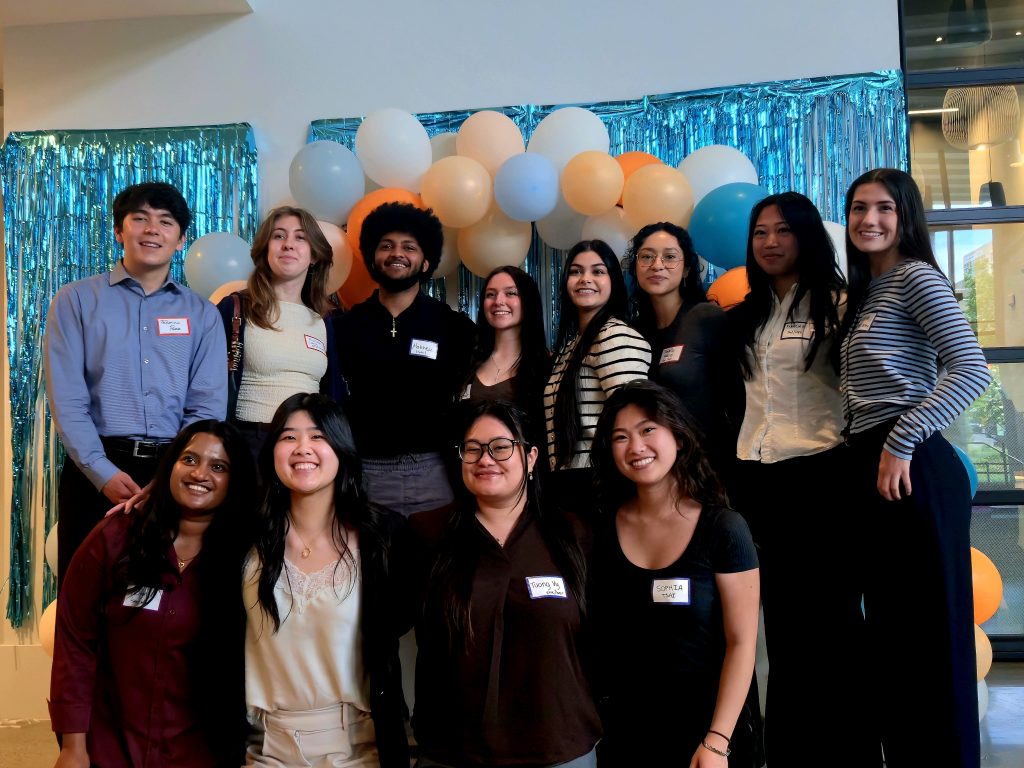
That spirit of trust and shared purpose runs through a series of collaborations between the University of Washington Students of Color for Public Health (SCPH) and the UW/Fred Hutch Center for AIDS Research (CFAR). Across four projects, students stepped beyond the classroom and into applied public health as researchers, educators, communicators, and advocates. What emerged was more than hands-on experience. It showed what can happen when students are invited to shape work that matters deeply to the communities it serves. The first effort grew from a challenge that was both urgent and deeply familiar on college campuses.
Building Pathways into Public Health
The partnership itself emerged through the work of Students of Color for Public Health (SCPH), a student-led registered student organization at the University of Washington dedicated to creating a supportive space for students of color who are passionate about public health and committed to addressing health inequities. Recognizing that representation matters throughout the public health workforce, SCPH works to support students professionally, academically, and socially as they navigate careers dedicated to improving community health.
At the center of these collaborations was Daphne Suen, SCPH’s Research Collaborations Coordinator. Suen worked closely with researchers and community partners to develop project learning objectives, recruit and support student participants, and ensure that students were positioned for success throughout each collaboration. Beyond coordinating projects, she served as a mentor to student volunteers, hosting professional development workshops, offering office hours, and supporting students as they prepared abstracts and posters for research symposia.

The relationship between SCPH and CFAR grew from a shared commitment to equity, community engagement, and workforce development. In fact, one of the earliest connections between the organizations emerged through SCPH’s Anti-Racism and Community Health Conference, which created opportunities for students and researchers to explore how public health institutions can better partner with the communities they serve. What began as a conversation evolved into a series of collaborations that gave students the opportunity to contribute directly to HIV prevention, sexual health education, public health communication, and community-engaged research.
Meeting Students Where They Are
For students Sophia Tsai, Natalya Bale, and Francine Javier, the problem was immediate and hard to ignore: young adults remain disproportionately affected by HIV, yet they are often left out of the very studies designed to support them.
Working with Fred Hutch’s Vaccine Trials Unit, the team set out to raise awareness about a clinical trial testing a new once-monthly form of PrEP, a medication that helps prevent HIV. Rather than depending only on traditional recruitment strategies, they took the conversation directly to the people they hoped to reach.
They surveyed fellow UW students, created social media content, staffed information tables in Red Square, and brought the project into classrooms. Again and again, they heard the same thing: many students were open to learning, but first needed a space that felt comfortable, honest, and free of judgment.
The takeaway was clear. Community engagement is not a side note to research; it is often the link between scientific progress and the people most likely to benefit from it.
Rewriting the Message Around Sexual Health
A second student team, Adelyn Emil, Isabella Velazco, and Felomino Paez, joined the DoxyIMPACT study, which is examining how doxycycline post-exposure prophylaxis, or doxyPEP, is being used in real-world settings to prevent bacterial sexually transmitted infections.
Their task went beyond translating science into plain language. They were also asking a larger question: how could sexual health information feel more relevant, trustworthy, and useful to the communities most affected by STIs, especially men who have sex with men and transgender women?
To answer it, the students reviewed research, built frameworks for evaluating outreach materials, redesigned educational flyers, and created a prototype website. The goal was not simply to make information available, but to make it accessible, engaging, and worthy of trust.
Their work reflects a broader truth in public health: communication can be an intervention in its own right. When messaging is clear and culturally responsive, it can lower barriers, build trust, and widen access to prevention tools. That lesson would take on new urgency in the next project.
When Public Health Sounds Human
When mpox cases began rising in Seattle and King County, the need for trusted communication became more immediate than ever. Students Tuong Vy Nguyen, Rowan King, and Jessica Nhi Phan recognized an opportunity to address a familiar weakness in public health outreach.
Too often, outreach materials are created for communities without being shaped by them. This team wanted to take a different approach from the beginning.
They reviewed existing educational resources through an equity-centered lens, then developed a multimedia campaign that included social media content, a community zine, and a video featuring young adults reflecting on what they knew about mpox.
What stood out most was the feedback. Community reviewers said cultural references, humor, and relatable language made the materials feel more trustworthy and inviting. One reviewer noted that the content felt authentic because it drew on experiences and cultural touchstones familiar to younger queer audiences.
It was a simple lesson, but an important one: people are far more likely to pay attention when they feel recognized in the message. In the final collaboration, that same idea would shape not only outreach, but the way research itself is taught and practiced.
Centering Community in HIV Research
If the first three projects focused on outreach and education, the fourth turned that same commitment inward, toward the research enterprise itself.
Students Fatimah Obaid, Grace Hudson-Pineda, and Matthew Gesese partnered with the CFAR Office of Community Engagement to strengthen a training curriculum for early-stage HIV investigators. At the heart of the effort was a simple but consequential idea: community engagement should not be treated as a box to check, but as a foundation of ethical and effective research.
The students interviewed community members, people living with HIV, and researchers whose experiences spanned the HIV research landscape. Among them were community advocates Christopher Archiopoli and Anthony Radovich, researcher-community member Pedro Goicochea, and HIV researchers Dr. Michele Andrasik and Dr. Joanne Stekler.
Across those conversations, the same themes surfaced again and again: shared accountability, reciprocity, and the value of lasting relationships. Participants emphasized that meaningful community engagement does not begin when recruitment starts or end when results are published. It is an ongoing practice grounded in trust, mutual respect, and common purpose.
For the students, the interviews offered something rare: a chance to learn directly from people who have spent years working at the intersection of research, advocacy, and lived experience. Taken together with the projects before it, the collaboration pointed to something larger than any single effort.
What These Collaborations Make Possible
Together, the four collaborations reveal something larger than any one project could capture on its own.
They show what becomes possible when students are welcomed into genuine partnership with researchers and community leaders. They also reveal how mentorship, curiosity, and community engagement can turn learning into meaningful public health work. Most importantly, they show why creating pathways for students from historically underrepresented backgrounds matters so much—not because these students are merely the future of public health, but because they are already helping shape its present.
The partnership between Students of Color for Public Health and the UW/Fred Hutch Center for AIDS Research is producing far more than outreach materials, surveys, or curriculum updates. It is helping cultivate a generation of public health leaders who understand, in a way that cannot be taught only in textbooks, that science is strongest when it is built with communities, not simply delivered to them.
As the challenges surrounding HIV prevention, sexual health, and health equity continue to evolve, that lesson feels less like a takeaway and more like a mandate: the future of public health will depend not only on new discoveries, but on who is invited to shape them, and whose voices are trusted along the way.
Michael Louella is Manager of the Office of Community Engagement at the UW/Fred Hutch Center for AIDS Research, where he works at the intersection of public health, partnership-building, and community-engaged research.