Implementation Science
July 14, 2026
Researchers share LAUNCH trial and implementation research findings on faith leader-community health worker partnerships to improve newborn and infant health in Ethiopia
Categories: Children, Gut Health and Child Survival, Implementation Science, Research
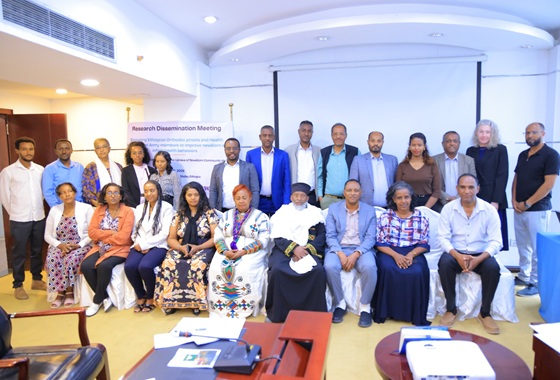
Faith leaders, maternal and child health stakeholders, and SCOPE/University of Gondar researchers at the LAUNCH dissemination meeting in Addis Ababa, Ethiopia
February 23, 2026
MIND study collaborators attend 3rd annual meeting for child development research in Kenya
Categories: Gut Health and Child Survival, HIV and Co-Infections, Implementation Science, Mental Health, Research

Investigators and administrators from multiple Kenyan and U.S. institutions who support the MIND study.
In early February, nearly 40 collaborators affiliated with the “Drug, microbiome, and immune determinants of birth and neurodevelopmental outcomes in children with exposure to HIV infection (MIND) study” attended the 3rd annual MIND meeting in Nairobi, Kenya.
Launched in early 2023, MIND leveraged three birth cohorts in Kenya to build new studies of neurodevelopment. In addition, MIND supports two “Cores” that provide access to technologies, services, training, and consultation to successfully execute the studies, particularly focused on neurodevelopmental assessments. (more…)
January 16, 2026
Researchers share the latest science at the 2025 D&I Conference
Categories: Conferences, Implementation Science, Research, students
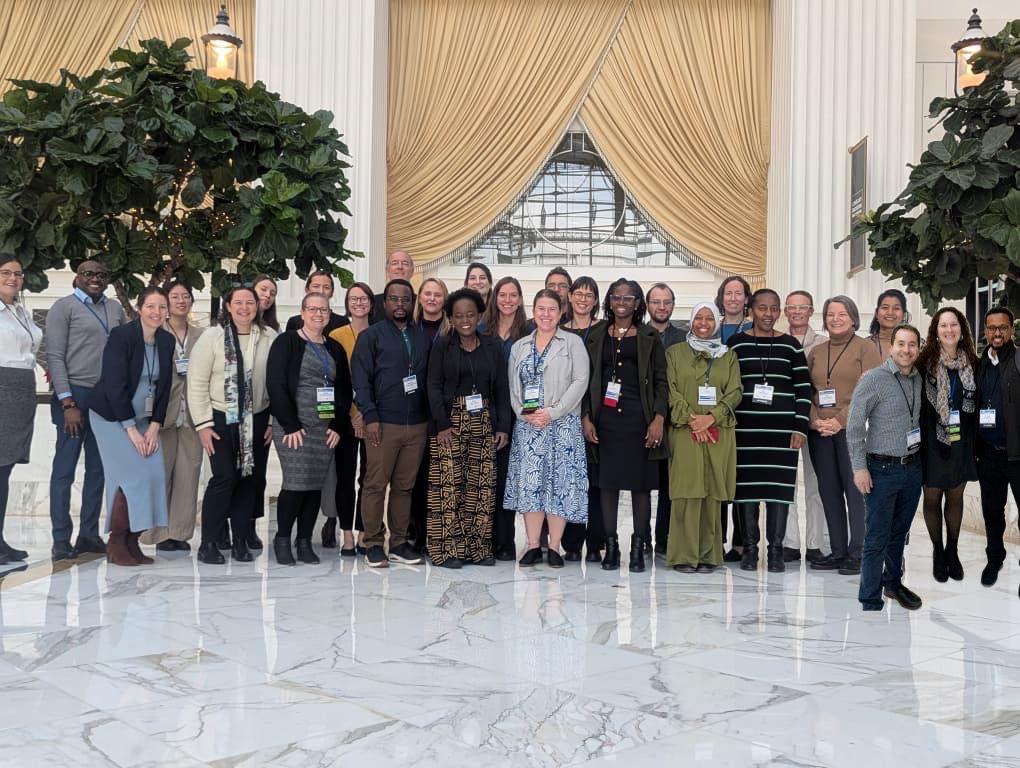
Global WACh researchers among a group of researchers University of Washington Department of Global Health and partner organizations
In December 2025, Global WACh faculty, staff, and student researchers presented the latest science at the 18th Annual Conference on the Science of Dissemination & Implementation (D&I), co-hosted by the National Institutes of Health (NIH) and AcademyHealth. The conference theme, “Realizing the Benefits of Dissemination & Implementation Science,” highlighted success stories and challenges in turning evidence into impact across health systems and communities.
Our team participated in a larger network of fellow researchers from the UW Department of Global Health and partner organizations. It was an enriching and insightful opportunity to learn about emerging trends and evidence in the implementation science field for all.
(more…)
December 19, 2025
MIND study collaborators convene at UW to discuss future directions for childhood neurodevelopment research
Categories: Children, HIV and Co-Infections, Implementation Science, Research

MIND meeting collaborators at the University of Washington
December 5, 2025
Researchers receive major grant to study impact of HIV/ART exposure on child neurodevelopment
Categories: Awards, HIV and Co-Infections, Implementation Science, Research

Multiple Principal Investigators Grace John-Stewart, Dalton Wamalwa, Kathleen Powis, and Andrew Prendergast leading the newly awarded U19 RISE Project
An international research team with Global WACh and partners in the U.S., Kenya, Zimbabwe, and Botswana received a five-year long $36 million dollar grant from the National Institute of Health to better understand how HIV or antiretroviral (ART) exposure in utero influences child health outcomes, including neurodevelopment.
“Researching Interventions and Implementation Strategies to Evaluate the Health and Development of Children Affected by HIV (RISE)” is a large NIH-funded U19 Program to evaluate tools for screening children for neurodevelopmental delays and to identify interventions to optimize neurodevelopment among children with and without in utero HIV/ART exposure.
The RISE Program includes three distinct research Projects and three Cores that provide shared resources, focusing on scientific administrative support, data management and analysis, and dissemination and stakeholder engagement, to facilitate the Projects.
(more…)
November 14, 2025
New grant supports Kenyan health facilities reduce maternal and perinatal mortality
Categories: Awards, Gut Health and Child Survival, Implementation Science, Research

Principal Investigator Dr. Arianna Means; Co-Investigators, Dr. John Kinuthia and Dr. Jennifer Unger; Research Scientist Dr. Sarah Hicks
Congratulations to Dr. Arianna Means (Associate Professor, Global Health) for receiving a NIH award for the AMANI (Accelerating Maternal And Neonatal survIval) trial. Study collaborators include Dr. John Kinuthia (Kenyatta National Hospital), Dr. Jennifer Unger (Brown University), and Dr. Sarah Hicks (Research Scientist, Global WACh).
AMANI will test a practice facilitation package (of training materials, tools, and other resources) that could help stakeholders better understand the circumstances surrounding maternal and perinatal deaths, leading to improved quality of care and reduced mortality among mothers and infants.
AMANI builds on prior research identifying critical issues contributing to neonatal deaths during health facility delivery and identifying factors influencing guideline adherence, which led to the development of a practice facilitation package designed to strengthen facilities’ capacity to address care quality and implementation gaps. (more…)
September 12, 2025
Dr. Anjuli Wagner and Dr. John Kinuthia receive new award to understand how mobile health technology supports PrEP adherence
Categories: Awards, HIV, Implementation Science, Research

Congratulations to Drs. Anjuli Wagner (Associate Professor, UW Global Health) and John Kinuthia (Affiliate Associate Professor, UW Global Health; Obstetrician Gynecologist, Kenyatta National Hospital) for receiving a National Institutes of Health award to fund “Mechanisms of Action for mobile SMS PrEP adherence intervention (mWACH PrEP Mechanisms).”
The study aims to understand how digital health technologies work to support women to adhere to PrEP, a daily oral pill to prevent HIV. Effectiveness of the pill requires it to be taken daily, yet more than half of women discontinue within the first month. (more…)
June 6, 2025
Global WACh Student Poster Symposium Round-Up 2025
Categories: Certificate Program, HIV and Co-Infections, Implementation Science, PrEP, Research, Talks and Events

Attendees viewing student posters.
On Wednesday, June 4th, Global WACh hosted its annual Student Poster Symposium to highlight graduate student research affiliated with our center. Dozens of UW faculty, staff, students attended to learn about 17 students’ projects that fulfilled academic capstone and dissertation requirements, while providing opportunities to gain knowledge and build marketable skillsets in the field of maternal-child health.
The majority of presenters are enrolled in the Global WACh Graduate Certificate Program and are graduating in the 2025 academic year. The certificate program offers opportunities for additional learning about woman, adolescent, and child health topics through 12 credits of coursework and a 90-hour capstone. We wish these students the very best in their future endeavors as public health professionals.
Additional posters featured master and doctoral degree capstones and dissertations that led to major advancements in the scientific field and were featured at the recent Conference on Retroviruses and Opportunistic Infections (CROI) held in San Francisco in March. CROI is considered the world’s leading HIV research meeting that attracts thousands of researchers and clinicians from around the globe – and is a fantastic stage to showcase our emerging early-stage researchers.
See a list of featured students and poster titles. View the photo gallery courtesy of the Department of Global Health Communications Team.
December 2, 2024
Enterics for Global Health (EFGH) Phase C aims to assess policymaker preferences on Shigella vaccine characteristics
Categories: Awards, Gut Health and Child Survival, Implementation Science, Research
The Enterics for Global Health (EFGH): Shigella surveillance study was launched in 2022 and aims to establish incidence and consequences of Shigella diarrhea among children 6-35 months in Bangladesh, Kenya, Malawi, Mali, Pakistan, Peru, and The Gambia and inform future Shigella vaccine trial planning. The study protocol has been published in a supplement in Open Forum of Infectious Diseases. During Phases A and B, the EFGH Consortium built a robust collaborative research infrastructure to facilitate shared scientific decision making and protocol standardization, and recently completed enrollment of 9,476 participants in August 2024.
(more…)
November 26, 2024
Dr. Arianna Means awarded grant to develop a researcher-friendly tool to improve translating evidence into practice
Categories: Awards, Implementation Science, Research

It is estimated that it takes an average of 17 years for 14% of clinical research to translate into practice. Many evidence-based interventions (EBIs), including biomedical interventions or practices that have demonstrated ability to improve health behaviors, health outcomes, or health-related environments, fail to translate into policy and practice.
There are several cultural, organizational, political and operational barriers that prevent effective uptake of EBIs. There may be serious constraints in policymakers’ preferences and priorities, the ability to supply the workforce training needed, and communication gaps between researchers and policymakers, among many other factors.
Dr. Arianna Means, Assistant Professor in UW Global Health, who is a trained epidemiologist and implementation scientist, is launching a new project in early 2025 to help close the gap between what scientists know can optimize health and what they do in practice (often referred to as “the know-do gap”) by identifying and addressing the barriers that slow or halt the uptake of EBIs. (more…)
Next page