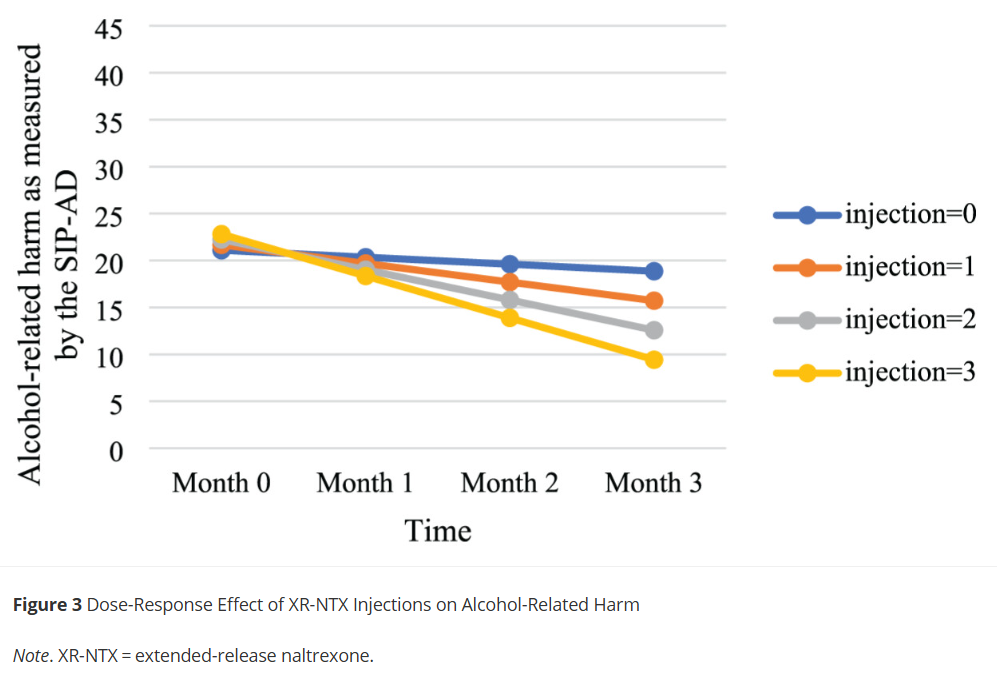
A new study from the HaRRT Center shows that — in the context of harm-reduction treatment — participants who received more XR-NTX injections reduced their drinking and alcohol-related harm over time. Number of counseling sessions delivered an early bump that tapered after the third session.
The HaRRT center came together to celebrate our undergraduate students presenting on the eHaRT-A project at the UW Undergraduate Research Symposium. We have had a great time working on these two projects together over the past year and they did a wonderful job presenting their posters!
Then, to celebrate our graduating seniors and the end of the academic year, we learned more about the history of Seattle at the underground tour with our 499 students and graduate student interventionists.
Harm reduction builds equity in substance use treatment! Our new open-access paper shows that harm-reduction treatment for AUD produced similar outcomes across race, ethnicity, and sex assigned at birth among adults experiencing homelessness.
In an op-ed in PubliCola, HaRRT Center codirector, Dr. Susan Collins, highlights the importance of defining terms in policy discussions about involuntary treatment. Unlike mandated treatment and other means of coercion, involuntary treatment strips people of their civil liberties, and decades of worldwide research show it precipitates poor treatment outcomes — including relapse, reincarceration, and overdose death. It should remain a treatment of last resort, reserved for rare, life-threatening cases. What needs expansion is a full range of voluntary, evidence-based options — from harm reduction services to inpatient SUD care — that are affordable and accessible to people who use substances and their families.
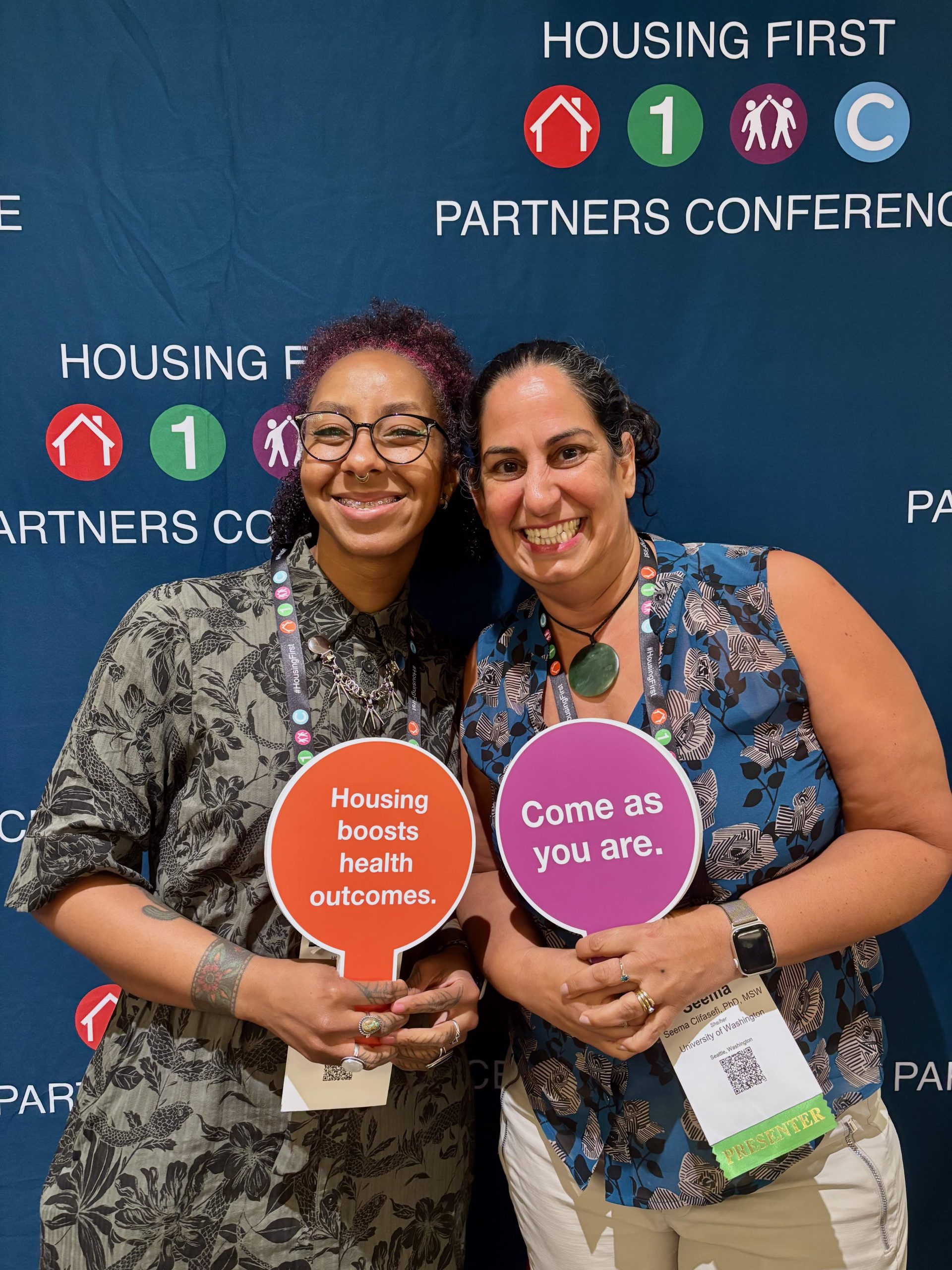
We are so proud of our student research assistants who created and presented a poster at the UW Undergraduate Research Symposium! Kazu, Rachel, and Ryan (above) did a wonderful job presenting some of our findings from the eHaRT-A Phase 1 data. In short, participants found the eHaRT-A to be feasible, acceptable, and usable. Click the poster below to view a higher definition version. We have taken feedback from these interviews to help further shape the eHaRT-A which is now in the RCT phase.
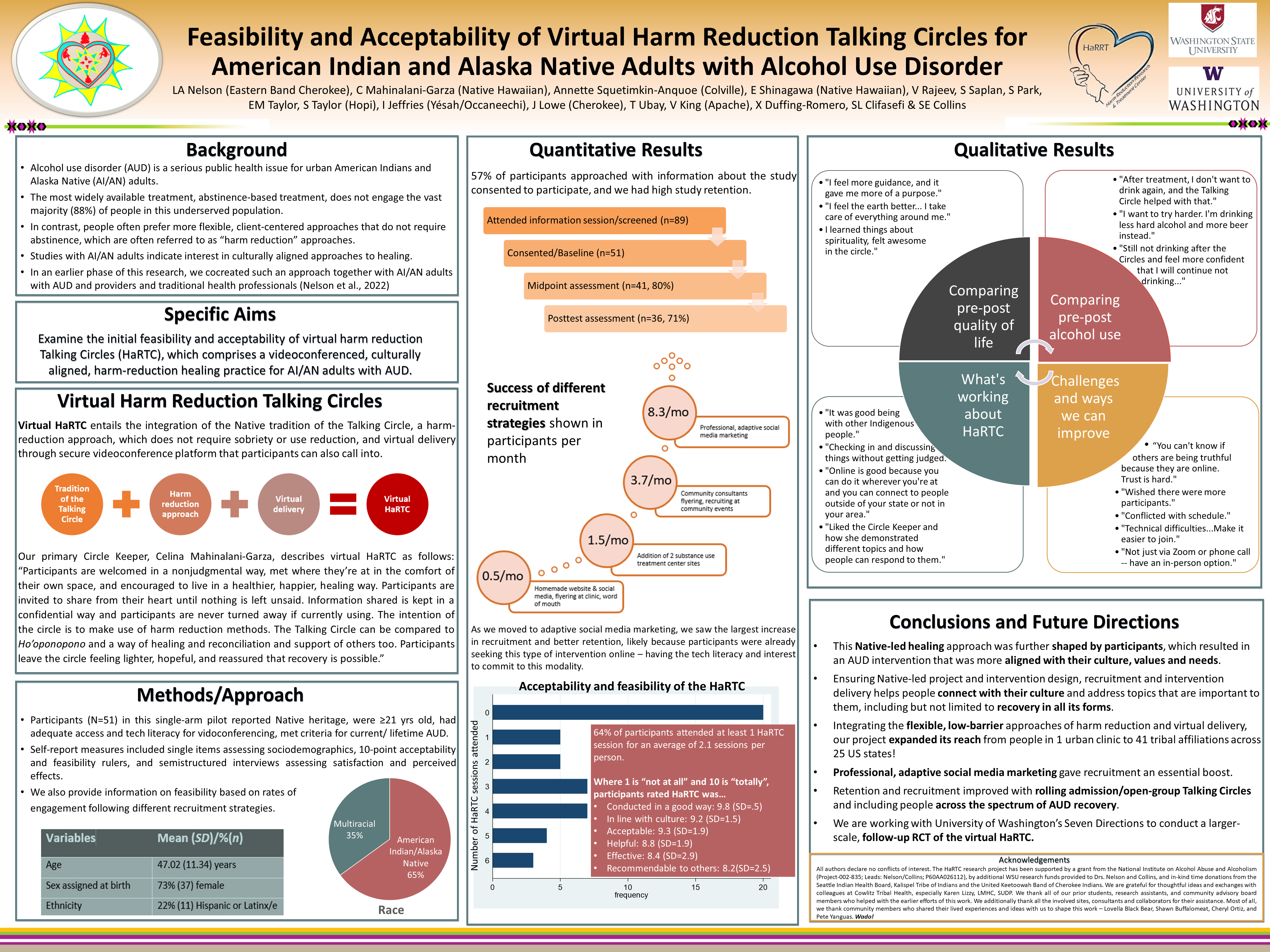
“Although the single‐arm study design precludes causal inferences, participants evinced statistically significant decreases in days of alcohol use and alcohol‐related harm over the three timepoints. Additionally, both sense of spirituality, which is a factor of cultural connectedness, and health‐related quality of life increased over time as a function of the number of HaRTC sessions attended. Virtual HaRTC shows initial feasibility and acceptability as a culturally aligned intervention for AI/AN people with AUD. Future randomized controlled trials will provide a test of the efficacy of this approach.”
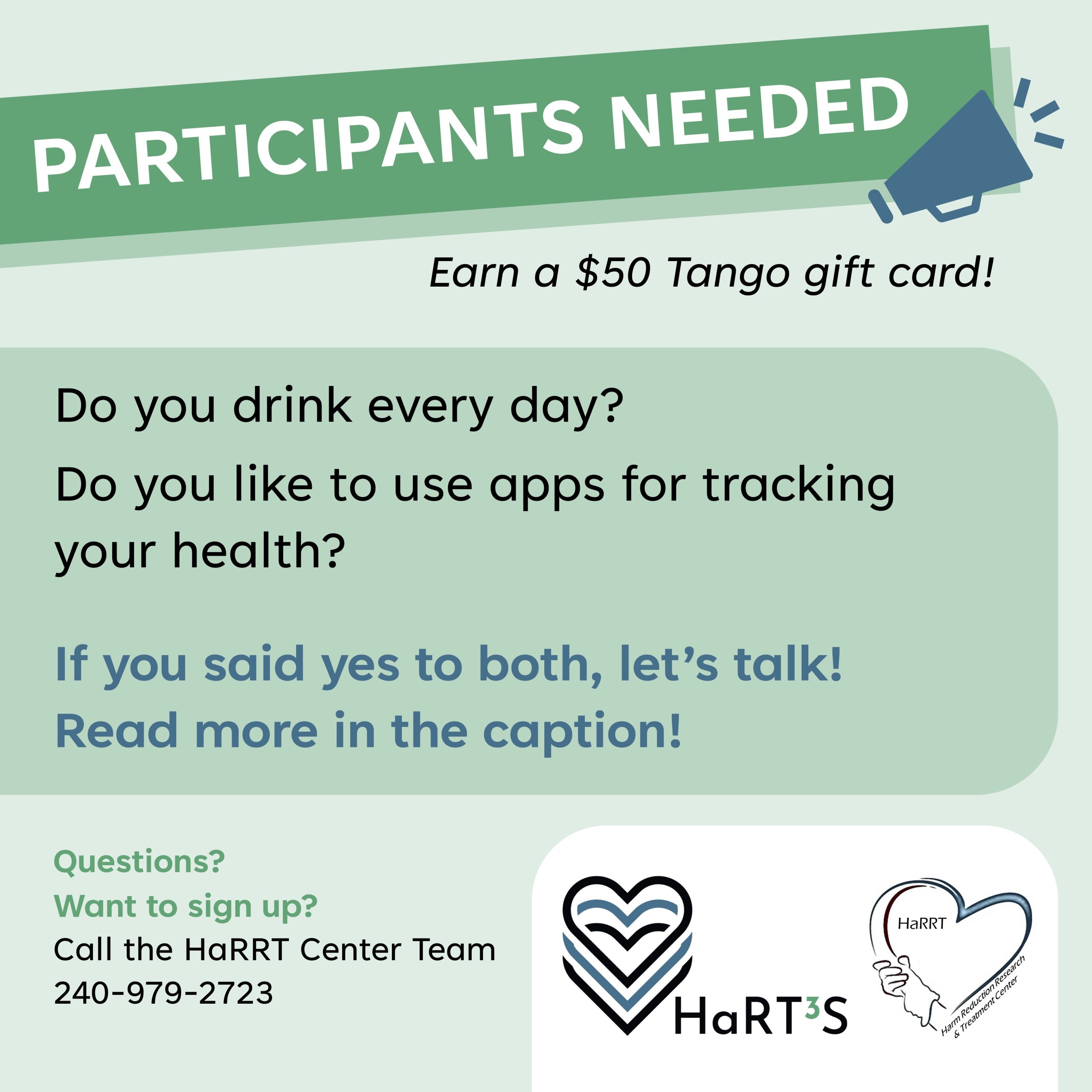
UPDATE: We have reached the recruitment quota for this aim of the study. Please keep an eye out for other opportunities!
Hello!
Exciting update! We are happy to report that we will be partnering with Harm Reduction Treatment, Training & Technical Solutions (HaRT3S) to support development of a mobile app version of our Harm Reduction Treatment for Alcohol Use Disorder (mHaRT-A).
The aims of this initial project are:
Development of the mHaRT-A prototype
Lab-based usability testing of mHaRT-A
Feasibility and acceptability field study of mHaRT-A
We are excited to embark on this new project that builds on our strengths and community partnerships, while also pushing us outside our comfort zones in pursuit of more accessible and effective harm reduction treatment options for all!
Drs. Collins and Clifasefi have released a book that goes over the history of harm reduction, empirical evidence for harm reduction treatment (HaRT), and provides practitioners with the tools to integrate harm reduction in daily practice. Input from community members is included and we would like to thank them for their valuable contribution to both this book and the work we do every day.
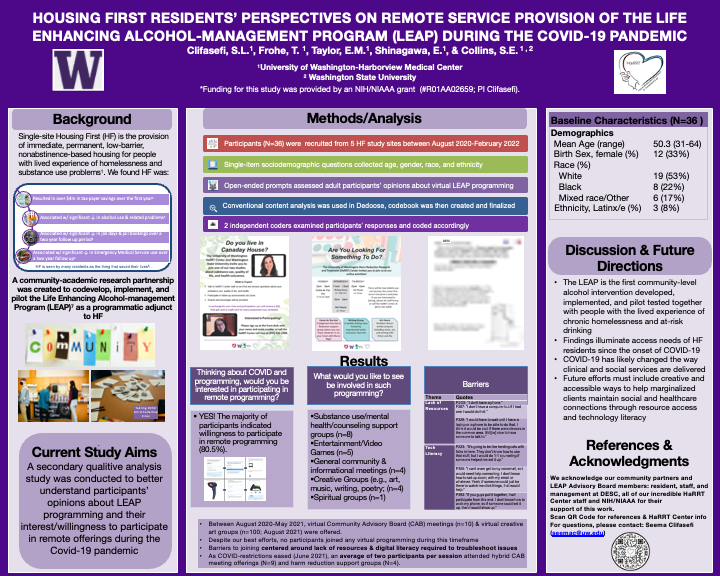
The West and East sides of the HaRRT Center are coming together to present at the 2023 Research Society on Alcohol (RSA) Annual Scientific Meeting on the HaRTC and LEAP findings! See our posters below: