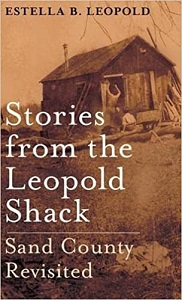
Even if you have never read A Sand County Almanac by the famous conservationist Aldo Leopold, you will enjoy and learn from this memoir by his youngest child.
In the first half of the book, Estella Leopold recounts the family acquisition of Wisconsin farmland, long abandoned, and the remodeling of a decaying barn on the site, so it could be used as a shelter on weekends. They named the barn The Shack.
Aldo Leopold developed the idea of ecological restoration. On his property he wanted to restore the soil and bring back the plants native to the area. The whole family, including the five children, worked on that project, beginning in 1936. Estella describes how her dad filed a sharp edge on the shovels each day before they all dug holes and planted hundreds of pine trees. For this and many other tasks, she makes it sound like they all had fun.
In chapters on each season of the year, the author combines these work activities with experiences with nature they all enjoyed. She tells of skating on the frozen river and seeing a muskrat swimming along under the ice with her. She recounts the many hours she savored being alone in the woods, and the times the children hid to watch the woodcock courtship dance. Aldo Leopold was a professor at the University of Wisconsin in Madison. The Shack was just a few hours from the family home, so the family could visit regularly and invite friends. These had to be tolerant friends, as amenities at the Shack were few. Water came from a hand pump outdoors. The outhouse earned the majestic name “The Parthenon.” Estella describes many nights of singing and guitar playing, with much Spanish music from her mother’s past.
Aldo Leopold set out to restore the prairie to its state before the land was plowed for farming in the mid-1800s. One springtime activity to that end was transplanting wildflowers (springtime because they had to be in bloom to be identified). Sources were unmown places along railroad tracks and country roads, and even private property that had been left unplowed. The family dug up, transported in a tub by car, and planted in their old cornfield prairie grasses and many perennial wildflowers.
In Chapter 7 the author describes the ecological restoration as well as the glacial history of the property. The parents and some of the children learned and recorded the Latin names of all the plants on the property, including the wildflowers they transplanted. The Leopolds had personal relationships with some plants. A few non-natives, like a lilac bush, were allowed near the Shack, because Mother (also named Estella) loved them. Natives they loved included wahoo, serviceberry, trillium, and aspen. Others they were proud to collect and see thrive: turkeyfoot, Indian grass, switchgrass, prairie phlox, and purple coneflower.
Concerned that a fire might wipe out all their planting, Aldo devised a system of protective fire lanes. The family, with helpers, laid tin sheets and supervised the flames with water buckets. Then they noticed that the prairie grasses grew better where they had burned. Years later they adopted the current practice of regular burning.
Chapter 8 recounts the “Continuing Process of Restoration” after Aldo’s death in 1948. He had acquired about 350 acres. Another 1500 acres have been added to what is now the Aldo Leopold Memorial Reserve. Several other Wisconsin prairies have been restored. There is an active study center on the property, and the Aldo Leopold Foundation now meets in the LEED-certified Leopold Center.
Each of the five Leopold children followed in their father’s footsteps by creating a Shack-like project in whatever state they lived. Estella’s work in Colorado led to the establishment of the Florissant Fossil Beds National Monument. She is now a professor of botany emerita here at the University of Washington.
The federal government recently announced plans to plant a billion trees to counteract global warming. It’s fun to think it all may have started with the Leopold family laboring over pine seedlings in the 1930s.
Reviewed by Priscilla Grundy for the Leaflet, September 2022, Vol. 9, Issue 9
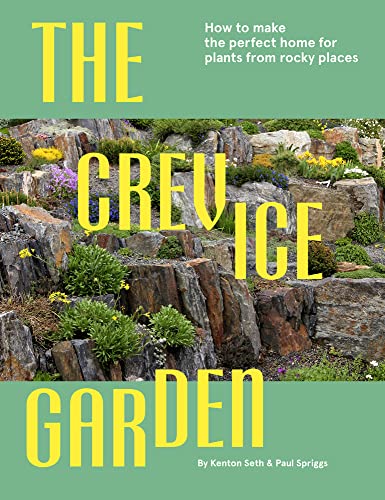 In May 2022, I visited the Denver Botanic Gardens. After I tore myself away from the array of tall bearded iris at the peak of bloom, I found nearby different renditions of the traditional rock garden. The rocks were not the smooth, roundish boulders but instead craggy slates, positioned vertically and close together, with only a limited cracks for the plants.
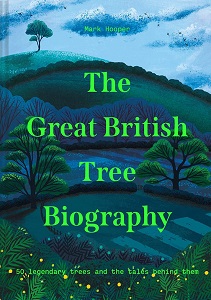 Read this book to have fun with tales, myths, legends, and historical facts about British trees. Mark Hooper says the book aims “to explore the space where social history meets natural history” (p. 9). Along the way he ties events familiar and unfamiliar to many individual trees.


 Before he was known as a landscape architect, Frederick Law Olmsted was best known for a series of articles he wrote for “The New York Daily Times” (now “The New York Times”) and later books he published about his travels in the southern United States between late 1852 and the summer of 1854. He was keen observer and reported quite accurately and in great detail on the economic and social structures, especially the practice of slavery.
 “A Clearing in the Distance” by Witold Rybczynski was published in 1999 but has stood the test of time. The author takes a personal approach, interjecting his opinions on the actions of his subject: “And now, I feel myself becoming impatient with Olmsted. Why can’t he just get on with it?”