Skip to content

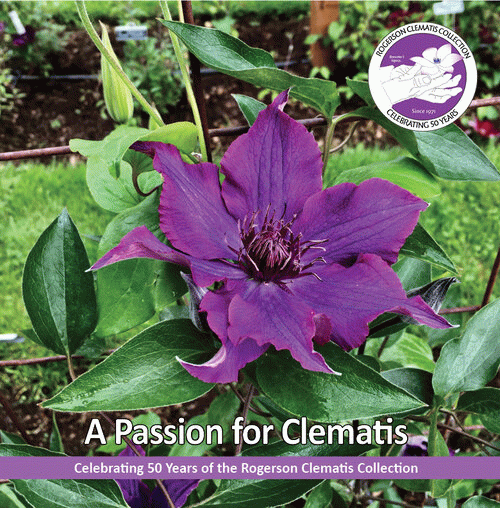
A Passion for Clematis: Celebrating 50 years of the Rogerson Clematis Collection

Brewster Rogerson (1921-2015) spent most of his academic career teaching English at Kansas State University.  The purchase of four clematis plants began the focus of the latter part of his life, leading after retirement to his move to Oregon for a climate more conducive to his favorite genus.
His efforts to develop a comprehensive collection is recounted in “A Passion for Clematis” by the Friends of the Rogerson Clematis Collection.  Now grown at the Luscher Farm, owned by the City of Lake Oswego, Oregon, this assemblage is one of the newer horticultural treasures to visit in the Pacific Northwest.

The garden is divided into many sections, all highlighted in this short book.  These include heirlooms more than hundred years old, species and cultivars from different regions of the world, and Rogerson’s favorite selections.  If one is overwhelmed by these choices, a beginner’s garden demonstrates several easy, widely available selections.

Rogerson’s comments in a letter to another avid collector will resonate with many gardeners: “Being no botanist by training, and only a rather clumsy gardener, I find I need to pick up everything I can from every clematis grower, big or little, I can find, and so far I’ve done pretty well.”


Excerpted from the Fall 2021 issue of the Arboretum Bulletin


Cultivated: The Elements of Floral Style

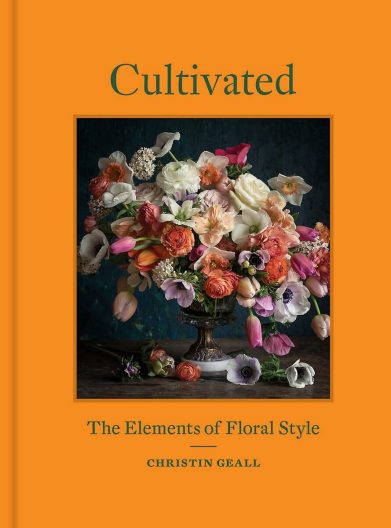
One tool that librarians use to organize books is the subject headings in catalog entries.  For “Cultivated: The Elements of Floral Style,” the single subject heading term as provided by the Library of Congress is “flower arrangement.”  While this choice is technically correct, this new book by Victoria, BC author and photographer Christin Geall is also a memoir, and explores deeper matters than most books with the same heading.

The author describes herself as like a magpie; she is drawn to many different topics.  Fortunately, she is skilled at combining those interests around the central subject of this book, and rarely strays off topic.  For example, gardening is very important to her and she encourages flower arrangers to grow their own material.  However, this is not a how-to book on gardening.  Instead, she recommends you find such a book, and then suggests some choices.

I learned many practical tips from reading “Cultivated,” including keeping a photographic record as part of your study.  A chapter on history provides insights from the baroque, the rococo, and the styles of other periods and places.  But resonant to me was Geall’s philosophical perspective shaped by the homestead she owned in her 20s on a tiny British Columbia island six hours from Vancouver.  During this time, she also visited Findhorn, a self-described ecovillage in Scotland known initially for applying spiritual principles to grow robust gardens.

She uses the lessons learned from all these experiences (including training in horticulture at Kew Gardens) to guide the purpose of her flower arrangements.  She encourages the reader to draw on all of life’s experiences.  “This book is both an aesthetic and personal inquiry–an exploration of history, culture, the senses, and my own understanding, which I hope might serve as tools for interpreting and appreciating floral designs in new ways.”

Excerpted from the Fall 2021 issue of the Arboretum Bulletin

Yungcautnguuq nunam qainga tamarmi = All the land’s surface is medicine : edible and medicinal plants of southwest Alaska

For 15 years, the Elisabeth C. Miller Library has been hosting an exhibit by the Pacific Northwest Botanical Artists every spring.  These artists keep alive a tradition of many centuries by creating scientifically accurate portrayals of the flowers, leaves, seeds, and other parts of plants, often with more detail and accuracy than a photograph.
One of the local, participating artist is Sharon Birzer.  Recently, she illustrated many of the native plants of southwest Alaska, published in “Yungcautnguuq nunam qainga tamarmi = All the Land’s Surface is Medicine.”  This new book is written by a consortium of experts in cultural anthropology, ethnobotany, and the Yup’ik language, and is based on a 20-year oral history project to preserve the stories of elders and their traditional way of life.

The book is divided equally into two parts.  The first is a catalog of the native plants used for food or medicine, organized by the time of harvest and starting with the plants that define the spring after long, cold winters.  One example is Mertensia maritima or Neqnirliaraat, literally “best-tasting things,” a plant I grow in my garden.  Although not widely used, “one Nelson Island woman reported collecting them before they flowered, cooking the stems briefly, and eating them with seal oil.”

The traditional tales of the plants and the land where they grow are collected in the second half of the book.  Quoting many of the elders, these entries are in English on the left page, and in Yup’ik on the right.  This includes “mouse foods,” caches of plants parts harvested and stored by voles and lemmings before the onset of winter, and an important source of food for humans.

Winner of the 2022 Annual Literature Award from the Council on Botanical and Horticultural Libraries.

Excerpted from the Fall 2021 issue of the Arboretum Bulletin

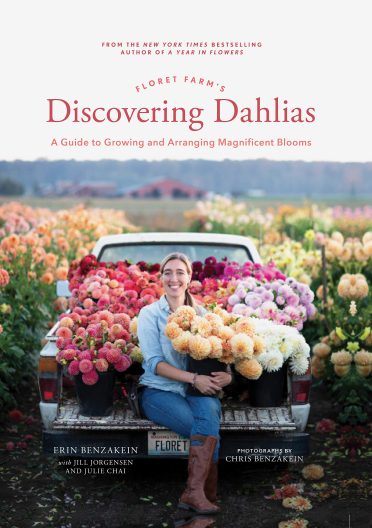
Floret Farm’s Discovering Dahlias: A Guide to Growing and Arranging Magnificent Blooms

We have several books on dahlias in the Miller Library collection, but none provide as much photographic detail on the different forms and the methods of growing, especially the harvesting, storing, and dividing of dahlia tubers as “Floret Farm’s Discovering Dahlias.”  This how-to section also has a demonstration of hybridizing and creating your own dahlia varieties.

As to be expected from Floret Farm, the use of dahlia flowers in arrangements is the heart of the book.  This includes a catalog of recommended varieties, divided by color.  These emphasize subtle differences.  For example, pink, coral, raspberry, peach, and blush each have a separate entry.

Excerpted from the Fall 2021 issue of the Arboretum Bulletin

Floret Farm’s A Year in Flowers: designing gorgeous arrangements for every season

“Floret Farm’s A Year in Flowers”, is an especially helpful book on flower arranging for those who prefer a structured teaching approach and lots of practical matters, along with inspiration.  To do this, Erin Benzakein and her co-authors use many comparison photographs.

An example is a full-bleed page of “warm” pinks on the left, contrasted with “cool” pinks on the right page, giving a clear insight to how the addition of a bit of yellow or blue makes an important difference in the exact shade.

Other pages demonstrate the different shades of green or the texture of foliage types.  Another important consideration is the stylistic functions of different shapes of flowers.  Some, by their substance, will be the focus of an arrangement.  Others will act in supporting or accent roles.

Following the basics are pages and pages of gloriously photographed arrangements, taken by Erin’s husband Chris Benzakein, accompanied by lots of details in the text on the components.

Excerpted from the Fall 2021 issue of the Arboretum Bulletin

Growing Conifers: the complete illustrated gardening and landscaping guide

John Albers has highlighted his garden of 20 years in Bremerton and his passion for sustainable gardening practices in two previous books. Now, he turns his attention to a favorite plant group: conifers, especially dwarf and small cultivars. He is very clear in his reasons for writing the book. “Given the horticultural and ecological importance of urban conifers, it is vital that all of us do our part to restore conifers to our urban environment.”

More than just a gardening book, “Growing Conifers” is a good introduction to the botany of conifers. The narrative description of each genus and species gives clues to help with identification, as do the excellent photographs by David Perry. It also explains the origins of the beloved dwarf forms, including many found in the Pacific Northwest, either as mutations in the wild or in nurseries.

The author walks the reader through the process of assessing a garden and developing a design, with the liberal use of suitable conifers. But he doesn’t stop there. He also gives careful instructions for planting and sustainable care of these long-lived plants, and even the basics of propagation.

The design elements also include good companion plants. An example being clematis, especially if they are species that come from lean soil, as Albers believes neighboring plants should share the water needs. However, “sometimes rules can be broken for the sake of a greater good […] for the sake of creating a beautiful garden vignette that warms the heart and soothes the soul.”

Excerpted from the Fall 2021 issue of the Arboretum Bulletin

Japanese Gardening: A Practical Guide to Creating a Japanese-Style Garden with 700 Step-By-Step Photographs

“Japanese Gardening: A Practical Guide” provides a long-needed book on how to apply the principles of Japanese style gardens on a small scale, allowing the incorporation of Japanese garden elements in a home garden.

This is done with a collection of projects that will engage the do-it-yourself gardener, and allow as little or much Japanese influence as desired.  Author Charles Chesshire and photographer Alex Ramsay “show you how to create a beautiful and individual Japanese garden.”

Excerpted from the Fall 2021 issue of the Arboretum Bulletin

Around the World in 80 Plants

[Around the World in 80 Plants] cover

I imagined Jonathan Drori’s world tour starring 80 plants would be interesting to a plant nerd like myself. Inspired by Jules Verne’s Around the World in 80 Days, Drori’s second book follows on the well-received Around the World in 80 Trees, but with more flowers and herbaceous subjects. I was not disappointed. The book is fun and informative with a perfect mix of botany, history, and culture.

I was surprised to learn that the common Rhododendron native to Turkey, which is invading natural areas of Western Scotland, produces toxic nectar. The honeybees that evolved with this Rhododendron aren’t harmed by the toxin. However, the “mad honey” created from this nectar causes low blood pressure and general feelings of wooziness in humans who eat it. Drori reports that the delicious but dangerous mad honey was used as a bioweapon against pursuing Roman soldiers in 69 BCE by a fleeing Persian army.

The country/plant associations are not always obvious nor necessarily plants native to the country or even the region. Scotland gets Rhododendron because it is so invasive that it is taking over the countryside there. One unusual tree representing the USA is the Cook Island pine, frequently planted in California, especially on college campuses. Part of the fun of this book is anticipating which plants represent which countries. Germany has entries on barley and hops, while Australia has the endemic grass tree (Xanthorrhoea), but also the opium poppy because it is the world’s largest legal supplier to the pharmaceutical industry.

Most of the included plants make an economic or cultural contribution to humankind, such as sugar cane, henna, wormwood, or yerba mate. Others, such as sphagnum moss or saguaro cactus, anchor an ecosystem . A few plants are simply botanically remarkable, such as Welwitschia growing in the harsh Angolan desert. It survives by collecting moisture from fog and Charles Darwin described it as the “platypus of the plant world” because it exhibits traits from both cone-bearing and flowering plants.

Drori’s writing style is clear and engaging. He teases us with just enough botanic and cultural highlights, and seldom writes more than two pages of text per entry. I would guess that most of these 80 plants could each have their own book filled with history, lore, and botany. French illustrator Lucille Clerc really brings the entries alive with captivating color drawings of plant habit and flowers, but also little sketches of products made from the plants, such as thread on spools and a bottle of linseed oil for the entry on flax. The illustrations for lotus were so expansive that they required a two-page spread without any text.

Published in Leaflet for Scholars Volume 8, Issue 9, September 2021.

The Kinfolk Garden: How to Live with Nature

[book title] cover

When I first picked up The Kinfolk Garden, I was impressed with the breadth of photographs capturing the many ways people engage with plants in diverse settings of gardens and in homes. Supplementing these photographic essays is text that is brief, but I found effective in capturing the individual and collective passions of those profiled.

Kinfolk.com describes itself as “a leading lifestyle authority.” Founded in Portland, Oregon ten years ago, it is now based in Copenhagen and publishes a quarterly magazine, social media posts, art prints, and several books including The Kinfolk Garden.

Aside from a few short sections, this is not a how-to book, nor is it about the plants to be found by trekking into nature. Instead, it gave me insights into the human drive to use plants for nurturing in ways both casual and immersive. This is a passion that spans all cultures, all climates, and all peoples.

An example is Ron Finley, who is described as a community garden activist in poorer communities of Los Angeles. He sees gardening as a way to foster self-sufficiency that “can also positively disrupt the social and political systems that perpetuate self-defeating cycles in low-income communities.”

Umberto Pasti, an Italian novelist, has embraced the plants and people of northern Morocco, developing a garden near Tangiers that rescues endangered native flora. He has discovered this also helps rescues the native people who, like the plants, are endangered by industrialization. More on Pasti and his work can be found in the book Eden Revisited.

The subtitle of The Kinfolk Garden is “how to live with nature.” I think a more complete description would be “how to bring nature, specifically plants, into everyday life.” Sometimes, the separation between human life and plants in nature is not very wide. Eduardo “Roth” Neira designed and built a hotel and museum near Tulum, Mexico and yet avoided chopping down trees in the dense rain forest setting. How to do this? “Build around them.”

Published in Leaflet for Scholars, Volume 8, Issue 8, August 2021.

Tokachi Millennium Forest : Pioneering a New Way of Gardening with Nature

[Tokachi Millennium] cover

I have always wanted to travel to Japan to experience the bustling energy of Tokyo and the serenity of ancient Buddhist temples in Kyoto. Now after reading about Tokachi Millennium Forest I know I have to include the northern island of Hokkaido on my itinerary. Why did the owner of a private parcel comprised of second growth forest and former agricultural fields hire a British garden designer? Because the lofty goal of creating a carbon sequestering ecological park that would be sustainable for 1,000 years, while also charming urban Japanese visitors required cross-cultural collaboration. Designer and author Dan Pearson’s expertise is creating ecologically sensitive, naturalistic landscapes. He worked with Japanese landscape architect Fumiaki Takano to fulfill the vision of site owner and newspaper magnate Mitsushige Hayashi starting in 2000. In a nutshell, Hayashi’s vision is to rekindle the visitors’ connection to nature in order to instill an ethic of environmental responsibility and love for the mountains and forests. Head gardener and co-author Midori Shintani – profiled in Jennifer Jewell’s The Earth in Her Hands – joined the team in 2008.

The book is elegantly designed with beautiful color photographs. The opening chapters relay how Pearson first traveled to Japan and how he was introduced to the project. It includes a brief history of the island, mountains and forest, and the reason behind Tokachi Millennium Forest. Pearson writes the main body of text while Shintani contributes essays on Japanese culture and how the culture is manifest at Tokachi. Pearson conveys high level design concepts such as sense of place and ecology, purpose and mission. He also includes very specific horticultural details such as how the native, yet aggressive Sasa bamboo is cut back in the forest every spring in order to give other native plants a chance to regenerate.

The following chapters describe each of the park’s main regions, such as the Forest or the Earth Garden with its waves of grassy, sculpted landforms that relate to the looming mountains. The Productive Garden contains vegetables, herbs, and fruits for the café as well as roses to delight visitors. Native flowers mix with carefully selected cold hardy perennials from temperate regions of the world in the Meadow Garden. Pearson and Shintani continue to meet for a week every year to discuss and plan maintenance strategies and required edits. The editing process means perennials that are too dominant either get deadheaded so seeds don’t spread or potentially removed entirely, while less vigorous or short-lived plants are encouraged to reseed or are propagated and replanted the following spring. For example, Thermopsis lupinoides was edited out while Verbascum ‘Christo’s Yellow Lightning’ was added later. I question how the complex, perennial-filled Meadow Garden will be sustainable for 1,000 years given the work required to keep it looking presentable through the short growing season, but I am eager to see it in person. It must be magnificent to walk through the flower-filled Meadow with the mountains framing the scene. The book concludes with a complete list of plants used in the Meadow Garden with notes on which ones failed to thrive or were removed for being too dominant.

Published in The Leaflet, Volume 8, Issue 8, August 2021.