![[Play the Forest School Way] cover](https://depts.washington.edu/hortlib/graphix/playtheforestschoolway.jpg)
Time in the woods refreshes your spirit and opens your mind. It cultivates appreciation, discovery, and possibilities.
In a woodland setting, Play the Forest School Way: Woodland Games, Crafts and Skills for Adventurous Kids offers hands-on learning experiences for a wide range of children from preschool to about 11 years of age. The Forest School philosophy strengthens confidence and builds self-esteem and social skills through connecting with nature. The movement developed in the 1990s was initially inspired by the play-based, nature-centered teaching of Scandinavia, known in Denmark as friluftsliv (‘free open-air life’). In addition, it draws on the learning theories of Rudolf Steiner and Maria Montessori, as well as British Scouting and Woodcraft Folk in the United Kingdom.
Chapters include Nature Explorers, Forest Arts, Survival Skills, and Wildlife Team Games. Inventive and fun activities include making a journey stick, traditionally made by Aboriginal people in Australia to record their travels and help retell their stories. Headdresses can be transformative. Creating natural headdresses from leaves, twigs, acorns, feathers and other finds relate to ceremonial headdresses such as those worn by ancient kings and queens or those worn at carnivals or other celebrations. Survival skills include essential knots, a prehistoric skill that is certainly still important today – even for tying one’s shoelaces, for example. Wildlife team games can be ice breakers, helping to build relationships, confidence, and a sense of belonging. The historical references throughout the book give an ancestral link to interacting with the environment.
Peter Houghton and Jane Worroll in the UK are particularly well qualified as authors of Play the Forest School Way. Peter is an artist in woodwork and other media as well as a leader of Forest School sessions. Jane has degrees in ecology and environmental conservation, and as a Countryside Ranger has managed habitat, monitored protected species, and led volunteers.
Play the Forest School Way helps to keep holistic learning in nature alive, reminding us anew about life experiences that are rooted in the real world.
Published in the May 2018 Leaflet Volume 5, Issue 5.
 I reviewed “What’s Wrong with My Plant” in the Winter 2017 issue of the Bulletin, but I didn’t realize that this 2009 publication was just the beginning for the writing team of David Deardorff and Kathryn Wadsworth of Port Townsend, Washington. They have published four more “What’s Wrong with My…” books, including “Vegetable Garden” (2011), “Fruit Garden” (2013), “Houseplant” (2016) and “Marijuana Plant” (2017). The structure of each is similar to the original with chapters to identify the symptoms and causes of the problems, and separate chapters laying out organic solutions or preferred cultural practices.
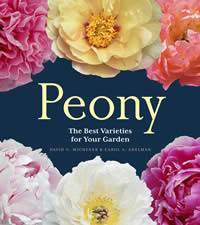 Carol Adelman and her husband own a peony nursery in Salem, Oregon. She has teamed up with David Michener of the University of Michigan to write “Peony: The Best Varieties for Your Garden.” Much of this book is a beautiful photo album of the most highly regarded peony hybrids, including tree and intersectional (or Itoh) peonies. While it is easy to thumb quickly through these images, you will miss a lot of information in the notes, including comments on the foliage quality or awards that designate the selection as good for landscapes.
![[Our Native Bees] cover](https://depts.washington.edu/hortlib/graphix/ournativebees.jpg)
 It is no secret that Barbara Blossom Ashmun is an avid gardener. Besides having a floriferous name, there are the intimate titles of her memoirs: “Married to My Garden” (2003) and “Love Letters to My Garden” (2017). This Portland garden designer and writer did not grow up as a gardener, but instead found her calling well into adulthood. A divorce and the desire to leave the world of a social worker helped this process.
 “The Northwest Garden Manifesto” by John Albers is a new book for our region. While the title may conjure up images of gardeners marching rake-to-rake for their causes, this instead is a very solid and comprehensive gardening book that keeps closely in mind the bigger ecosystem surrounding any private garden. Divided into three broad sections, the book asks you to assess what you have, then make changes that are sustainable (for your garden) and healthful (for you), and finally – for all your actions – think outside the property line.
 I always look forward to new books intended for Pacific Northwest gardeners. Paul Bonine and Amy Campion’s “Gardening in the Pacific Northwest” has been long anticipated, and it doesn’t disappoint. As explained in the introduction, this book is mostly from Bonine’s perspective, as he grew up here and has gardened in this region for many years. Campion did most of the excellent photography.
![[RHS Genealogy for Gardeners]]cover](https://depts.washington.edu/hortlib/graphix/RHSGenealogyforgardeners (2).jpg)
![[Saving Tarboo Creek]]cover](https://depts.washington.edu/hortlib/graphix/savingtarboocreek.jpg)
![[Companions in Wonder]]cover](https://depts.washington.edu/hortlib/graphix/Companionsinwonder.jpg)