Polymer Optical Fiber Manufacturing
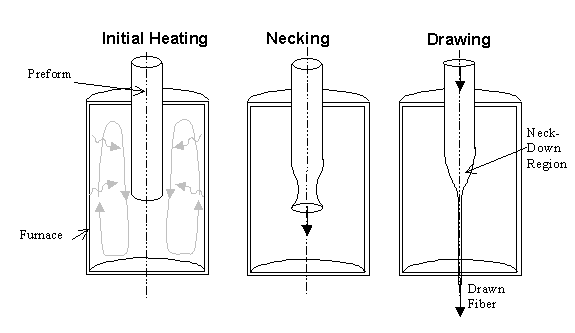
As shown in below, optical fiber
is produced by a drawing process. A large diameter preform is heated in a
furnace by natural convection and thermal radiation. When the preform is
sufficiently hot, it necks-down under its own weight. After the lower end
is removed, tension is continuously applied to draw optical fiber.
The quality of POF is dependent on the manufacturing conditions. In particular, variations in the final fiber diameter and residual stresses from drawing can affect the fiber's optical preformance. To minimize these effects research has been carried out in order to understand the heat and mass transfer phenomena associated with the initial preform heating and the steady-state fiber drawing.