The African Union, in an August 2025 report, estimates that illicit financial flows (IFFs) cost countries in Africa $88 billion per year. IFFs are illicit or illegal funds derived from criminal activities and/or illegal tax practices that are moved or transferred across countries, including international trade manipulations (the most common), tax evasion, smuggling, government corruption, and money laundering. Nearly half of these losses come from the ‘extractive sector,’ mostly mining. IFFs are fundamental drivers of economic injustice, and enormously undermine…
Tag: decolonization
Barred from Healing: Denial of Qualified Medical Care Deepens Humanitarian Crises
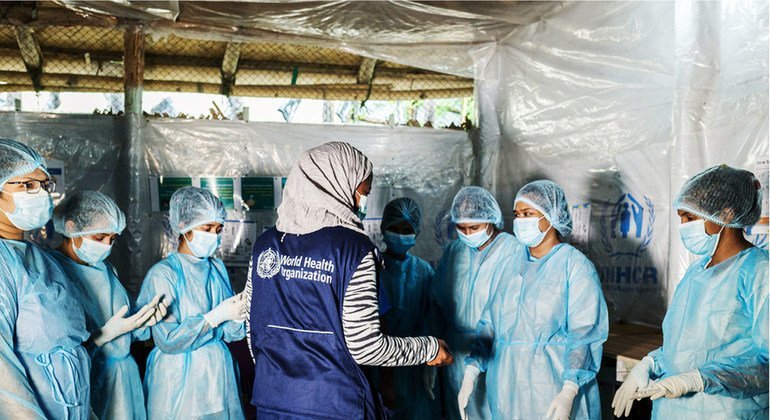
This article is written in Arabic and English. For the English version, please see below. في مناطق النزاع حول العالم، يمكن أن يكون الوصول إلى المهنيين الطبيين المؤهلين هو الفارق بين الحياة والموت. ولا يوجد مكان يتجلى فيه هذا الأمر أكثر من غزة، حيث أدى الحصار المتعمد على العاملين في مجال الرعاية الصحية الماهرين إلى تفاقم كارثة إنسانية متزايدة. أحد الحالات الرمزية هو حالة الدكتور محمد الموسوي محمد طاهر، الجراح البريطاني-العراقي المتخصص في جراحة الصدمات والمعروف بمساهماته الاستثنائية خلال مهمة…
Re-imagining foreign aid
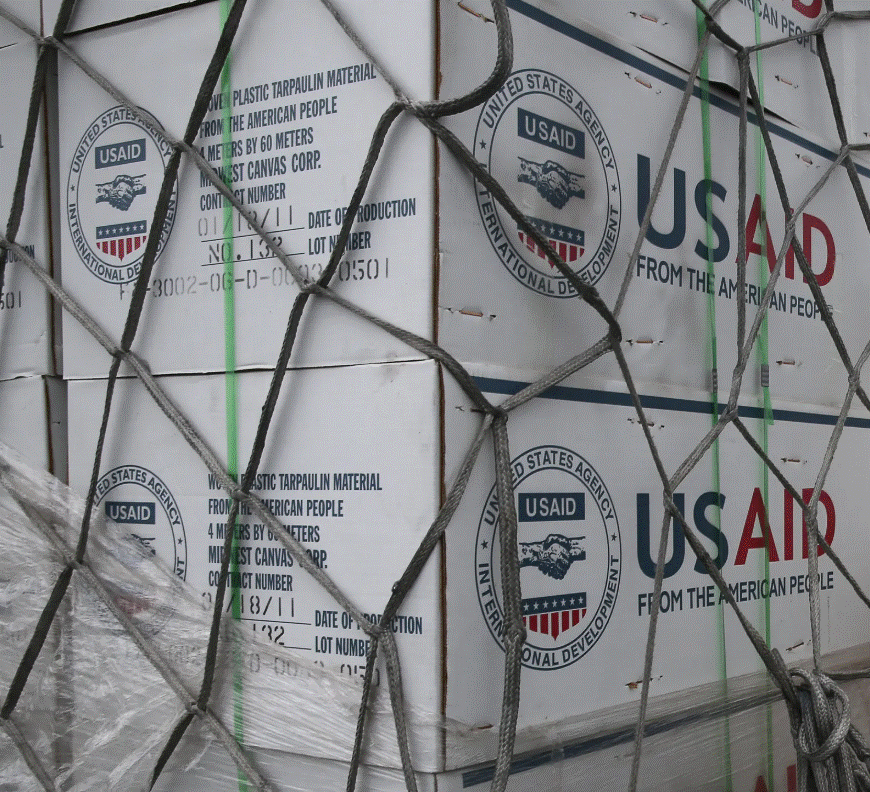
Farah Stockman in her NY Times editorial decries the chaos and devastation from cuts in US foreign aid, but also calls for re-imagining a foreign aid that addresses serious flaws inherent in the current forms of aid. We know that local groups (especially under-funded government health systems) are far more cost-effective and attuned to what communities need – and stay long after foreign workers depart. Cutting out the middlemen is essential, and more cost-effective – as leaders in the global…
Moving Beyond Allyship in the Decolonization of Global Health
The University of Washington School of Public Health’s Alison Wiyeh, MD, MSc (PhD student in the Department of Epidemiology with a concentration in public policy and management) and Ferdinand Mukumbang, PhD, MS (Assistant Professor in the Department of Global Health) recently published a correspondence in The Lancet, “Global South leaders should strengthen strategic capacity“. The commentary describes the limitations of relying on Global North allyship in the decolonization of global health. Wiyeh and Mukumbang’s argument is particularly salient following current…
IMF imposing austerity on new Sri Lanka government
The new wave of IMF-imposed austerity measures is now reaching Sri Lanka, and their newly elected center-left government is challenging the usual IMF terms of social welfare cuts, rise in the VAT, and other measures that have the effect of doubling the cost of living and reducing the real wages by half for those that have formal employment. These are the standard IMF free-marked driven policies that typically benefited the elite in the country, while the burden typically falls on the…
Decolonizing must challenge globalized systems of wealth extraction and profiteering.
The authors of a February 2024 Bulletin of the World Health Organization article call for global health actors to challenge current forms of corporate and financialized colonialism that operate through globalized systems of wealth extraction and profiteering. They note that most of the current narrative on decolonization focuses on correcting power imbalances between health actors in high-income and low-income countries and on challenging ideas and values of some wealthy countries that shape the practice of global health. The authors of…
Tim Schwab & “The Bill Gates Problem” Town Hall Seattle Podcast
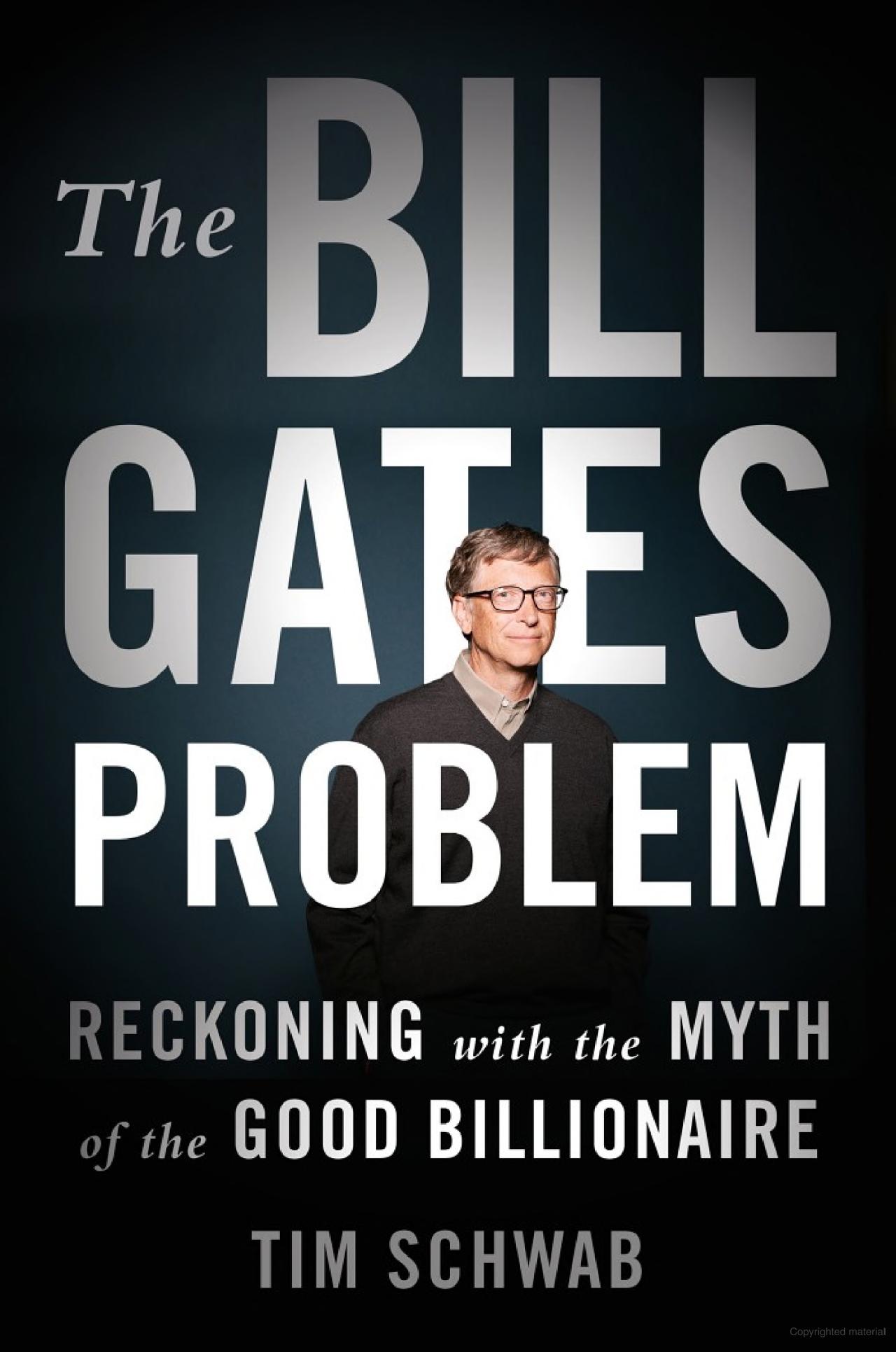
Tim Schwab, author of the recently published “The Bill Gates Problem: Reckoning with the myth of the good billionaire,” headlined a Seattle Town Hall event in December 2024 sponsored by the Community Alliance for Global Justice. In this podcast of the event, Tim explains how Bill Gates’ uses his foundation as a vehicle for unaccountable personal power and influence, using taxpayers dollars. He describes how dogmatic belief in the primacy of the private sector and their patent interests and the…
Could you patent the sun? How vaccine patent waivers would save lives
The world had the chance to truly treat COVID-19 as a common problem and respond to it in an equitable and just manner. At the beginning of the COVID-19 pandemic, politicians, mainstream media and celebrities in the West declaring the disease the “great equalizer” – implying that this novel virus would affect everyone regardless of their position, wealth, race, or power. However, as the pandemic progressed, it became abundantly clear that this was not the case. Instead, the development and distribution of several effective…
Hollow Promises and True Adversaries
Decolonization in global health has gained popularity as a trendy topic, but the language of equity and justice falls short when it comes to practice. Richard Horton’s “Offline: The case for global health” (Lancet, May 2023) pushes us to struggle against deeper issues in our field, including power and money imbalances, unearned privileges, racism, and the omniscience to decide the narrative and tell the global south what it needs. While global health professionals engage in internal battles, the true adversaries…
Fossil Fuel Shackles: How Wealthy Nations Hook Developing Ones
Introduction In the realm of global environmental justice, a disconcerting phenomenon has gained prominence in recent times: the entrapment of impoverished nations by their wealthier counterparts into a relentless dependence on fossil fuels. (1) This practice, though obscured by economic negotiations, perpetuates a cycle of environmental degradation and inequality. By examining pertinent examples and evidence, this essay aims to illuminate the detrimental consequences of this pattern, exposing how such actions hinder both sustainable development and the global fight against climate…