
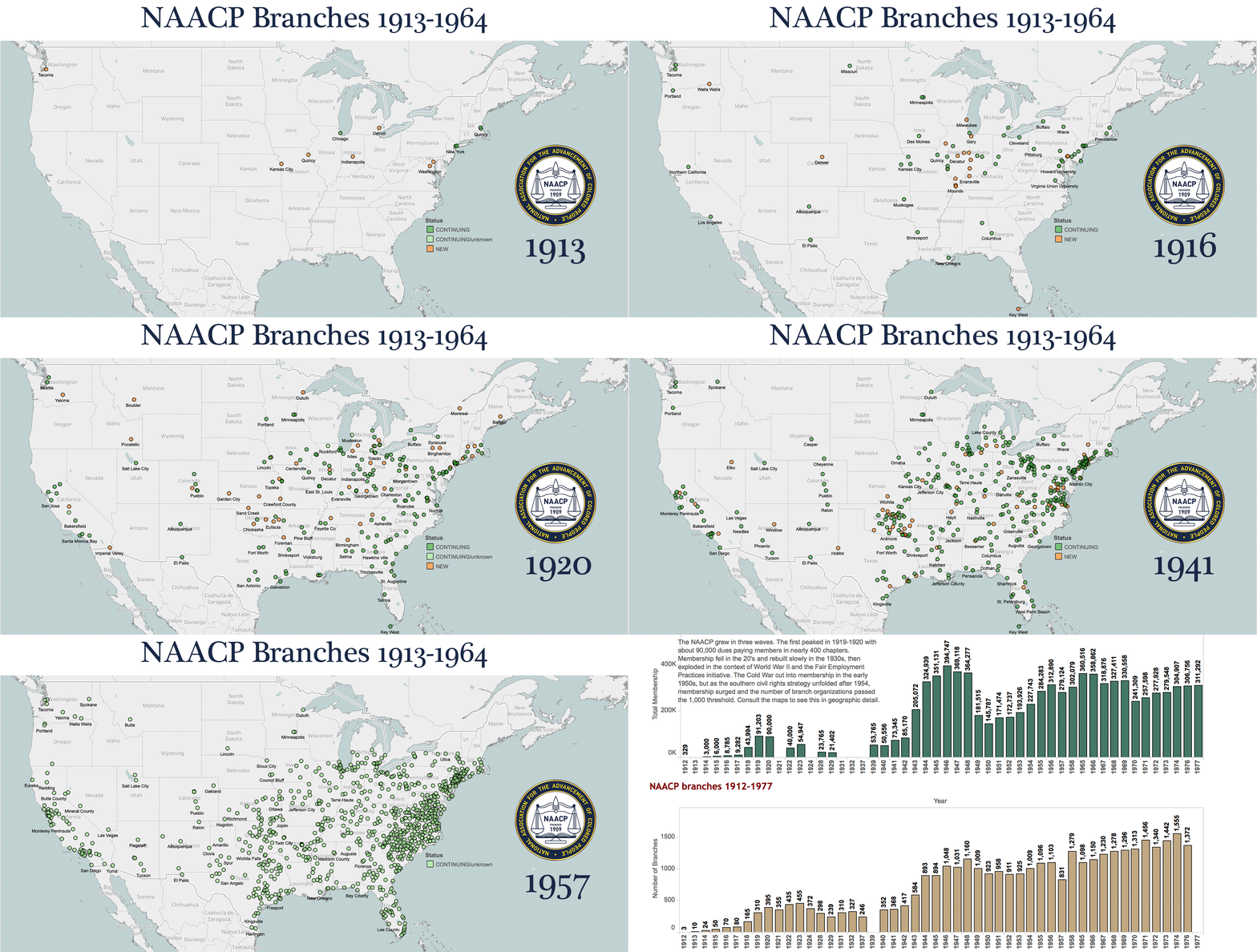
 see interactive map below
Many social movements come and go, but for more than a century the NAACP has been essential to struggles for racial justice and civil rights. Founded in 1909, the National Association for the Advancement of Colored People grew quickly, setting agendas and developing tactics that propelled the civil rights movement through the 20th century. Scholars emphasize the organization's national initiatives, the political lobbying and publicity efforts handled by the headquarters staff in New York and Washington D.C. and the brilliant court strategies developed by the legal team based for many years at Howard University.
But from an early date, the NAACP was a grass roots organization with a mass membership based in hundreds of communities across the nation. NAACP local branches have always been key to the organization's endurance and effectiveness. When, in its early years, the national office launched campaigns against the vile racist movie, Birth of a Nation, it was the local branches that carried out the boycotts. When the organization fought to expose and outlaw the terrible crime of lynching, the branches carried the campaign into hundreds of communities. And while the NAACP Legal Defense Fund developed a federal court strategy of legal challenges to segregation, many branches fought discrimination using state laws and local political opportunities, sometimes winning important victories.
Those victories were mostly achieved in Northern and Western states before World War II. When the Southern civil rights movement gained momentum in the 1940s and 1950s, credit goes both to the Legal Defense Fund attorneys and to the massive network of local branches that Ella Baker and other organizers had spread across the region.
Most important, it was in the local organizations that the great work of building a culture of Black political activism was carried on. High rates of political engagement and activism of many different kinds has been the story in African American community life and the key to progress in civil rights struggles throughout the last century, and it has a lot to do with the persistent efforts of grass roots NAACP chapters.
We are developing data and maps and charts that show the changing geography of NAACP grass roots activism. Below are several sets of visualizations. In addition, we are pleased to publish Reading "Along the Color Line" -- NAACP Reports from Black America in 1916 and 1917 an innovative project by Tyler Babbie.
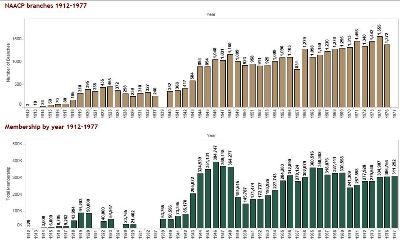
NAACP branches and members 1912-1977
Here are six charts and maps showing the growth in membership and the spread of NAACP branches. Detailed membership numbers for individual chapters are shown for selected years. Charts show the changing regional distribution of branches.
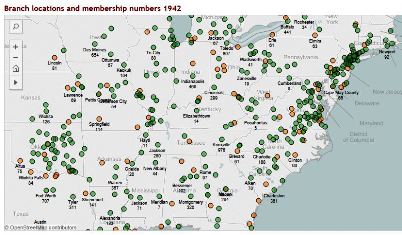
Branch activities year by year 1912-1923 and databases of branches 1924-1964
Six maps and databases provide fuller information about branch activities, officers, and membership. The first map shows branch activities in the first decade and a half, up to 1923. In addition, here are maps and searchable databases of branches, officers, and membership numbers for all available years 1912-1964.
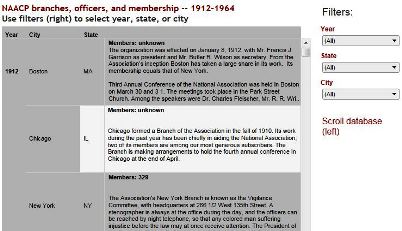
NAACP database of branches, officers, membership 1912-1964
This interactive database accompanies the NAACP maps and charts.
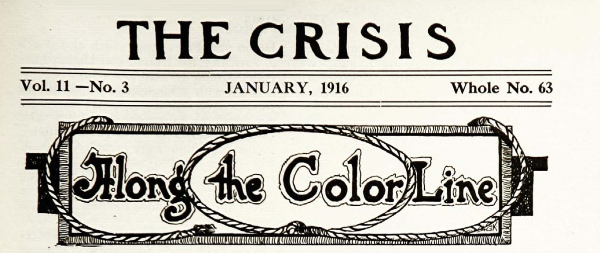
Reading "Along the Color Line"
NAACP Reports from Black America in 1916 and 1917
By Tyler Babbie
In its early years, The Crisis, the NAACP’s monthly magazine edited by W.E.B Du Bois, sought to survey events of significance in African American communities across America. In a regular feature, initially called "Along the Color Line," Du Bois culled news from correspondents and published more than 100 short news reports each month under headings that included education, industry, political, church, military, personal, social uplift, and music and art. Here we map and display more than 1,800 entries published in 1916 and 1917. They provide a sampling of activities in several hundred Black communities during those pivotal years and tell us even more about what Du Bois’ wanted NAACP members to know about those activities..