




Don’t miss:
Click Here to Register and for More Information
2026 Huntington’s Disease Education Day
Thank you for attending. Recording and slides from the day can be accessed in Past Events on our Events Page
See you later this month in Phoenix, AZ
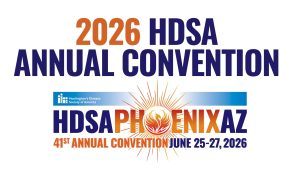 June 25-27, 2026
REGISTRATION LINK HERE
*Tickets for the Convention are sold out. There is a waiting list available, please e-mail convention@hdsa.org to add yourself to the waiting list*
KEY HIGHLIGHTS:
Educational workshops and breakout sessions led by experts in the field
Networking opportunities with others impacted by HD
Inspirational keynote speakers sharing their unique perspectives
Updates on the latest research and advancements in Huntington’s disease
Don’t miss this opportunity to be part of an empowering and informative event that strengthens the HD community and fosters hope.

HDSA is now accepting scholarship applications to help individuals and families attend the 41st Annual HDSA Convention in Phoenix, AZ (June 24–28, 2026). Scholarships may include support for travel reimbursement, hotel accommodations, and Convention registration (including the Gala), depending on the scholarship category and eligibility.
All applications must be submitted by midnight (ET) on Sunday, March 8, 2026. Applicants will be notified of decisions by March 20, 2026. Please note: application information is confidential and reviewed only by HDSA scholarship committees.
Click here for complete details and eligibility criteria.
Questions? Contact Convention@hdsa.org.
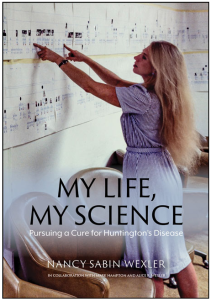
NEW YORK (May 6, 2026) — One of the most influential figures in modern genetic research, Nancy S. Wexler, PhD, led the pioneering fieldwork that helped make possible the discovery of the gene responsible for Huntington’s disease, a fatal, hereditary neurodegenerative disorder. Now she brings her personal journey to a wide audience in her memoir, My Life, My Science: Pursuing a Cure for Huntington’s Disease, available nationwide.
For decades, Wexler has stood on the frontlines of the genetic revolution, engaging with such hot-button issues as the ethical use of genetic information and the promise and peril of predictive gene testing. During the search for the Huntington’s disease gene, she helped create new forms of collaboration while encouraging and mentoring several generations of researchers, especially women.
But her scientific mission began with a personal revelation. At age 23, she learned that her mother Leonore’s jerky movements and gradual withdrawal into depression and anxiety were due to a hereditary illness, the same disease that had killed Leonore’s father and all three of her brothers. Wexler also learned that she and her sister each faced a 50–50 chance of developing it themselves. Rather than retreat, she embarked on a lifelong quest to understand and ultimately defeat the disease.
Wexler draws readers into her experiences moving among the halls of government, university labs, lecture halls, and the impoverished barrios and stilt villages around Lake Maracaibo, Venezuela—home to the largest concentration of Huntington’s disease in the world. She returned there with a team every year for 22 years to help unravel the mysteries of the disease. In her memoir, she shares both the rewards and the toll of that quest, including her private struggles over whether to have children and her gradual realization that she, too, was developing the disease she had spent her life trying to cure.
Now living with Huntington’s, Wexler offers an unflinching account of resilience, purpose, and hope.
“This book is the story of a life shaped by urgency—the need to understand a disease that affects my family and that of so many others,” said Nancy Wexler. “Science gave me a way to fight back, but it was love—for my mother, my family, and this community—that sustained me.”
The memoir also highlights the role of family, including her father, psychoanalyst Milton Wexler, who established what is now the Huntington’s Disease Foundation, and her sister, historian Alice R. Wexler, with whom she collaborated on this book, along with writer Mark Hampton.
All author royalties from My Life, My Science support the Huntington’s Disease Foundation’s ongoing efforts to fund research and improve the lives of those affected by the disease.
Praised as “a lesson in courage, fortitude, heroism, and above all…love” by Carol Burnett, the book offers a powerful window into both the scientific process and the human realities behind it.
About the Author
Nancy S. Wexler, PhD, is the Higgins Professor of Neuropsychology at Columbia University Vagelos College of Physicians and Surgeons and president of the Huntington’s Disease Foundation. Her work identifying the genetic basis of Huntington’s disease has earned numerous honors, including the Lasker Award for Public Service and the Cold Spring Harbor Double Helix Medal.
Book Details
My Life, My Science: Pursuing a Cure for Huntington’s Disease
By Nancy S. Wexler, PhD, in collaboration with Mark Hampton and Alice R. Wexler
Publication Date: March 10, 2026
Publisher: Cold Spring Harbor Laboratory Press
Available via Amazon
and
Cold Spring Harbor Laboratory Press
Our Center of Excellence
Our multidisciplinary team is led by neurologists (neurogeneticist and movement disorder specialists) and includes a social worker, nurse, genetic counselors, clinical coordinator, research coordinator, patient navigator, and consulting psychiatrist.
Our Mission
- Enhance the quality of life of patients and families affected by HD by providing the highest level of education, compassionate evaluation and supportive interdisciplinary care.
- Collaborate with health care providers, caregivers, and staff in facilities providing care for individuals with HD (such as adult family homes, assisted living and skilled nursing facilities).
- Provide patients and families with up to date information about clinical trials and research.
Thanks to the generous support of the Friedman family, we have been able to spearhead important HD advocacy initiatives across the state of Washington, including the launch of this website. With their help we aim to bring both awareness of and resources for families impacted by HD in the Pacific Northwest.