_(cropped)__full__full.jpg)
__ex-sm.jpg)
Kimberley Rettig, M. Arch, is a retired intern-architect and local community member. Throughout her career, she created hand-drawn renderings and floor plans for home and urban development projects. Her craft shifted into more creative territory as she found that making art helped her process her experience of illness across different stages of her life.
Rettig’s book, titled Art in Mind, is a compilation of her artworks that she created as a therapy to manage her symptoms of bipolar disorder and mild cognitive impairment, over decades. “I close my eyes and start to sketch,” she says. “I find it therapeutic and validating to spend my time that way.” In the book, she includes prose that interprets each image.
Rettig found the Memory Hub through art exhibit opportunities. In 2024, her paintings were featured in the Memory Hub’s Garden of Inspiration exhibit and Frame of Mind exhibit.
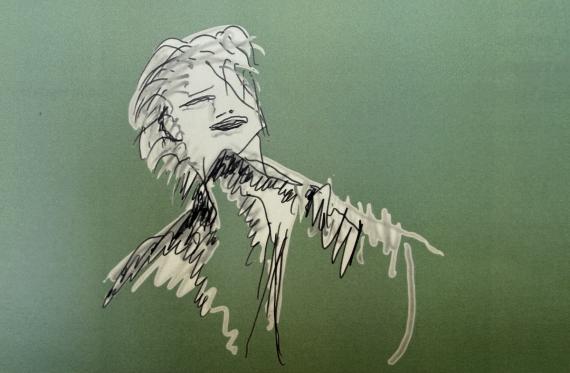
I Sight. 2019, Digitized Pen
My thoughts form a committee to distinguish between past, present, and future.
Residing in the present offers a bundle of opportunity and encouragement!
A glimpse of the future captures what is forthcoming.
The clouds invite the sun to show itself every morning.
They put it to sleep every night.
A constant of time! (Excerpted from Art in Mind)
Rettig notices that the physical act of drawing does something special for her brain. “I see photographs I’ve taken,” she says, “but I often can’t share specifics about what’s in the photos in conversation. But in many of my drawings, I can remember what was happening and share the story behind the art. My recall is better with things I’ve drawn.”
For Rettig, art is a way to combine joy and creativity to create new meanings, whether it is the transformation from a state of illness to recovery (Rise), or the act of assembling pieces of hope (Round About). “That’s the gift of art; it lets me interpret my experience and share reactions with others,” she says.
_(cropped)__full__sm.jpg)
Rise. 2004, Ink Wash
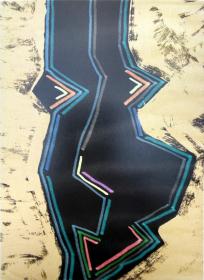
Face Line. 2017, Pen and Acrylic
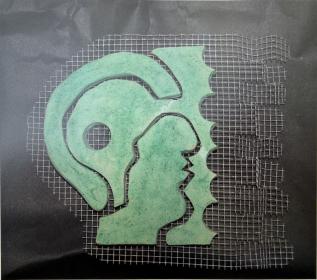
Round About. 2014, Clay over Mesh Wire
Rettig hopes that her story can motivate others to use art or writing as an approach to living with memory loss. “Often we are unable to put our emotions into spoken words. Thus, creativity serves as a therapeutic vehicle for wellness,” she writes in Art of Mind.
Currently, Rettig is maintaining and developing her website at artinmindkr.com. She continues to share copies of the book with professionals and colleagues and is researching more publication channels to reach more audiences. A copy of Art In Mind is in the Memory Hub Library for visitors to enjoy. •

__media-listing.png)


