
Enter your username and password below

Not registered yet?   Forgotten your password?

Ocean Acidification

In addition to the famous impacts of atmospheric carbon on global warming, there is an equally worrisome effect of carbon dioxide on the oceans: ocean acidification (or OA for short). Here at I2SEA we have a series of resources about OA, including Our Acidifying Ocean, which is an introductory activity and virtual lab (note: now mobile compatible!).

A student suggested that we start a conversation topic about OA, and here it is! Have you heard about Ocean Acidification? If so, are you worried about it? How do you think we can best raise awareness about it among your fellow students and the general public? Have you seen particularly good links or films about OA that you would like to share? What are you doing to address the problem?


You must be logged in in order to post.

Ocean Acidification

Recent posts:

nora123   2024-11-18 14:50:06 (Last post: 2024-11-20 18:31:39)
The ocean is dying

Ocean acidification is no joke. So many different sea animals are going extinct, many of these are keystone species. For example coral reefs are a big concern because they are going through mass extinction, this is because of the carbon getting into the ocean and heating it up. This happens because the carbon is reducing the ph levels and making the ocean more acidic which corals react very poorly to because the water is so warm, the coral will expel the algae that lives in their tissues and the coral will turn white, if the algae doesn’t come back the coral will die. This can happen in 4 weeks if the water goes up by 1 degree celsius, if this keeps happening we will have no coral in the future and coral reefs are a keystone ecosystem for so many species.

ashaw   2024-11-18 15:01:19

I completely agree with this. Ocean acidification needs to be talked about more so that a difference can be made. The longer we wait, the harder it would be to come back from our mistakes. Keystone species are a crucial part to our ecosystems and many more species will die if we keep doing what we are doing. Our planet is warming at such an alarming rate, organisms don't have time to evolve and adapt to these new circumstances. The last time the earth's climate changed this much there was a mass extinction. We need to worry about our carbon emissions now, so that in the future coral still exists.

ella223   2024-11-18 15:06:47

I agree with what you are saying nora. The oceans have never been this warm and I don’t think they will ever go back down. Even if the feature we reduce the amount of carbon we produce we can’t bring the coral back to life. We have to take action now if we want to save our oceans. I’m fortunate enough to have gone snorkelling before and see how beautiful the coral is. I and assume everyone else wants to be able to go snorkelling with their own kids, and not have to tell them about them like we talk about dinosaurs today.

Mlaurence   2024-11-20 18:31:39

I agree with everything that u guys are saying. There is absolutely no way we can fight a problem most people don’t even know is happening. Most people hear about oceans being polluted by micro plastics but not how the fundamental chemistry of our oceans are being changed. And un like most climate issues where there are a hole bunch of different causes we know that this is being caused by an increased amounts of carbon in the atmosphere. Which causes the ocean to heat up. People say it’s hard to fight for something you can’t feel or see happening. This is why the worming of the planet is being so strongly fought for but you can see the impacts of worming oceans. When you see the news that says we are in a mass extinction event and you go back to your favourite scuba diving or fishing spot and there are no fish and the coral Reeves are bleached. Or u dip you feet in the ocean and don’t feel that familiar numbing cold. Our every impact is shown all around us and if we are going to solve this problem you can’t look away.

Click to reply
Char B   2024-09-29 12:52:17 (Last post: 2024-10-25 07:12:25)
Combat Ocean Acidification! Save the Creatures!

Combating ocean acidification is crucial for the health of marine ecosystems and the livelihoods that depend on them. As carbon dioxide levels rise, more of this greenhouse gas is absorbed by the oceans, leading to a decrease in pH levels and disrupting the delicate balance of marine life. Coral reefs, shellfish, and various marine organisms struggle to build their calcium carbonate structures in increasingly acidic waters, threatening biodiversity and fisheries. Effective strategies to address ocean acidification include reducing carbon emissions, promoting sustainable practices, and restoring coastal habitats like mangroves and seagrasses, which can help buffer changes in pH. Collaborative global efforts, research, and public awareness are vital to mitigate the impacts of ocean acidification, ensuring the resilience of our oceans for future generations.

Larryn G   2024-10-25 07:12:25

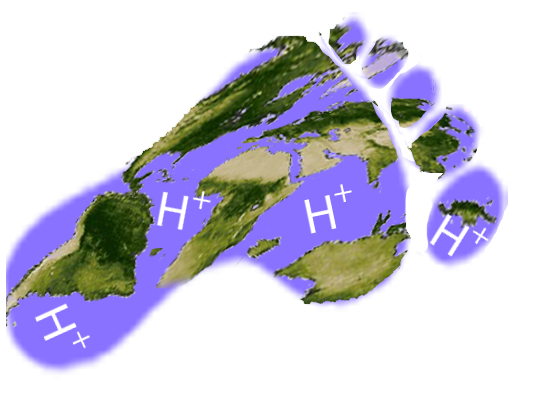
Ocean acidification is expected to have negative overall effects on many marine species. This could alter marine food chains and food supply to humans. Ocean acidification occurs when carbon dioxide (CO2) is absorbed rapidly into the ocean. It reacts with water molecules (H2O) to form carbonic acid (H2CO3). This compound then breaks down into a hydrogen ion (H+) and bicarbonate (HCO3-). These hydrogen ions decrease seawater pH.

Click to reply
alyssak2024   2024-10-24 11:29:13 (Last post: 2024-10-25 07:10:04)
Ocean Acidifcation

Ocean acidification is a rising environmental issue that poses a significant threat to marine ecosystems. As carbon dioxide levels rise in the atmosphere,a portion is absorbed by the oceans, leading to a decrease in pH levels. This chemical shift can have devastating effects on marine life, particularly organisms with calcium carbonate shells or skeletons, such as coral reefs and shellfish, which struggle to maintain their structures in more acidic waters. To help this issue, we can take  action by reducing our carbon footprints through lifestyle changes. Such as advocating for renewable energy sources, and supporting policies aimed at decreasing greenhouse gas emissions. Promoting awareness and education about ocean health can help communities to engage in conservation efforts to help our oceans.
I have also found a link about more information in ways we can help our oceans and marine life. https://texanbynature.org/2019/08/5-way … our-ocean/

Mammon   2024-10-25 07:10:04

I had no idea that what we put out goes all the way into the oceans...that is really sad to read about. Putting this post up will definitely help with my drive to cut down on carbon emissions.

Click to reply
katelyn_ryan   2024-10-24 11:09:24
Fixing Ocean Acidification

Ocean acidification is a significant environmental issue caused by excess atmospheric carbon dioxide being absorbed by the oceans. This process lowers the pH of seawater, making it more acidic. According to the National Oceanic and Atmospheric Administration (NOAA), ocean acidification has detrimental effects on marine life, mainly the organisms with calcium carbonate shells and skeletons. These species are vital to the marine food web and their decline can disrupt entire ecosystems, affecting biodiversity and fisheries that we rely on. The NOAA suggests several strategies, reducing CO2 emissions is paramount, which can be achieved by transitioning to renewable energy sources and enhancing energy efficiency. Protecting and restoring marine ecosystems, such as seagrass beds and mangroves, can also help as they absorb CO2. Additionally, improving monitoring and research on ocean chemistry and its impacts can guide effective policy and conservation efforts. We need to work harder on reducing our carbon footprint!

https://www.noaa.gov/education/resource … dification

Click to reply
TayC   2024-10-24 11:03:26
What is Ocean Acidification?

I had never heard of this phrase until recently, but it is one of the many effects of climate change. So, what is it? Basically, ocean acidification in the phrase used to describe the increasing acidity of the ocean. This is due to the ocean absorbing massive amounts of carbon dioxide from human activities. The more carbon dioxide that is put out into the atmosphere from activities like burning coal for power, the more the ocean absorbs. When that happens, it raises the acidity of the water. While it may not harm humans, it causes lots of harm to the ocean life. For example, the increasing acidity of the water has been harming coral reefs. Because they are unable to adapt quick enough to withstand the sudden changes, the coral die off. This leaves many aquatic species without protection from predators. While this is only one species that is suffering, soon enough all ocean life will be killed off by the raising acidity. This could spell disaster for many societies that rely on ocean life to feed themselves or to keep them employed. That is why it is so important to take climate change seriously, and to start working as a society to reverse the effects of climate change.

https://oceanservice.noaa.gov/facts/aci … atmosphere.

Click to reply
Reniya   2024-10-24 07:18:03
Ocean Acidification

The increase in acidification in the ocean has impacted all sea creatures with shells and or bones that are made of calcium due to the flow of carbonated calcium going from net positive to net negative.

Click to reply
NorDeV   2024-10-16 10:15:43 (Last post: 2024-10-16 10:16:56)
Trying to code this... Thoughts?

Hi! At my house, I recently downloaded a coding game, and I was planning on coding a video-game focusing on helping creatures that are being harmed from Ocean Acidification. The game would be centered on quests that the player would go on to help ocean creatures--- but that's beside the point. I can't think of any creatures right now!!! Do any of you have any ideas for ocean creatures and some quests to help them? Please spare me the coder's block! :,(

NorDeV   2024-10-16 10:16:56

(P.S.) (I wanted to code this game to raise awareness of Ocean Acidification. Just an FYI!)

Click to reply
radu8dda   2024-04-19 09:35:57 (Last post: 2024-05-12 21:01:44)
Protect the ocean!

Protecting the ocean is essential for life on Earth.Oceans are vital sources of oxygen,food and resources,and their conservation is crucial to our health and the health of global ecosystems.

regi2BOD   2024-05-12 16:11:39

Yes, I agree but how do we protect our ocean from acidification? First, we must understand what causes acidification. Ocean acidification is caused because more carbon dioxide is dissolving into the Ocean than ever before. It is natural for CO2 to dissolve into the ocean because the Ocean is a carbon sink. However, because of the industrial revolution and deforestation a surplus amount is being absorbed by the ocean which lowers the ocean's pH levels. The lower the pH levels are the more harmful it is to certain organisms who depend on the Ocean to survive. We must find ways to lower our carbon emissions as a whole to prevent any further extra acidification.

read this article to learn more on this topic:
https://www.nhm.ac.uk/discover/quick-qu … uses-ocean-
acidification.html#:~:text=Ocean%20acidification%20is%20mainly%20caused,being%20absorbed%20by%20the%20ocean.

japrabod   2024-05-12 19:50:27

I agree, and even little things you can do at home can help protect ocean life. Things such as properly disposing of waste and conserving water are great ways to help even just a small amount. Another great way is to use less energy around the house, ways to do this are using energy efficient appliances and lightbulbs, keeping lights off when your not using them, and trying to limit large appliance usage. Even if these make a small difference if everyone pitches in we can help the bigger picture greatly. Many corporations also help contribute to restoring and conserving ocean life, they do this through many techniques such as rebuilding reefs and salt marshes that guard against storms and flooding, and protecting "Super Reefs" which are reefs which can survive hot temperatures and are used to help grow new generations of coral. We can make a difference by supporting and donating to these corporations which often rely on donations to operate.

https://www.nature.org/en-us/what-we-do … our-ocean/

https://oceanservice.noaa.gov/ocean/help-our-ocean.html

kileBOD   2024-05-12 21:01:44

I completely agree; oceans are one of the most important contributors to human life. However, humans have caused great damage to the ocean. So how can we protect the ocean, and keep it healthy? Well, according to National Geographic, there are over 5.25 trillion of plastic in the ocean. This plastic kills sea life and is incredibly damaging to the ocean. To fix this, we can try to limit the plastic we use and correctly sort our trash. For example, instead of buying Ziploc bags, you can buy glass containers, which are reusable and don't cause damage to the environment after you dispose of them. Limiting your use of plastic leads to less plastic being put in the ocean. Similarly, we can also protect our ocean from acidification. Ocean acidification is the decrease in the pH of the ocean caused by too much carbon dioxide. The ocean naturally absorbs CO2, but abounding too much can lead to acidificaction, which harms sea plants and animals. To stop this crisis, we can try to limit our carbon footprint. According to I2SEA, the average human produces 3 791 kgs of CO2 per year, and even more in the United States. To reduce this number, we can drive to avoid driving and can use public transportation, biking, or walking instead. We can also try to invest in renewable energy sources, like solar panels, which use energy from the sun for electricity. This not only reduces your carbon footprint but saves you money. You can also try to eat less meat. Animals produce a lot of greenhouse gases, and not eating meat means not giving money to these companies that exploit and harvest animals.


https://education.nationalgeographic.or … ns-remain/

Click to reply
ZackUSA   2024-04-24 11:30:27
Ocean Acidification

What is ocean acidification? Well, for starters, it is the ongoing decrease in the pH of the Earth's ocean. This is caused by the uptake of carbon dioxide in the atmosphere. This topic is important to the carbon footprint because it’s caused by all the carbon dioxide. When taking the survey, it gave us numbers that show how much carbon dioxide we produce throughout the things that we do. These things include any type of transportation, what kind of food you eat, how often you use energy in your house depending on if it’s gas or electric, and the things you buy. Bad things could happen to our waters if we don’t make an attempt to prevent ocean acidification. For example, the first thing that affects us is that we won’t be able to swim in the ocean. The second example is that these changes can affect seafood supplies and the ocean's ability to store pollutants, including future carbon emissions. You may ask, “what are some ways that we could prevent this though?” Well, even living in the midwest away from oceans, reducing  the amount of carbon dioxide emissions at home, at the office, and on the road can still help with the problem. The carbon dioxide that we as humans release comes from burning fossil fuels. When we do that, it increases the acidity in the ocean allowing carbon dioxide to dissolve. The best things to do in a home that helps decrease the amount fossil fuels being burned include, swapping your furnace for a heat pump (many people in Canada rely on fossil fuels to heat homes), replacing your gas water heater with a heat pump water heater, trading your gas stove for an induction stove, and replacing your gas fireplace with an electric one. You can also use LED lights in the house that helps with the amount of energy being used. More things that people can do include turning off lights, computers, televisions, video games and other electrical equipment when you're not using them, limiting the use of air conditioning, and trying to use more things that take electricity instead of gas, like cars or stoves. These are all easy ways that humans can prevent ocean acidification. The hard thing is trying to get multiple people to go to beaches and pick up all the litter and trash people are throwing and letting dissolve into the ocean and atmosphere. For many years, people have been trying to get others to quit littering, lawmakers have even tried to make it illegal, but that doesn’t stop everyone. Although, the less people emitting fossil fuels, the better. Overall, if more people make an effort to do these things, then the ocean will be thriving again and coral reefs will stop fading in color.

Click to reply
Qbi Wang   2024-04-24 02:52:03 (Last post: 2024-04-24 03:02:01)
ocean acidification

Ocean acidification refers to the decrease in the pH level of the world's oceans, it is caused by the carbon dioxide from the atmmosphere. When Co2 dissolves in salt water, it forms carbonic acid, when then dissolve into bicarbonate ions and hydrogen ions, which lowers the pH of the water.

Why is ocean acidification a problem?
First, the lower of the pH level affects the lives of marine animals such as corals, mollusks, and some plankton species especially to build and maintain their shells and skeletons composition which is made out of calcium carbonate. If it is severe enough, it can cause problem in the marine food chain. Second, the coral reef decline. Coral reefs are vulnerable to ocean acidification. As they lose their ability to form and maintain their calcium carbonate structures, they will eventually collapses and die. This will affect the biodiversuty and the habitats supported by the coral reefs. Third, ocean acidification can distrupt the entire marine ecosystem, affecting species diversity and changing the predator prey relationship.

How do we solve ocean acidification?
One way that we can reduce ocean acidification whcih is to reduce the amount of carbon dioxide and other greenhouse gases which means to be conscious of your energy use. Some ways we can do this is to drive less, switch to fluorescent light bulbs, and compost your food waste. To protect the ocean, we must also stabalize the carbon dioxide in the atmosphere.

j@miecheng   2024-04-24 03:02:01

Ocean acidification is something that could ultimately affect us as well, since coral reefs are part of the ecosystem in the ocean. Each year, world trade in fish and fisheries products in 2023 is estimated at 65 million tonnes, which would also make our economy go down. To make the ocean acidification rate go down, we have to cut down our usage of fossil fuel and carbon emissions. To do this, we could take public transportations such as the metro or instead of driving, we could bike to the destination. That way, not only would you save the Earth, you would be exercising as well. The carbon dioxide in the atmosphere could be reduced by the way we live daily.

Click to reply
TaraUSA   2024-04-23 11:28:28
Ocean Acidification

What is ocean acidification? It is when the Ph of the ocean is reduced over an extended period of time. Ocean acidification is mainly caused by uptake in carbon dioxide from the atmosphere. Carbon has been increasing over 200 years due to burning fossil fuels and land use change. The ocean absorbs a lot of carbon from the atmosphere, about 30%. When the carbon levels rise in the atmosphere they also rise in the ocean. When the carbon is absorbed by the seawater a chemical reaction happens causing more hydrogen ions. More hydrogen ions means the seawater will become more acidic but the water being more acidic carbonate ions to be less abundant. Certain fish have the ability to detect predators and when the water is acidic this ability decreases. Effects on other marine organisms are the extra acidity make it harder for things like coral and plankton to create their shell and skeleton. If the organism already has its shell it will begin to dissolve. Some things could benefit from the increased carbon. Some algae and seagrass are one of the ones that benefit from the carbon because it increases their photosynthetic and growth rates. More things the acidity can harm are mollusks, their shells could be very weak or dissolving. The marine organisms also can experience other changes such as abundance, changes in growth, development and survival because of ocean acidification. What can coastal decision makers do? Everyone can try to reduce their greenhouse gas admissions but the best way is to use the adaption approach. The adaption approach is changing things in your daily lives that will help produce less carbon into the atmosphere. What can we do to help? The only thing that will help the ocean acidification is lowering carbon admission. Ocean acidification is a serious thing that effects the environment, animals, etc and by reducing it the marine organisms will be able the develop normally.

Click to reply
YadiraUSA   2024-04-23 10:11:56
Ocean Acidification, why its bad and what we can do to help.

Ocean acidification is a reduction of pH of the ocean over an extended period of time, caused by the increase of carbon dioxide in the atmosphere. Ocean acidification is not good because this can create conditions that eat away at the minerals used by oysters, clams, lobsters, shrimp, coral reefs, and other marine life to build their shells and skeletons. Not only is this bad for marine life but also human health. This condition can cause harmful algae species to produce more toxins and bloom later in acidified waters. This will only be harmful to humans if this is affected by shellfish or sicken fish consumed by humans. This is not only affecting humans but industries as well. For example, Alaska fisheries are suffering the consequences of ocean acidification. The Great Barrier Reef is being affected as well. There has been a decline of living corals, causing a reduction of habitat for living fish. Now how can we stop this? Helping stop emissions is a way we can help stop this since ocean acidification is caused by an increase of carbon dioxide. By trying to decrease the annual output, for example, cars, we can decrease the amount of carbon dioxide being released into the atmosphere, helping stop ocean acidification. Sure this might be a slow way of stopping ocean acidification but it will help over time. Along with decreasing the output of carbon dioxide we can also help by protecting and restoring marine and coastal ecosystems. Just planting kelp and seaweed forest allows them to absorb the greenhouse gasses and can help restore the oceans environment. In conclusion, if we want to keep out marine life and ecosystems safe we should take part in helping reduce/stop ocean acidification.

https://www.gao.gov/products/gao-24-107 … %20warming.

https://www.epa.gov/ocean-acidification … 0community.

https://oceanservice.noaa.gov/facts/aci … atmosphere.

https://www.fisheries.noaa.gov/insight/ … %20concern.

Click to reply

Board footer

Powered by FluxBB

This site is licensed under a Creative Commons Attribution-NonCommercial-ShareAlike 4.0 International License.
Privacy
Terms