


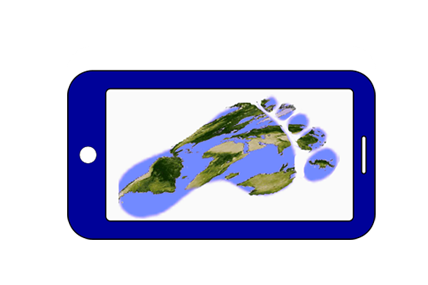
Is having the latest technology a want or a need?
How often do you get a new cel phone or mp3 player? Did you really need a new model? Do you consider the environmental impact of these purchases? If you are addicted, how can you break your addiction?
Wants or Needs?
Recent posts:

I think that needing new technology depends on the person, some might need it due to disabilities. I get a new cell phone every two years, I don’t really consider the environmental impact. And I'm not addicted to the point where I need my phone everywhere.
I believe that having the latest technology is a need for some people, like those who have disabilities or conditions and need certain technology, having the latest technology is a need. But if it’s someone that is perfectly healthy, there is no use for the latest technology. I’ve had my first phone for around 3 years, and I haven’t gotten a new one since. If I were to get a new phone, I would consider the environmental cost. I am not addicted.
I personally think that you do not need the latest tech. Sure it might be funner or a little more efficient in the long run, but in no way do you need it. I do not get a new cell phone unless mine is outdated to the point I can’t use it, or I break mine (Luckily hasn’t happened!). I have not personally thought of the effects this has had on the environment until I did this. I think if you’re addicted, it’s helpful to look at nature, and remember why the world around us is so beautiful! You know? Thanks for reading!

Wants and needs are both important parts of human life, but they are not the same. Needs are things that are necessary for survival and well-being, such as food, water, shelter, and safety. Without these, a person cannot live a healthy or stable life. Wants, on the other hand, are things that we desire but do not actually need in order to survive. These can include items like expensive clothes, new technology, or entertainment. Understanding the difference between wants and needs is important for making good decisions, especially when it comes to money and priorities.

One of my biggest carbon footprints, is travelling by planes.
But I cannot stop because my family always wants to travel around the world. And we live in Tahiti and all our family lives in France. So if someone gets sick or dies (and even for vacation), we take planes and go in France.
Also my dad is a pilot so we are encouraged to take the plane.
Secondly, my purchases cost me a lot in my carbon footprint because I love to do shopping and I recognise that I don't pay attention to plastic bags even if I should do it.
For the planes I cannot reduce my consumption, but I will do it for my purchases.
For the food, this is not my biggest problem but I eat a lot of meat (everyday) because I eat the same food as my parents. But sometimes when I am alone I try to eat meat-free dishes.
I get what you aresaying, but it kind of sounds like excuses tbh. Like yeah, living in Tahiti makes flying hard to avoid for emergencies, but for vacations it’s still a choice. Saying you “can’t reduce” isn’t really true
Also the pilot argument doesn’t really justify anything it just explains why you fly more
At least youre honest about shopping and food, but it feels like you’re choosing to change the easy stuff and not the biggest impact (planes). So it’s more “I don’t want to reduce it” than “I can’t”
I think fast fashion is a major problem for the environment. People buy too many clothes that they don’t really need, and then throw them away quickly. This creates a lot of waste and pollution.
I try to buy fewer clothes and use them for longer. I think people should think more about what they actually need instead of just buying things because they are cheap or trendy.
I think everyone has a vague idea of how big fast fashion is, and how much bigger its impact on our planet is. People working in fast fashion companies not only work in very poor conditions but also stay long hours and earn very little. It's very sad that we have such a high demand for so many things, most of them made very quickly and unreliably. Low quality is the main reason we buy more things that we think will replace old ones. It's a constant cycle of never-ending processes.
Many people feel pressured to purchase new technology whenever a new version is released because they feel social pressure to always have the nicest phone or the newest airpods. This creates lots of unnecessary electronic waste and could be avoided if people use their devices until they absolutely need new ones.
It's easy to lose sight of wants and needs when in a third place like the mall, especially when you have your own source of money for the first time. To try and minimize unnecessary spending, I usually try to window-shop, set a budget, and carefully consider whether or not I'll use the things I want. At the end of the day, virtually nothing at the mall is needed, but splurging on yourself every once in a while can be beneficial mentally.
In our modern world, people are inclined to buy things they don't need without thinking. Websites like Amazon make it so easy for people to purchase things at the click of a button without thinking: "Do I really need that?" Additionally, social media trends allow people to promote buying things people want in excess, contributing to waste and environmental decline globally.
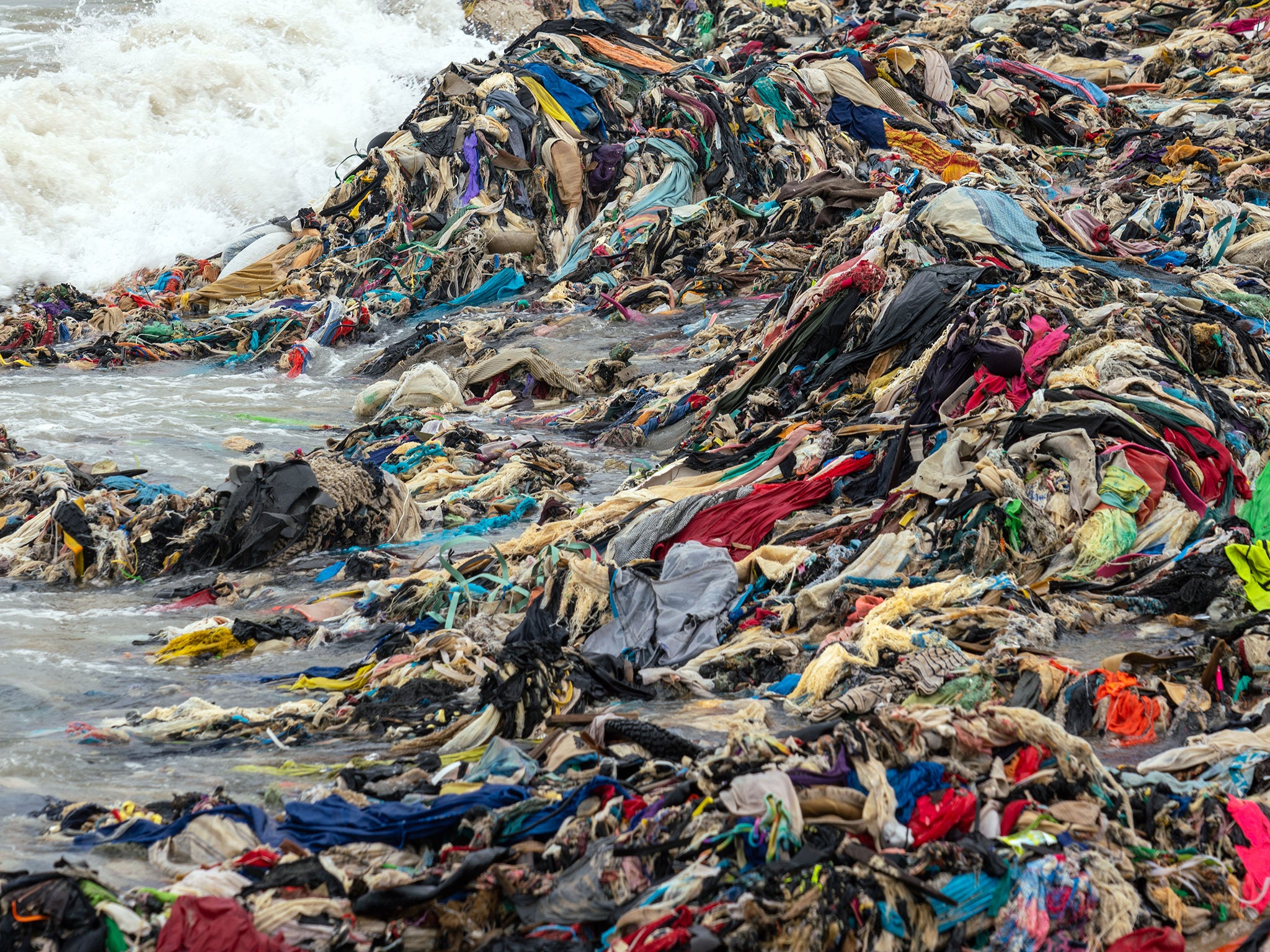
Fast fashion is one example of a trendy industry, guided by the whims of people with the most influence. A particular style will be "in" for a week or two and then cast aside and forgotten. As a result, fast fashion companies like Temu and Shein can make low-quality products that fall apart quickly without consequence. Fashion trends are already over by the time the cheap polyester(plastic) clothing falls apart; people move on to the next almost immediately and throw everything else away. The sheer amount of low-quality clothing being wasted is obscene, more than we can feasibly make use of. All around the world, these cheap products go into landfills, slowly stripping the Earth of its health and nature.
This obscene modern trend must be stopped; we need to put more thought into our purchases and consider the future consequences of our actions.
I think fast fashion is one of the things that seems like a need because everyone wants to keep up with trends, but it's actually a big want that causes a lot of problems. It's tempting because you can get a whole outfit for like $20, but the quality is usually so bad that it ends up in the trash after a month. In my opinion, it's much better to save up for at least a quality piece of clothing that you like instead of buying five cheap things just because they're on sale. Plus, the environmental impact is huge, fast fashion creates so much waste. If more people just shopped at thrift stores or wore their clothes longer, it would save money and the planet.

In my opinion having the latest technology could be a want but it could also be a need, it depends by the use that a person gets out of it.
if you buy the latest without any reason, just because you want it, it's a "want"; if you buy it because you use it for a reasonable cause, like work or also school, it can be called a "need".
I only buy a new phone if my latest one doesn't work anymore because until it stops working i don't need a new one.
i reckon i'm not addicted to my phone but if someone is, i think they should try doing something else like doing some sports or maybe reading a book.
yes i am so with you on this 
I usually buy a new phone only when the old one is almost totally broken and i usually don't buy a new model but an old model or a refurbished phone.
When i have an old or broken phone i don't put it in the waste because there are some components of it that can be reused one more time before becoming rubbish so i ususally bring it in specifics centers that recycle them.
I'm not addicted by my phone but, if i were, i could break it leaving my phone in another room when i'm doing somethink, like studying.
I think that always having the latest technology is clearly a wants because no one needs a new technology dispositive every year.
I usually get a new phone every two/three years because I use mine until it breaks down and I find usless the amount of money that requires news models and I don't actually need that.
Besides, all technology dispositives produce a lot of e-waste and consume a lot of energy.
I don't think I'm addicted but sometimes is better read, walk or even sleep intead of spending so much time on phones and videogames that doesn't give you the right education!
For me, having the last phone is clearly a want. We don't need a new model every year just because it's trendy. I personally don't change my phone really often, but I replace it when it doesn't work anymore. Another theme to consider is the environmental impact too. Most of our phones release a lot of carbon dioxide being produced, so people should think before buying anything that could damage our planet. I'm not addicted to my phone because I try to spend always less time on it. I prioritize staying with the people I love or go out to do some healthy activities instead of rotting in bed all day.
Have you ever thought of buying something and then taking a second to recognize if it's a need or a want? About 40% of clothing that is unwanted and sometimes unused gets thrown away and 38% of Americans have unused Items in their house and usually end up throwing them away. There is a big difference between a want and a need. The denotation of the word want is, too "Have a desire to possess or do (something); wish for." For example, I want food (I can do without it for now.) I want a new car. (A new car would be nice to have, but I can live without it.) The denotation for need is, "require (something) because it is essential or very important." Ex. I need food. (I desperately require food. Food is a necessity to me right now.) I need a new car. (A new car is essential to me. I cannot live without it.)
I agree. Instead of buying what you want AND what you need, you should stick to buying only your needs. For example, new clothes. Unless your clothes are in very bad condition and you are in need of new ones, you shouldn’t buy new clothes. However, you should also treat yourself to a want every once in a while. All in all, you should be able to tell the difference between a want and need, and to control yourself from buying all the wants along with the needs.
Everyone has wants and needs, and it's usually hard to balance the two. Needs things and items that you usually need, while wants are just something that you desire. And a problem with wants is that usually it gets to a point where you have too many things that you want and you don't end up using them just because you wanted it at the moment which causes resources to used wastefully.

I agree with this statement. Overconsumption has caused major effects in our climate and there are many people who can learn the importance of identifying a want, or a need. Wants take up a lot of overconsumption because when you want it, you tend to buy it. There is no problem purchasing items you want for your pleasure. However, there are times when you want more than you truly need and constantly buy things that just begin to pile up. On the other hand, needs are resources that help with your survival, like food, water, and warm clothing. Needs should have priority to your purchases. While you start to only buy things you need, your carbon footprint might start decreasing, less money will be spent and your action will positively impact our climate.
I agree that it’s super important to be mindful of your wants and needs. This can help limit over consumption which alone can significantly reduce your carbon footprint. It will reduce the amount of fossil fuels release when transporting your packages, and the garbage thrown away after unpackaging your items. When we only focus on what we need it helps us live a sustainable life from conserving resources.
Hi there friend I totally agree with this statement because I've experienced it. For example, this usually happens to me while buying clothes where I see something that I want. Something that has helped me is seeing myself with it in the future and seeing if I'll actually use it or if I'm even a little bit hesitant I won't buy it. I do think this is a problem though because for the people out there who don't have very big limits when it comes to money they won't even stutter when thinking of buying something they might like. This is bad for the environment because it takes a lot of carbon to manufacture all those clothing, gadgets, tools and other stuff.
I totally agree, you have to be super careful with what you purchase and think if it’s a need versus a want. For example, the dollar store you might see an item that is only one to two dollars and think oh it’s only one to two dollars that won’t hurt. However, what you don’t take in account why these products are so cheap. They were probably made in an unfair working condition or the materials were harvested in a way that hurts the environment. Which will increase the carbon emissions from producing these cheap products if they weren’t created in a sustainable way.
I notice that the internet is a huge factor to the reason why people are such impulsive shoppers online, and thus leading many to purchase things that they don’t need at all. Social media, such as tiktok, instagram and other apps promotes new random gadget or new clothes to users that'll be forgotten about in a few weeks max. A study done by Earth Institute’s Research Program says that, "And in fact, across its life cycle, the average product results in carbon emissions of 6.3 times its own weight",not only meaning that these products are simply useless but that it causes harm to the environment. Not to mention that the quality of these items promoted on these apps are extremely cheap and short-lasting so much so that they really aren't worth your money.
I fully agree. The influence of social media is causing so many people to buy things that they don’t need. For example, new clothes, beauty products, electronics, etc… When we buy these things and realize we don’t need them, not only did we waste our money but also just created more garbage. When we decide to donate or trash the cheap products, it ends up polluting our environment. This is not good! Everyone needs to start thinking about the outcome of buying these useless products and where they are going to end up!
I completely agree. the large impact of influencers has totally forced us into buying way too many products leading to unnecessary amounts of waste. this is a huge problem in the way that we are always being told we need more but with that also comes the carbon footprint .
This is so true. Social media has become such a big part of our daily lives that we don't notice how much impact it has on our actions. We tend to buy anything we see online, just because it's trending or it looks cool, not noticing that in 2 months, you won't even remember that you bought it. A lot of these products on your for you page are visibly appealing, and its made for you to buy it because its aesthetic, or because everybody has it. Labubu's are a big example on this. People only bought them once it became a trend to have one, but nobody thinks of what they will do with it after it goes out of trend. When we think about it, they're just pieces of plastic that's pretty useless (sorry). Since the sales of Labubus significantly increased, the company started producing more and more, just creating even more waste.
Our items and belongings that we have, clothes, technology and such should be kept if it is able to be used. For example, the clothes that I have are good enough and I do not need or want to buy new ones. There is no need to buy new clothes if the ones that I have are already good, and it would just be a waste of money and it would damage the climate. The fashion industry already makes up 8-10% of the total global carbon emissions, and me buying new clothes would make it go up even more.
you're totally right about this, the fashion industry is insane for carbon emissions. i never realized it was like 8-10% of global emissions until i started researching. honestly keeping the clothes you have is way smarter than constantly buying new stuff. plus most new clothes are fast fashion that fall apart anyway so you end up replacing them more often. if everyone just wore what they already had and took care of it, the fashion industry's carbon footprint would drop so much. it's crazy how simple the solution is but nobody does it.
I completely agree with you on this, I think that it will always be smart to keep your clothes till you absolutely can't fit them any more. I also think that many more people should shop at secondhand places and thrift stores when they need new clothes. Of course for some things you need to get them new but for most things thrift stores work just as well and are usually much cheaper. I knew the carbon admissions because of the fashion industry where high but I didn't know they where that high.
"Influences" online are paid to make ads promoting unnecessary products. This influence hurts not only the wallets of those who purchase such products, but also the environment. Many of these products have plastic packaging, this packaging will likely end up in landfills or waterways.
*influencers
I disagree. Sometimes the influencer might not be well educated on the product and might just think of it as a harmless ad for some quick free cash. They also might not be aware of how the product may be packaged. It is mostly the companys fault for plastic packaging so we shouldn't blame the influencer. I see where you are coming from though, as the influencer should've done some research on the product before advertising, but we can't blame the influencer for everything right?
to add onto ethanhe's comment, i agree that some influencers aren't aware of the products that they are advertising are harmful for the environment .however, instead of using their platform to influence buying random restocks and opening pr, they could use it to de-influence you. if there was a way to let people know that we don't need new iPhones every year, and that Shein produces mass amounts of pollution, i think that would really help the climate. these people who appear on your fyp, are very influential, they have the power to get a whole giant group of people, to do what they want. we need influencers who will tell their fans about climate change, and how to help.
According to Carbonliteracy.com the fashion industry is the second largest contributor to pollution (about 10% of global pollution). We in this generation spend around 5-6 hours a day on our phones, and more “doom scrolling” through TikTok, this is where companies thrive off of by paying your favorite influencers to promote their products, making them 2x as desirable just for them to lose “hype” after a few months; examples being clothes, water bottles, make up, etc. . All of these products that are being mass produced for every month long trends go to waste, as of 2019 H&M was known for having over 4.2 billion dollars worth of unsold clothing; according to Carbonliteracy.com 1.2 billion tonnes of carbon emissions come from the fashion industry alone.
Exactly, companies make fast fashion items which get popular for a certain amount of time only to go to waste when it goes out of trend.
This is smart to notice, because people often buy things that are trendy and stop wearing them or throw them out when they are not in style/trend anymore.
I agree with your statement as well. Organic food is also harder to maintain, as it does not have preservatives and other chemicals to make it last longer. it is also common for humans to use substances to increase the growth of crops and vegetables. Meanwhile organic food takes much more time and care to nurture and grow. This is why if everyone starts a home garden, organic food will be more abundant and easier to access overall.
planned obsolescence is a business practice that involves making products break or become obsolete prematurely, this causes consumers to have to spend money to replace items more often than needed. for example, apple and other mobile device companies releases new phones annually and people are socially pressured to buy the newest model. due to this, people buy a new phone every year instead of when their old one breaks. this overconsumption causes more greenhouse gasses to be emitted because companies produce more phones per year.
The difference between needs and wants is simple, but difficult to make a choice between them. Needs are things you must have to live. This includes things like food and water. Wants are things you just really want, like a new phone or toy. A significant issue is that wanting too much stuff can cause an overconsumption of materials. Making all those extra items uses up lots of Earth's materials, and it wastes energy. Also, it creates pollution. If everyone focused more on just meeting their basic needs instead of always getting the new and trendy items, we would stop hurting the environment so much and save natural resources.
With social media like TikTok and Instagram being so prevalent today, there's a lot of content centered around the trendiest clothes to buy. Especially now with resources like TikTok Shop and SHEIN, poorly made "trendy" clothes aren't only being pushed onto you from every site, they're also accessible with a few clicks. If you see a post about a shirt that you just need, you might not even have to leave the app to buy it. It's almost too good to be true. But what happens after a few months? The clothes you just bought aren't just falling out of style, they're falling apart. Influencers sometimes make it seem like the trendy, fast-fashion apparel they're promoting is a necessity, but the truth is, the clothes you have now work just fine. Not participating in fast fashion helps slow the masses of thrown-away clothes that litter every landfill. It also means you're not funding the unethical work practices of most of the companies that sell them. So the next time you see a shirt on the internet you're convinced you can't live without, remember, the shirt you have on right now is just as good.
This post effectively illustrates the relationship between social media consumption and unsustainable consumer behavior in the fashion industry. The accessibility of fast-fashion platforms like TikTok Shop and SHEIN creates a cyclical pattern of overconsumption and waste. When garments deteriorate rapidly due to poor manufacturing standards, they contribute significantly to landfill accumulation. Additionally, the carbon emissions generated from manufacturing, shipping, and disposing of these low-quality items represent a substantial environmental cost. By maintaining existing clothing items rather than participating in trend-driven purchasing, individuals can reduce their personal carbon footprint while simultaneously decreasing demand for unethical production practices. The data supports that extending the lifespan of existing garments through conscious consumption is one of the most effective strategies for reducing fashion-related carbon emissions and textile waste in landfills.