


Look to the right side of this page, and you will see a series of Student Discussion topics listed. Students: you should look through those topics, read other students' comments, post replies, and add your own thoughts. Join as many discussions as you like!
Teachers can meet other ISCFC participating teachers and share ideas at the Teacher Planning Discussion link at right.
Note that all teachers and students who wish to participate in the forum will need to register, you can now use a single registration for both the footprint calculator and our new forum!
Click the buttons at the top right of every page to either Register or Log in so that you can participate in the forum.
Need more help getting started? Email Jason. Otherwise, go ahead and start discussing your footprints!
In order to post, you must be registered and logged in.
Recent posts:

A way some people could get rid of gifts they don’t like after the holiday season is a gift swap. For some people the gifts they receive is actually what they want, but for some people they receive gifts that they probably won’t ever use, which is where this idea comes in. This can be a community event or a school event where everyone comes together after the holiday season and you place all of your gifts on a table or out in the open. Then you swap your gifts with someone else’s gift they didn’t want. The way you swap your gifts is adjustable to how people are there and what the people want, it can vary. In the end , this a good way to receive something you actually want and will use instead of letting it collect dust on a shelf or worse, throwing it away which would intern more carbon emissions. This idea is also customizable to where you don’t have to swap your gifts for someone. It could be where everyone brings the gifts they didn’t really want or think they’ll use and then you’ll collect all those gifts and then you could donate them to some charity or organization that could use them.

When I calculated my carbon footprint I found that I was far above average because I travel a lot. Air travel is something I do quite often and traveling in planes releases a ton of CO2 into the atmosphere. There is little I personally as a kid can do about this but, some companies could limit their flights. A Some airlines fly extra empty flights just so that they can keep their status, but they are not thinking about the effects that has on the environment. Air travel amounts to about 2.5% of all greenhouse gas emissions which is a lot that most likely could be cut down. We can do our best to limit unnecessary air travel, but in the grand scheme of things we need to be careful and mindful of how the things we do change the environment we live in.
I agree its bad but we cant just limit flights
As a high schooler, I agree it is difficult to affect how you do your air travel, as that is mostly up to the parents. I find myself in the same situation. Another way you might be able to help with all that air travel is making up for it by instead of driving to some places, ride your bike, or walk. That's what I have been doing, and I find that helpful.
Train systems are an incredibly eco-friendly option for long distance traveling. In Japan, this form of transportation generates about 80% less CO2 per person. Very sustainable.
I ride the bus which releases carbon but that doesn't really change anything considering a bus has a designated route it drives everyday so me not riding it wouldn't matter
Yes it wouldn't add to YOUR carbon footprint, it will still add to other so even if you don't ride the bus it will still add to the total carbon. Yes it does have a designated rout that doesn't change how much carbon it adds to the air.
It depends if you pay, as that gives them money to continue. City buses (at least in seattle, where I am) are generally more eco friendly though.
It doesn't change the amount of carbon releases which is what I said, all I said was me not riding the bus wouldn't change the amount of carbon it releases in all. I said me riding it wouldn't change the direct amount of carbon released
Our items and belongings that we have, clothes, technology and such should be kept if it is able to be used. For example, the clothes that I have are good enough and I do not need or want to buy new ones. There is no need to buy new clothes if the ones that I have are already good, and it would just be a waste of money and it would damage the climate. The fashion industry already makes up 8-10% of the total global carbon emissions, and me buying new clothes would make it go up even more.
you're totally right about this, the fashion industry is insane for carbon emissions. i never realized it was like 8-10% of global emissions until i started researching. honestly keeping the clothes you have is way smarter than constantly buying new stuff. plus most new clothes are fast fashion that fall apart anyway so you end up replacing them more often. if everyone just wore what they already had and took care of it, the fashion industry's carbon footprint would drop so much. it's crazy how simple the solution is but nobody does it.
I completely agree with you on this, I think that it will always be smart to keep your clothes till you absolutely can't fit them any more. I also think that many more people should shop at secondhand places and thrift stores when they need new clothes. Of course for some things you need to get them new but for most things thrift stores work just as well and are usually much cheaper. I knew the carbon admissions because of the fashion industry where high but I didn't know they where that high.
You're totally right the solution is simple but nobody wants to do it because they're too lazy. the world needs to change people need to wake up and realize that we are causing global warming. I'm not saying you need to go all crazy and buy the stuff that is expensive, even the stuff that is good for the enviorment is bad for example electric cars how do the charge.they use fossil fuels to charge.
Turning off the lights when you leave the room
yes is completely is and its human cuased
Yes, it is absolutey human caused since everything we do releases co2
While I am under average in almost everything I am wildly over in the travel section and should probably cut down on that
Me too, i think that it might be from when i went on trips for fun over summer break. I could cut back on these to reduce my footprint.
I was also wayyyy over the transportation section and that's the only section I really need to improve more on
Me too, i flew way too much this year which really contributes to travel.
I am quite the opposite because I rarely ever take flights for trips. Driving, yes, but if I were to fly more my carbon footprint would skyrocket.
Maybe its not that we should travel less, just less by car and airplanes.
Protect our planet
keep our wildlife safe and respect animals habitats.
we need to limit ai/ google search use too, the carbon foot print challenge doesn't calculate it but it still produces a lot of co2.
All internet use of any kind effects the climate change and student carbon footprint.
ai uses a lot of water to cool down its system causing places to have less water. it also impacts global warming.

A sustainable city should have good public transport so people don’t need to use cars as much. It should also have green areas like parks and trees. This helps reduce pollution and makes the city healthier for people.
I want to go a step further and just eliminate cars. Public transportation (if it works well) could be faster than lots of individual people stuck in traffic, and it would definitely take up a lot less space.
The city could have a mix of wind, solar, and water powered energy sources so that it could still store energy in any weather. Instead of a power plant, energy could be taken from a bunch of different sources and then spread evenly across a grid.
This is a very far-fetched idea with current technology though.
Malcom your idea isn't far fetched we have ways to make fast public transportation. We have the technology we just need people to do it.
Another way to reduce car use is to make more bike lanes to encourage people to bike more.
I personally think that you do not need the latest tech. Sure it might be funner or a little more efficient in the long run, but in no way do you need it. I do not get a new cell phone unless mine is outdated to the point I can’t use it, or I break mine (Luckily hasn’t happened!). I have not personally thought of the effects this has had on the environment until I did this. I think if you’re addicted, it’s helpful to look at nature, and remember why the world around us is so beautiful! You know? Thanks for reading!
Its so wastful to get new devices everytime a new model comes out
We get a lot of new models and it seems that there is a very small difference between them and the older models.
The production and use of new tech so often greatly increases your carbon footprint, so it is best to limit that.
Before purchasing something new, I check if i already have something like this. Getting the new model isnt just bad for your footprint, its also expensive.
It depends on whether or not your current model is sufficient for what you do with it.

Climate Change is a consequence of the rapid industrialisation of the world and human neglect/unawareness of pollution. The industrial revolution, while an important event in modern history, also kickstarted industrial pollution and as a consequence caused climate change. Are there any real ways to prevent it, or does the current political landscape not allow any such preventive actions to be put in effect due to the favoritism showed to corporations, industrialists and how they see these preventive actions as 'non-beneficial'?
this makes a lot of sense and i understand what you mean by "are there any real ways to prevent it..." i do think there are at least a couple but they might not be possible at this point in climate change.
"STOP" and "NOW", absolutely not, "lower drastically" and "over the next decade or so", very possible.
if all of humanity managed to agree to some policies and promises then we could likely meet the goal of less than 2°C by 2030 (maybe 2040)
1st we need to stop all burning of coal NOW,
coal is by far the worst, dirtiest, and least efficient fossil fuel, its a technology that belongs in the industrial revolution.
2nd we need better public infrastructure,
while one train (even electric) produces more co2 by itself than a car, if a hundred people are in that train then that train produces much less greenhouse gases per person than a car, so the answer is more electric trains, subway systems, electric ferries to islands, and electric busses where applicable, its also not just enough to have these things we need to
2.5lf encourage people to use public infrastructure and discouraging use of cars
cars are convenient sure but they pollute a lot, if we could make parking harder to find, more walking streets, one ways, reduce the number of lanes on highways, trains that run on time, and better accommodations, for example on one of these points, LA opened a new lane on one of their highways a few (dozen) years ago, and congestion got worse over the entire city, because people found it more convenient driving they would drive more and thus more cars on the roads, and that has lead to a joke in civil engineering "just one more lane and that will solve it"
3rd the world needs to transition away from coal, oils (petrol, diesel, crude oil), biofuels, and natural gas,
some fuels are less bad than others, for example crude oil and coal are much less preferable over the RELATIVELTY clean natural gas and biofuels, still not ideal fuel sources but just better if for example cargo ships run on biofuel over crude oil.
so we need to adapt industry away from that, foundries need to use preferably something like hydrogen gas or induction heating ovens,
ships need to use more efficient fuels or even hybrid ships (electric ferries for shorter trips are amazing (trust me, I'm on one right now))
4th we need cleaner powerplants to run this new industry. lets say we get every company and industry on the planet to somehow go fully electric, we still need the source of that electricity to be clean or we are just moving the problem from the production to the source. solar, wind, hydro, and geothermal, are obviously the goal and the best for this, but we need a ton of electricity it in a very short time, so might I suggest nuclear energy,
nuclear energy is much safer than people imagine (I mean global warming kills more people per year than nuclear energy ever has,) fossil fuels also contaminate more than nuclear and produce waste that goes into the air and is harder to manage than barely radioactive rocks that you can reuse 97% of and then throw the waste into a hole. because nuclear energy is so scrutinized that means that like airplanes its one of the safest forms of doing what they do, any time anything goes wrong everyone is talking about it so they have to hire the smartest people they can to make sure everything is safe.
another benefit of nuclear energy is that the only waste is a rock you burry a few kilometres underground to safely decay, and some water vapour that condenses back into safe water.
After all of the damage that humans have done to earth is is true That it cant be fixed now but right now we can take steps to save the future earth even small thing like turning off the lights make a difference however small. But if the entire world turns off lights when not in use it can make a huge difference.
It is very true that we can't make climate change disappear overnight, but we can reduce carbon emissions. Even if everyone only did a little bit, it would still make a huge difference.
People believe that climate change is fake because they argue that it's still -10 degrees outside. That's the weather. Weather and climate are two very similar, but different things. Weather is the temperature of the current day. Climate is the temperature, precipitation rates, storm possibilities, and more. Climate tells us what the average weather will be for a certain time period. Over the years, we have seen the climate increase and more and more carbon dioxide gets released into the atmosphere.
If climate change is fake, then are the ice caps melting? Why are coral reefs going extinct? You may think that increasing the sea levels by 2 meters is nothing, but the effects are catastrophic. Many parts of the world including Florida, Miami, Bangkok, and more will be underwater. So what? Who cares about these cities? It's not about the cities. It's about the people. Who will pay for all the damage caused by these floods? Where will all the people populating the cities go? If we do not do something now, it will become much harder later to fix these problems.
Exactly, People really need to open their eyes nowadays, we are heading into a dark future. I hope to live in a future where my future grandkids will be able to see snow. I have a half-sister that dreams of seeing snow someday. As our carbon emissions go higher than ever recorded, I don't think it will be possible in the future unless we act now. Can you believe that after the industrial period, we have produced over 1,800 GtCO₂ which is 37.8 billion metric tons. How will we ever recover from this. As sea levels rise, i feel like more people are covering their eyes and ears as they don't believe this is really happening. 99% of scientists believe that climate change is real, but why don't the people believe? I'll tell you why; they are too scared to realize that us humans will go extinct in a matter of a few decades if we keep up our carbon emissions. There are ways we can reduce carbon, A bunch actually, but people live too lavish to care. If we can't do something about this right here and right now, our species is done. Mother nature can live without us. But we can't live without her.
Yeah, I strongly agree with what you guys are saying. We need to wake up to what climate change is doing to our planet,and not just in small places, like the pacific islands or the Maldives that don't really affect a large number of places, but everywhere. People have ignored the problem for so long, only because it didn't DIRECTLY impact their daily lives.And only now are people realising that this is real and they suddenly have to do something about it. But what about the people who have already been suffering for years, who had to move because rising sea levels made their country go extinct. These people have been trying to tell us for years that climate change is real, we are the problem, but we haven't listened until now. We all have to do something now to stop climate change before it's too late.
I like what you are saying about how it affects small islands more than other places and in those small islands they can actually see climate change affecting their lives but without the help of the whole world change is harder in small places even though larger countries may not be directly affected by the climate change if they don't do anything in the next century it might be too late for some places and a wake up call is needed for the whole world to take action
I am curious to learn about ocean acidification as i know little about it. It doesn't really seem like a problem caused by the increase of greenhouse gasses yet it is and could be just as much of a problem as increased temperatures or water levels. I want to learn more about how carbon dioxide can cause this issue.
I too am curious as to how ocean acidification because I don't know a whole lot about it but i do know that it is somehow affected. It affects Calcifying organisms—including oysters, clams, sea urchins, and corals—rely on carbonate ions to build and maintain their shells and skeletons. I also know that when CO2 dissolves in water, it forms carbonic acid, which breaks down into hydrogen ions.
So it is affected and could become more of a problem in the near future if we don't stop it.
Climate change causing temperature rises
Climate change is real and we only make it worse by disrupting the natural order.

After doing this carbon footprint test, I was honestly very shocked by my results. I did not expect my total footprint to be so high, especially when I compare it to the sustainable level mentioned in the results. What surprised me the most is the "home" category, which is extremely high compared to my region. It made me realize that things like electricity, water use, or even air conditioning probably have a much bigger impact than I thought. The
"food" category is also quite high, which shows that my diet and consumption habits play an important role in my environmental impact. Even if my "purchases" category is relatively low, I think it still shows that buying products has a hidden cost for the environment. As for transportation, my result is lower than the regional average, which is a bit reassuring, but it is still not low enough to be considered sustainable. Overall, this test made me understand that my lifestyle is more polluting than I imagined. It is quite worrying, but at the same time, it helps me see where I can improve, especially by reducing my energy use at home and being more careful about what I eat and consume.
i agree and my largest section for the foot print was home as well and was mostly contributed to by the light bulbs. to ensure our planet is not destroyed by us everything counts even turning off the lights when you leave the room
Stop wasting food, its bad for our carbon footpring
I agree with this, when we waste less food it can help climate change.
If my family has and uses less lightbulbs, it could decrease our carbon impact.
travel less or go on planes less
our planet is changing fast because of pollution and waste. if we all reduce trash and save energy. we can protect Earth for the future. small actions from everyone can make a big difference.
I 100 percent agree with what your saying because its true that our planet is changing fast due to all the pollution and waste. I think that if we all took climate change seriously we could make a big difference because we did start climate change so we can also finish the ongoing increase in carbon dioxide. If we don't stop climate change we could be majorly affected as humans in the future and also affect other populations (Animals). All of our small actions can make a difference but only if we all corporate.
Anybody have any ideas to reduce trash other than burning them or recycling?
We should start making all natural grocery stores that dont use plastic containers
That's a good idea. Maybe instead of plastic maybe some non-plastic mesh bags? Kind of like the ones at Michaels, you know what I mean?
Or like brown paper bag type of thing? I don't think that would cause that much of a cost difference and it would be SO MUCH BETTER for the environment. There are so many places that use plastic paper bags. I looked it up- 1-5 TRILLION plastic bags are used per year. That's so sad. Humans need to do better. 
we should use compostable items or reusable items. i use reusable bags instead of plastic or paper.
Use reusable water bottles instead of plastic ones.
Climate change is caused by humans, fossil fuels and other things are causing climate to change
It is sad that all of it relates back to us. We should really be doing better.
Using gas stoves and the use of gas products like many things in the world cause major amounts of carbon dioxide into our atmosphere. Also with the use of coal and natural gases it's even worse.
How much do my long showers affect the environment and my footprint?
I take hour long showers every day personally and don't see any problem with that.
jesus christ that wastes so much water, try to shorten it
I am not totally sure I think it wastes energy especially for heating hot showers.
you can save a ton of water even by shortening it by 10 minutes
Heating water uses most of the time gas.
When burned it emits CO2 which traps heat. The most you should take is probably 10 minutes or less.
Hour long showers will use alot of water and electricity/gas, try setting a goal for shorter showers
I think 10-15 minute showers are the most reasonable. Taking up to 1 hour long showers is not the greatest idea because it wastes water and emits a lot more CO2 then you think.
Although some aspects of generative AI can appear to be very useful to our everyday life, it’s benefits still should not overshadow the overall destruction it has caused to our planet. Of course, we can’t blame it all on the AI (a survey conducted in August of 2024 and ended by August of 2025 by the Federal Reserve Bank of St. Louis found that 44.6% of adults in the US use Generative AI regularly)as the many users on platforms such as ChatGPT, Sora AI, are the reason why AI takes up so much resources. According to the UN Enviorment Programme regarding what AI does to our environment ,“they use massive amounts of electricity, spurring the emission of planet-warming greenhouse gases". We should focus on finding ways to decrease the amount of resources that AI uses to function, or better yet, we should minimize how much we use AI.
I see what you're saying, DANNYTHEOG, you also make some strong points. Generative AI is really helpful in our everyday lives, but its true that it also has a big impact on the environment. With so much people using AI tools nowadays, it makes sense that they use a lot of electricity. And like the UN Environment Programme said, all that energy use goes to more greenhouse gas emissions, which is not good for the planet for sure.
yes exactlyyy! it also discourages people from thinking for themselves, which only further prevents them from thinking abt sustainable solutions.
I feel like all generative AI is bad in the long run. Even for the useful, mundane, everyday tasks like replying to emails, the line still gets blurred--what defines how far we're willing to go to substitute human art of writing. Generative AI overall is overtly negative, and it's just not an expenditure that is affordable when we have less than ten years to get carbon emissions down below 1.5 degrees Celsius of warming. Unfortunately the easiness and comfort of AI has really put a spell on people.
?ai data centers are using clean water to cool their machines, which is bad because it's wasting CLEAN water that could go to people that need it
I agree with Elijah ai was made by people and then imediattly got shamed for it. It has been nothing but useful for us
I've been trying to use AI less because I feel it removes the accomplishment you get when you finish something
Sustainable City
I think sustainable cities are important for the future. Cities can do a lot to reduce carbon emissions, like improving public transportation and making it easier for people to walk or bike. If it’s easier and safer to bike or take the bus, more people will choose that instead of driving.
I also think cities should focus more on green spaces and renewable energy. For example, using solar panels and making buildings more energy efficient could help a lot. Small changes in how a city is planned can make a big difference over time.
In my opinion, both the government and the people living in the city need to work together to make it more sustainable.
Transportation and Flights
Transportation is a big part of carbon emissions, especially cars and airplanes. I realized that even if I don’t travel a lot, it still adds up. Flying is especially bad for the environment, but sometimes it’s hard to avoid.
I think I could make some small changes, like walking or biking more instead of always using a car. I could also try to use public transportation more often.
Even though these changes seem small, I think they can still help. If more people do the same, it could make a bigger difference.
I think improving public transport is very important because I live in a city with good and electric powered bus systems and I use the bus a lot.
With the rise of generative AI data centers, I worry that they could be bad for our environment. They use a lot of electricity and water to keep the computers running and cool. They also only are made in neighborhoods with more people of color, and I think our community should think more carefully about whether we really want more of these data centers being built. I think we should speak up and make sure both our environment and communities come first.
As summers get warmer, our wild life gets more and more scarce as we live large; and even if you don't someone else might be living large enough to cover the space you've tried to save. Which is why we need to start focusing on our individual actions, not collective. Think of it as 12 people write their names on bottle caps and throw them into a room then get sent to look for them, if each person looks for only their name it'd take hours! But if they all picked up each one they saw and handed it to who it belonged to, they'd be done way quicker. Like the example, if we all work together we'd get to reverse what we've already done so much more quicker.
Look up what your city's mayors email is and it should be there, then email them that YOU do care about our climate.
Why is plastic bad for the environment
Plastic doesn't decompose for a very long time.
Plastic is awesome i love what it does for the enivironment and how it decomposes. I personally drive a car with 5 mpg and have set two forest fires in my state. I love climate change
Plastic is really bad for to environment. It takes thousands of years to decompose and ends up as litter on land and in our oceans.
I feel like people who are not directly affected by severe weather events do not fully grasp how much of an effect climate change has on natural disasters. Seasonal hurricanes, wildfires, and tornadoes have become so normalized that unless they are destroying your city, most people will ignore the media coverage because they do not want to accept it as a result of climate change.
With climate change weathers are getting more extreme. Rainy days are getting rainer, windy days are getting windier etc. Which climate change creates more heat and faster cycles.
Climate change causes more extreme weather. Makes warmer oceans which causes hurricanes and dryer earth and soil which causes wildfires. Fires emit CO2 which traps heat and makes our earth warmer.
I think the UN had a great idea by setting those goals of improving universal welfare and making everyone's lives better. But I also think 2015 was a little greedy, by 2026, 11 years after the goal, pretty much none of these goals have been achieved.
if people like elon musk decided to invest in stopping world hunger, he could do it because he has enough money. we could also stop wasting food and give unwanted food to those who need it
I think otherwise because although his networth may be 1 trillion doesnt mean he has enough to spend and if he does it could negativly impact the world like extreme inflation and much more Co2 released
what foods require the most carbon footprint that are easy to cut out of your diet?
I didn't relies how much my food causes co2. if I eat less red meat and dairy it could have a big impact.
Climate change is very much real, but this topic does get me wondering. How much of climate change is truly caused by humans? What specific things cause the most climate change?
Yes, over 99 percent is caused by humans becuase of all the gas cars, stoves, and etc we use.
I learned that my carbon footprint is heavily impacted by travel, and I still wonder how much of the Co2 released is because of travelling
One way we can make a more sustainable city is first focusing on manageable things like avoiding fast fashion. Fast fashion is buying clothes that are currently in style, even if you don't need them, from companies that make them with cheap materials. This creates more clothes waste when these clothes go out of style fast and can cause harm to the environment because of the cheap and therefore more dangerous materials used in fast fashion. The creation of these clothes pollute the water and cause micro fabrics into the ocean as an article, "The Environmental Effect of Fast Fashion Explained" tells us. In order to prevent fast fashion, focus on thrift shopping, or buying higher quality clothes.
I totally agree, you made some great points. To add onto what you said about about thrift shopping or buying higher quality pieces. You have to be careful nowadays in thrift stores because a good amount of what you’re seeing is from fast fashion brands as a result of this overproduction of clothes. The brand I see a lot when thrifting nowadays is SHEIN. To add onto what you’re saying about buying higher quality pieces yes, the quality does matter, you’re correct about that. However, you must be careful when buying a higher quality pieces as it’s irrelevant to buy a high quality piece if it was made unfair working conditions or the process of harvesting the materials for the product was harmful to the environment.
I think that both of your are right and i have been thrifting more mostly for the expeirence but also for items in my wardrobe
I don't get why the world works so hard on destroying the people that could be working together to help heal the world they destroyed like the wars destroy a lot of greenery and kill A LOT of people but those same people could work together and heal the world so that it would be so healthy that there would be no need to fight for land.
I agree, why are people so focused on creating another world war when we could be saving the planet?!
We should definently focus more on saving this planet because we only get one.
i think we should focus on the planet and not the other things that are wanted and not needed which is causing climate change.
We should focus on what is needed not wanted. Otherwise there will be no way to save the planet.
Honestly I think that part of countries focusing on war and machines that will actively make people's lives worse is a "mutually assured destruction" mindset (like if everybody else has something powerful and harmful, then we've got to have it too, just in case). I think the United States is one of the biggest contributors to that problem--we have the most per-person carbon emissions in the world, and one of the largest militaries in the world.
Another big factor is that world leaders and grown up citizens aren't going to necessarily feel the side effects of their negative behavior, because they're the older generation. If they don't do much to fix the climate or they just deny that it's changing altogether, big deal, it'll be the next generation's issue, when it's even worse. That kind of short-term thinking is super toxic and it avoids the problem, which only makes it bigger.
A sustainable city should have good public transport so people don’t need to use cars as much. It should also have green areas like parks and trees. This helps reduce pollution and makes the city healthier for people.
how much food is wasted yearly in the usa and how do we prevent this?
add solar panels to the top of school buildings to reduce carbon output.
I think that needing new technology depends on the person, some might need it due to disabilities. I get a new cell phone every two years, I don’t really consider the environmental impact. And I'm not addicted to the point where I need my phone everywhere.
I agree that new technology depends on the person. But even using a phone has a environmental impact almost everything we use is created from things that hurt the planet.
technology is very helpful but destroys parts of the world because of climate change.
If you are getting a new phone every 2 years, I don't think that that has a huge impact on the environment. Don't get me wrong, everything we do has an impact, but sometimes you don't have as big of an impact as you think. And, I do agree that sometimes technology depends on the person, for example, my little sister needs an iPad to communicate with us because of her disability. But we should always try to consider if what we are doing will have an impact on Climate change and how big of an impact that would be.

I see the humans with extreme pessimist point of view i blame them for the extinction of several thousand animal species and they caused the global warming by raising animals producing electricity ect...

over fishing
Cars
Deforestation
Petrol extraction
Wars
Over hunting
trash in our oceans
having to save animals because of our stupid decisions
the fact we have to have breeding programs for almost extinct animals because of us
elephant ivory black market
and more......

Ok, human are bad, then what? I don't think this kind of thought leads us to any practical solution. So beyond discussing about whether human are bad or not we rather have to focus on our current problemes.

Our biggest problem is that our governements that have the power to help stop the global warming but they just care to watch their computer and having a nice sofa on he wich they can put their ass on.
This is a difficult topic for a lot of people, but I have to say I agree with you on this. Humans have done far more damage to the planet than any other force in its entire history (maybe except for events like the Chicxulub impact that killed most things 65 million years ago).
You are right about humans doing a ton of horrible things in our history. But I think that it is more important to focus on what we can do to make up for those mistakes, rather than dwell in the past. All of the bad things that you mentioned are issues that many people are dedicating their lives to solving. Even though humans are ruining this planet we have also done many amazing things. The bad outweighs the good obviously, but we can learn from both the bad and the good.
I agree! Humans don't care about planet earth, and we should not be polluting our planet. We should be taking care of our planet, because if we don't reduce the consumption of fossil fuels, we will eventually destroy animal's lives and our lives too.
The only problem is that if the humans change everything to natural energy and it produces 4 times less than the fossil fuel so it will occupy 4 times the spaces involved in fossil uels industry that meanig more cutting down trees. But fossil fuels pollute a lot more than natural fuels and destroying those places will be even more plluting. Third of all even if all the people on earth say to change it will cost an enormity to the governement eradicating those factories so the removal can only be done little by little. Thank you for your attention zenone2.
If you want to contact me my email is m.sassi26@ejm.org

I agree with you that humans harm our planet. But in my opinion, humans are not that bad anymore. Right now people are doing their best to improve the environment. Many eco supportive programs are being created, different companies change their products and the number of cars and rubbish has greatly decreased. The attitude is changing. I hope that our environmental problems will improve soon.
People all over the world talk of green and economical growth and ecologie but have the same bad ideas that brought us in this mess !!????

I don't think humans are bad. The things we are doing are bad. But develop more about your statement.
Humans can be in some aspects badddd. BUt , if ur a fellow human. How would u feel??? Taking actions are not a joke, please elaborate pon ur point @Zenone.
I agree that not all humans are bad. Sure they have done some things to harm our planet, but they have also done so many things to help our planet such as starting organizations like 4ocean.
I do agree that some human are bad, but we are also humans. I think we should not be blaming ourselves but instead reflect on we can do better to make a world a better place. : ) For example what others said above, maybe we can think of changing everything into natural energy and not using fossil etc... (sorry for the bad grammar)
I agree on some parts. I understand how more than 500 species has gone extinct because of humans but I don't think that humans are bad just because of the things you stated a lot of people are fighting against climate change so not all humans are bad. And if you want to fight against climate change we should start using more eco friendly products.
I agree with this sentiment to a degree, as it is very clear that not all people are ignorant to the ecological needs of our world, but is is incredibly sad to see the lengths at which corporations will pollute our world to make profits.
Yes humans are bad. People make lots of fossil fuels, waste lots of food, cut down way to many trees, and force tons of animals to extinction. We have been killing lots of animals that are almost extinct. This can mess up the carbon cycle and in the long term start something very bad. Something like a mass extinction.
I feel like js saying that humans are inherently evil instead of trying 2 encourage ppl 2 change will enforce a defeatist attitude that only discourages change. :3 while it is difficult sometimes 2 hold faith in humanity, i would encourage u to take action and find others that want to do so. then u may realize that there is good left in humanity, even if its not much XD
Take bus not car to school.
Add a compost bin to school cafeteria.
Cut out and reuse notebook paper at the end of the school year.
Bike to school not drive.
Walk to school not drive.
take the pubic or school bus instead of driving
if people like elon musk decided to invest in stopping world hunger, he could do it because he has enough money. we could also stop wasting food and give unwanted food to those who need it
such as meat consumption, showering for a little bit longer than i should...
Ya'll got any creative solutions?! I must know.
Imagine a in real life Hunger Games were to "solve the issue". But I feel this would be a last resort. And honestly it's something I fear happening.
I wish that we could work together more to not have more drastic measures come into play.
If this even makes sense.
Pls no hate gang.
Across the world, food is wasted by restaurants, fast food places, grocery stores, and markets that make or stock more than they can sell. This is incredibly harmful because all of this waste could provide suffering families with the meals that they do not have access to. I think food needs to be made more available to the public by lowering costs of quality, healthy ingredients so that people who are impoverished can still feed their families nutritious meals.
I think that ALL restaurants and grocery stores should be giving the "expired" food and leftovers to people in need
I wish that more people cared about this topic.
Many things you own create waste as it's created, from chips, to your whole car! And what do people do with that waste? Well, they waste it! We need to put that waste to use, by finding some way to recycle it and vastly lower the high Co2 content in the atmosphere. Scientists and green organizations should start experimenting with ways for some of the most common waste products to have a not-so wasteful use. For example, sewers get rid of the waste by just throwing it in the ocean! Biological waste that doesn't belong in the ocean can harm the environment, leading to more Co2. why don't people at least extract any ocean harming biological waste, and use it as a healthy fertilizer for land? Yes, it would be gross, and people wouldn't want to do it, but they should also consider the way it can positively affect future generations, and themselves. In conclusion, healthy reuse can lead to a healthy society, ecosystem, and world for all. 
I fully agree that we as humans waste a lot of things which is bad if we want to work on conserving and controlling the waste we so desperately hate.
Mr.Ryan was trying to defend his property but Sasol wasn't putting up with it and bought him out.
Also he was trying his hardest but his health was getting the best of him and he couldn't even use his payment money to get his son away from that town he used it on medical bills.
My class recently watched a video on Mossville and the highest earth polluting company known to man! Sasol is stopping many lives from being happy, and living the American dream, and ending many lives too! Mossville is a old community which thrived before sasol gave them the bum's rush, something has to be done, even if it means bringing them down. >:(
Yes, there are things I wouldn’t change. That is high meat consumption, I like eating meat. My family is mexican and we eat a lot of meat with other things that makes a truly delicious meal.
I noticed the more c02 you use the more the footprint goes up
Something you can do to reuse cans, cardboard containers,glass,and plastics is turn them into fun crafts. Another thing you can do with things like empty soda bottles and things of that sort is use them as containers for other things, like beads, or marbles, you could also turn bottles and cans into plant pots.
I think there are some things that I just can’t change. For example, my showers. I have such long hair that it takes at least 15 minutes alone to wash it. I also can not change how much air conditioning we use in our house. We have two dogs. One of them is really fluffy, and her hair makes it easy for her to get hot, since she is a mountain dog. We live in a really hot area, so we have to keep it on for her. I also can change my note taking habits since it is a literal requirement to use it how I do.
Normally,my family and I travel by car to Colorado,that most likely puts a lot of carbon into the air, but this is not a tradition my or my family is willing to end.
my grandma lost her house to a hurricane a couple years ago and we had to help her pay for it and we had to not have a lot of for for a lil bit but is aight we up
I believe that having the latest technology is a need for some people, like those who have disabilities or conditions and need certain technology, having the latest technology is a need. But if it’s someone that is perfectly healthy, there is no use for the latest technology. I’ve had my first phone for around 3 years, and I haven’t gotten a new one since. If I were to get a new phone, I would consider the environmental cost. I am not addicted.
In 2025, Sacramento has experienced very weird weather. From Jan-Mar we experienced normal weather patterns. Then, from April-June is where rain randomly came mid may then everything is normal but gets cold instantly in the night and really hot in the days. July-Sep has been confusing it was averaging through 80-95F and was a little fresh in the nights which were refreshing. Oct-Nov has been probably the weirdest part of the year. First week it was in the 70s then three days with 90 degree weather then went back to 70, it gets lower then higher in temperature. Early November-Now it has been cooling down since but its going up again then going down later. This has been the year for the weirdest weather. Any clue why our weather has been weird?
I’ve noticed similar weather patterns in other parts of California this year. It seems like the rapid shifts between warm and cool air masses, along with changes in the jet stream, have made temperatures much less predictable than usual. While seasonal variability is normal, this year has definitely felt more extreme. Hopefully, next year brings a more stable pattern.
Wants and needs are both important parts of human life, but they are not the same. Needs are things that are necessary for survival and well-being, such as food, water, shelter, and safety. Without these, a person cannot live a healthy or stable life. Wants, on the other hand, are things that we desire but do not actually need in order to survive. These can include items like expensive clothes, new technology, or entertainment. Understanding the difference between wants and needs is important for making good decisions, especially when it comes to money and priorities.
Food and hunger are important global issues that affect millions of people every day. While some parts of the world have an abundance of food, others struggle with shortages and hunger. This imbalance is often caused by poverty, conflict, climate change, and unequal distribution of resources. It is not only about how much food is produced, but also about access and affordability.
At the same time, a large amount of food is wasted, especially in wealthier countries. This is a serious problem because it means that resources such as water, energy, and labor are also wasted. Reducing food waste could help make food more available to those in need.
Individuals can help by being more mindful of what they buy and eat, avoiding unnecessary waste, and supporting sustainable food systems. Governments and organizations also play a key role in improving food distribution and helping vulnerable populations.
In conclusion, solving hunger requires both global cooperation and individual responsibility.
Extreme weather is becoming more common around the world. We are seeing more storms, floods, heatwaves, and wildfires than before. A big reason for this is climate change, which is caused by human activites like burning fossil fuels. These events can damage homes, nature, and even put lives at risk. I think it is important that countries work together to reduce emissions and prepare better for these situations. People should also be aware of how their actions affect the climate. It also shows how connected the world is, because problems in one place can quickly affect others around the globe.
Transportation is one of the biggest contributors to my carbon footprint, which I did not fully expect. My results show that I travel a lot, likely by car or even flights, which greatly increases my emissions. This made me realize that my lifestyle involves more travel than I thought, and that I need to make changes. One important step is to reduce unnecessary trips and use more environmentally friendly options like walking, cycling, or public transport when possible. For longer distances, I could try to travel less often or choose more efficient ways of traveling. I also need to consider carbon offsetting, where I compensate for my emissions by supporting environmental projects like tree planting. Overall, these results have made me more aware of how much transportation affects my carbon footprint and how important it is to reduce and offset these emissions.
The carbon footprint results surprised me, especially how high my emissions from food are. A large part of this comes from eating a lot of red meat, which has a significantly higher carbon impact compared to plant-based foods. Producing beef requires more land, water, and energy, and it also releases a lot of greenhouse gases like methane. When I connect this to the global issue of food and hunger, it becomes even more serious. Resources used for high-impact foods could instead help feed more people if they were used more efficiently. At the same time, many people around the world do not have enough to eat, while others (like me) consume in ways that increase emissions. This makes me realize that changing my diet—by reducing red meat and avoiding food waste—could both lower my carbon footprint and contribute, in a small way, to a more sustainable and fair food system.
Food and hunger are still big problems in many parts of the world. It is strange because there is enough food being produced, but it is not shared equally. A lot of food is also wasted every day, especially in richer countries. This makes the problem worse. I think people can help by being more careful with food. For example, not throwing away food and only buying what they need. Schools and governments can also help by educating people and improving how food is distributed. Hunger is not just about lack of food, but also about how we manage it.
First and foremost, I was pretty shocked by the carbon emissions of my traveling habits. Indeed, it was the highest carbon emissions among all of the categories. I did not realize the impact of my habits everyday. Surely, plane was an obvious factor of the carbon emissions. As it is for car rides; even though I live nearby my school; thank to this test, I do realize the great impacts. It made me understand that I have to change my traveling habits.
Furthermore, as far as I'm concerned, at an individual level, I try to consume less but better. Before, I had a nasty habit to consume a lot, and what I consumed was left into my closet. Today, I try to buy good quality products and to reduce my buyings, consume local products in order to reduce my consumption of imported products.
Besides, I also try to consume less meat, pork. I can see the results of these new consumption habits during the test, because it was the category with the lowest carbon emissions among all of them.
• ENVIRONMENTAL ISSUES :
In French Polynesia, a great problem remains in our consumption. Indeed, people tend to overconsume things that they don't need, leading our environment spoilt.
Therefore, I try to be part of a engaged generation that tries to respect, and to create a sustainable world for the future generations.
We have the chance in our islands to have outstanding landscapes, beaches and a verdant nature. And yet, our environment is endangered by our habits. Indeed, people do not sort their wastes and even dump them into the nature. Therefore, our fauna and flora are impacted by a very alarming pollution.
In addition, I'm part of an association in my school, therefore I participate in environmental actions such as cleaning beaches. These actions are made in order to promote change in the way that we perceive the beauty of our island. I was very shocked to see the wastes dumped on beaches, electronic devices left beside the rode, etc. Our association was shown on TV, so that we could convey the issue that we face in today's society.
Thus, the real issue today is our own responsibility in the way that we consume. We have to change so that our islands, nature and resources can be preserved.
What truly stood out to me in my carbon footprint results was not what I expected. I would've never thought my CO2 emissions were so high, it really made me feel guilty about my consumption. My worst habits are the following: the consumption at home and the worst of all, the air-planes.
High CO2 emissions intensify global warming by strengthening the greenhouse effect, leading to rising temperatures, melting ice caps, and more frequent extreme weather events. They also harm ecosystems and human health, causing biodiversity loss, air pollution, and threatening food security.
This is the reason why even if I live in Tahiti without my parents and I go to France to see them and my family I will consider the possibility to never live in Tahiti ever again even if I love it because If I need to see my family then I would need to pollute. Also changing my home habits are not that hard so then I could bring a lot down my emissions.
Therefore, I will try to change my habits so then it will have a impact at my scale to help the environment and as of now I am a part of the problem and I know that we have to protect our planet because we have only one. Reducing our CO2 emission and our consumption is the only solution to save our planet.
I have been wondering how much energy it truly saves growing your food at home? Being able to grow it at home and also recycle using your old food to develop new food surely has to save energy, right? Is it truly worth the extra effort?
I think you are right because growing your own food can help save energy. When people grow vegetables at home, there is less transportation, less packaging, and less food waste. Many fruits and vegetables travel long distances before reaching stores and this uses fuel and creates pollution.
Using food scraps to make compost is also a good idea. It helps the soil stay healthy and reduces waste. Having a small garden can also be relaxing and can help people eat fresher and healthier food.
However, growing food still needs water and time. People must take care of the plants regularly. If gardening is done in a simple and natural way, it can be good for the environment. Even if it takes some effort, I think growing food at home is worth trying because it has many benefits for both people and nature. It can also teach responsibility and help families spend more time together outside.?
If I hade my own home, I would make it as energy efficient as possible by using good insulation, LED lights, and energy-saving appliances. My house would use electricity from renewable sources like geothermal and hydropower, and I would consider adding solar panels if possible. I would live close to school or work so I could walk, bike, or use public transportation instead of driving often.
I would also try to reduce waste by recycling, using less water, and choosing durable products instead of buying unnecessary things. For food, I would buy as much as possible from local farmers and choose seasonal foods to reduce emissions from transport. My home would ideally be in a community with good public transit and green spaces, making it easier to live sustainably every day.
Okay, i think that your comment has some good intention about the environment, but at the same time, it looks like too perfect and not really doable. Because, is not everyone that can be buy himself some solar panels or have the choice to live near by school or work.
But i agree with some ideas that are common, like recycling, or buying local.
I think your ideas are really good and show that you want to reduce your carbon footprint, especially with renewable energy and reducing waste. However, even if these are good intentions, it does not always mean it is the best solution. For example, building solar panels or other technologies requires materials and energy, which also creates pollution. So in some cases, it can have a negative impact before becoming beneficial.
Moreover, not everyone can afford to buy energy-efficient appliances or install solar panels, because it can be very expensive. In the same way, living close to school or work is not always possible for everyone, depending on where they live or their situation.
So I think your ideas are interesting, but in reality, it can be more complicated to apply them in everyday life, and small actions, like the ones I try to do, can also make a difference.
My biggest carbon footprint as a student is the way i use my electronic devices like my personal computer or my phone either to study either to entertain myself, it a lot during a day. I think I can reduce my time when I entertain myself, but when I study it gets a bit more complicated, because today many classes are done on computers or iPad, so I can't really reduce my time but of course when it is fully charged I unplug it or when i don't use it I turn it off. Maybe I can't really reduce it but I try in my daily life to make small gestures that allow me even if it's almost nothing.
Living in Tahiti, my carbon footprint is about 23,000 kg, mostly because of transport. Honestly, it makes me feel a bit uncomfortable. I know it’s high, but at the same time, I don’t have many choices. Here, if you want to travel, you often have to take a plane. There are no trains, and everything is far away, so it’s hard to reduce it a lot.
Still, I don’t want to ignore it. Knowing this number makes me think more about my habits and the way I travel. Even if I can’t change everything, I believe small actions still matter.
First, I could try to take fewer flights. For example, I can group my trips together instead of traveling many times during the year. This way, I reduce the number of flights without giving up travel completely.
Second, I could change how I move every day. I can walk more, share rides with others, or avoid using the car when it’s not necessary. These small changes may seem simple, but they can make a real difference over time.
For me, it’s not about being perfect. It’s just about being more aware and trying to do better little by little.
I had some ideas about my carbon footprint, but damn I didn’t realize that half of it comes from my food consumption. Honestly, when I ate meat, I never thought about my carbon emissions. Now, my goal is to reduce my meat consumption. However, I don’t want to completely stop eating meat, and I also have difficulties to eat vegetables. So I really need to make an effort to improve my diet.
I talk a lot about my food consumption because I think that in other aspects of my footprint, I am already responsible. But I also realize that I’m probably not the only one who underestimated the environmental impact of food.I think many people, like me, don’t realize how much what we eat can affect the environment.And that’s because nobody teach me that.So I think,we need to be better educated about the environmental impact of food so we can make more responsible choices.
Hello, I think this test is very important to know our pollution. It showed me the importance of becoming aware of one’s carbon footprint, especially with housing and travel.
In the first part, about my home,
I was very surprised by the pollution caused by my consumption, especially by DATA. Instagram and YouTube are apps that use a lot of GB, and I use them a little too much.
For that, I have two solutions:
- use my phone and these apps less
- when I don’t use my phone, close the apps because they always consume energy
The second part is travel.
In the last years, I took the plane a lot. I live on an island and I go to see my family who live far away from me. I take the plane because it is faster and I don’t have time to spend many hours in transport if I want to see many people in my family.
Solution:
- making choices, even if it means not seeing everyone in my family, in order to take public transport
My total carbon footprint: 31,116 kgs
Home: 12,017 kgs
Transport: 15,086 kgs
Having food that is grown in your own country and local area is important for the carbon footprint of the Earth. Transporting food over long distances, for example by air, can release a large amount of carbon dioxide. Shipping by sea can be very efficient, unless the journey is extremely long.
Production is also a major factor. For example, growing vegetables can be difficult in Iceland during winter, as greenhouses require a lot of heating, which means a high use of energy. Refrigeration in stores is also a significant issue, as it requires a lot of electricity to keep vegetables and dairy products cold around the clock.
The conclusion is that if people can grow their own food or obtain it from nearby sources, it is more beneficial for our carbon footprint.
Honestly, this is a shock. 16,462 kg of CO₂ , nearly 6 times the French Polynesian average and 16 times the "sustainable" threshold of 1,000 kg. I expected to be above average, but not to this extent.
What strikes is transportation: 12,954 kg, versus a regional average of 510 kg. It makes sense though living in Papeete and travelling to mainland France or elsewhere almost always means long-haul flights, and a single Paris-Tahiti round trip already carries a massive footprint. The 2,152 kg for"home" is also surprising especially that I don't even have air conditioning, it must come from electricity use.
On the other hand, I'm glad to see food and purchases below the regional average my consumption habits aren't the real issue here.
The conclusion is that as long as I keep flying at this frequency, the rest of my efforts remain insignificant, and that I must reduce my flights frequency.
I understand what you are putting forward and I totally agree. I personally, as an inhabitant of Tahiti, a small islands from French Polynesia, relate to it.
We also have difficulties to grow some vegetables and fruits, forcing us to get theses from nearby countries, and in worse cases, from farther countries.
In contrary from you, our island might be really warm sometime, forcing us to need and use refrigerator or any cooling devices.
We can’t anymore ignore the carbon emissions we are producing from transportations and productions and should find ways to try and reduce or prevent it.
Thankfully, our locals products are slowly expanding themselves more and more in the market showing a little progress.
Even thought it’s not going to replace our daily needs and habits of consuming, it is still a way to move towards progress.
Hello, I am an 18 years-old student from French Polynesia.
Firstly, I would like to thank the website creators, they made me aware of how high my carbon footprint is, especially due to my flights. I am strongly concerned about climate change and its pessimistic evolution, and I commit to reducing my flights and taking more actions every day to reduce my CO2 emissions. I believe that, together, we can make a difference.
However, today, the situation is critical: we are heading towards a point of no return and our children will be the first victims. If we do not change our habits now, I am afraid of what might happen in the future. In my opinion, governments must take action to incentivize the population to reduce their carbon footprint, and a general outcry is needed to wake them up. The future depends entirely on us, so let’s take action!
Honestly, this is a shock. 16,462 kg of CO₂ , nearly 6 times the French Polynesian average and 16 times the "sustainable" threshold of 1,000 kg. I expected to be above average, but not to this extent.
What strikes is transportation: 12,954 kg, versus a regional average of 510 kg. It makes sense though living in Papeete and travelling to mainland France or elsewhere almost always means long-haul flights, and a single Paris-Tahiti round trip already carries a massive footprint. The 2,152 kg for"home" is also surprising especially that I don't even have air conditioning, it must come from electricity use.
On the other hand, I'm glad to see food and purchases below the regional average my consumption habits aren't the real issue here.
The conclusion is that as long as I keep flying at this frequency, the rest of my efforts remain insignificant, and that I must reduce my flights frequency.
My total footprint is 8,690 kgs of CO2 per year. With home being the cause of 5003 kgs. Food being 1885 kgs, purchases being 656 kgs, and transportation being 1,146 kgs. Ways to reduce my carbon footprint would be to recycle more, and reduce my AC usage. Another way would be to increase my energy efficiency as a whole at home.
https://www.green.earth/blog/10-easy-wa … -footprint
I think your carbon emission is certainly high. However I do agree that changing habits can help to lower your emission, especially in some areas such as personal purchasing. You do not have to always buy new things like clothes or electronic devises, because we all make unnecessary purchases that we do not actually need. Moreover, for your AC usage, you could try to use only in extreme heat: personally I try to use it at least as possible. For example, I first open the door to let the air pass before using AC. Therefore , I have to admit that transportation emission can be hard to reduce especially if you live far away from your school. The best would be to use common transportation as much as possible or even walk. I think that being conscious about your consumption is part of changing our habits to reduce our carbon emissions. So even the small steps such as turning off AC or just lower our home energy consumption as much as possible can contribute. I would also add that acknowledging our carbon emissions and the changes that we have to do like you did, is crucial to actually lower emission.
Personally , when I discover carbon emission , I did not expect it would be that enormous, especially for transport or even food. I think that knowing more about it now, I am even more conscious about my consumption and its effects on the environment. I want to try to lower my emission as much as possible by recycling more like you proposed to do, or try to eat less meat.
Hello, during my test I realized something great: Travelling is too negative for our Earth.
Indeed, we travel to enjoy our vacation or to discover new cultures, but the CO2 emissions of our travel are too big.
So there is an issue: How can we reduce our CO2 emissions without stopping travelling ?
Indeed, travelling is the worst way to travel. And, this is very disruptive for people who live in the Pacific. So it is very complicated to travel without using a plane.
From my point of view, the solution is not to stop travelling. We should travel more strategically. For example, we can prioritize carpooling or discover countries by walking and avoid renting cars.
I know I eat to much food, and that's bad for the planet. Reducing my food is hard becuase I love eating, but I should try to eat a little less.
For electricity, I don't use my fan when it's not needed. But the problem is it extremely hot here, so I have to use it a lot. I can't really reduce that because I need to stay fresh. So insted, I need to find other small actions. For example, I can turn off lights when I leave a room or unplug charger. I can also close curtains during the day to keep the heat out, so maybe the fan works better.
Every littel action helps. Even if I can't reduce my fan use, I can still eat less food and save electricity in other ways. It's not easy, but I want to try.
In my opinion, if you live close to your school, you do not need to drive. You can cut down your carbon footprint by just walking or biking. Even just taking the bus is better because it keeps more individual cars off the road.
Hi, I didn't really agree with you because personally, I live on an island and our island isn't very well served by public transport. The buses are often full and they often leave at 4 a.m..
Also, even if we live close to school, in Tahiti the distances are long and there aren't really any places where you can walk.
So most of the students are forced to take the car.
But the solution is carpooling. Many people live close to each other, so they could carpool.
Bulking up, or “bulk,” is popular among many young people who want to gain muscle and improve their physique. However, this lifestyle can also increase a person’s carbon footprint. Building muscle often requires eating more food, especially high-protein products such as chicken, beef, eggs, and dairy. The production of these foods, particularly red meat, creates large amounts of CO2 through farming, transport, and packaging.
Another factor is the use of supplements like protein powder, creatine, and energy drinks. These products require factories, plastic packaging, and shipping, which also add to pollution. Going to the gym by car every day can increase emissions even more, especially for short trips that could be done by walking or cycling.
This does not mean that doing a bulk is bad, but it should be done responsibly. People can choose local foods, eat more plant-based proteins, buy supplements only when necessary, and use eco-friendly transport to the gym.
In conclusion, a bulk can have an environmental impact, but with smart choices, it is possible to build your body while reducing your carbon footprint.
We need to implement Solar wrap technology—ultra-thin, flexible solar film that can be wrapped around skyscrapers, paved into sidewalks, and even built into the windows of our school. This would turn every city into a self-sustaining battery. Imagine if your school building produced enough energy not just for its own lights, but to power the neighborhood around it. We wouldn’t need massive, polluting power plants miles away.
Hi, so I do not fully agree with your point of view. I don't think that solar wrap technology and the creation of new solar films would be an effective solution to reduce carbon emissions.
Indeed, the issue of the already existing solar panels is that they pollute a lot when they are worn out. Indeed, they only last for several years before they have to be replaced. Then, most of the solar panels components are not recycled, thus creating pollution.
Therefore, I think that these solar films could have the same issue like the solar panels. So I do not think that what you propose is a sustainable solution.
The real problem here, is whether we change or not our ways of consuming.
Considering my scores as a student of French Polynesia, I can state that, my consumption was clearly higher than the average in my region. It made me realize how bad my habits of consuming were and that I definitely needed to change some of them.
The highest in my scores were probably in the category of transportation. Taking this into consideration, I know that I should find a way to reduce my waste in transportation.
Nevertheless, in Tahiti, one of the islands of French Polynesia, Tahitian tends to really be attracted to own more than 1 car. This underline a major problem for our islands but also our consumption and carbon emissions in general.
In this case, one solution that I could think about would be, obviously to restrain ourself from owning more than we need. On the other side, we could also promote the use of bicycle, since our island is not to big, meaning that getting to any places is easier for us, than for metropolitan citizens.
—————————————————————————-
Regarding all of our scores, high or low concerning our carbon emissions, we can clearly see that we need to take actions in order to preserve our planet. It might be hard to change our way of living, our habits, but it is our duty to take responsibility for the future of our planet. For the future we are leaving to the generation to come.
As part of the younger generation, I’m not trying to convince or force you to act this way, but this is a piece of advice to make our planet green again.
I noticed that most of my carbon footprint comes from transportation, especially flying. I only traveled abroad once last year, but it still had a big impact. It made me realize how much CO2 airplanes produce. I think I could reduce my footprint by flying less and using other transportation when possible.
That’s a really good observation, especially noticing how much impact one flight can have. It’s great that you’ve already reflected on it and are thinking about alternatives. Small changes like flying less when possible can make a real difference over time.
I think transportation is a big reason for my carbon footprint. Many people use cars every day, including me. In my results, transportation was the biggest part of my carbon footprint. This shows that I need to change some habits. For example, I can walk more, ride a bike, or use the bus when possible. I believe that if people travel less and choose better ways to move around, it can make a big difference for the environment.
Same for me, especially flying, but i don't have real solution because i live on island and my family live too far.
My second big carbon footprint comes from my home and especially the use of GB. I'm very surprised by the pollution caused by the data. I think here for the solution is to use less my phone and close app when i don't us them.
One of my biggest carbon footprints, is travelling by planes.
But I cannot stop because my family always wants to travel around the world. And we live in Tahiti and all our family lives in France. So if someone gets sick or dies (and even for vacation), we take planes and go in France.
Also my dad is a pilot so we are encouraged to take the plane.
Secondly, my purchases cost me a lot in my carbon footprint because I love to do shopping and I recognise that I don't pay attention to plastic bags even if I should do it.
For the planes I cannot reduce my consumption, but I will do it for my purchases.
For the food, this is not my biggest problem but I eat a lot of meat (everyday) because I eat the same food as my parents. But sometimes when I am alone I try to eat meat-free dishes.
I get what you aresaying, but it kind of sounds like excuses tbh. Like yeah, living in Tahiti makes flying hard to avoid for emergencies, but for vacations it’s still a choice. Saying you “can’t reduce” isn’t really true
Also the pilot argument doesn’t really justify anything it just explains why you fly more
At least youre honest about shopping and food, but it feels like you’re choosing to change the easy stuff and not the biggest impact (planes). So it’s more “I don’t want to reduce it” than “I can’t”
I’ve never really felt comfortable with fast fashion. At first, it seems exciting everything is cheap, trendy, and easy to buy. But after a while, it starts to feel empty. You end up buying clothes you don’t truly need, wearing them only a few times, and then forgetting about them. It creates a cycle where nothing really feels valuable, and your wardrobe becomes full without actually being meaningful.
Personally, I’ve realized that I prefer having fewer clothes, but better ones. I like pieces that fit well, that last over time, and that I genuinely enjoy wearing. When I invest in quality, I feel more confident and more comfortable in what I wear. It also makes getting dressed easier, because everything in my closet has a purpose and matches my style.
I’ve also changed the way I shop. I take more time before buying something and really think about it. I ask myself if I’ll still like it in a year or if it’s just a temporary trend. Most of the time, this means I buy less, but I’m happier with my choices.
For me, it’s not about rejecting fashion, but about consuming differently choosing quality over quantity and valuing what I own.
A student's carbon footprint is mostly comprised of actions caused by bad habits. These habits appear in daily life, and the most common are leaving the lights on, taking long showers, sitting in their car with the engine idling, leaving their devices turned on, and not recycling properly. All of these habits are commonplace in many students' daily lives and go unchecked unless someone close to them knows just how bad these habits are. We as a society should be warning these students about how harmful these things are on a larger scale.
So like, it's kinda true that what we do every day adds up for our carbon footprint, right? But it's not like it's « all » our fault cause we're just being « bad » or whatever. It's also about stuff like if there's even good bus or trains around or like how our houses get power, and even how the stuff we buy is made. It's more like, the whole system needs to make it easier for us to do good stuff for the planet, instead of just saying we're the bad guys for like forgetting to turn off a light.
Recording to all of our responds, we have to react especially if the score is higher than our region.
Honestly, when i saw my footprint shocked me. Because i did not think that it will be that higher (9,277kgs of CO2 per year). It also shocked me because i think that i did not realize how much things like cars or flights can be that polluting. Even small ride, like everyday trips probably can change my score footprint. It makes me think about how dependent we are on transport without really questioning about it.
Now that i know that my footprint is higher than my region, it makes me feel more uncomfortable. Because, it shows that even if I don’t feel like I’m doing anything “wrong,” my lifestyle still isn’t very sustainable. It also makes me think about the inequalities, because not everyone contributes the same way to pollution.
So in my opinion, this result is a bit scary but is also useful. Because it can helps me to understand my impact better and makes me think about my future choice.
Something that is probably “off the table” for me is eating meat and eggs. I know it affects my carbon footprint, but I enjoy those foods and wouldn’t want to stop eating them completely. I could try to eat less meat sometimes, but not give it up fully.
Another thing is using a car. It can be hard to avoid, especially when it’s the easiest way to get around. I know both of these add to emissions, but they are part of my daily life. I think it’s more realistic for me to make small changes, like eating less meat or driving less often, instead of giving them up completely.
I see your point, and I think your approach is quite realistic. Completely giving up thing like meat or car using can feel too restrictive, so aiming for graduate changes makes sense. In your case, reducing meat consumption rather than eliminating it entirely is already a meaningful step, especially if you choose lower-impact options or limit frequency. The same goes for driving: even small efforts like carpooling,or using alternative transport occasionally can make a difference over time.
for my own situation, my carbon footprint is about 4,790 kg of CO2 per year, which is significantly higher than both the regional average (2,710 kg) and even the global average (3,791 kg). What stands out most is transportation, which alone accounts for 3,179 kg, far above the regional level. This clearly shows that my main issue is not diet, I actually don’t eat meat, but rather my using on a car.
So, while your challenge is partly about food, mine is more about mobility. I think the most relevant improvements for me would be to reduce car usage, for example by walking, cycling, or using public transport when possible.
I see your point and I think we have the same issue. I think your approach is quite realistic. Completely giving up thing like meat or car using can feel too restrictive, so aiming for graduate changes makes sense. In your case, reducing meat consumption rather than eliminating it entirely is already a meaningful step, especially if you choose lower-impact options or limit frequency. The same goes for driving: even small efforts like carpooling,or using alternative transport occasionally can make a difference over time.
for my own situation, my carbon footprint is about 4,790 kg of CO2 per year, which is significantly higher than both the regional average (2,710 kg) and even the global average (3,791 kg). What stands out most is transportation, which alone accounts for 3,179 kg, far above the regional level. This clearly shows that my main issue is not diet, I actually don’t eat meat, but rather my using on a car.
So, while your challenge is partly about food, mine is more about mobility. I think the most relevant improvements for me would be to reduce car using, for example by walking, cycling, or using public transport when possible.
Climate change is definitely real, and so much data proves it. It's true the Earth’s climate has always changed naturally over millions of years, but the real issue is how fast we’re making it happen now. By burning fossil fuels and clearing out forests, we’re pumping harmful gasses like co2 and methane into the air at a rate the planet can't handle. We're also trashing the oceans and destroying habitats that are supposed to help clean the air. So, even though climate change happens on its own, human intervention is basically putting that natural process on fast-forward and making it way more destructive.
I absolutely agree with you, Paul Cherney! The Earth's climate is definitely being rapidly changed and warmed by humans. Most of this change is contributed to by massive corporations and businesses, but it's important to remember that we all have a part in this world. This is why I responded to your message in particular, because I appreciate how you consistently used the word "We're", which makes it clear that the problem of climate change is caused by us and therefore needs to be fixed by us.
I agree with you. Climate change is real and humans are making it happen faster. Big companies have a big impact, but we all have a role too. Using “we” is important because it shows that we are all responsible. If we work together, we can make a difference. But we need better solutions to be able to make great change.
and stronger actions from governments and businesses. Small changes in our daily lives help, but bigger changes are needed to create real progress and protect the future. We should start now, because the longer we wait, the worse it’s going to get.
Yeah, climate change being real and partly human-caused isn’t really debate anymore, the scientific consensus (like from the IPCC) is pretty clear on that.
At the same time, I think it’s too simple to just blame individuals. For example, my own footprint is around 10.8 tons of CO2 per year, which is actually pretty close to the average in a lot of developed countries. That doesn’t mean I’m doing something wrong personally, it also reflects the system I live in (transport, energy mix, consumption patterns, …)
A lot of emissions come from things people don’t fully control: how electricity is produce, urban planning (wether you need a car or not), or how products are made. So putting all the responsibility on individuals kinda ignores the bigger structural factors.
I think individual choices still matter, but more because they can push more change (like demand for organic products or political pressure), not because one person’s footprint alone will solve the problem. So it’s less about blaming people and more about understanding how individual behavior and social constraints work.
transportation is one of the largest fontributors to carbon emissions, mostly from air travel and car usage. Many people rely on their cars for daily activities from short distances to long and that increases the carbon footprint a lot. Flights are very harmful to the environment mostly because of the large amount of emissions that they produce in a short time. Traveling abroud by plane can always have a bigger impact then your daily car activities combined for a long time. Its very important to try and use sustainable ways to travel like cycling and walking or using public transport.
In my opinion transportation habits can be easy to change if people want to put in the effort.
Food production has a really big impact on our carbon footprint but it especially has a big impact because of meat. Producing meat, particularly beef and lamb requires large amounts of land, energy and water and that leads to a high greenhouse gas emissions. To compare with plant based foods they generally have much lower environmental impact. I don’t think people realise how their diet affects the climate. For example many foods need transportation and storage so that all has a bad impact on the climate aswell. I think that reducing meat consumption even a little will make a difference. You don’t have to become vegetarian just reduce it a little.
In conclusion food choices are important part of reducing the carbon footprint.
I would live in South France, where the sun is shining. I would use regular electricity, but I would also try to use solar power. I would live near the school I'm attending, where I will walk, which is healthy for me and the earth. When I have to go further than the school, I would bike or go to the bus station to take the bus. I would grow vegetables in a little greenhouse in my garden. I would make a deal and get a good connection with farmers for milk and meat. To get eggs, I would have chickens in my garden. That is the best way for the earth to live.
I learned that food has a big impact on my carbon footprint, especially when eating meat. I think I can reduce it by eating more plant-based meals. This could also help reduce world hunger if food is used more efficiently instead of feeding animals.
I learned that eating a lot of meat can increase carbon footprint. This made me think about my own diet. I don’t need to stop eating meat completely, but I can eat less of it. I can also eat more vegetables and plant-based food. Another important thing is to not waste food. Because when we throw away food, it also harms the environment. I think small changes in what we eat can help reduce our carbon footprint over time.
I think carpooling is a really good idea to reduce carbon emissions. Many people travel alone in cars, which creates a lot of CO2. If more students shared rides, it would help lower pollution and also save money.
In my case, transportation is the biggest part of my carbon footprint, so carpooling could make a big difference. Even just sharing rides a few times a week would help.
its also a good and simple idea using bikes or walking for short distances instead of cars. It reduces emissions a lot and also keeps people healthier. Even replacing a few small trips each week can make a noticeable difference. but carpooling is a solid and great thing in this battle against carbon emissions.
One of my biggest carbon footprint category is food. I was not very surprised because I eat meat regularly. However, I didn’t expect the number to be that high. I try not to waste food, so I think the result is a bit unfair in that way. I could improve by eating less meat and choosing more plant-based meals.
Corporate responsibility means companies should care about more than just making money. They should also help people and the environment. For example, businesses can treat workers fairly, not pollute, and use less plastic. They can also give money or food to people in need. I think big companies have a lot of power, so they should use it in a good way. If they only care about profit, it can hurt others. But if they act responsibly, they can make the world better.
Food is something everyone needs, but not everyone has enough to eat. Some people go to bed hungry every night, which is really sad and unfair. I think we can do better by not wasting food and helping others. For example, we can give extra food to people who need it or donate to food banks. Schools and communities can also teach kids how important it is to share and care.
Eating less meat is better for the envoiroment.
Take smaller shower. Use less water. Might be more stinky but you save the earth little stinky people. Using less water means more water for fish. Fish are better then humans anyways, so use less water.
we could shift subsidies away from resource-intensive livestock and toward plant-based foods, sustainable farming, and affordable fruits, vegetables, and legumes in schools and public programs.
We can reuse old things instead of throwing them away. For example, clothes can be used longer or given to others. This reduces waste and helps the environment because less needs to be produced.
A sustainable city should have good public transportation, bike lanes, and more green energy. If more people use buses or bikes instead of cars, pollution will go down. Trees and parks are also important because they make cities healthier and cleaner.
I think food choices have a big impact on the environment. Eating less meat and wasting less food can reduce carbon emissions. I try to eat more vegetables and only buy the food I need. Small changes can make a big difference if many people do it.
Individuals can have a significant impact on their carbon footprint by changing their daily habits. One of the easiest ways is to use more environmentally friendly transportation, like walking, cycling, or using public transport instead of driving. It is also possible to save energy at home by turning off lights and electronic devices when they are not in use and using less hot water. Consumption also matters, buying less and choosing second-hand or environmentally friendly products can reduce emissions. Diet also has a major impact, as meat production causes high emissions. By eating more plant-based foods and less meat, individuals can significantly lower their carbon footprint. Although these changes may seem small, they can make a big difference when many people take part. Therefore, it is important for individuals to do their best to live in a more environmentally friendly way.
I think students in our school should carpool more often or walk. Most of the students live within walking distance but the parking spaces are always full. I carpool with 2 other people since we live 37km from school, we pick up other students if they need a ride and most of the time an extra student on the way home. I think most of the kids are just lazy and thats why they wont walk .
I agree that carpooling is a really good idea, especially for students, it can actually help reduce traffic and also lower carbon emissions, which is important for the environment. And i think it’s great that you already carpool with other people and even pick up extra students, that shows that it’s actually possible to make small changes that have a positive impact:) Maybe i should start doing the same. Many students who live close to school could walk or bike more often , sometimes it’s just easier to take a car, but that doesn’t mean it’s the best option.
In my opinion, if more students started carpooling or walking, it would not only help the environment but also reduce the problem with parking spaces. I believe small changes in daily habits can make a big difference.
While most people try to use up what's in their fridges, some people simply throw it away. It doesn't take long to see what's in the fridge, find a recipe with those ingredients, and use up what would otherwise go to waste. There are so many things you can make into something to eat, preserve in jars for another time, or even share with people who can't cook for themselves. It can be the smallest of pleasures, cooking with a loved one, mindful of the fact that you're helping the planet. Even if not everyone else, you're already one of the factors contributing to our enviroment.
I agree with this idea because food waste is something many people don’t think about enough, it’s actually very easy to just check what you already have in your fridge and make something instead of throwing it away. and I like how you mentioned that cooking can also be something enjoyable, especially when you do it with someone else. It doesn’t always have to be complicated, even simple meals can help reduce waste. In my opinion, people sometimes throw food away just because it’s easier, not because they really have to, but with a little effort, like finding a recipe or saving food for later, we can avoid wasting so much. Also, sharing food with others is a really good idea, especially for people who might not be able to cook for themselves. I think small actions like this can make a difference if more people start doing them.
I learned that food waste is also a big problem. A lot of food gets thrown away, and all the energy used to produce and transport that food is wasted too.
If I could make a policy, I would focus on reducing food waste, like making stores donate unsold food and encouraging people to waste less at home.
This could help with world hunger because instead of throwing food away, it could go to people who don’t have enough to eat.
So reducing food waste could lower emissions and help feed more people at the same time.
I think fast fashion is a major problem for the environment. People buy too many clothes that they don’t really need, and then throw them away quickly. This creates a lot of waste and pollution.
I try to buy fewer clothes and use them for longer. I think people should think more about what they actually need instead of just buying things because they are cheap or trendy.
Home-grown chickens and eggs can make a meaningful difference when it comes to reducing your carbon footprint. By raising chickens at home, you cut out the need for long transportation chains, industrial farming systems, and excessive packaging that are typically involved in store-bought eggs. This means fewer greenhouse gas emissions and less waste overall. Chickens can also be fed with kitchen scraps and local feed, which helps recycle food that might otherwise go to waste. In return, they produce fresh eggs right in your backyard, creating a small, sustainable food loop. Their manure can even be used as natural fertilizer, reducing the need for chemical alternatives. While keeping chickens still requires resources like feed, water, and shelter, home-grown eggs are often a more environmentally friendly choice compared to large-scale production. It’s a simple, local step toward more sustainable living and a smaller carbon footprint.
Corporate companies produce immense amounts of pollution that infects our air, water, and land based habitats. Factories are poisoning the air with harmful gases and chemicals, and wasting many valuable natural resources. Corporate CEOs need to be held responsible for the corners they cut in order to make larger profits. Customers also need to shop responsibly and avoid companies that do not take any measures to protect the environment, their employees, or the local community.
I agree with a lot of that. Big companies do have a huge impact on the environment, and too often profit comes before people or the planet. When businesses cut corners on waste, pollution, or worker safety just to save money, they should absolutely be held accountable. At the same time, I think customers have power too, because where people spend their money can pressure companies to do better. If more consumers supported businesses that treat workers fairly and take real environmental action, companies would have a stronger reason to change.
AI is becoming bigger and bigger as the industry and years progress onward. Artificial Intelligence uses gargantuan amounts of water and resources, and is becoming a tool that seemingly all companies want to use. I felt it necessary to talk about and at least put into the minds of some people since it is now becoming commonplace in today's society.
That is true right now, but as the technology advances, the necessary resources will decrease significantly.
Yeah, I agree. A lot of people talk about how useful AI is, but not enough people talk about the environmental cost behind it. Since AI is becoming so common, I think it’s important to make people aware that it uses a huge amount of water, electricity, and other resources. Even though companies see it as the future, that doesn’t mean we should ignore the impact it has on the planet. It’s definitely something more people should keep in mind as AI continues to grow.
I think everyone has a vague idea of how big fast fashion is, and how much bigger its impact on our planet is. People working in fast fashion companies not only work in very poor conditions but also stay long hours and earn very little. It's very sad that we have such a high demand for so many things, most of them made very quickly and unreliably. Low quality is the main reason we buy more things that we think will replace old ones. It's a constant cycle of never-ending processes.
I'm willing to adopt an reduce reuse recycle lifestyle by not using so many one time plastics, and picking up food, plastic, cardboard, anything that is on the floor
Many people feel pressured to purchase new technology whenever a new version is released because they feel social pressure to always have the nicest phone or the newest airpods. This creates lots of unnecessary electronic waste and could be avoided if people use their devices until they absolutely need new ones.
If I were the head of my household I would lower my carbon footprint by opting for LED light bulbs because they are more energy efficient than incandescent. I would also compost organic food waste to reduce the amount of waste going to the landfill and to return nutrients to the soil around my home so that I could potentially grow my own fruits and vegetables. I would also opt for energy efficient appliances to avoid burning fossil fuels.
I'm aware that there have been restrictions placed upon corporations regarding their effect on the environment, but to what extent do these restrictions address the issue? As it stands, corporations still make up a large portion of climate change and can operate without much care for the environment. I feel that corporations need more limitations placed upon them so that they will have to take responsibility for their actions. Any thoughts?
Now is the time to fight against climate change! We as a people need to crack down on the increasing emissions released by companies. As humans, we stray away from restricting businesses and organizations too much because it could affect the economy or progression of technology, but there will be no future if it is not done. You may think I'm exaggerating, but I 100% believe that if nothing is done, the world will become almost uninhabitable within the coming centuries(think of your kids or grandkids). Now then, everyone has a part and contributes a certain amount to climate change, but the majority is caused by organizations or businesses, and it needs to be cracked down on. The time is NOW!
My big idea is to turn school hallways and cafeteria walls into vertical farms. Most of the food we eat in the cafeteria is trucked in from hundreds of miles away, which creates a massive carbon footprint just for one lunch.
If we grew our own vegetables like lettuce, tomatoes, and herbs right on the school walls, the "food miles" would basically be zero. These gardens use 95% less water than regular farming and don't need pesticides. Plus, having thousands of plants inside the building would act like a massive "carbon sponge," cleaning the air we breathe while we’re in class. It’s a way to make the school self-sufficient and cut down on waste at the same time.
My question is, how much more money would it cost for companies to switch to more eco-friendly packaging? Given the amount of waste and excess packaging these companies use, it would likely be more cost-effective to use biodegradable packaging that requires less, so why don't they?
Most days, I leave my fan running in my room. This is a habit I got used to because my room is super small, so it is always hot. I recently discovered how much energy I am wasting and that I need to make some changes to my energy-wasting habits. How much have my few years of leaving my fan running affected my personal carbon footprint and the area around me?
It's hard for me to gauge what aspects I am responsible for. Sure, there's the lights in my personal spaces, the plumbing I use, the things I buy, but that hardly scrapes the surface of my family's overall carbon footprint. Is there anything else I can be more involved in?
I find it odd how hurricanes, droughts, and forest fires can devastate states every year, but it's just brushed off as an annual travesty. What compels people to keep returning to places that are becoming uninhabitable? Is anyone working towards preventative measures, and how?
My family used to have a tomato plant many years ago, but we probably only had two years of it producing tomatoes before it died. I also had a personal cucumber plant, but it didn't reach maturation due to accidentally overhydrating it with a humidifier. My mother claims to have a black thumb when it comes to gardening, but I believe I'll have better luck if I try caring for a cucumber plant again. Does anyone have any advice?
It's easy to lose sight of wants and needs when in a third place like the mall, especially when you have your own source of money for the first time. To try and minimize unnecessary spending, I usually try to window-shop, set a budget, and carefully consider whether or not I'll use the things I want. At the end of the day, virtually nothing at the mall is needed, but splurging on yourself every once in a while can be beneficial mentally.
Flying is the biggest way I add to my carbon footprint. Planes use a lot of fuel and release pollution into the air. To cut down on this, I can fly less and take trains or buses for shorter trips. If I do fly, picking direct flights helps because takeoff and landing create the most pollution. Some airlines are working on fuel-efficient planes, and I can also use carbon offset programs to support eco-friendly projects. A big question is how the aviation industry can make flying greener.
Just like you, my carbon footprint suffered massively from the number of flights I take. My dad is a pilot and my mom used to be a flight attendant, so I practically grew up in the air. Direct flights are definitely the best way to reduce carbon emissions without actually traveling less. Even so, I think we should push airlines to find more environmentally-friendly business practices and increase fuel efficiency.
I'm sure that some people in some time in their life have heard about food shortages, but do you really know what it means or how bad it really is? Over 295 million people spread over 53 countries that have suffered from food insecurity. That's 5% increase of people losing food from the previous year, according to 2025 Global Report On Food Crisis. People throughout the world should care because this can effect a persons health by chronic diseases, such as diabetes and/or heart problems, also could effect a child's growth, mental health and much more. I believe this topic is important because this affects many people and can be a problem we can all pitch in to help solve and help the people around us all around the world.
The drastic increase in food insecurity over the past year signals an issue with the way we live in the modern day. The statistics are concerning, and people are suffering both physically and mentally because they can't get enough nutrition to fuel their bodies. All people deserve to be healthy and fed, even if they live in a food desert or can't afford ample fuel. I agree that this topic is important and should be addressed so we can develop better practices worldwide to help this terrible situation. Whether its spreading the message or encouraging global governments to aid in the crisis, we can all do something to curb food insecurity.
Out of all my friends, I am the only one who has both a driver's license and a car. Naturally, I offer rides to them to/from school and work, and I never thought much about it until recently, when I realized I was unknowingly cutting down on carbon emissions. If I start or end a work shift at the same time as someone else, it only makes sense for us to take one car instead of two.
What ways can the everyday person avoid food waste? Not everyone has a compost bin so where do they put all the old food? Maybe there should be a separate bin for food waste that certain trash collectors can get for compost on farms?
How can schools properly provide more information and resources about climate change? Students should be properly informed about how their actions affect the environment.
There was once a time when climate change was merely speculative, a faraway threat nobody needed to address at the time. We didn't think humans would ever see the consequences of reaching greater and greater populations, using more energy and producing more waste and carbon emissions than the Earth can handle. Now, climate change is real, and its a greater threat than ever because we ignored it for so long. Year after year, temperatures have increased drastically as rainforests have been cut down and fossil fuels have been burned. This can only go on for so long; the human population tends to increase exponentially, and the Earth will eventually reach its limit.
Between corporate waste, excessive energy usage, and an unwillingness to look toward the future, we've killed off coral reefs in the ocean and obliterated entire species. This wouldn't have happened without us. We must acknowledge the glaring threat of global warming and work to coexist with ecosystems instead of destroying them. Things won't change unless we all take action together. We can't just pin the responsibility on others when we all inadvertently play a part in this dilemma. Between reducing energy usage, recycling and reusing, and spreading the message about our dying Earth, we can all make a difference together and heal the Earth.
There should be a lot more encouragement to grow your own food in a garden. There should be more encouragement and available resources to let people grow their food without taking a large monetary risk.
In our modern world, people are inclined to buy things they don't need without thinking. Websites like Amazon make it so easy for people to purchase things at the click of a button without thinking: "Do I really need that?" Additionally, social media trends allow people to promote buying things people want in excess, contributing to waste and environmental decline globally.
Fast fashion is one example of a trendy industry, guided by the whims of people with the most influence. A particular style will be "in" for a week or two and then cast aside and forgotten. As a result, fast fashion companies like Temu and Shein can make low-quality products that fall apart quickly without consequence. Fashion trends are already over by the time the cheap polyester(plastic) clothing falls apart; people move on to the next almost immediately and throw everything else away. The sheer amount of low-quality clothing being wasted is obscene, more than we can feasibly make use of. All around the world, these cheap products go into landfills, slowly stripping the Earth of its health and nature.
This obscene modern trend must be stopped; we need to put more thought into our purchases and consider the future consequences of our actions.
I think fast fashion is one of the things that seems like a need because everyone wants to keep up with trends, but it's actually a big want that causes a lot of problems. It's tempting because you can get a whole outfit for like $20, but the quality is usually so bad that it ends up in the trash after a month. In my opinion, it's much better to save up for at least a quality piece of clothing that you like instead of buying five cheap things just because they're on sale. Plus, the environmental impact is huge, fast fashion creates so much waste. If more people just shopped at thrift stores or wore their clothes longer, it would save money and the planet.
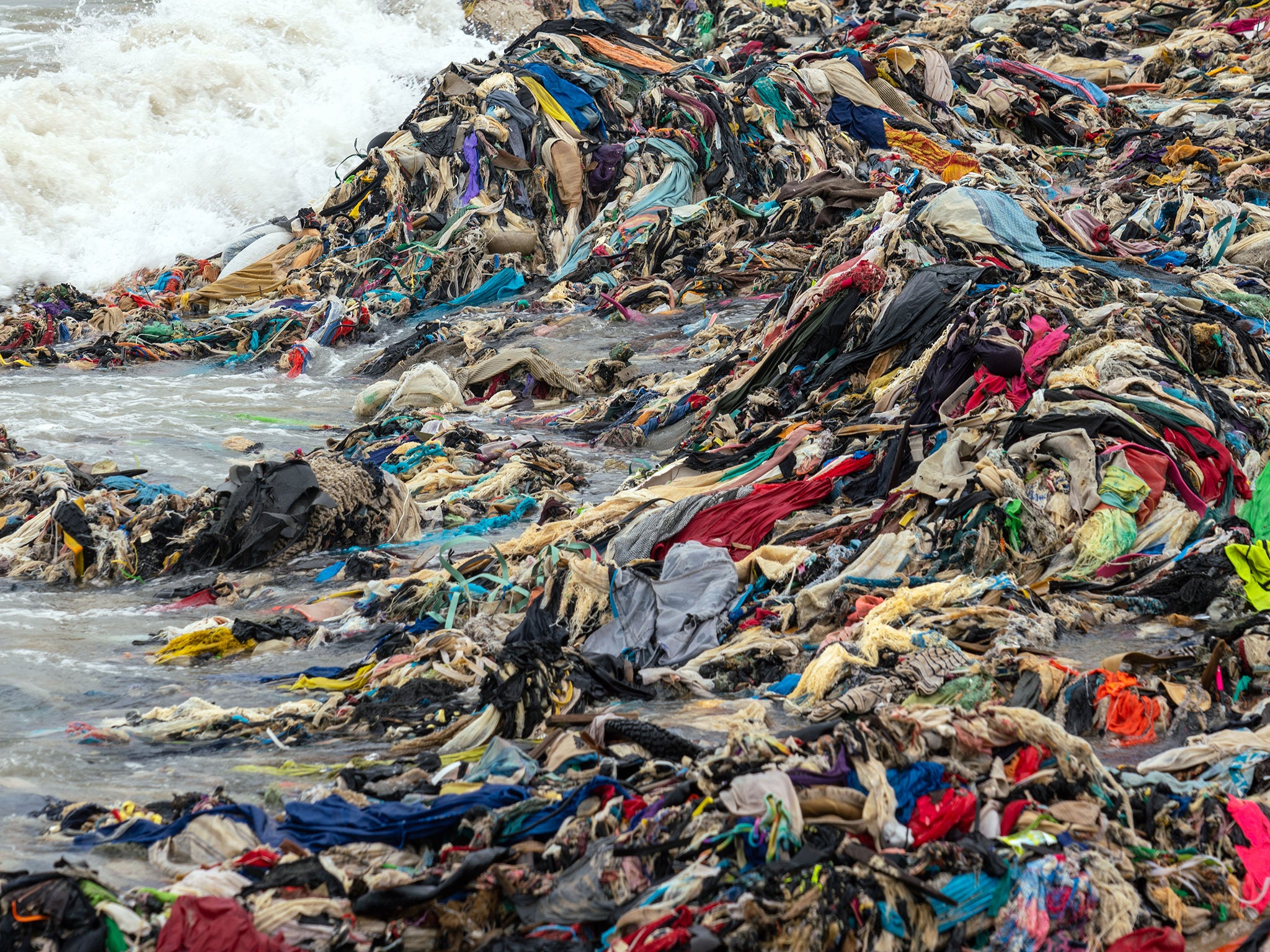
How can children encourage their parents to change their way of living? Parents hold a lot of authority and it could be hard to break them out of their habits.
Corporations play a concerningly large role in the environmental decline of the modern day. Appliances in previous decades used to be built to last a lifetime, and now they must be replaced every few years. By forcing people to buy low-quality products again and again, corporations contribute to an obscene amount of waste. At the end of the day, all that matters to these big businesses is profit margins, not the increasing frequency of landfills all across the world. Between non-biodegradable plastic products, fast fashion, and water/energy waste during production, corporations are destroying the planet and then pinning the blame on consumers. They pretend to care about the environment, lying about green policies and imploring people to recycle instead of removing harmful business practices. We could do so much to resolve this, whether by imposing legal responsibilities onto these corporations or implementing clean and renewable energy, but doing so requires foresight people don't want to have. Looking toward our future reveals an unpleasant picture of a desolate Earth, and we are more willing to turn a blind eye to this and hope it'll never affect them. Unfortunately, the way things are going, it most certainly will over the course of our lifetimes.
How can students encourage people around them to take action to have a smaller carbon footprint? It is very difficult for students to get the attention of their peers and help change their minds. It is also almost impossible for students to be heard by adults so how can they be heard?
Something I am very willing to change would be my shower time. Taking long showers increases our co2 emission because of the gas water heating system in houses. For some people this can be an easy thing to change, but for others it can also be hard. Many people use showers as their time of relaxation and alone time (like me). After a long day all I want to do is stay in a warm shower and relax, but taking a shorter shower will minimize my relaxation time. This would be a challenge I would encounter. Some support that would make my life easier could be to ask for more time alone away from my siblings from my parents.
I completely agree! After a long day, I find enjoyment in my showers because they are the one time I can truly relax without any distractions. However, I know how big of an impact long showers have on the environment, and now that I’m aware, I am going to start cutting my time short. Shorter showers use less hot water, which means my water heater burns less energy and produces less CO2, helping reduce my personal carbon footprint. I’ve realized that I can still enjoy my relaxation time without harming the planet, like listening to calming music, or use scented soaps and lotions to make my shower feel luxurious even if it’s shorter. By being mindful and intentional about my shower routine, I can feel refreshed, unwind after a busy day, and still do my part to protect the environment.

I completely agree with you! Long showers can feel incredibly relaxing after a busy day, but being mindful of our water and energy use really does make a difference. Shorter showers help reduce hot water consumption, lower CO2 emissions, and support a more sustainable lifestyle. I’ve also learned that making small eco-friendly choices at home benefits everyone — just like choosing energy-efficient solutions such as getting an EPC Certificate London Same Day when needed. It’s all about balance. You can still enjoy calming music, scented soaps, and a peaceful routine while also protecting the environment through simple, intentional habits.
Buying food from other places around the world has a huge affect on our global co2 emissions. It takes a lot of energy to transport said food by boat, truck, plane as well as keeping the food refrigerated, thus creating a lot of carbon. Gardening is a really fun but also contributes way less to your carbon footprint. here are a few benefits; Plants create oxygen, creating more space for biodiversity in your neighbourhood, reduces CO2 emissions from shipping, because now you have grown it yourself instead of buying it from somewhere else, you will not be intaking pesticides from your produce, its good for your mental and physical health, and you will get the satisfaction of growing something yourself. Not everyone has the space or time to garden but it is always good to buy local. By stopping at your local farmers market, not only are you reducing your shipping emissions but also supporting your community and local farmers. Also when shopping at grocery stores you can check to see where the food was grown/made and if it's organic. It makes an impact what you buy. That be said no one can be expected to make and grow everything they eat by hand or to eat entirely locally, and many people rely on transported food to survive. But it's always a good thing to think about when buying food.
Hi, there are still some people who can't grow all their food at home because of the weather, for example. It's not possible to grow a lot of food where I live due to the weather, so it's okay to buy food from other countries. But I also agree with you that we should try to grow as much food as we can ourselves.
I think we might be in the same school Guðrún.
You can absolutely grow potatoes, carrots, beets, probably onions, during summer break, you could grow tomatoes and even grapes year round with a grow lamp, if you have a potato storage room you could even set up a mushroom growing place (please wear a respirator or some kind of a mask) and you could potentially also you could keep 2-4 chickens by making a small chicken coop and you can feed them scraps, leftovers and/or seeds and you can get up tp 4-5 eggs per week per chicken, (this is all assuming you live in a house with your own garden and not an apartment) but if you live in an apartment you can join or get some other people to pitch in to create some kind of a community garden focused on growing homemade food and maybe keeping small livestock (this could cost a bit of money though so i understand if this is not realistic). this is all obviously a ton of work and its much easier to buy local food and vegetables, its very fun if you have the time.
In my opinion having the latest technology could be a want but it could also be a need, it depends by the use that a person gets out of it.
if you buy the latest without any reason, just because you want it, it's a "want"; if you buy it because you use it for a reasonable cause, like work or also school, it can be called a "need".
I only buy a new phone if my latest one doesn't work anymore because until it stops working i don't need a new one.
i reckon i'm not addicted to my phone but if someone is, i think they should try doing something else like doing some sports or maybe reading a book.
I usually buy a new phone only when the old one is almost totally broken and i usually don't buy a new model but an old model or a refurbished phone.
When i have an old or broken phone i don't put it in the waste because there are some components of it that can be reused one more time before becoming rubbish so i ususally bring it in specifics centers that recycle them.
I'm not addicted by my phone but, if i were, i could break it leaving my phone in another room when i'm doing somethink, like studying.