


Look to the right side of this page, and you will see a series of Student Discussion topics listed. Students: you should look through those topics, read other students' comments, post replies, and add your own thoughts. Join as many discussions as you like!
Teachers can meet other ISCFC participating teachers and share ideas at the Teacher Planning Discussion link at right.
Note that all teachers and students who wish to participate in the forum will need to register, you can now use a single registration for both the footprint calculator and our new forum!
Click the buttons at the top right of every page to either Register or Log in so that you can participate in the forum.
Need more help getting started? Email Jason. Otherwise, go ahead and start discussing your footprints!
In order to post, you must be registered and logged in.
Recent posts:

A way some people could get rid of gifts they don’t like after the holiday season is a gift swap. For some people the gifts they receive is actually what they want, but for some people they receive gifts that they probably won’t ever use, which is where this idea comes in. This can be a community event or a school event where everyone comes together after the holiday season and you place all of your gifts on a table or out in the open. Then you swap your gifts with someone else’s gift they didn’t want. The way you swap your gifts is adjustable to how people are there and what the people want, it can vary. In the end , this a good way to receive something you actually want and will use instead of letting it collect dust on a shelf or worse, throwing it away which would intern more carbon emissions. This idea is also customizable to where you don’t have to swap your gifts for someone. It could be where everyone brings the gifts they didn’t really want or think they’ll use and then you’ll collect all those gifts and then you could donate them to some charity or organization that could use them.

When I calculated my carbon footprint I found that I was far above average because I travel a lot. Air travel is something I do quite often and traveling in planes releases a ton of CO2 into the atmosphere. There is little I personally as a kid can do about this but, some companies could limit their flights. A Some airlines fly extra empty flights just so that they can keep their status, but they are not thinking about the effects that has on the environment. Air travel amounts to about 2.5% of all greenhouse gas emissions which is a lot that most likely could be cut down. We can do our best to limit unnecessary air travel, but in the grand scheme of things we need to be careful and mindful of how the things we do change the environment we live in.
I agree its bad but we cant just limit flights
As a high schooler, I agree it is difficult to affect how you do your air travel, as that is mostly up to the parents. I find myself in the same situation. Another way you might be able to help with all that air travel is making up for it by instead of driving to some places, ride your bike, or walk. That's what I have been doing, and I find that helpful.
Train systems are an incredibly eco-friendly option for long distance traveling. In Japan, this form of transportation generates about 80% less CO2 per person. Very sustainable.
I ride the bus which releases carbon but that doesn't really change anything considering a bus has a designated route it drives everyday so me not riding it wouldn't matter
Yes it wouldn't add to YOUR carbon footprint, it will still add to other so even if you don't ride the bus it will still add to the total carbon. Yes it does have a designated rout that doesn't change how much carbon it adds to the air.
It depends if you pay, as that gives them money to continue. City buses (at least in seattle, where I am) are generally more eco friendly though.
It doesn't change the amount of carbon releases which is what I said, all I said was me not riding the bus wouldn't change the amount of carbon it releases in all. I said me riding it wouldn't change the direct amount of carbon released
Our items and belongings that we have, clothes, technology and such should be kept if it is able to be used. For example, the clothes that I have are good enough and I do not need or want to buy new ones. There is no need to buy new clothes if the ones that I have are already good, and it would just be a waste of money and it would damage the climate. The fashion industry already makes up 8-10% of the total global carbon emissions, and me buying new clothes would make it go up even more.
you're totally right about this, the fashion industry is insane for carbon emissions. i never realized it was like 8-10% of global emissions until i started researching. honestly keeping the clothes you have is way smarter than constantly buying new stuff. plus most new clothes are fast fashion that fall apart anyway so you end up replacing them more often. if everyone just wore what they already had and took care of it, the fashion industry's carbon footprint would drop so much. it's crazy how simple the solution is but nobody does it.
I completely agree with you on this, I think that it will always be smart to keep your clothes till you absolutely can't fit them any more. I also think that many more people should shop at secondhand places and thrift stores when they need new clothes. Of course for some things you need to get them new but for most things thrift stores work just as well and are usually much cheaper. I knew the carbon admissions because of the fashion industry where high but I didn't know they where that high.
You're totally right the solution is simple but nobody wants to do it because they're too lazy. the world needs to change people need to wake up and realize that we are causing global warming. I'm not saying you need to go all crazy and buy the stuff that is expensive, even the stuff that is good for the enviorment is bad for example electric cars how do the charge.they use fossil fuels to charge.
Turning off the lights when you leave the room
yes is completely is and its human cuased
Yes, it is absolutey human caused since everything we do releases co2
While I am under average in almost everything I am wildly over in the travel section and should probably cut down on that
Me too, i think that it might be from when i went on trips for fun over summer break. I could cut back on these to reduce my footprint.
I was also wayyyy over the transportation section and that's the only section I really need to improve more on
Me too, i flew way too much this year which really contributes to travel.
I am quite the opposite because I rarely ever take flights for trips. Driving, yes, but if I were to fly more my carbon footprint would skyrocket.
Maybe its not that we should travel less, just less by car and airplanes.
Protect our planet
keep our wildlife safe and respect animals habitats.
we need to limit ai/ google search use too, the carbon foot print challenge doesn't calculate it but it still produces a lot of co2.
All internet use of any kind effects the climate change and student carbon footprint.
ai uses a lot of water to cool down its system causing places to have less water. it also impacts global warming.

A sustainable city should have good public transport so people don’t need to use cars as much. It should also have green areas like parks and trees. This helps reduce pollution and makes the city healthier for people.
I want to go a step further and just eliminate cars. Public transportation (if it works well) could be faster than lots of individual people stuck in traffic, and it would definitely take up a lot less space.
The city could have a mix of wind, solar, and water powered energy sources so that it could still store energy in any weather. Instead of a power plant, energy could be taken from a bunch of different sources and then spread evenly across a grid.
This is a very far-fetched idea with current technology though.
Malcom your idea isn't far fetched we have ways to make fast public transportation. We have the technology we just need people to do it.
Another way to reduce car use is to make more bike lanes to encourage people to bike more.
I personally think that you do not need the latest tech. Sure it might be funner or a little more efficient in the long run, but in no way do you need it. I do not get a new cell phone unless mine is outdated to the point I can’t use it, or I break mine (Luckily hasn’t happened!). I have not personally thought of the effects this has had on the environment until I did this. I think if you’re addicted, it’s helpful to look at nature, and remember why the world around us is so beautiful! You know? Thanks for reading!
Its so wastful to get new devices everytime a new model comes out
We get a lot of new models and it seems that there is a very small difference between them and the older models.
The production and use of new tech so often greatly increases your carbon footprint, so it is best to limit that.
Before purchasing something new, I check if i already have something like this. Getting the new model isnt just bad for your footprint, its also expensive.
It depends on whether or not your current model is sufficient for what you do with it.

Climate Change is a consequence of the rapid industrialisation of the world and human neglect/unawareness of pollution. The industrial revolution, while an important event in modern history, also kickstarted industrial pollution and as a consequence caused climate change. Are there any real ways to prevent it, or does the current political landscape not allow any such preventive actions to be put in effect due to the favoritism showed to corporations, industrialists and how they see these preventive actions as 'non-beneficial'?
this makes a lot of sense and i understand what you mean by "are there any real ways to prevent it..." i do think there are at least a couple but they might not be possible at this point in climate change.
"STOP" and "NOW", absolutely not, "lower drastically" and "over the next decade or so", very possible.
if all of humanity managed to agree to some policies and promises then we could likely meet the goal of less than 2°C by 2030 (maybe 2040)
1st we need to stop all burning of coal NOW,
coal is by far the worst, dirtiest, and least efficient fossil fuel, its a technology that belongs in the industrial revolution.
2nd we need better public infrastructure,
while one train (even electric) produces more co2 by itself than a car, if a hundred people are in that train then that train produces much less greenhouse gases per person than a car, so the answer is more electric trains, subway systems, electric ferries to islands, and electric busses where applicable, its also not just enough to have these things we need to
2.5lf encourage people to use public infrastructure and discouraging use of cars
cars are convenient sure but they pollute a lot, if we could make parking harder to find, more walking streets, one ways, reduce the number of lanes on highways, trains that run on time, and better accommodations, for example on one of these points, LA opened a new lane on one of their highways a few (dozen) years ago, and congestion got worse over the entire city, because people found it more convenient driving they would drive more and thus more cars on the roads, and that has lead to a joke in civil engineering "just one more lane and that will solve it"
3rd the world needs to transition away from coal, oils (petrol, diesel, crude oil), biofuels, and natural gas,
some fuels are less bad than others, for example crude oil and coal are much less preferable over the RELATIVELTY clean natural gas and biofuels, still not ideal fuel sources but just better if for example cargo ships run on biofuel over crude oil.
so we need to adapt industry away from that, foundries need to use preferably something like hydrogen gas or induction heating ovens,
ships need to use more efficient fuels or even hybrid ships (electric ferries for shorter trips are amazing (trust me, I'm on one right now))
4th we need cleaner powerplants to run this new industry. lets say we get every company and industry on the planet to somehow go fully electric, we still need the source of that electricity to be clean or we are just moving the problem from the production to the source. solar, wind, hydro, and geothermal, are obviously the goal and the best for this, but we need a ton of electricity it in a very short time, so might I suggest nuclear energy,
nuclear energy is much safer than people imagine (I mean global warming kills more people per year than nuclear energy ever has,) fossil fuels also contaminate more than nuclear and produce waste that goes into the air and is harder to manage than barely radioactive rocks that you can reuse 97% of and then throw the waste into a hole. because nuclear energy is so scrutinized that means that like airplanes its one of the safest forms of doing what they do, any time anything goes wrong everyone is talking about it so they have to hire the smartest people they can to make sure everything is safe.
another benefit of nuclear energy is that the only waste is a rock you burry a few kilometres underground to safely decay, and some water vapour that condenses back into safe water.
After all of the damage that humans have done to earth is is true That it cant be fixed now but right now we can take steps to save the future earth even small thing like turning off the lights make a difference however small. But if the entire world turns off lights when not in use it can make a huge difference.
It is very true that we can't make climate change disappear overnight, but we can reduce carbon emissions. Even if everyone only did a little bit, it would still make a huge difference.
People believe that climate change is fake because they argue that it's still -10 degrees outside. That's the weather. Weather and climate are two very similar, but different things. Weather is the temperature of the current day. Climate is the temperature, precipitation rates, storm possibilities, and more. Climate tells us what the average weather will be for a certain time period. Over the years, we have seen the climate increase and more and more carbon dioxide gets released into the atmosphere.
If climate change is fake, then are the ice caps melting? Why are coral reefs going extinct? You may think that increasing the sea levels by 2 meters is nothing, but the effects are catastrophic. Many parts of the world including Florida, Miami, Bangkok, and more will be underwater. So what? Who cares about these cities? It's not about the cities. It's about the people. Who will pay for all the damage caused by these floods? Where will all the people populating the cities go? If we do not do something now, it will become much harder later to fix these problems.
Exactly, People really need to open their eyes nowadays, we are heading into a dark future. I hope to live in a future where my future grandkids will be able to see snow. I have a half-sister that dreams of seeing snow someday. As our carbon emissions go higher than ever recorded, I don't think it will be possible in the future unless we act now. Can you believe that after the industrial period, we have produced over 1,800 GtCO₂ which is 37.8 billion metric tons. How will we ever recover from this. As sea levels rise, i feel like more people are covering their eyes and ears as they don't believe this is really happening. 99% of scientists believe that climate change is real, but why don't the people believe? I'll tell you why; they are too scared to realize that us humans will go extinct in a matter of a few decades if we keep up our carbon emissions. There are ways we can reduce carbon, A bunch actually, but people live too lavish to care. If we can't do something about this right here and right now, our species is done. Mother nature can live without us. But we can't live without her.
Yeah, I strongly agree with what you guys are saying. We need to wake up to what climate change is doing to our planet,and not just in small places, like the pacific islands or the Maldives that don't really affect a large number of places, but everywhere. People have ignored the problem for so long, only because it didn't DIRECTLY impact their daily lives.And only now are people realising that this is real and they suddenly have to do something about it. But what about the people who have already been suffering for years, who had to move because rising sea levels made their country go extinct. These people have been trying to tell us for years that climate change is real, we are the problem, but we haven't listened until now. We all have to do something now to stop climate change before it's too late.
I like what you are saying about how it affects small islands more than other places and in those small islands they can actually see climate change affecting their lives but without the help of the whole world change is harder in small places even though larger countries may not be directly affected by the climate change if they don't do anything in the next century it might be too late for some places and a wake up call is needed for the whole world to take action
I am curious to learn about ocean acidification as i know little about it. It doesn't really seem like a problem caused by the increase of greenhouse gasses yet it is and could be just as much of a problem as increased temperatures or water levels. I want to learn more about how carbon dioxide can cause this issue.
I too am curious as to how ocean acidification because I don't know a whole lot about it but i do know that it is somehow affected. It affects Calcifying organisms—including oysters, clams, sea urchins, and corals—rely on carbonate ions to build and maintain their shells and skeletons. I also know that when CO2 dissolves in water, it forms carbonic acid, which breaks down into hydrogen ions.
So it is affected and could become more of a problem in the near future if we don't stop it.
Climate change causing temperature rises
Climate change is real and we only make it worse by disrupting the natural order.

After doing this carbon footprint test, I was honestly very shocked by my results. I did not expect my total footprint to be so high, especially when I compare it to the sustainable level mentioned in the results. What surprised me the most is the "home" category, which is extremely high compared to my region. It made me realize that things like electricity, water use, or even air conditioning probably have a much bigger impact than I thought. The
"food" category is also quite high, which shows that my diet and consumption habits play an important role in my environmental impact. Even if my "purchases" category is relatively low, I think it still shows that buying products has a hidden cost for the environment. As for transportation, my result is lower than the regional average, which is a bit reassuring, but it is still not low enough to be considered sustainable. Overall, this test made me understand that my lifestyle is more polluting than I imagined. It is quite worrying, but at the same time, it helps me see where I can improve, especially by reducing my energy use at home and being more careful about what I eat and consume.
i agree and my largest section for the foot print was home as well and was mostly contributed to by the light bulbs. to ensure our planet is not destroyed by us everything counts even turning off the lights when you leave the room
Stop wasting food, its bad for our carbon footpring
I agree with this, when we waste less food it can help climate change.
If my family has and uses less lightbulbs, it could decrease our carbon impact.
travel less or go on planes less
our planet is changing fast because of pollution and waste. if we all reduce trash and save energy. we can protect Earth for the future. small actions from everyone can make a big difference.
I 100 percent agree with what your saying because its true that our planet is changing fast due to all the pollution and waste. I think that if we all took climate change seriously we could make a big difference because we did start climate change so we can also finish the ongoing increase in carbon dioxide. If we don't stop climate change we could be majorly affected as humans in the future and also affect other populations (Animals). All of our small actions can make a difference but only if we all corporate.
Anybody have any ideas to reduce trash other than burning them or recycling?
We should start making all natural grocery stores that dont use plastic containers
That's a good idea. Maybe instead of plastic maybe some non-plastic mesh bags? Kind of like the ones at Michaels, you know what I mean?
Or like brown paper bag type of thing? I don't think that would cause that much of a cost difference and it would be SO MUCH BETTER for the environment. There are so many places that use plastic paper bags. I looked it up- 1-5 TRILLION plastic bags are used per year. That's so sad. Humans need to do better. 
we should use compostable items or reusable items. i use reusable bags instead of plastic or paper.
Use reusable water bottles instead of plastic ones.
Climate change is caused by humans, fossil fuels and other things are causing climate to change
It is sad that all of it relates back to us. We should really be doing better.
Using gas stoves and the use of gas products like many things in the world cause major amounts of carbon dioxide into our atmosphere. Also with the use of coal and natural gases it's even worse.
How much do my long showers affect the environment and my footprint?
I take hour long showers every day personally and don't see any problem with that.
jesus christ that wastes so much water, try to shorten it
I am not totally sure I think it wastes energy especially for heating hot showers.
you can save a ton of water even by shortening it by 10 minutes
Heating water uses most of the time gas.
When burned it emits CO2 which traps heat. The most you should take is probably 10 minutes or less.
Hour long showers will use alot of water and electricity/gas, try setting a goal for shorter showers
I think 10-15 minute showers are the most reasonable. Taking up to 1 hour long showers is not the greatest idea because it wastes water and emits a lot more CO2 then you think.
Although some aspects of generative AI can appear to be very useful to our everyday life, it’s benefits still should not overshadow the overall destruction it has caused to our planet. Of course, we can’t blame it all on the AI (a survey conducted in August of 2024 and ended by August of 2025 by the Federal Reserve Bank of St. Louis found that 44.6% of adults in the US use Generative AI regularly)as the many users on platforms such as ChatGPT, Sora AI, are the reason why AI takes up so much resources. According to the UN Enviorment Programme regarding what AI does to our environment ,“they use massive amounts of electricity, spurring the emission of planet-warming greenhouse gases". We should focus on finding ways to decrease the amount of resources that AI uses to function, or better yet, we should minimize how much we use AI.
I see what you're saying, DANNYTHEOG, you also make some strong points. Generative AI is really helpful in our everyday lives, but its true that it also has a big impact on the environment. With so much people using AI tools nowadays, it makes sense that they use a lot of electricity. And like the UN Environment Programme said, all that energy use goes to more greenhouse gas emissions, which is not good for the planet for sure.
yes exactlyyy! it also discourages people from thinking for themselves, which only further prevents them from thinking abt sustainable solutions.
I feel like all generative AI is bad in the long run. Even for the useful, mundane, everyday tasks like replying to emails, the line still gets blurred--what defines how far we're willing to go to substitute human art of writing. Generative AI overall is overtly negative, and it's just not an expenditure that is affordable when we have less than ten years to get carbon emissions down below 1.5 degrees Celsius of warming. Unfortunately the easiness and comfort of AI has really put a spell on people.
?ai data centers are using clean water to cool their machines, which is bad because it's wasting CLEAN water that could go to people that need it
I agree with Elijah ai was made by people and then imediattly got shamed for it. It has been nothing but useful for us
I've been trying to use AI less because I feel it removes the accomplishment you get when you finish something
Sustainable City
I think sustainable cities are important for the future. Cities can do a lot to reduce carbon emissions, like improving public transportation and making it easier for people to walk or bike. If it’s easier and safer to bike or take the bus, more people will choose that instead of driving.
I also think cities should focus more on green spaces and renewable energy. For example, using solar panels and making buildings more energy efficient could help a lot. Small changes in how a city is planned can make a big difference over time.
In my opinion, both the government and the people living in the city need to work together to make it more sustainable.
Transportation and Flights
Transportation is a big part of carbon emissions, especially cars and airplanes. I realized that even if I don’t travel a lot, it still adds up. Flying is especially bad for the environment, but sometimes it’s hard to avoid.
I think I could make some small changes, like walking or biking more instead of always using a car. I could also try to use public transportation more often.
Even though these changes seem small, I think they can still help. If more people do the same, it could make a bigger difference.
I think improving public transport is very important because I live in a city with good and electric powered bus systems and I use the bus a lot.
With the rise of generative AI data centers, I worry that they could be bad for our environment. They use a lot of electricity and water to keep the computers running and cool. They also only are made in neighborhoods with more people of color, and I think our community should think more carefully about whether we really want more of these data centers being built. I think we should speak up and make sure both our environment and communities come first.
As summers get warmer, our wild life gets more and more scarce as we live large; and even if you don't someone else might be living large enough to cover the space you've tried to save. Which is why we need to start focusing on our individual actions, not collective. Think of it as 12 people write their names on bottle caps and throw them into a room then get sent to look for them, if each person looks for only their name it'd take hours! But if they all picked up each one they saw and handed it to who it belonged to, they'd be done way quicker. Like the example, if we all work together we'd get to reverse what we've already done so much more quicker.
Look up what your city's mayors email is and it should be there, then email them that YOU do care about our climate.
Why is plastic bad for the environment
Plastic doesn't decompose for a very long time.
Plastic is awesome i love what it does for the enivironment and how it decomposes. I personally drive a car with 5 mpg and have set two forest fires in my state. I love climate change
Plastic is really bad for to environment. It takes thousands of years to decompose and ends up as litter on land and in our oceans.
I feel like people who are not directly affected by severe weather events do not fully grasp how much of an effect climate change has on natural disasters. Seasonal hurricanes, wildfires, and tornadoes have become so normalized that unless they are destroying your city, most people will ignore the media coverage because they do not want to accept it as a result of climate change.
With climate change weathers are getting more extreme. Rainy days are getting rainer, windy days are getting windier etc. Which climate change creates more heat and faster cycles.
Climate change causes more extreme weather. Makes warmer oceans which causes hurricanes and dryer earth and soil which causes wildfires. Fires emit CO2 which traps heat and makes our earth warmer.
I think the UN had a great idea by setting those goals of improving universal welfare and making everyone's lives better. But I also think 2015 was a little greedy, by 2026, 11 years after the goal, pretty much none of these goals have been achieved.
if people like elon musk decided to invest in stopping world hunger, he could do it because he has enough money. we could also stop wasting food and give unwanted food to those who need it
I think otherwise because although his networth may be 1 trillion doesnt mean he has enough to spend and if he does it could negativly impact the world like extreme inflation and much more Co2 released
what foods require the most carbon footprint that are easy to cut out of your diet?
I didn't relies how much my food causes co2. if I eat less red meat and dairy it could have a big impact.
Climate change is very much real, but this topic does get me wondering. How much of climate change is truly caused by humans? What specific things cause the most climate change?
Yes, over 99 percent is caused by humans becuase of all the gas cars, stoves, and etc we use.
I learned that my carbon footprint is heavily impacted by travel, and I still wonder how much of the Co2 released is because of travelling
One way we can make a more sustainable city is first focusing on manageable things like avoiding fast fashion. Fast fashion is buying clothes that are currently in style, even if you don't need them, from companies that make them with cheap materials. This creates more clothes waste when these clothes go out of style fast and can cause harm to the environment because of the cheap and therefore more dangerous materials used in fast fashion. The creation of these clothes pollute the water and cause micro fabrics into the ocean as an article, "The Environmental Effect of Fast Fashion Explained" tells us. In order to prevent fast fashion, focus on thrift shopping, or buying higher quality clothes.
I totally agree, you made some great points. To add onto what you said about about thrift shopping or buying higher quality pieces. You have to be careful nowadays in thrift stores because a good amount of what you’re seeing is from fast fashion brands as a result of this overproduction of clothes. The brand I see a lot when thrifting nowadays is SHEIN. To add onto what you’re saying about buying higher quality pieces yes, the quality does matter, you’re correct about that. However, you must be careful when buying a higher quality pieces as it’s irrelevant to buy a high quality piece if it was made unfair working conditions or the process of harvesting the materials for the product was harmful to the environment.
I think that both of your are right and i have been thrifting more mostly for the expeirence but also for items in my wardrobe
I don't get why the world works so hard on destroying the people that could be working together to help heal the world they destroyed like the wars destroy a lot of greenery and kill A LOT of people but those same people could work together and heal the world so that it would be so healthy that there would be no need to fight for land.
I agree, why are people so focused on creating another world war when we could be saving the planet?!
We should definently focus more on saving this planet because we only get one.
i think we should focus on the planet and not the other things that are wanted and not needed which is causing climate change.
We should focus on what is needed not wanted. Otherwise there will be no way to save the planet.
Honestly I think that part of countries focusing on war and machines that will actively make people's lives worse is a "mutually assured destruction" mindset (like if everybody else has something powerful and harmful, then we've got to have it too, just in case). I think the United States is one of the biggest contributors to that problem--we have the most per-person carbon emissions in the world, and one of the largest militaries in the world.
Another big factor is that world leaders and grown up citizens aren't going to necessarily feel the side effects of their negative behavior, because they're the older generation. If they don't do much to fix the climate or they just deny that it's changing altogether, big deal, it'll be the next generation's issue, when it's even worse. That kind of short-term thinking is super toxic and it avoids the problem, which only makes it bigger.
A sustainable city should have good public transport so people don’t need to use cars as much. It should also have green areas like parks and trees. This helps reduce pollution and makes the city healthier for people.
how much food is wasted yearly in the usa and how do we prevent this?
add solar panels to the top of school buildings to reduce carbon output.
I think that needing new technology depends on the person, some might need it due to disabilities. I get a new cell phone every two years, I don’t really consider the environmental impact. And I'm not addicted to the point where I need my phone everywhere.
I agree that new technology depends on the person. But even using a phone has a environmental impact almost everything we use is created from things that hurt the planet.
technology is very helpful but destroys parts of the world because of climate change.
If you are getting a new phone every 2 years, I don't think that that has a huge impact on the environment. Don't get me wrong, everything we do has an impact, but sometimes you don't have as big of an impact as you think. And, I do agree that sometimes technology depends on the person, for example, my little sister needs an iPad to communicate with us because of her disability. But we should always try to consider if what we are doing will have an impact on Climate change and how big of an impact that would be.

I see the humans with extreme pessimist point of view i blame them for the extinction of several thousand animal species and they caused the global warming by raising animals producing electricity ect...
over fishing
Cars
Deforestation
Petrol extraction
Wars
Over hunting
trash in our oceans
having to save animals because of our stupid decisions
the fact we have to have breeding programs for almost extinct animals because of us
elephant ivory black market
and more......

Ok, human are bad, then what? I don't think this kind of thought leads us to any practical solution. So beyond discussing about whether human are bad or not we rather have to focus on our current problemes.

Our biggest problem is that our governements that have the power to help stop the global warming but they just care to watch their computer and having a nice sofa on he wich they can put their ass on.
This is a difficult topic for a lot of people, but I have to say I agree with you on this. Humans have done far more damage to the planet than any other force in its entire history (maybe except for events like the Chicxulub impact that killed most things 65 million years ago).
You are right about humans doing a ton of horrible things in our history. But I think that it is more important to focus on what we can do to make up for those mistakes, rather than dwell in the past. All of the bad things that you mentioned are issues that many people are dedicating their lives to solving. Even though humans are ruining this planet we have also done many amazing things. The bad outweighs the good obviously, but we can learn from both the bad and the good.
I agree! Humans don't care about planet earth, and we should not be polluting our planet. We should be taking care of our planet, because if we don't reduce the consumption of fossil fuels, we will eventually destroy animal's lives and our lives too.
The only problem is that if the humans change everything to natural energy and it produces 4 times less than the fossil fuel so it will occupy 4 times the spaces involved in fossil uels industry that meanig more cutting down trees. But fossil fuels pollute a lot more than natural fuels and destroying those places will be even more plluting. Third of all even if all the people on earth say to change it will cost an enormity to the governement eradicating those factories so the removal can only be done little by little. Thank you for your attention zenone2.
If you want to contact me my email is m.sassi26@ejm.org

I agree with you that humans harm our planet. But in my opinion, humans are not that bad anymore. Right now people are doing their best to improve the environment. Many eco supportive programs are being created, different companies change their products and the number of cars and rubbish has greatly decreased. The attitude is changing. I hope that our environmental problems will improve soon.
People all over the world talk of green and economical growth and ecologie but have the same bad ideas that brought us in this mess !!????

I don't think humans are bad. The things we are doing are bad. But develop more about your statement.
Humans can be in some aspects badddd. BUt , if ur a fellow human. How would u feel??? Taking actions are not a joke, please elaborate pon ur point @Zenone.
I agree that not all humans are bad. Sure they have done some things to harm our planet, but they have also done so many things to help our planet such as starting organizations like 4ocean.
I do agree that some human are bad, but we are also humans. I think we should not be blaming ourselves but instead reflect on we can do better to make a world a better place. : ) For example what others said above, maybe we can think of changing everything into natural energy and not using fossil etc... (sorry for the bad grammar)
I agree on some parts. I understand how more than 500 species has gone extinct because of humans but I don't think that humans are bad just because of the things you stated a lot of people are fighting against climate change so not all humans are bad. And if you want to fight against climate change we should start using more eco friendly products.
I agree with this sentiment to a degree, as it is very clear that not all people are ignorant to the ecological needs of our world, but is is incredibly sad to see the lengths at which corporations will pollute our world to make profits.
Yes humans are bad. People make lots of fossil fuels, waste lots of food, cut down way to many trees, and force tons of animals to extinction. We have been killing lots of animals that are almost extinct. This can mess up the carbon cycle and in the long term start something very bad. Something like a mass extinction.
I feel like js saying that humans are inherently evil instead of trying 2 encourage ppl 2 change will enforce a defeatist attitude that only discourages change. :3 while it is difficult sometimes 2 hold faith in humanity, i would encourage u to take action and find others that want to do so. then u may realize that there is good left in humanity, even if its not much XD
Take bus not car to school.
Add a compost bin to school cafeteria.
Cut out and reuse notebook paper at the end of the school year.
Bike to school not drive.
Walk to school not drive.
take the pubic or school bus instead of driving
if people like elon musk decided to invest in stopping world hunger, he could do it because he has enough money. we could also stop wasting food and give unwanted food to those who need it
such as meat consumption, showering for a little bit longer than i should...
Ya'll got any creative solutions?! I must know.
Imagine a in real life Hunger Games were to "solve the issue". But I feel this would be a last resort. And honestly it's something I fear happening.
I wish that we could work together more to not have more drastic measures come into play.
If this even makes sense.
Pls no hate gang.
Across the world, food is wasted by restaurants, fast food places, grocery stores, and markets that make or stock more than they can sell. This is incredibly harmful because all of this waste could provide suffering families with the meals that they do not have access to. I think food needs to be made more available to the public by lowering costs of quality, healthy ingredients so that people who are impoverished can still feed their families nutritious meals.
I think that ALL restaurants and grocery stores should be giving the "expired" food and leftovers to people in need
I wish that more people cared about this topic.
Many things you own create waste as it's created, from chips, to your whole car! And what do people do with that waste? Well, they waste it! We need to put that waste to use, by finding some way to recycle it and vastly lower the high Co2 content in the atmosphere. Scientists and green organizations should start experimenting with ways for some of the most common waste products to have a not-so wasteful use. For example, sewers get rid of the waste by just throwing it in the ocean! Biological waste that doesn't belong in the ocean can harm the environment, leading to more Co2. why don't people at least extract any ocean harming biological waste, and use it as a healthy fertilizer for land? Yes, it would be gross, and people wouldn't want to do it, but they should also consider the way it can positively affect future generations, and themselves. In conclusion, healthy reuse can lead to a healthy society, ecosystem, and world for all. 
I fully agree that we as humans waste a lot of things which is bad if we want to work on conserving and controlling the waste we so desperately hate.
Mr.Ryan was trying to defend his property but Sasol wasn't putting up with it and bought him out.
Also he was trying his hardest but his health was getting the best of him and he couldn't even use his payment money to get his son away from that town he used it on medical bills.
My class recently watched a video on Mossville and the highest earth polluting company known to man! Sasol is stopping many lives from being happy, and living the American dream, and ending many lives too! Mossville is a old community which thrived before sasol gave them the bum's rush, something has to be done, even if it means bringing them down. >:(
Yes, there are things I wouldn’t change. That is high meat consumption, I like eating meat. My family is mexican and we eat a lot of meat with other things that makes a truly delicious meal.
I noticed the more c02 you use the more the footprint goes up
Something you can do to reuse cans, cardboard containers,glass,and plastics is turn them into fun crafts. Another thing you can do with things like empty soda bottles and things of that sort is use them as containers for other things, like beads, or marbles, you could also turn bottles and cans into plant pots.
I think there are some things that I just can’t change. For example, my showers. I have such long hair that it takes at least 15 minutes alone to wash it. I also can not change how much air conditioning we use in our house. We have two dogs. One of them is really fluffy, and her hair makes it easy for her to get hot, since she is a mountain dog. We live in a really hot area, so we have to keep it on for her. I also can change my note taking habits since it is a literal requirement to use it how I do.
Normally,my family and I travel by car to Colorado,that most likely puts a lot of carbon into the air, but this is not a tradition my or my family is willing to end.
my grandma lost her house to a hurricane a couple years ago and we had to help her pay for it and we had to not have a lot of for for a lil bit but is aight we up
I believe that having the latest technology is a need for some people, like those who have disabilities or conditions and need certain technology, having the latest technology is a need. But if it’s someone that is perfectly healthy, there is no use for the latest technology. I’ve had my first phone for around 3 years, and I haven’t gotten a new one since. If I were to get a new phone, I would consider the environmental cost. I am not addicted.
In 2025, Sacramento has experienced very weird weather. From Jan-Mar we experienced normal weather patterns. Then, from April-June is where rain randomly came mid may then everything is normal but gets cold instantly in the night and really hot in the days. July-Sep has been confusing it was averaging through 80-95F and was a little fresh in the nights which were refreshing. Oct-Nov has been probably the weirdest part of the year. First week it was in the 70s then three days with 90 degree weather then went back to 70, it gets lower then higher in temperature. Early November-Now it has been cooling down since but its going up again then going down later. This has been the year for the weirdest weather. Any clue why our weather has been weird?
I’ve noticed similar weather patterns in other parts of California this year. It seems like the rapid shifts between warm and cool air masses, along with changes in the jet stream, have made temperatures much less predictable than usual. While seasonal variability is normal, this year has definitely felt more extreme. Hopefully, next year brings a more stable pattern.
Wants and needs are both important parts of human life, but they are not the same. Needs are things that are necessary for survival and well-being, such as food, water, shelter, and safety. Without these, a person cannot live a healthy or stable life. Wants, on the other hand, are things that we desire but do not actually need in order to survive. These can include items like expensive clothes, new technology, or entertainment. Understanding the difference between wants and needs is important for making good decisions, especially when it comes to money and priorities.
Food and hunger are important global issues that affect millions of people every day. While some parts of the world have an abundance of food, others struggle with shortages and hunger. This imbalance is often caused by poverty, conflict, climate change, and unequal distribution of resources. It is not only about how much food is produced, but also about access and affordability.
At the same time, a large amount of food is wasted, especially in wealthier countries. This is a serious problem because it means that resources such as water, energy, and labor are also wasted. Reducing food waste could help make food more available to those in need.
Individuals can help by being more mindful of what they buy and eat, avoiding unnecessary waste, and supporting sustainable food systems. Governments and organizations also play a key role in improving food distribution and helping vulnerable populations.
In conclusion, solving hunger requires both global cooperation and individual responsibility.
Extreme weather is becoming more common around the world. We are seeing more storms, floods, heatwaves, and wildfires than before. A big reason for this is climate change, which is caused by human activites like burning fossil fuels. These events can damage homes, nature, and even put lives at risk. I think it is important that countries work together to reduce emissions and prepare better for these situations. People should also be aware of how their actions affect the climate. It also shows how connected the world is, because problems in one place can quickly affect others around the globe.
Transportation is one of the biggest contributors to my carbon footprint, which I did not fully expect. My results show that I travel a lot, likely by car or even flights, which greatly increases my emissions. This made me realize that my lifestyle involves more travel than I thought, and that I need to make changes. One important step is to reduce unnecessary trips and use more environmentally friendly options like walking, cycling, or public transport when possible. For longer distances, I could try to travel less often or choose more efficient ways of traveling. I also need to consider carbon offsetting, where I compensate for my emissions by supporting environmental projects like tree planting. Overall, these results have made me more aware of how much transportation affects my carbon footprint and how important it is to reduce and offset these emissions.
The carbon footprint results surprised me, especially how high my emissions from food are. A large part of this comes from eating a lot of red meat, which has a significantly higher carbon impact compared to plant-based foods. Producing beef requires more land, water, and energy, and it also releases a lot of greenhouse gases like methane. When I connect this to the global issue of food and hunger, it becomes even more serious. Resources used for high-impact foods could instead help feed more people if they were used more efficiently. At the same time, many people around the world do not have enough to eat, while others (like me) consume in ways that increase emissions. This makes me realize that changing my diet—by reducing red meat and avoiding food waste—could both lower my carbon footprint and contribute, in a small way, to a more sustainable and fair food system.
Food and hunger are still big problems in many parts of the world. It is strange because there is enough food being produced, but it is not shared equally. A lot of food is also wasted every day, especially in richer countries. This makes the problem worse. I think people can help by being more careful with food. For example, not throwing away food and only buying what they need. Schools and governments can also help by educating people and improving how food is distributed. Hunger is not just about lack of food, but also about how we manage it.
First and foremost, I was pretty shocked by the carbon emissions of my traveling habits. Indeed, it was the highest carbon emissions among all of the categories. I did not realize the impact of my habits everyday. Surely, plane was an obvious factor of the carbon emissions. As it is for car rides; even though I live nearby my school; thank to this test, I do realize the great impacts. It made me understand that I have to change my traveling habits.
Furthermore, as far as I'm concerned, at an individual level, I try to consume less but better. Before, I had a nasty habit to consume a lot, and what I consumed was left into my closet. Today, I try to buy good quality products and to reduce my buyings, consume local products in order to reduce my consumption of imported products.
Besides, I also try to consume less meat, pork. I can see the results of these new consumption habits during the test, because it was the category with the lowest carbon emissions among all of them.
• ENVIRONMENTAL ISSUES :
In French Polynesia, a great problem remains in our consumption. Indeed, people tend to overconsume things that they don't need, leading our environment spoilt.
Therefore, I try to be part of a engaged generation that tries to respect, and to create a sustainable world for the future generations.
We have the chance in our islands to have outstanding landscapes, beaches and a verdant nature. And yet, our environment is endangered by our habits. Indeed, people do not sort their wastes and even dump them into the nature. Therefore, our fauna and flora are impacted by a very alarming pollution.
In addition, I'm part of an association in my school, therefore I participate in environmental actions such as cleaning beaches. These actions are made in order to promote change in the way that we perceive the beauty of our island. I was very shocked to see the wastes dumped on beaches, electronic devices left beside the rode, etc. Our association was shown on TV, so that we could convey the issue that we face in today's society.
Thus, the real issue today is our own responsibility in the way that we consume. We have to change so that our islands, nature and resources can be preserved.
What truly stood out to me in my carbon footprint results was not what I expected. I would've never thought my CO2 emissions were so high, it really made me feel guilty about my consumption. My worst habits are the following: the consumption at home and the worst of all, the air-planes.
High CO2 emissions intensify global warming by strengthening the greenhouse effect, leading to rising temperatures, melting ice caps, and more frequent extreme weather events. They also harm ecosystems and human health, causing biodiversity loss, air pollution, and threatening food security.
This is the reason why even if I live in Tahiti without my parents and I go to France to see them and my family I will consider the possibility to never live in Tahiti ever again even if I love it because If I need to see my family then I would need to pollute. Also changing my home habits are not that hard so then I could bring a lot down my emissions.
Therefore, I will try to change my habits so then it will have a impact at my scale to help the environment and as of now I am a part of the problem and I know that we have to protect our planet because we have only one. Reducing our CO2 emission and our consumption is the only solution to save our planet.
I have been wondering how much energy it truly saves growing your food at home? Being able to grow it at home and also recycle using your old food to develop new food surely has to save energy, right? Is it truly worth the extra effort?
I think you are right because growing your own food can help save energy. When people grow vegetables at home, there is less transportation, less packaging, and less food waste. Many fruits and vegetables travel long distances before reaching stores and this uses fuel and creates pollution.
Using food scraps to make compost is also a good idea. It helps the soil stay healthy and reduces waste. Having a small garden can also be relaxing and can help people eat fresher and healthier food.
However, growing food still needs water and time. People must take care of the plants regularly. If gardening is done in a simple and natural way, it can be good for the environment. Even if it takes some effort, I think growing food at home is worth trying because it has many benefits for both people and nature. It can also teach responsibility and help families spend more time together outside.?
If I hade my own home, I would make it as energy efficient as possible by using good insulation, LED lights, and energy-saving appliances. My house would use electricity from renewable sources like geothermal and hydropower, and I would consider adding solar panels if possible. I would live close to school or work so I could walk, bike, or use public transportation instead of driving often.
I would also try to reduce waste by recycling, using less water, and choosing durable products instead of buying unnecessary things. For food, I would buy as much as possible from local farmers and choose seasonal foods to reduce emissions from transport. My home would ideally be in a community with good public transit and green spaces, making it easier to live sustainably every day.
Okay, i think that your comment has some good intention about the environment, but at the same time, it looks like too perfect and not really doable. Because, is not everyone that can be buy himself some solar panels or have the choice to live near by school or work.
But i agree with some ideas that are common, like recycling, or buying local.
I think your ideas are really good and show that you want to reduce your carbon footprint, especially with renewable energy and reducing waste. However, even if these are good intentions, it does not always mean it is the best solution. For example, building solar panels or other technologies requires materials and energy, which also creates pollution. So in some cases, it can have a negative impact before becoming beneficial.
Moreover, not everyone can afford to buy energy-efficient appliances or install solar panels, because it can be very expensive. In the same way, living close to school or work is not always possible for everyone, depending on where they live or their situation.
So I think your ideas are interesting, but in reality, it can be more complicated to apply them in everyday life, and small actions, like the ones I try to do, can also make a difference.
My biggest carbon footprint as a student is the way i use my electronic devices like my personal computer or my phone either to study either to entertain myself, it a lot during a day. I think I can reduce my time when I entertain myself, but when I study it gets a bit more complicated, because today many classes are done on computers or iPad, so I can't really reduce my time but of course when it is fully charged I unplug it or when i don't use it I turn it off. Maybe I can't really reduce it but I try in my daily life to make small gestures that allow me even if it's almost nothing.
Living in Tahiti, my carbon footprint is about 23,000 kg, mostly because of transport. Honestly, it makes me feel a bit uncomfortable. I know it’s high, but at the same time, I don’t have many choices. Here, if you want to travel, you often have to take a plane. There are no trains, and everything is far away, so it’s hard to reduce it a lot.
Still, I don’t want to ignore it. Knowing this number makes me think more about my habits and the way I travel. Even if I can’t change everything, I believe small actions still matter.
First, I could try to take fewer flights. For example, I can group my trips together instead of traveling many times during the year. This way, I reduce the number of flights without giving up travel completely.
Second, I could change how I move every day. I can walk more, share rides with others, or avoid using the car when it’s not necessary. These small changes may seem simple, but they can make a real difference over time.
For me, it’s not about being perfect. It’s just about being more aware and trying to do better little by little.
I had some ideas about my carbon footprint, but damn I didn’t realize that half of it comes from my food consumption. Honestly, when I ate meat, I never thought about my carbon emissions. Now, my goal is to reduce my meat consumption. However, I don’t want to completely stop eating meat, and I also have difficulties to eat vegetables. So I really need to make an effort to improve my diet.
I talk a lot about my food consumption because I think that in other aspects of my footprint, I am already responsible. But I also realize that I’m probably not the only one who underestimated the environmental impact of food.I think many people, like me, don’t realize how much what we eat can affect the environment.And that’s because nobody teach me that.So I think,we need to be better educated about the environmental impact of food so we can make more responsible choices.
Hello, I think this test is very important to know our pollution. It showed me the importance of becoming aware of one’s carbon footprint, especially with housing and travel.
In the first part, about my home,
I was very surprised by the pollution caused by my consumption, especially by DATA. Instagram and YouTube are apps that use a lot of GB, and I use them a little too much.
For that, I have two solutions:
- use my phone and these apps less
- when I don’t use my phone, close the apps because they always consume energy
The second part is travel.
In the last years, I took the plane a lot. I live on an island and I go to see my family who live far away from me. I take the plane because it is faster and I don’t have time to spend many hours in transport if I want to see many people in my family.
Solution:
- making choices, even if it means not seeing everyone in my family, in order to take public transport
My total carbon footprint: 31,116 kgs
Home: 12,017 kgs
Transport: 15,086 kgs
Having food that is grown in your own country and local area is important for the carbon footprint of the Earth. Transporting food over long distances, for example by air, can release a large amount of carbon dioxide. Shipping by sea can be very efficient, unless the journey is extremely long.
Production is also a major factor. For example, growing vegetables can be difficult in Iceland during winter, as greenhouses require a lot of heating, which means a high use of energy. Refrigeration in stores is also a significant issue, as it requires a lot of electricity to keep vegetables and dairy products cold around the clock.
The conclusion is that if people can grow their own food or obtain it from nearby sources, it is more beneficial for our carbon footprint.
Honestly, this is a shock. 16,462 kg of CO₂ , nearly 6 times the French Polynesian average and 16 times the "sustainable" threshold of 1,000 kg. I expected to be above average, but not to this extent.
What strikes is transportation: 12,954 kg, versus a regional average of 510 kg. It makes sense though living in Papeete and travelling to mainland France or elsewhere almost always means long-haul flights, and a single Paris-Tahiti round trip already carries a massive footprint. The 2,152 kg for"home" is also surprising especially that I don't even have air conditioning, it must come from electricity use.
On the other hand, I'm glad to see food and purchases below the regional average my consumption habits aren't the real issue here.
The conclusion is that as long as I keep flying at this frequency, the rest of my efforts remain insignificant, and that I must reduce my flights frequency.
I understand what you are putting forward and I totally agree. I personally, as an inhabitant of Tahiti, a small islands from French Polynesia, relate to it.
We also have difficulties to grow some vegetables and fruits, forcing us to get theses from nearby countries, and in worse cases, from farther countries.
In contrary from you, our island might be really warm sometime, forcing us to need and use refrigerator or any cooling devices.
We can’t anymore ignore the carbon emissions we are producing from transportations and productions and should find ways to try and reduce or prevent it.
Thankfully, our locals products are slowly expanding themselves more and more in the market showing a little progress.
Even thought it’s not going to replace our daily needs and habits of consuming, it is still a way to move towards progress.
Hello, I am an 18 years-old student from French Polynesia.
Firstly, I would like to thank the website creators, they made me aware of how high my carbon footprint is, especially due to my flights. I am strongly concerned about climate change and its pessimistic evolution, and I commit to reducing my flights and taking more actions every day to reduce my CO2 emissions. I believe that, together, we can make a difference.
However, today, the situation is critical: we are heading towards a point of no return and our children will be the first victims. If we do not change our habits now, I am afraid of what might happen in the future. In my opinion, governments must take action to incentivize the population to reduce their carbon footprint, and a general outcry is needed to wake them up. The future depends entirely on us, so let’s take action!
Honestly, this is a shock. 16,462 kg of CO₂ , nearly 6 times the French Polynesian average and 16 times the "sustainable" threshold of 1,000 kg. I expected to be above average, but not to this extent.
What strikes is transportation: 12,954 kg, versus a regional average of 510 kg. It makes sense though living in Papeete and travelling to mainland France or elsewhere almost always means long-haul flights, and a single Paris-Tahiti round trip already carries a massive footprint. The 2,152 kg for"home" is also surprising especially that I don't even have air conditioning, it must come from electricity use.
On the other hand, I'm glad to see food and purchases below the regional average my consumption habits aren't the real issue here.
The conclusion is that as long as I keep flying at this frequency, the rest of my efforts remain insignificant, and that I must reduce my flights frequency.
My total footprint is 8,690 kgs of CO2 per year. With home being the cause of 5003 kgs. Food being 1885 kgs, purchases being 656 kgs, and transportation being 1,146 kgs. Ways to reduce my carbon footprint would be to recycle more, and reduce my AC usage. Another way would be to increase my energy efficiency as a whole at home.
https://www.green.earth/blog/10-easy-wa … -footprint
I think your carbon emission is certainly high. However I do agree that changing habits can help to lower your emission, especially in some areas such as personal purchasing. You do not have to always buy new things like clothes or electronic devises, because we all make unnecessary purchases that we do not actually need. Moreover, for your AC usage, you could try to use only in extreme heat: personally I try to use it at least as possible. For example, I first open the door to let the air pass before using AC. Therefore , I have to admit that transportation emission can be hard to reduce especially if you live far away from your school. The best would be to use common transportation as much as possible or even walk. I think that being conscious about your consumption is part of changing our habits to reduce our carbon emissions. So even the small steps such as turning off AC or just lower our home energy consumption as much as possible can contribute. I would also add that acknowledging our carbon emissions and the changes that we have to do like you did, is crucial to actually lower emission.
Personally , when I discover carbon emission , I did not expect it would be that enormous, especially for transport or even food. I think that knowing more about it now, I am even more conscious about my consumption and its effects on the environment. I want to try to lower my emission as much as possible by recycling more like you proposed to do, or try to eat less meat.
Hello, during my test I realized something great: Travelling is too negative for our Earth.
Indeed, we travel to enjoy our vacation or to discover new cultures, but the CO2 emissions of our travel are too big.
So there is an issue: How can we reduce our CO2 emissions without stopping travelling ?
Indeed, travelling is the worst way to travel. And, this is very disruptive for people who live in the Pacific. So it is very complicated to travel without using a plane.
From my point of view, the solution is not to stop travelling. We should travel more strategically. For example, we can prioritize carpooling or discover countries by walking and avoid renting cars.
I know I eat to much food, and that's bad for the planet. Reducing my food is hard becuase I love eating, but I should try to eat a little less.
For electricity, I don't use my fan when it's not needed. But the problem is it extremely hot here, so I have to use it a lot. I can't really reduce that because I need to stay fresh. So insted, I need to find other small actions. For example, I can turn off lights when I leave a room or unplug charger. I can also close curtains during the day to keep the heat out, so maybe the fan works better.
Every littel action helps. Even if I can't reduce my fan use, I can still eat less food and save electricity in other ways. It's not easy, but I want to try.
In my opinion, if you live close to your school, you do not need to drive. You can cut down your carbon footprint by just walking or biking. Even just taking the bus is better because it keeps more individual cars off the road.
Hi, I didn't really agree with you because personally, I live on an island and our island isn't very well served by public transport. The buses are often full and they often leave at 4 a.m..
Also, even if we live close to school, in Tahiti the distances are long and there aren't really any places where you can walk.
So most of the students are forced to take the car.
But the solution is carpooling. Many people live close to each other, so they could carpool.
Bulking up, or “bulk,” is popular among many young people who want to gain muscle and improve their physique. However, this lifestyle can also increase a person’s carbon footprint. Building muscle often requires eating more food, especially high-protein products such as chicken, beef, eggs, and dairy. The production of these foods, particularly red meat, creates large amounts of CO2 through farming, transport, and packaging.
Another factor is the use of supplements like protein powder, creatine, and energy drinks. These products require factories, plastic packaging, and shipping, which also add to pollution. Going to the gym by car every day can increase emissions even more, especially for short trips that could be done by walking or cycling.
This does not mean that doing a bulk is bad, but it should be done responsibly. People can choose local foods, eat more plant-based proteins, buy supplements only when necessary, and use eco-friendly transport to the gym.
In conclusion, a bulk can have an environmental impact, but with smart choices, it is possible to build your body while reducing your carbon footprint.
We need to implement Solar wrap technology—ultra-thin, flexible solar film that can be wrapped around skyscrapers, paved into sidewalks, and even built into the windows of our school. This would turn every city into a self-sustaining battery. Imagine if your school building produced enough energy not just for its own lights, but to power the neighborhood around it. We wouldn’t need massive, polluting power plants miles away.
Hi, so I do not fully agree with your point of view. I don't think that solar wrap technology and the creation of new solar films would be an effective solution to reduce carbon emissions.
Indeed, the issue of the already existing solar panels is that they pollute a lot when they are worn out. Indeed, they only last for several years before they have to be replaced. Then, most of the solar panels components are not recycled, thus creating pollution.
Therefore, I think that these solar films could have the same issue like the solar panels. So I do not think that what you propose is a sustainable solution.
The real problem here, is whether we change or not our ways of consuming.
Considering my scores as a student of French Polynesia, I can state that, my consumption was clearly higher than the average in my region. It made me realize how bad my habits of consuming were and that I definitely needed to change some of them.
The highest in my scores were probably in the category of transportation. Taking this into consideration, I know that I should find a way to reduce my waste in transportation.
Nevertheless, in Tahiti, one of the islands of French Polynesia, Tahitian tends to really be attracted to own more than 1 car. This underline a major problem for our islands but also our consumption and carbon emissions in general.
In this case, one solution that I could think about would be, obviously to restrain ourself from owning more than we need. On the other side, we could also promote the use of bicycle, since our island is not to big, meaning that getting to any places is easier for us, than for metropolitan citizens.
—————————————————————————-
Regarding all of our scores, high or low concerning our carbon emissions, we can clearly see that we need to take actions in order to preserve our planet. It might be hard to change our way of living, our habits, but it is our duty to take responsibility for the future of our planet. For the future we are leaving to the generation to come.
As part of the younger generation, I’m not trying to convince or force you to act this way, but this is a piece of advice to make our planet green again.
I noticed that most of my carbon footprint comes from transportation, especially flying. I only traveled abroad once last year, but it still had a big impact. It made me realize how much CO2 airplanes produce. I think I could reduce my footprint by flying less and using other transportation when possible.
That’s a really good observation, especially noticing how much impact one flight can have. It’s great that you’ve already reflected on it and are thinking about alternatives. Small changes like flying less when possible can make a real difference over time.
I think transportation is a big reason for my carbon footprint. Many people use cars every day, including me. In my results, transportation was the biggest part of my carbon footprint. This shows that I need to change some habits. For example, I can walk more, ride a bike, or use the bus when possible. I believe that if people travel less and choose better ways to move around, it can make a big difference for the environment.
Same for me, especially flying, but i don't have real solution because i live on island and my family live too far.
My second big carbon footprint comes from my home and especially the use of GB. I'm very surprised by the pollution caused by the data. I think here for the solution is to use less my phone and close app when i don't us them.
One of my biggest carbon footprints, is travelling by planes.
But I cannot stop because my family always wants to travel around the world. And we live in Tahiti and all our family lives in France. So if someone gets sick or dies (and even for vacation), we take planes and go in France.
Also my dad is a pilot so we are encouraged to take the plane.
Secondly, my purchases cost me a lot in my carbon footprint because I love to do shopping and I recognise that I don't pay attention to plastic bags even if I should do it.
For the planes I cannot reduce my consumption, but I will do it for my purchases.
For the food, this is not my biggest problem but I eat a lot of meat (everyday) because I eat the same food as my parents. But sometimes when I am alone I try to eat meat-free dishes.
I get what you aresaying, but it kind of sounds like excuses tbh. Like yeah, living in Tahiti makes flying hard to avoid for emergencies, but for vacations it’s still a choice. Saying you “can’t reduce” isn’t really true
Also the pilot argument doesn’t really justify anything it just explains why you fly more
At least youre honest about shopping and food, but it feels like you’re choosing to change the easy stuff and not the biggest impact (planes). So it’s more “I don’t want to reduce it” than “I can’t”
I’ve never really felt comfortable with fast fashion. At first, it seems exciting everything is cheap, trendy, and easy to buy. But after a while, it starts to feel empty. You end up buying clothes you don’t truly need, wearing them only a few times, and then forgetting about them. It creates a cycle where nothing really feels valuable, and your wardrobe becomes full without actually being meaningful.
Personally, I’ve realized that I prefer having fewer clothes, but better ones. I like pieces that fit well, that last over time, and that I genuinely enjoy wearing. When I invest in quality, I feel more confident and more comfortable in what I wear. It also makes getting dressed easier, because everything in my closet has a purpose and matches my style.
I’ve also changed the way I shop. I take more time before buying something and really think about it. I ask myself if I’ll still like it in a year or if it’s just a temporary trend. Most of the time, this means I buy less, but I’m happier with my choices.
For me, it’s not about rejecting fashion, but about consuming differently choosing quality over quantity and valuing what I own.
A student's carbon footprint is mostly comprised of actions caused by bad habits. These habits appear in daily life, and the most common are leaving the lights on, taking long showers, sitting in their car with the engine idling, leaving their devices turned on, and not recycling properly. All of these habits are commonplace in many students' daily lives and go unchecked unless someone close to them knows just how bad these habits are. We as a society should be warning these students about how harmful these things are on a larger scale.
So like, it's kinda true that what we do every day adds up for our carbon footprint, right? But it's not like it's « all » our fault cause we're just being « bad » or whatever. It's also about stuff like if there's even good bus or trains around or like how our houses get power, and even how the stuff we buy is made. It's more like, the whole system needs to make it easier for us to do good stuff for the planet, instead of just saying we're the bad guys for like forgetting to turn off a light.
Recording to all of our responds, we have to react especially if the score is higher than our region.
Honestly, when i saw my footprint shocked me. Because i did not think that it will be that higher (9,277kgs of CO2 per year). It also shocked me because i think that i did not realize how much things like cars or flights can be that polluting. Even small ride, like everyday trips probably can change my score footprint. It makes me think about how dependent we are on transport without really questioning about it.
Now that i know that my footprint is higher than my region, it makes me feel more uncomfortable. Because, it shows that even if I don’t feel like I’m doing anything “wrong,” my lifestyle still isn’t very sustainable. It also makes me think about the inequalities, because not everyone contributes the same way to pollution.
So in my opinion, this result is a bit scary but is also useful. Because it can helps me to understand my impact better and makes me think about my future choice.
Something that is probably “off the table” for me is eating meat and eggs. I know it affects my carbon footprint, but I enjoy those foods and wouldn’t want to stop eating them completely. I could try to eat less meat sometimes, but not give it up fully.
Another thing is using a car. It can be hard to avoid, especially when it’s the easiest way to get around. I know both of these add to emissions, but they are part of my daily life. I think it’s more realistic for me to make small changes, like eating less meat or driving less often, instead of giving them up completely.
I see your point, and I think your approach is quite realistic. Completely giving up thing like meat or car using can feel too restrictive, so aiming for graduate changes makes sense. In your case, reducing meat consumption rather than eliminating it entirely is already a meaningful step, especially if you choose lower-impact options or limit frequency. The same goes for driving: even small efforts like carpooling,or using alternative transport occasionally can make a difference over time.
for my own situation, my carbon footprint is about 4,790 kg of CO2 per year, which is significantly higher than both the regional average (2,710 kg) and even the global average (3,791 kg). What stands out most is transportation, which alone accounts for 3,179 kg, far above the regional level. This clearly shows that my main issue is not diet, I actually don’t eat meat, but rather my using on a car.
So, while your challenge is partly about food, mine is more about mobility. I think the most relevant improvements for me would be to reduce car usage, for example by walking, cycling, or using public transport when possible.
I see your point and I think we have the same issue. I think your approach is quite realistic. Completely giving up thing like meat or car using can feel too restrictive, so aiming for graduate changes makes sense. In your case, reducing meat consumption rather than eliminating it entirely is already a meaningful step, especially if you choose lower-impact options or limit frequency. The same goes for driving: even small efforts like carpooling,or using alternative transport occasionally can make a difference over time.
for my own situation, my carbon footprint is about 4,790 kg of CO2 per year, which is significantly higher than both the regional average (2,710 kg) and even the global average (3,791 kg). What stands out most is transportation, which alone accounts for 3,179 kg, far above the regional level. This clearly shows that my main issue is not diet, I actually don’t eat meat, but rather my using on a car.
So, while your challenge is partly about food, mine is more about mobility. I think the most relevant improvements for me would be to reduce car using, for example by walking, cycling, or using public transport when possible.
Climate change is definitely real, and so much data proves it. It's true the Earth’s climate has always changed naturally over millions of years, but the real issue is how fast we’re making it happen now. By burning fossil fuels and clearing out forests, we’re pumping harmful gasses like co2 and methane into the air at a rate the planet can't handle. We're also trashing the oceans and destroying habitats that are supposed to help clean the air. So, even though climate change happens on its own, human intervention is basically putting that natural process on fast-forward and making it way more destructive.
I absolutely agree with you, Paul Cherney! The Earth's climate is definitely being rapidly changed and warmed by humans. Most of this change is contributed to by massive corporations and businesses, but it's important to remember that we all have a part in this world. This is why I responded to your message in particular, because I appreciate how you consistently used the word "We're", which makes it clear that the problem of climate change is caused by us and therefore needs to be fixed by us.
I agree with you. Climate change is real and humans are making it happen faster. Big companies have a big impact, but we all have a role too. Using “we” is important because it shows that we are all responsible. If we work together, we can make a difference. But we need better solutions to be able to make great change.
and stronger actions from governments and businesses. Small changes in our daily lives help, but bigger changes are needed to create real progress and protect the future. We should start now, because the longer we wait, the worse it’s going to get.
Yeah, climate change being real and partly human-caused isn’t really debate anymore, the scientific consensus (like from the IPCC) is pretty clear on that.
At the same time, I think it’s too simple to just blame individuals. For example, my own footprint is around 10.8 tons of CO2 per year, which is actually pretty close to the average in a lot of developed countries. That doesn’t mean I’m doing something wrong personally, it also reflects the system I live in (transport, energy mix, consumption patterns, …)
A lot of emissions come from things people don’t fully control: how electricity is produce, urban planning (wether you need a car or not), or how products are made. So putting all the responsibility on individuals kinda ignores the bigger structural factors.
I think individual choices still matter, but more because they can push more change (like demand for organic products or political pressure), not because one person’s footprint alone will solve the problem. So it’s less about blaming people and more about understanding how individual behavior and social constraints work.
transportation is one of the largest fontributors to carbon emissions, mostly from air travel and car usage. Many people rely on their cars for daily activities from short distances to long and that increases the carbon footprint a lot. Flights are very harmful to the environment mostly because of the large amount of emissions that they produce in a short time. Traveling abroud by plane can always have a bigger impact then your daily car activities combined for a long time. Its very important to try and use sustainable ways to travel like cycling and walking or using public transport.
In my opinion transportation habits can be easy to change if people want to put in the effort.
Food production has a really big impact on our carbon footprint but it especially has a big impact because of meat. Producing meat, particularly beef and lamb requires large amounts of land, energy and water and that leads to a high greenhouse gas emissions. To compare with plant based foods they generally have much lower environmental impact. I don’t think people realise how their diet affects the climate. For example many foods need transportation and storage so that all has a bad impact on the climate aswell. I think that reducing meat consumption even a little will make a difference. You don’t have to become vegetarian just reduce it a little.
In conclusion food choices are important part of reducing the carbon footprint.
I would live in South France, where the sun is shining. I would use regular electricity, but I would also try to use solar power. I would live near the school I'm attending, where I will walk, which is healthy for me and the earth. When I have to go further than the school, I would bike or go to the bus station to take the bus. I would grow vegetables in a little greenhouse in my garden. I would make a deal and get a good connection with farmers for milk and meat. To get eggs, I would have chickens in my garden. That is the best way for the earth to live.
I learned that food has a big impact on my carbon footprint, especially when eating meat. I think I can reduce it by eating more plant-based meals. This could also help reduce world hunger if food is used more efficiently instead of feeding animals.
I learned that eating a lot of meat can increase carbon footprint. This made me think about my own diet. I don’t need to stop eating meat completely, but I can eat less of it. I can also eat more vegetables and plant-based food. Another important thing is to not waste food. Because when we throw away food, it also harms the environment. I think small changes in what we eat can help reduce our carbon footprint over time.
I think carpooling is a really good idea to reduce carbon emissions. Many people travel alone in cars, which creates a lot of CO2. If more students shared rides, it would help lower pollution and also save money.
In my case, transportation is the biggest part of my carbon footprint, so carpooling could make a big difference. Even just sharing rides a few times a week would help.
its also a good and simple idea using bikes or walking for short distances instead of cars. It reduces emissions a lot and also keeps people healthier. Even replacing a few small trips each week can make a noticeable difference. but carpooling is a solid and great thing in this battle against carbon emissions.
One of my biggest carbon footprint category is food. I was not very surprised because I eat meat regularly. However, I didn’t expect the number to be that high. I try not to waste food, so I think the result is a bit unfair in that way. I could improve by eating less meat and choosing more plant-based meals.
Corporate responsibility means companies should care about more than just making money. They should also help people and the environment. For example, businesses can treat workers fairly, not pollute, and use less plastic. They can also give money or food to people in need. I think big companies have a lot of power, so they should use it in a good way. If they only care about profit, it can hurt others. But if they act responsibly, they can make the world better.
Food is something everyone needs, but not everyone has enough to eat. Some people go to bed hungry every night, which is really sad and unfair. I think we can do better by not wasting food and helping others. For example, we can give extra food to people who need it or donate to food banks. Schools and communities can also teach kids how important it is to share and care.
Eating less meat is better for the envoiroment.
Take smaller shower. Use less water. Might be more stinky but you save the earth little stinky people. Using less water means more water for fish. Fish are better then humans anyways, so use less water.
we could shift subsidies away from resource-intensive livestock and toward plant-based foods, sustainable farming, and affordable fruits, vegetables, and legumes in schools and public programs.
We can reuse old things instead of throwing them away. For example, clothes can be used longer or given to others. This reduces waste and helps the environment because less needs to be produced.
A sustainable city should have good public transportation, bike lanes, and more green energy. If more people use buses or bikes instead of cars, pollution will go down. Trees and parks are also important because they make cities healthier and cleaner.
I think food choices have a big impact on the environment. Eating less meat and wasting less food can reduce carbon emissions. I try to eat more vegetables and only buy the food I need. Small changes can make a big difference if many people do it.
Individuals can have a significant impact on their carbon footprint by changing their daily habits. One of the easiest ways is to use more environmentally friendly transportation, like walking, cycling, or using public transport instead of driving. It is also possible to save energy at home by turning off lights and electronic devices when they are not in use and using less hot water. Consumption also matters, buying less and choosing second-hand or environmentally friendly products can reduce emissions. Diet also has a major impact, as meat production causes high emissions. By eating more plant-based foods and less meat, individuals can significantly lower their carbon footprint. Although these changes may seem small, they can make a big difference when many people take part. Therefore, it is important for individuals to do their best to live in a more environmentally friendly way.
I think students in our school should carpool more often or walk. Most of the students live within walking distance but the parking spaces are always full. I carpool with 2 other people since we live 37km from school, we pick up other students if they need a ride and most of the time an extra student on the way home. I think most of the kids are just lazy and thats why they wont walk .
I agree that carpooling is a really good idea, especially for students, it can actually help reduce traffic and also lower carbon emissions, which is important for the environment. And i think it’s great that you already carpool with other people and even pick up extra students, that shows that it’s actually possible to make small changes that have a positive impact:) Maybe i should start doing the same. Many students who live close to school could walk or bike more often , sometimes it’s just easier to take a car, but that doesn’t mean it’s the best option.
In my opinion, if more students started carpooling or walking, it would not only help the environment but also reduce the problem with parking spaces. I believe small changes in daily habits can make a big difference.
While most people try to use up what's in their fridges, some people simply throw it away. It doesn't take long to see what's in the fridge, find a recipe with those ingredients, and use up what would otherwise go to waste. There are so many things you can make into something to eat, preserve in jars for another time, or even share with people who can't cook for themselves. It can be the smallest of pleasures, cooking with a loved one, mindful of the fact that you're helping the planet. Even if not everyone else, you're already one of the factors contributing to our enviroment.
I agree with this idea because food waste is something many people don’t think about enough, it’s actually very easy to just check what you already have in your fridge and make something instead of throwing it away. and I like how you mentioned that cooking can also be something enjoyable, especially when you do it with someone else. It doesn’t always have to be complicated, even simple meals can help reduce waste. In my opinion, people sometimes throw food away just because it’s easier, not because they really have to, but with a little effort, like finding a recipe or saving food for later, we can avoid wasting so much. Also, sharing food with others is a really good idea, especially for people who might not be able to cook for themselves. I think small actions like this can make a difference if more people start doing them.
I learned that food waste is also a big problem. A lot of food gets thrown away, and all the energy used to produce and transport that food is wasted too.
If I could make a policy, I would focus on reducing food waste, like making stores donate unsold food and encouraging people to waste less at home.
This could help with world hunger because instead of throwing food away, it could go to people who don’t have enough to eat.
So reducing food waste could lower emissions and help feed more people at the same time.
I think fast fashion is a major problem for the environment. People buy too many clothes that they don’t really need, and then throw them away quickly. This creates a lot of waste and pollution.
I try to buy fewer clothes and use them for longer. I think people should think more about what they actually need instead of just buying things because they are cheap or trendy.
Home-grown chickens and eggs can make a meaningful difference when it comes to reducing your carbon footprint. By raising chickens at home, you cut out the need for long transportation chains, industrial farming systems, and excessive packaging that are typically involved in store-bought eggs. This means fewer greenhouse gas emissions and less waste overall. Chickens can also be fed with kitchen scraps and local feed, which helps recycle food that might otherwise go to waste. In return, they produce fresh eggs right in your backyard, creating a small, sustainable food loop. Their manure can even be used as natural fertilizer, reducing the need for chemical alternatives. While keeping chickens still requires resources like feed, water, and shelter, home-grown eggs are often a more environmentally friendly choice compared to large-scale production. It’s a simple, local step toward more sustainable living and a smaller carbon footprint.
Corporate companies produce immense amounts of pollution that infects our air, water, and land based habitats. Factories are poisoning the air with harmful gases and chemicals, and wasting many valuable natural resources. Corporate CEOs need to be held responsible for the corners they cut in order to make larger profits. Customers also need to shop responsibly and avoid companies that do not take any measures to protect the environment, their employees, or the local community.
I agree with a lot of that. Big companies do have a huge impact on the environment, and too often profit comes before people or the planet. When businesses cut corners on waste, pollution, or worker safety just to save money, they should absolutely be held accountable. At the same time, I think customers have power too, because where people spend their money can pressure companies to do better. If more consumers supported businesses that treat workers fairly and take real environmental action, companies would have a stronger reason to change.
AI is becoming bigger and bigger as the industry and years progress onward. Artificial Intelligence uses gargantuan amounts of water and resources, and is becoming a tool that seemingly all companies want to use. I felt it necessary to talk about and at least put into the minds of some people since it is now becoming commonplace in today's society.
That is true right now, but as the technology advances, the necessary resources will decrease significantly.
Yeah, I agree. A lot of people talk about how useful AI is, but not enough people talk about the environmental cost behind it. Since AI is becoming so common, I think it’s important to make people aware that it uses a huge amount of water, electricity, and other resources. Even though companies see it as the future, that doesn’t mean we should ignore the impact it has on the planet. It’s definitely something more people should keep in mind as AI continues to grow.
I think everyone has a vague idea of how big fast fashion is, and how much bigger its impact on our planet is. People working in fast fashion companies not only work in very poor conditions but also stay long hours and earn very little. It's very sad that we have such a high demand for so many things, most of them made very quickly and unreliably. Low quality is the main reason we buy more things that we think will replace old ones. It's a constant cycle of never-ending processes.
I'm willing to adopt an reduce reuse recycle lifestyle by not using so many one time plastics, and picking up food, plastic, cardboard, anything that is on the floor
Many people feel pressured to purchase new technology whenever a new version is released because they feel social pressure to always have the nicest phone or the newest airpods. This creates lots of unnecessary electronic waste and could be avoided if people use their devices until they absolutely need new ones.
If I were the head of my household I would lower my carbon footprint by opting for LED light bulbs because they are more energy efficient than incandescent. I would also compost organic food waste to reduce the amount of waste going to the landfill and to return nutrients to the soil around my home so that I could potentially grow my own fruits and vegetables. I would also opt for energy efficient appliances to avoid burning fossil fuels.
I'm aware that there have been restrictions placed upon corporations regarding their effect on the environment, but to what extent do these restrictions address the issue? As it stands, corporations still make up a large portion of climate change and can operate without much care for the environment. I feel that corporations need more limitations placed upon them so that they will have to take responsibility for their actions. Any thoughts?
Now is the time to fight against climate change! We as a people need to crack down on the increasing emissions released by companies. As humans, we stray away from restricting businesses and organizations too much because it could affect the economy or progression of technology, but there will be no future if it is not done. You may think I'm exaggerating, but I 100% believe that if nothing is done, the world will become almost uninhabitable within the coming centuries(think of your kids or grandkids). Now then, everyone has a part and contributes a certain amount to climate change, but the majority is caused by organizations or businesses, and it needs to be cracked down on. The time is NOW!
My big idea is to turn school hallways and cafeteria walls into vertical farms. Most of the food we eat in the cafeteria is trucked in from hundreds of miles away, which creates a massive carbon footprint just for one lunch.
If we grew our own vegetables like lettuce, tomatoes, and herbs right on the school walls, the "food miles" would basically be zero. These gardens use 95% less water than regular farming and don't need pesticides. Plus, having thousands of plants inside the building would act like a massive "carbon sponge," cleaning the air we breathe while we’re in class. It’s a way to make the school self-sufficient and cut down on waste at the same time.
My question is, how much more money would it cost for companies to switch to more eco-friendly packaging? Given the amount of waste and excess packaging these companies use, it would likely be more cost-effective to use biodegradable packaging that requires less, so why don't they?
Most days, I leave my fan running in my room. This is a habit I got used to because my room is super small, so it is always hot. I recently discovered how much energy I am wasting and that I need to make some changes to my energy-wasting habits. How much have my few years of leaving my fan running affected my personal carbon footprint and the area around me?
It's hard for me to gauge what aspects I am responsible for. Sure, there's the lights in my personal spaces, the plumbing I use, the things I buy, but that hardly scrapes the surface of my family's overall carbon footprint. Is there anything else I can be more involved in?
I find it odd how hurricanes, droughts, and forest fires can devastate states every year, but it's just brushed off as an annual travesty. What compels people to keep returning to places that are becoming uninhabitable? Is anyone working towards preventative measures, and how?
My family used to have a tomato plant many years ago, but we probably only had two years of it producing tomatoes before it died. I also had a personal cucumber plant, but it didn't reach maturation due to accidentally overhydrating it with a humidifier. My mother claims to have a black thumb when it comes to gardening, but I believe I'll have better luck if I try caring for a cucumber plant again. Does anyone have any advice?
It's easy to lose sight of wants and needs when in a third place like the mall, especially when you have your own source of money for the first time. To try and minimize unnecessary spending, I usually try to window-shop, set a budget, and carefully consider whether or not I'll use the things I want. At the end of the day, virtually nothing at the mall is needed, but splurging on yourself every once in a while can be beneficial mentally.
Flying is the biggest way I add to my carbon footprint. Planes use a lot of fuel and release pollution into the air. To cut down on this, I can fly less and take trains or buses for shorter trips. If I do fly, picking direct flights helps because takeoff and landing create the most pollution. Some airlines are working on fuel-efficient planes, and I can also use carbon offset programs to support eco-friendly projects. A big question is how the aviation industry can make flying greener.
Just like you, my carbon footprint suffered massively from the number of flights I take. My dad is a pilot and my mom used to be a flight attendant, so I practically grew up in the air. Direct flights are definitely the best way to reduce carbon emissions without actually traveling less. Even so, I think we should push airlines to find more environmentally-friendly business practices and increase fuel efficiency.
I'm sure that some people in some time in their life have heard about food shortages, but do you really know what it means or how bad it really is? Over 295 million people spread over 53 countries that have suffered from food insecurity. That's 5% increase of people losing food from the previous year, according to 2025 Global Report On Food Crisis. People throughout the world should care because this can effect a persons health by chronic diseases, such as diabetes and/or heart problems, also could effect a child's growth, mental health and much more. I believe this topic is important because this affects many people and can be a problem we can all pitch in to help solve and help the people around us all around the world.
The drastic increase in food insecurity over the past year signals an issue with the way we live in the modern day. The statistics are concerning, and people are suffering both physically and mentally because they can't get enough nutrition to fuel their bodies. All people deserve to be healthy and fed, even if they live in a food desert or can't afford ample fuel. I agree that this topic is important and should be addressed so we can develop better practices worldwide to help this terrible situation. Whether its spreading the message or encouraging global governments to aid in the crisis, we can all do something to curb food insecurity.
Out of all my friends, I am the only one who has both a driver's license and a car. Naturally, I offer rides to them to/from school and work, and I never thought much about it until recently, when I realized I was unknowingly cutting down on carbon emissions. If I start or end a work shift at the same time as someone else, it only makes sense for us to take one car instead of two.
What ways can the everyday person avoid food waste? Not everyone has a compost bin so where do they put all the old food? Maybe there should be a separate bin for food waste that certain trash collectors can get for compost on farms?
How can schools properly provide more information and resources about climate change? Students should be properly informed about how their actions affect the environment.
There was once a time when climate change was merely speculative, a faraway threat nobody needed to address at the time. We didn't think humans would ever see the consequences of reaching greater and greater populations, using more energy and producing more waste and carbon emissions than the Earth can handle. Now, climate change is real, and its a greater threat than ever because we ignored it for so long. Year after year, temperatures have increased drastically as rainforests have been cut down and fossil fuels have been burned. This can only go on for so long; the human population tends to increase exponentially, and the Earth will eventually reach its limit.
Between corporate waste, excessive energy usage, and an unwillingness to look toward the future, we've killed off coral reefs in the ocean and obliterated entire species. This wouldn't have happened without us. We must acknowledge the glaring threat of global warming and work to coexist with ecosystems instead of destroying them. Things won't change unless we all take action together. We can't just pin the responsibility on others when we all inadvertently play a part in this dilemma. Between reducing energy usage, recycling and reusing, and spreading the message about our dying Earth, we can all make a difference together and heal the Earth.
There should be a lot more encouragement to grow your own food in a garden. There should be more encouragement and available resources to let people grow their food without taking a large monetary risk.
In our modern world, people are inclined to buy things they don't need without thinking. Websites like Amazon make it so easy for people to purchase things at the click of a button without thinking: "Do I really need that?" Additionally, social media trends allow people to promote buying things people want in excess, contributing to waste and environmental decline globally.
Fast fashion is one example of a trendy industry, guided by the whims of people with the most influence. A particular style will be "in" for a week or two and then cast aside and forgotten. As a result, fast fashion companies like Temu and Shein can make low-quality products that fall apart quickly without consequence. Fashion trends are already over by the time the cheap polyester(plastic) clothing falls apart; people move on to the next almost immediately and throw everything else away. The sheer amount of low-quality clothing being wasted is obscene, more than we can feasibly make use of. All around the world, these cheap products go into landfills, slowly stripping the Earth of its health and nature.
This obscene modern trend must be stopped; we need to put more thought into our purchases and consider the future consequences of our actions.
I think fast fashion is one of the things that seems like a need because everyone wants to keep up with trends, but it's actually a big want that causes a lot of problems. It's tempting because you can get a whole outfit for like $20, but the quality is usually so bad that it ends up in the trash after a month. In my opinion, it's much better to save up for at least a quality piece of clothing that you like instead of buying five cheap things just because they're on sale. Plus, the environmental impact is huge, fast fashion creates so much waste. If more people just shopped at thrift stores or wore their clothes longer, it would save money and the planet.
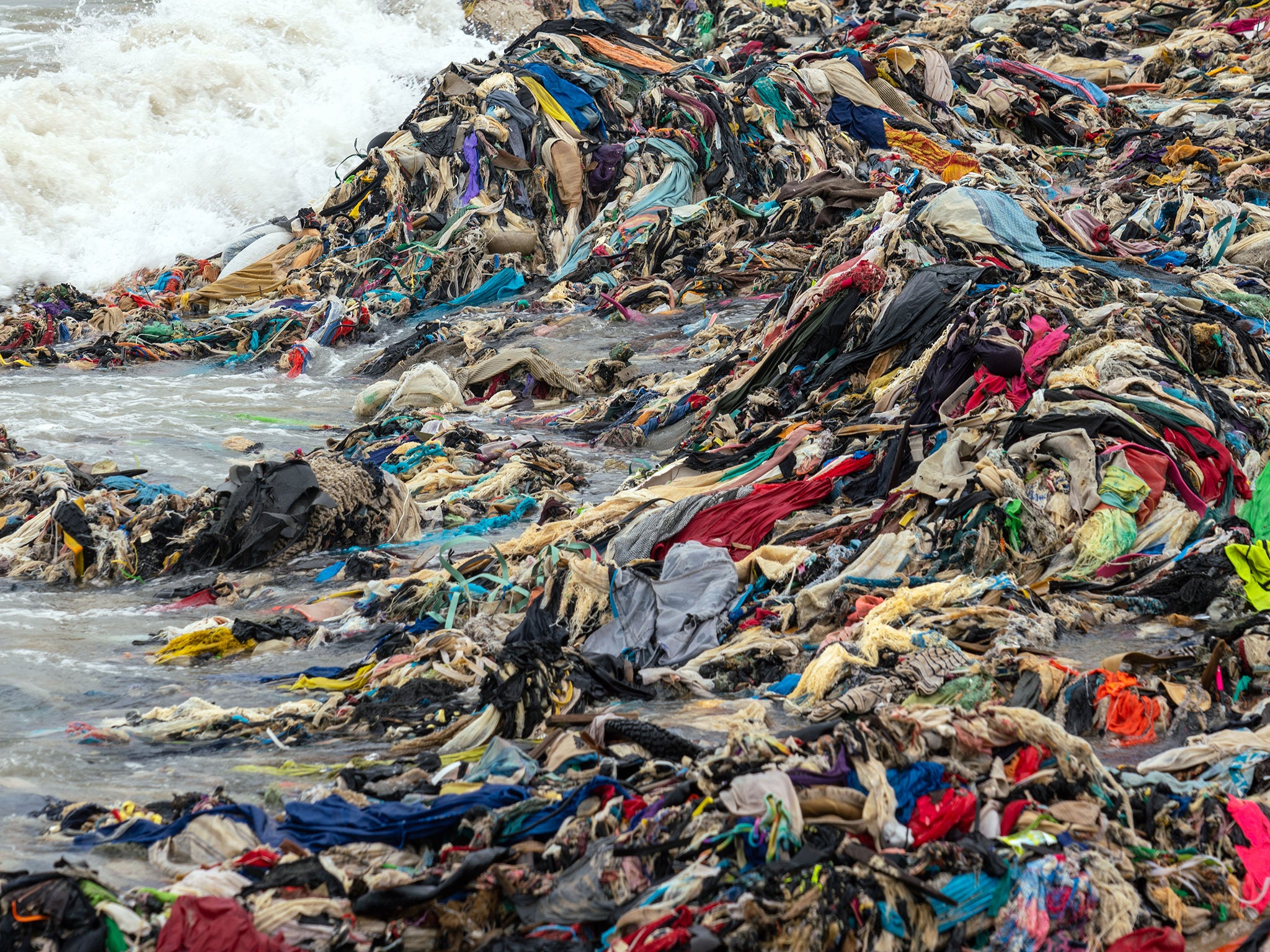
How can children encourage their parents to change their way of living? Parents hold a lot of authority and it could be hard to break them out of their habits.
Corporations play a concerningly large role in the environmental decline of the modern day. Appliances in previous decades used to be built to last a lifetime, and now they must be replaced every few years. By forcing people to buy low-quality products again and again, corporations contribute to an obscene amount of waste. At the end of the day, all that matters to these big businesses is profit margins, not the increasing frequency of landfills all across the world. Between non-biodegradable plastic products, fast fashion, and water/energy waste during production, corporations are destroying the planet and then pinning the blame on consumers. They pretend to care about the environment, lying about green policies and imploring people to recycle instead of removing harmful business practices. We could do so much to resolve this, whether by imposing legal responsibilities onto these corporations or implementing clean and renewable energy, but doing so requires foresight people don't want to have. Looking toward our future reveals an unpleasant picture of a desolate Earth, and we are more willing to turn a blind eye to this and hope it'll never affect them. Unfortunately, the way things are going, it most certainly will over the course of our lifetimes.
How can students encourage people around them to take action to have a smaller carbon footprint? It is very difficult for students to get the attention of their peers and help change their minds. It is also almost impossible for students to be heard by adults so how can they be heard?
Something I am very willing to change would be my shower time. Taking long showers increases our co2 emission because of the gas water heating system in houses. For some people this can be an easy thing to change, but for others it can also be hard. Many people use showers as their time of relaxation and alone time (like me). After a long day all I want to do is stay in a warm shower and relax, but taking a shorter shower will minimize my relaxation time. This would be a challenge I would encounter. Some support that would make my life easier could be to ask for more time alone away from my siblings from my parents.
I completely agree! After a long day, I find enjoyment in my showers because they are the one time I can truly relax without any distractions. However, I know how big of an impact long showers have on the environment, and now that I’m aware, I am going to start cutting my time short. Shorter showers use less hot water, which means my water heater burns less energy and produces less CO2, helping reduce my personal carbon footprint. I’ve realized that I can still enjoy my relaxation time without harming the planet, like listening to calming music, or use scented soaps and lotions to make my shower feel luxurious even if it’s shorter. By being mindful and intentional about my shower routine, I can feel refreshed, unwind after a busy day, and still do my part to protect the environment.

I completely agree with you! Long showers can feel incredibly relaxing after a busy day, but being mindful of our water and energy use really does make a difference. Shorter showers help reduce hot water consumption, lower CO2 emissions, and support a more sustainable lifestyle. I’ve also learned that making small eco-friendly choices at home benefits everyone — just like choosing energy-efficient solutions such as getting an EPC Certificate London Same Day when needed. It’s all about balance. You can still enjoy calming music, scented soaps, and a peaceful routine while also protecting the environment through simple, intentional habits.
Buying food from other places around the world has a huge affect on our global co2 emissions. It takes a lot of energy to transport said food by boat, truck, plane as well as keeping the food refrigerated, thus creating a lot of carbon. Gardening is a really fun but also contributes way less to your carbon footprint. here are a few benefits; Plants create oxygen, creating more space for biodiversity in your neighbourhood, reduces CO2 emissions from shipping, because now you have grown it yourself instead of buying it from somewhere else, you will not be intaking pesticides from your produce, its good for your mental and physical health, and you will get the satisfaction of growing something yourself. Not everyone has the space or time to garden but it is always good to buy local. By stopping at your local farmers market, not only are you reducing your shipping emissions but also supporting your community and local farmers. Also when shopping at grocery stores you can check to see where the food was grown/made and if it's organic. It makes an impact what you buy. That be said no one can be expected to make and grow everything they eat by hand or to eat entirely locally, and many people rely on transported food to survive. But it's always a good thing to think about when buying food.
Hi, there are still some people who can't grow all their food at home because of the weather, for example. It's not possible to grow a lot of food where I live due to the weather, so it's okay to buy food from other countries. But I also agree with you that we should try to grow as much food as we can ourselves.
I think we might be in the same school Guðrún.
You can absolutely grow potatoes, carrots, beets, probably onions, during summer break, you could grow tomatoes and even grapes year round with a grow lamp, if you have a potato storage room you could even set up a mushroom growing place (please wear a respirator or some kind of a mask) and you could potentially also you could keep 2-4 chickens by making a small chicken coop and you can feed them scraps, leftovers and/or seeds and you can get up tp 4-5 eggs per week per chicken, (this is all assuming you live in a house with your own garden and not an apartment) but if you live in an apartment you can join or get some other people to pitch in to create some kind of a community garden focused on growing homemade food and maybe keeping small livestock (this could cost a bit of money though so i understand if this is not realistic). this is all obviously a ton of work and its much easier to buy local food and vegetables, its very fun if you have the time.
In my opinion having the latest technology could be a want but it could also be a need, it depends by the use that a person gets out of it.
if you buy the latest without any reason, just because you want it, it's a "want"; if you buy it because you use it for a reasonable cause, like work or also school, it can be called a "need".
I only buy a new phone if my latest one doesn't work anymore because until it stops working i don't need a new one.
i reckon i'm not addicted to my phone but if someone is, i think they should try doing something else like doing some sports or maybe reading a book.
I usually buy a new phone only when the old one is almost totally broken and i usually don't buy a new model but an old model or a refurbished phone.
When i have an old or broken phone i don't put it in the waste because there are some components of it that can be reused one more time before becoming rubbish so i ususally bring it in specifics centers that recycle them.
I'm not addicted by my phone but, if i were, i could break it leaving my phone in another room when i'm doing somethink, like studying.
I think that always having the latest technology is clearly a wants because no one needs a new technology dispositive every year.
I usually get a new phone every two/three years because I use mine until it breaks down and I find usless the amount of money that requires news models and I don't actually need that.
Besides, all technology dispositives produce a lot of e-waste and consume a lot of energy.
I don't think I'm addicted but sometimes is better read, walk or even sleep intead of spending so much time on phones and videogames that doesn't give you the right education!
For me, having the last phone is clearly a want. We don't need a new model every year just because it's trendy. I personally don't change my phone really often, but I replace it when it doesn't work anymore. Another theme to consider is the environmental impact too. Most of our phones release a lot of carbon dioxide being produced, so people should think before buying anything that could damage our planet. I'm not addicted to my phone because I try to spend always less time on it. I prioritize staying with the people I love or go out to do some healthy activities instead of rotting in bed all day.
climate change has always been a problem but It is not caused purely by humans but they help it increase. all things that produce carbon dioxide and other greenhouse gasses can increase the effect of climate change. like: cows, chickens, and all other mammals. they exhale carbon dioxide as a byproduct of cellular respiration. so climate change is not purely human-caused but mostly human-caused.some ways to reduce it would be to:
1) reduce home energy use-Switch to energy-efficient appliances and LED light bulbs.
2) Rethink your transportation-Walk, bike, or use public transportation instead of driving.
3) Change your diet-Eat less meat, especially red meat, and more plant-based foods, as livestock farming is a major source of greenhouse gases.
4) Consume less and reduce waste-Buy less overall and avoid impulse purchases.
5) Support renewable energy Switch to a renewable energy provider for your home if possible.
Fossil fuels are the main cause of rising temperature and climate change. Burning them for energy releases large amounts of greenhouse gases into the atmosphere. Since we use fossil fuels for many different purposes, like industrial processing, energy production, and transportation, we can't immediately stop using fossil fuels. But if people will slowly change, at first, energy production, then use this energy for industrial processing, and change all cars, and other transport to electric ones. Then this will help our planet a lot.
I think that this is an issue that needs to be addressed. However, I think this problem would be better handled regionally, not globally. I live in an area that produces almost three times as much carbon per year than average. I think that we would need to bring the carbon emissions average down by drastic changes in smaller regions. This is because it is very hard to accurately judge progress on a global scale. This could lead to inaccurate data.
I agree, Makar! Turning over to renewable resources from fossil fuels will definitely mitigate climate change and balance the carbon cycle again. However, achieving this is extremely challenging - society and our global economy is heavily reliant on fossil fuels to power transportation, industrial production, and energy generation. To cease use of fossil fuels would facilitate economic collapse worldwide; corporations and stakeholders with financial interest in fossil fuels will actively deny and refuse the transition to renewable energy, sowing doubt among the people. Our daily lives are deeply intertwined with fossil fuel consumption, with many people unwilling to give up this resource. A very slow change initially will definitely be the best approach, and hopefully the accumulative effort will lead the planet to a better future.
In my opinion, we should not stop using fossil fuels completely. We should definitely use them less, but I don’t think it would be possible to stop using them completely .
Have you ever thought of buying something and then taking a second to recognize if it's a need or a want? About 40% of clothing that is unwanted and sometimes unused gets thrown away and 38% of Americans have unused Items in their house and usually end up throwing them away. There is a big difference between a want and a need. The denotation of the word want is, too "Have a desire to possess or do (something); wish for." For example, I want food (I can do without it for now.) I want a new car. (A new car would be nice to have, but I can live without it.) The denotation for need is, "require (something) because it is essential or very important." Ex. I need food. (I desperately require food. Food is a necessity to me right now.) I need a new car. (A new car is essential to me. I cannot live without it.)
I agree. Instead of buying what you want AND what you need, you should stick to buying only your needs. For example, new clothes. Unless your clothes are in very bad condition and you are in need of new ones, you shouldn’t buy new clothes. However, you should also treat yourself to a want every once in a while. All in all, you should be able to tell the difference between a want and need, and to control yourself from buying all the wants along with the needs.
We should make food free and give people only the amount they need. This will stop people from eating to much food and making less carbon, it will stop world hunger. About 30%-40% of food is wasted in USA which is estimated to be around 170 million metric tons of carbon this is why people should only get the right amount of and it should be shared.
I don't think food should necessarily be free because the people making the food have to somehow earn money, but if the food is free then they have no source of income. without a source of income their farm or wherever they grow their food they won't be able to pay taxes for it. the people working at restaurants and stores that sell mostly food, they will have to find another source of income. but I think at the end of a day or something like that restaurants should give their leftovers away instead of throwing it out.
I don't think that all food should be free because then farmers can't make money to support themselves and their families. I think that if we limit the amount of food each household can buy based on how many people live there or have a carbon tax, it would decease the food wasting. I like eliggg's idea of giving away leftovers from restaurants instead of throwing them out, and I think stores should also give away products that are about to go bad, so people in need have something to eat. Even if stores only have discounts for unwanted food, it will at least help somebody who is in need.
I also do not think all food should be free because farmers who harvest and sell food would not really have a purpose if all food were to be free, not only that, but peoples carbon footprint would rise a lot higher, and people would also take a lot more food for their family then necessary. and that would again probably leave an impact on peoples carbon footprints.
With all due respect, I personally do not agree. I don’t think food should be free. Some people may lie and take advantage of that. Also, many people work very hard to plant and prepare food, so making it free would be very unfair. Overall, I don’t think food should be free.
Fuels are burned to make energy. They release carbon dioxide into the atmosphere which hurts the planets environment by increasing the temperature. We need to stop burning fossil fuels and switch to a different energy source like solar power.
I totally agree with you. Fossil fuels and sedimentary rocks were not made to be burnt and used the way us humans are using them. Nature has a way of dealing with things and that is how it use to deal with carbon dioxide. The rocks absorb and store carbon dioxide. This process took millions of years of work and humans have been burning these fossils for daily use (as an energy source), destroying so much irreversible work. I also agree that we should switch to a different energy source like solar energy or windmill energy, however the way these things are priced is unrealistic. Solar panels have a high price rate as well as a high maintenance consumption. This causes some annoyance for some people and for others it may cause financial instability. Even though some have both the patience and money, they may not have the time to clean and set up the solar panels. This issue is not widely discussed, but I believe that if the government or solar panel companies could lower the price or/and be available to set up and come clean the panels every so often more people would be willing to switch their main energy source to try to help slow down climate change.
Garage sales are an old tradition that have been around for decades, offering a simple way for people to declutter their homes, sell items they no longer need, help the environment, and connect with neighbours and their local community in a social setting. They show how far items can go, traveling from one household to another, sometimes crossing towns, cities, or even states, giving objects a second life and allowing them to be enjoyed by new owners rather than ending up in a landfill. The saying “one person’s trash is another person’s treasure” perfectly captures the spirit of garage sales, where items that might seem useless to one person, like old books, clothes, or furniture, can hold great value and joy for someone else. These sales not only preserve the usefulness of items, but also help reduce waste, save resources, and keep countless objects out of landfills and waste-burning facilities. In this way, garage sales show practicality, and sustainability, proving that old habits can still have a positive impact on the environment, our communities, and the way we think about consumption today.
By making small, thoughtful changes to what we eat, each of us can help create a healthier planet. Eating fewer resource-intensive foods, especially beef, can significantly reduce greenhouse gas emissions because cows release large amounts of methane, a powerful heat-trapping gas that is much more effective than carbon dioxide at warming the atmosphere over a 100 year period. Methane from cows adds a surprisingly large portion to our overall carbon footprint, not just from the gas itself but also from the land, water, and feed required to raise livestock. Making small shifts, like incorporating more plant-based meals or choosing environmental-friendly options, can collectively lower the environmental impact of our food system. I'm not telling you to never eat the foods you enjoy again, but all of us consuming slightly less of it can meaningfully cut methane emissions and conserve precious land and water resources. Even small dietary changes, when completed by millions, can help slow down climate change and create a more sustainable future for everyone.
Extreme weather events are happening more often today because human-driven climate change is steadily warming our planet, reshaping the world we once knew. Rising global temperatures intensify heatwaves, pushing people into dangerous, exhausting conditions that make even ordinary days feel overwhelming. As the atmosphere warms, it holds more moisture, releasing heavier downpours, violent storms, and even floods that leave families picking up the pieces of homes and memories. Warmer oceans fuel hurricanes with speed and force, turning familiar coastlines into sites of destruction almost overnight. Together, these changes make it clear that climate change is not a distant threat but a current problem affecting all of us, demanding attention before the damage becomes irreversible.
don't just throw your old clothes out! fast fashion is becoming a big problem and old or ripped/broken clothing items are filling our landfills. But There are many ways to repurpose your old stuff such a donating to thrift stores or charities, or upcycling them into fun projects or useful items. If not they can be turned into rags or donated to fabric recycling center. Making art is super fun and what better way to do it than with stuff you already have that would just end up in landfills, polluting our climate. Get crafting people!
going shipping uses lots of gas and causes pollution, the food can get squished, lost , and get rotten on its way from farms to stores so you should try to buy locally grown food and all grocery stores should bring locally grown groceries to sell so they are cheaper and better for and it’s also harder to check if groceries from somewhere else are 100% organic.
I totally agree with this. Food that was not locally grown was likely shipped by plane or boat, both of which emits a lot of greenhouse gasses, increasing our carbon footprint. Locally grown food would not have to be transported as far. The downside to this, is depending on where you live, locally grown food is not always available. Where I live Its really easy to go to a farmers market in the summer to buy locally grown produce, but in the winter, most things are imported. This makes it more expensive during winter months to buy local organic foods. I think that it should be made easier, and more cost efficient to buy local produce for everyone.
I totally agree with this MHRC. To add onto what you were saying about the accessibility of locally grown food. If everyone budgeted to buy from local businesses, their profits would increase, which would intern allow them to potentially attend more farmers markets, or if many people are enjoying the produce the word would spread. However, some people can’t budget for this because of financial reasons. Which is where the government should come in and even out the prices of organic versus non-organic produce or food. This would decrease the amount of carbon emissions produced from the process of shipping non organic foods overseas if everyone shopped for organic products.
A way that some people will be able to get rid of their old items and some people will be able to get new items without buying brand new things, could be neighborhood item swaps. This idea could help those that are not fortunate enough to still get new things while helping those who over consume, to give back to their community and get rid of things they don't want or need any more without throwing them away (which creates more co2 emission). This would also be way more sustainable for those who are "addicted" to buying and having new things constantly, for them to have recycled/donated things so that they are not contributing to any more co2 emission. Another positive, unrelated, factor that may help decrease co2 emissions would be that neighborhoods could come together and talk. This could be highly impactful, raising awareness of climate change and possibly bringing up new ideas on how to decrease co2 emissions.
Everyone has wants and needs, and it's usually hard to balance the two. Needs things and items that you usually need, while wants are just something that you desire. And a problem with wants is that usually it gets to a point where you have too many things that you want and you don't end up using them just because you wanted it at the moment which causes resources to used wastefully.
I agree with this statement. Overconsumption has caused major effects in our climate and there are many people who can learn the importance of identifying a want, or a need. Wants take up a lot of overconsumption because when you want it, you tend to buy it. There is no problem purchasing items you want for your pleasure. However, there are times when you want more than you truly need and constantly buy things that just begin to pile up. On the other hand, needs are resources that help with your survival, like food, water, and warm clothing. Needs should have priority to your purchases. While you start to only buy things you need, your carbon footprint might start decreasing, less money will be spent and your action will positively impact our climate.
I agree that it’s super important to be mindful of your wants and needs. This can help limit over consumption which alone can significantly reduce your carbon footprint. It will reduce the amount of fossil fuels release when transporting your packages, and the garbage thrown away after unpackaging your items. When we only focus on what we need it helps us live a sustainable life from conserving resources.
Hi there friend I totally agree with this statement because I've experienced it. For example, this usually happens to me while buying clothes where I see something that I want. Something that has helped me is seeing myself with it in the future and seeing if I'll actually use it or if I'm even a little bit hesitant I won't buy it. I do think this is a problem though because for the people out there who don't have very big limits when it comes to money they won't even stutter when thinking of buying something they might like. This is bad for the environment because it takes a lot of carbon to manufacture all those clothing, gadgets, tools and other stuff.
I totally agree, you have to be super careful with what you purchase and think if it’s a need versus a want. For example, the dollar store you might see an item that is only one to two dollars and think oh it’s only one to two dollars that won’t hurt. However, what you don’t take in account why these products are so cheap. They were probably made in an unfair working condition or the materials were harvested in a way that hurts the environment. Which will increase the carbon emissions from producing these cheap products if they weren’t created in a sustainable way.
I learned that most of my carbon emissions come from home energy and transportation. My footprint is 3,055 kg of CO₂ per year, which is lower than the average for California, but I still want to lower it. I think the easiest way to start is by using less electricity and turning off lights and electronics when not needed. Families can also switch to LED bulbs, use energy-efficient appliances, and adjust the thermostat to save energy. If more people made small changes at home, it could really help reduce total CO₂ levels.
(Source: ISCFC Calculator, 2024; EPA “Reducing Home Energy Use,” 2024)
Another thing we can do to lower carbon emissions at home is to turn off the water while we are brushing our teeth and only using it when needed. We could also just not use any heating or air conditioning, and as a substitute for heating we can use blankets.
There are many ways you can lower your carbon footprint. Like using public transit, walking, or biking instead of driving. You can also lower your beef consumption. Eliminating beef as much as possible, will significantly lower your carbon footprint. Cows produce methane, which is produced when they eat. One methane molecule is equivalent to about 23 CO2 molecules! Even replacing beef for chicken or fish will lower your carbon emissions. You can also lower your shower times.
At my school especially, I have noticed there has been a mass overconsumption of paper, and that the paper has not even been fully used. This causes unnecessary de-forestation of tress and more garbage (if not recycled) pollution, which leads to more co2 emmision. A step we can take to fix this would be to collect all paper at school every so often and do recyling paper projects, especially in art classes. In the class students would 1) break down the paper to pulp using and reusing water, 2) make a flat or whatever shape intended paper 3) let it dry, for schools to make their own recycled paper, reducing co2 emission and ensuring a full recycling process, rather than "accidental" littering.
We can re-use items like shopping bags, lunch containers, and bring cutlery for eating. We can use water bottles instead of buying water in plastic bottles. We can also reuse clothes by shopping at thrift stores. When we do art, we can use recycled materials for projects. We can recycle paper, and reuse paper scraps for projects.
A large part of someone's carbon footprint comes from the amount of time that they travel in cars, so if they live in large or urban cities they can travel via bicycle instead. Especially for shorter distances, bikes are good alternatives for car travel since they significantly cut down on carbon emissions and provide exercise. The only con to traveling with a bicycles in urban cities is that it can be dangerous at times as a lot of people don't watch the road in front of them.
I think that bicycling around your city as a transportation mechanism is a great idea and is good for decreasing carbon emissions. Although if your like me and live far away from school and don't necessarily want to bike to school in the morning you can also take public transit. Public transit is much better for carbon emissions then cars because lots of buses and all skytrains are electric powered instead of gas powered cars. Public transit also can carry up to 20-30 people for buses and can carry up to 100-200 people for skytrains where a car only carry's around 2 people.
I think students who live in the neighbourhood can walk to school more often. They can also take a bus or ride a bike. They can improve their carbon footprint by walking, riding their bikes. Students can also take their lunch in containers and use reusable cutlery.
every week I have to drive to and from my sports and most of the time I have to drive 50km or more. I can't give this as my games are usually early in the morning, and I wouldn't have enough time if I didn't do this. although I try to balance this out by carpooling with other members of my team
I do things very similar to this. I also have to drive to many events 4-6 times a week for sports. Also, often the he event is more than 30km each time. Additionally, sometimes we have games in Victoria or Nanaimo. To get to the islands, I have to take the ferry. I have tried to look for public transit, but there are not many options to the areas where I play.
Although I agree, RileyWcanada never specified where his sports took place, or if he could take the bus or not. and if they are less than an hour away you could also just bike because if you just biked instead of driving it would impact your carbon footprint a fare bit.
I have very similar problems, as i have a dance class all the way in maple ridge every week. We have to drive incredibly far there and back and we dont really have a choice as there is no bus that takes you that far. Carpooling would also be difficult for us because everyone in my class is very spread out and everyone in my area doesn't go to this class. They only go to a separate one. So it's a very tough situation and i truly wish i didnt have to drive that far.
i am also in the same situation as all of you. i have to drive 2 times a week for practice, and every Saturday for games, and many times my games are far away. people should consider walking if they can to sports that are not to far away. even biking, taking the bus, or getting a ride with someone else.
There are many things that as people we naturally indulge in that we really have no need for. Because most people have evolved to be so naturally lazy we use things so environmentally horrible its shocking. Instead of driving your car to work you could bike instead,also by reducing shower times by just 5 minutes the energy needed to heat it could be affected greatly. Eating more organically and healthier could help you have a lower carbon footprint and be able to be more physically active meaning a bike is now a possible option over a car. Mass.gov says that other ways to be carbon efficient at home is to do things like recycle half of you plastic waste, and lower/ raise your thermostat depending on the temperature outside. With all of these together it is possible to make a comeback against mass carbon emissions and helps save humanity.
I agree with this completely since humans have evolved to be a lot lazier because we have made everything easier for humans. So for example instead of walking 20 mins to go to and from work we would instead just choose to take their car and save 15 mins of their day. So it is very important to understand the effects these actions will have on our environment and how they will eventually ruin our planet. So instead of making short term choices thinking that they wont effect anything we should instead make choices to better the overall health of our planet. Like instead of driving everywhere we go we could instead try to take public transit when you can. Also instead of taking 40 minute long everything showers we could try and cut down our shower time to only 15 or 20 minutes long. While doing your part by yourself stopping climate change is a group effort so reminding others to do their part can also play a big part in lowering the carbon footprint.
I also agree with this. Humans have gotten a lot lazier and more accustomed to things being made easy for us. For example, ordering clothing online; If you order online, there is often a lot of excess packaging, usually plastic. All this extra plastic being manufactured in large factories, which increases our greenhouse gas emissions. When you order something, it has to be shipped to you, either by plane, boat, and/or car. This further increases our carbon footprint. We have also become more, and more reliant on fast food, or factory made foods. These all have plastic containers or packaging, which greatly effects our environment. These are things that are now in our daily lives, and I think that even if we can't avoid these things every day, we can still try our best to avoid them as much as possible, even if its just a few times a week.
Extreme weather events (including but not limited to lightning) can cause wildfires. while a few wildfires are normal, with climate change in effect the wildfire rate has gone way up. wildfires each warm season now burn twice as many square hectares as they did before the human population skyrocketed. Wildfires destabilize ecosystems by removing prime food sources, destroying habitats and disorienting certain populations. Act now to prevent further damage.
I completely agree how wildfires are a serious problem that's been getting worse because of climate change. Hotter temperatures, dry conditions, and stronger storms make it easier for fires to start and spread quickly. Wildfires can hurt animals by destroying their homes and making it hard for them to find food, which can also change how the whole ecosystem works. People are affected too, because wildfires can damage homes, farms, and even make the air dangerous to breathe. Another problem is that wildfires release a lot of carbon into the air, which makes climate change even worse. We need to take action now, like planting more trees, managing forests carefully, and reducing pollution, to protect both nature and human communities.
(This isn't about wild fires, but forest fires.) I'm also very shocked to hear that people occasionally cause forest fires on purpose, just to get palm oil and make profit. People don't notice the harm tbey are causing to our future and planet in exchange of making money for themselves. I wish people knew the effects of their actions and how it leads to worsen the problem of climate change. They only focus on making profit from getting oil, even if that means having to start a fire
While growing your own food reduces your carbon footprint, there are downsides to growing your own food. While growing your own food seems to be a great way to lower your carbon footprint, you don't have to buy imported food, or use transportation to get to the store, there are downsides. The main downsides are that most people can't afford to, or don't have the time to grow their own food. Growing your own food requires time for them to grow, and most people also can't get the same things for several days or weeks at a time, and you have to wait for them to grow. For some people, they can't afford the seeds, dirt, and water needed to raise the plants. Sometimes people's only options are to go to the store.
i agree with TLee11. although growing your own food would benefit the climate largely, people are tight on space. it might be hard to grow your own food if you live in an apartment, or if you live in somewhere with extreme weather conditions or not much soil for growing produce. this is why clubs that give you opportunity's to grow food are such great ideas. because it can teach you the benefits of organic food, that wasn't made or transported through large factories.
My family would really like to be vegetarian. But because my family has some personal health issues, this is only possible for us once or twice a week. We were vegetarian for a long time. But meat became really important to my family's health a while ago, and we weren't able to give it up anymore. But i think its important to source your meat reputably and responsibly and try to address to yourself where it came from and acknowledge what you're eating before consumption if your family really has to eat meat like mine.
Companies have a crucial responsibility in addressing global warming. They must prioritize sustainable practices, reduce emissions, and invest in renewable energy sources.
By taking proactive measures, companies can mitigate their carbon footprint and contribute to a healthier planet for future generations.
However, as long as companies prioritize short-term profit over the well-being of the planet, change remains an illusion. It is essential for companies to realign their financial priorities towards sustainable investments and eco-friendly practices. Only then can we hope to reverse the trend of global warming and protect our environment for future generations
I definitely agree with you, many larger companies are way too obvious to the harm that their non biodegradable waste is for the environment. I feel that the larger food and grocery stores need to start solely only allow biodegradable bags/ packages.
Very true, and the people with all this money tend to say they help the environment or are going to, but don't actually act on what they said.
Very true, and the people with all this money tend to say they help the environment or are going to, but don't actually act on what they said.
I agree! We’re told that we can make a difference by turning off lights and water, or buying compostable things, and while this helps, I’ve read that the main problem is the companies that burn fossil fuels, or contribute to fast fashion/consumerism. What we really need to do is get them to stop or switch to different methods, but all the people in power care about is money, and because the things they are doing now are cheap and the more sustainable methods are more expensive, they refuse to switch. Despite them all being some of the richest people in the world and having too much money to even consider spending in one lifetime. I doubt using methods that won’t eventually kill us will affect their style of life too much.
I absolutely agree. A vast majority of companies do not care about their carbon footprint and do not take the necessary steps in order to appropriately limit them just to save them some money. It's completely morally corrupt, but morals are clearly disregarded in the face of profits.
I agree, most companies don't care enough to mention the importance of the earth's safety and where the money goes. They can use their company's popularity to provide information or encourage people to take action. Even if they don't do this, they can contribute by switching from burning fossil fuels to something else.
You’re right, companies hold a ton of power when it comes to fighting global warming. They’ve got the money, the reach, and the ability to push things in the right direction. Still, too many stick with whatever makes the most profit, even if it’s bad for the planet. Switching to renewable energy, cutting emissions, and choosing greener ways to operate shouldn’t just be nice ideas—they need to be the norm. Honestly, as long as companies keep chasing quick wins instead of thinking about the bigger environmental picture, we won’t see real progress.
I completely agree as well. Major companies hold a tremendous amount of power over politics. they can easily influence the political decisions made and turn things toward their favor. Companies are avoiding the fact that climate change is a huge problem. They're only focused on short term revenue and profits. Altogether ignoring the bigger picture that they're slowly destroying our planet because of their greed. Using renewable energy or choosing more sustainable ways to make their products is easy, it's just a matter of whether you care enough about the issue to do it. Because if we continue down this path and turn an eye away from climate change, future generations might never be able to witness snow firsthand or live in a peaceful world without major disasters.
I agree. This is a huge problem, but it's not just companies, it's the very foundation of our society that is the problem. As humans we tend to see the world from a very individual perspective, separate countries, separate poeple. Our society is run on consumerism and capitalism and if we want to live a sustainable future this will have to change. we are so busy with our day to day lives caring for ourselves, our familles, work school, that we aren't able to think about everybody all the time and the impacts longterm of our decisions, so we're left waiting on politicians and big companies to make a difference, but most of them rely on the revenues that come from fossil fuels so they aren't willing to change. politicians are more our elected followers rather than leaders, they have to do what the people want in order to get elected, even if they really want to make change. but since billionaires make their money on fossil fuels they would want to prevent laws and taxes against fossil fuels to keep up their income and so missinformation is spread to the public about climate change and change isn't able to happen at the rate we need it too.
I agree with you. Major companies only care about how much money they can make. They almost have everything you need to push the people in the right direction: money, and influence. But they choose not to. They could easily switch to using renewable energy as they have the money to do it. but they choose not to as fossil fuel is cheap and works well. They are slowly killing our planet without us realizing it. They shut down any talk about how their companies are corrupt and are killing our planet by using influencers to shut us up. If companies keep on chasing money rather than environmental friendly options, we will never survive as a species.
Environmental justice means making sure that all people, and organisms, have equal access to a clean and healthy environment. Globally, low-income communities and communities of POC often are faced with higher exposure to pollution, limited access to clean water, and overall more vulnerable to the impacts of climate change. Environmental justice is about understanding the inequalities and impacts and working towards solutions and policies that protect both the planet and the people most affected by environmental harm. One thing I noticed from calculating my family's carbon footprint was that a lot of the emissions came from transportation and home. Although not much can be done about traveling via planes, I think installing solar panels and using public transportation or an electric vehicle can lessen CO2 emissions, ultimately leading to less pollution and a cleaner environment.
Very well said, and I completely agree with your definition of environmental justice. Developing countries are disproportionately impacted by climate change, facing greater impacts from extreme weather and health risks compared to already industrialized countries: the result of inequities deep rooted in systematic racism; POC communities have limited access to resources like you said, which is a right everyone has. However, these countries are the ones trying their utmosts to mitigate their carbon emissions. These nations with minimal contribution to the problem, are prioritizing efforts to develop climate-resilient infrastructure and try turning to renewable energy. However, what can be done, and how can they turn their country to cleaner energy while they are simultaneously trying to lift their people out of poverty?
I have noticed that in my country that we have had an increase in rain and temperature. Summers have been have been getting hotter and the amount of rain that we had this year, especially the week of halloween was a lot and hate to see how climate change has done this. with climate change ice bergs have been melting, creating more water in our ocean, leading to more rain and eventually a rise in the ocean levels. A rise in ocean levels has already started happening in countries close to the water. Recently hurricane Melissa had affected Jamaica really significantly and I would hate to see it happen to my country and others around our world. Topics like this get us thinking what can we do to lower our carbon footprint and reflects what we can do to lower our carbon footprint.
climate change can be caused by our carbon footprints and I think it is important to try and lower them. Another factor of climate change is the increase of the human population because as the population of humans increase, the earth gets more populated and the humans increase their carbon footprints. The greenhouse gasses from the carbon footprints warm up the earth which can cause climate change and be harmful to our enviorment.
I very much agree with this statement. Having an exponentially growing population is doing huge amounts of harm to our environment. Organisms other than humans are incredibly important to our ecosystems, and if we don't lower our carbon footprint as a whole, animals and plants are at risk. The more humans on earth, ex: the more gas we need to fill our cars. causing more oil to have to be found in the forest or ocean which takes away many homes and resources for species that are essential to us. The amount at which we hurt our environment, we will be hurt back. the more humans, the more harm done.
Climate change is almost entirely because of our carbon footprints. Before human industrialization, the earths carbon cycle was balanced. There was about an equal amount of Carbon dioxide going in to the atmosphere as the Carbon coming out. Humans carbon footprints are the cause of ice melting in the arctic, and the extinction of animals. I think that we have to do anything we can to lower our carbon footprints. Such as eating less meat, buying more second-hand clothing, avoiding excess packaging, and turning the lights off when we leave a room.
I think one of the main issues when it comes to coming up with ways to improve carbon emissions is the cost of it. Although purchasing organic food is better and less harmful to the environment, it is not an accessible option for many. Organic food tends to be way more expensive than processed food, which happens to be a much cheaper option. What people should do if purchasing organic food isn’t affordable is start setting up gardens in their home so their food is healthier and cheaper.
I agree with this, people should start setting up gardens.
I think it would be an amazing idea to start growing our own gardens. It would be affordable instead of having to spend a lot of money in stores to get produce and, If you have any left over produce you can donate it to people in need or you could also make a profit out of it as well.
I truly agree with you that food waste can be very harmful for the environment. It causes lots of food waste, and plastic not being thrown out properly. I also totally agree that a greater effort needs to be made into recycling food waste from restaurants since it is becoming a must that needs to be done.
I agree with your statement. Although not all people have access to outside areas to grow food. Depending on the setup, community gardens could also be an option.
a major setback for lot of people is prices. often, organic and whole foods are much more expensive then heavily processed factory foods that come in bulk. however, if grocery stores could gather all the local and organic foods that don't come from large factories, and put them in a section with clear prices, that could greatly help. often times, people lack motivation to look for more environmentally friendly options, so if all those options were easy to find with comparable prices, that would be great.
I agree with your statement as well. Organic food is also harder to maintain, as it does not have preservatives and other chemicals to make it last longer. it is also common for humans to use substances to increase the growth of crops and vegetables. Meanwhile organic food takes much more time and care to nurture and grow. This is why if everyone starts a home garden, organic food will be more abundant and easier to access overall.
I agree. This also shows why garden clubs at schools are so important because it allows students to eat healthy, organic food while helping with climate change, and learning a skill that can be used forever. Since there are so many of us (students) to feed, it also ensures that these crops are not wasted. By growing organic food, we can take some carbon out of the air, and feed ourselves as well. Since schools also have a bigger area on where we can grow crops, it is much more efficient. As you said, it takes a long time for these foods to grow, and we might only be able to grow a few crops at home, meanwhile at school, we could grow five times or more, than we usually would at home.
I agree with you, organic food is usually more expensive than non organic food making most people reach for the non organic/cheaper option. I do also agree that people should grow at least a bit of their food but one thing to think about is that with city populations going up more apartment buildings and condos are going up. With people who live in apartments usually don't have enough space for everyone in them or even most people to have gardens. Even if each building had a communal garden not everyone would benefit from it. though its a good place to start and if you have your own property starting a small garden is a great idea.
Florida is confronting critical threats from rising sea levels that inundate low-lying coastal cities like Miami and Tampa, alongside increasingly severe hurricanes and storms that escalate insurance costs and damage essential infrastructure. Additionally, warmer air and ocean temperatures intensify environmental crises such as red tide and coral bleaching, jeopardizing our vital tourism and fishing industries. These escalating physical and economic challenges underscore an urgent call to action—both for comprehensive adaptation measures and for bold initiatives to cut greenhouse gas emissions, primarily driven by major corporations. It is imperative that we act decisively to safeguard Florida’s future.
Hello Marina, I agree with you so much here. So many huge cities located on the coasts all over the world are being put at risk due to global warming and climate change like New York, Japan and Florida like you mentioned. Our governments need to do better and warn the people about risks happening. Our homes will disappear! We have to act fast and get our governments and corporates to enforce rules or laws that help prevent the oceans from rising. As students, we can't do too much and don't have a lot of power in changing what goes on with laws. This is a huge crisis that needs to be solved. I heard Tuvalu has disappeared due to sea levels rising so high and had to evacuate, this big problem needs to be fixed before we have nowhere to go.
Solar panels are a wonderful invention that have the capability to reduce the carbon footprint of entire cities by more than thousands of pounds. It is a great source of energy that can reduce the amount of fossil fuels used to power a household. Implemented at large amount around the world it could help lower the carbon emissions even if it is by a small amount.
I agree to this, and I also think that solar panels are an amazing invention. I think that if we were able to implement solar panels in most of the world, it would reduce greenhouse gas emissions by a lot. The main problem with solar panels are most of the world can't see the good solar panels can do, and they're expensive to build, and many countries are struggling with their economy. However, I think that if we get some of the most influential countries to invest in solar panels, it would make a big difference in convincing other countries to follow their footsteps.
I also agree with this statement as well. although this would definitely cost a lot for cities to install, the long-term effects outweigh the cost. Firstly, this would greatly impact climate change and drastically slow down its effects. This would also benefit the city. Electrical power plants could be shut down and thus save the city money from maintaining and operating them. Citizens would also be happier, as there would be no more electrical taxes and energy is practically free. Lastly, this change can improve the air quality of cities. This will improve respiratory problems and get rid of plenty of pollutants and smog.
My carbon emissions for my household are much larger than other people worldwide. This is because one of my houses uses gas for everything. Does anyone have any suggestions on how I can reduce the carbon emissions in general while living at home?
Hey there Eric. There are so many ways to cut down on carbon emissions while living at home. Some ideas I have are taking shorter showers (around 7 minutes max) will reduce a lot since we use a lot of water when showering. (approximately 17-20 gallons of water) You can also remember to turn off running water when brushing your teeth because treated water uses carbon and basically if you leave the water running, you are wasting water and creating excessive carbon use! If your washer and dryer are powered by gas, try only doing laundry loads when your machine becomes full or try air drying your clothes without a dryer. Another thing that can help is instead of using heating systems, you can try layering more clothes on and encourage others living with you to do the same instead of turning the heating on. Hope this helped Eric!
Hi Eric, Another thing you could do is to make sure that all the lightbulbs in your house are LEDs. LEDs are a lot more energy efficient, than floresents or incandesces. They are more energy efficient, converting way more energy into light, and not heat. They also save money because they last longer and you would have to replace them less often. You could also try to walk, ride your bike or take public transportation to work or school depending on where you live. All these things emit significantly less carbon than driving. Lastly, you could try and change your diet if you are okay with that, to more plant based alternatives.
the climatic conditions are getting worse and worse, today we should reduce the consumption of non renewable sources, reduce pollution, stop deforestation, recycle, and use renewable sources.
I agree that we should do this, but it's not that easy. most of the things in the world run on non-renewable resources and it would take much longer to convert all of these into renewable sources. I think we should focus on putting are money into things like carbon scrubbers that take the carbon out of the atmosphere so that we have more time to convert to clean energy. we should also implement a mandatory carbon tax to help fund this well also making harder for people to continue using fossil fuels etc...
I notice that the internet is a huge factor to the reason why people are such impulsive shoppers online, and thus leading many to purchase things that they don’t need at all. Social media, such as tiktok, instagram and other apps promotes new random gadget or new clothes to users that'll be forgotten about in a few weeks max. A study done by Earth Institute’s Research Program says that, "And in fact, across its life cycle, the average product results in carbon emissions of 6.3 times its own weight",not only meaning that these products are simply useless but that it causes harm to the environment. Not to mention that the quality of these items promoted on these apps are extremely cheap and short-lasting so much so that they really aren't worth your money.
I fully agree. The influence of social media is causing so many people to buy things that they don’t need. For example, new clothes, beauty products, electronics, etc… When we buy these things and realize we don’t need them, not only did we waste our money but also just created more garbage. When we decide to donate or trash the cheap products, it ends up polluting our environment. This is not good! Everyone needs to start thinking about the outcome of buying these useless products and where they are going to end up!
I completely agree. the large impact of influencers has totally forced us into buying way too many products leading to unnecessary amounts of waste. this is a huge problem in the way that we are always being told we need more but with that also comes the carbon footprint .
This is so true. Social media has become such a big part of our daily lives that we don't notice how much impact it has on our actions. We tend to buy anything we see online, just because it's trending or it looks cool, not noticing that in 2 months, you won't even remember that you bought it. A lot of these products on your for you page are visibly appealing, and its made for you to buy it because its aesthetic, or because everybody has it. Labubu's are a big example on this. People only bought them once it became a trend to have one, but nobody thinks of what they will do with it after it goes out of trend. When we think about it, they're just pieces of plastic that's pretty useless (sorry). Since the sales of Labubus significantly increased, the company started producing more and more, just creating even more waste.
An effective way to prevent food waste is to store food properly and freeze food to extend its freshness. When you freeze food and store it properly it extends how long it will stay fresh. Also storing it properly ensures the food doesn't spoil too early.
Yes I totally agree.Storing food in the freezer can save you from wasting a lot of food. You can freeze Vegetables,Fruits, any other foods. Freezing fruits and Vegetables and really help a lot because they go bad quickly.
Yes, I totally agree that this technique will indeed stop food waste. Freezing food prevents it from going bad quickly, and it can lower the chance of food being wasted more often.
I agree with this. my family has a large freezer that we keep in the garage to store excess produce, meat, and food that we make and purchase. due to this we have almost never let food go to waste and are able to unfreeze meals that we make beforehand rather than spend time cooking.
I totally agree. Freezing fresh food and produce is such an incredible way to preserve our food. By doing this we are increasing the amount of time it’s consumable. This helps lower families carbon footprint by majorly reducing food waste.
I strongly agree with freezing food. Using a freezer to store leftovers, meats, deserts, and frozen foods definitely help prevent food waste. From experience, my family and I have saved money, time, and food in general. It helps preserve the food from going bad, which allows us to have many meals that still taste and feel fresh.
I agree that freezing food is good. I agree because freezing food is a way to stop wasting food, and to make the food still be safe to eat. this is good because it lowers carbon footprints. freezing food is also good because you don't need to get more food, and the frozen food keeps it safe to eat.
These days, corporations would do anything for money like harming the enviornment. For example, Elon Musk's rocket debris had been spread out all over the Caribbean. This harmed the enviornment but he can never be held accountable because of the power and money he has. This can also to many other corporations that work in other fields that other related to space. AI companies recycles water that is dangerous for the enviornment if it is ever put in the open. This is just one of many examples. I believe that there should be laws to keep corporation responsible for their actions.
I agree with you. Corporations need to be responsible for their actions, especially when they affect so many people worldwide. Things like mining operations come into somewhere, mine everything valuable, then leave with the profits. They are leaving the people who live there to deal with the negative environmental effects like water pollution, unbalanced ecosystems. Also, oftentimes the people who live in places full of resources or land are people who usually don't have the recourses to deal with the problem. Big corporations already have lots of money and power, so if they are held accountable, they could use that money to do something.
I highly agree! Corporate interests contribute tremendously to the carbon in our atmosphere. These people in positions of higher power benefit directly from fossil fuel companies, which furthers their drive for money. Many politicians and climate-change deniers are able to sway the public's opinion on our world's current state, exploiting their voters' partisan identities and tailoring their messages to directly resonate more with their supporters. By doing so, fossil fuel corporations are held in even higher power. This perpetuates the cycle of misinformation, and delays action to be done about climate change because so many people are in doubt of whether climate change is even real.
I think that using plastic water bottles for just one time, and then throwing them out is really bad for the environment and contributes to climate change. This is because all of the trash in the landfills contribute to pollution, which hurts the growth of trees, and the trees help prevent climate change by producing oxygen. I think that instead of wasting and throwing away plastic bottles after one use, they can be used many times in the future, like normal reusable water bottles.
That is a brilliant point, plastic water bottles and other things that are not reusable can tremendously impact the wildlife and environment. Especially when littered around the streets these things a get washed up by rain into rivers and large bodies of water completely ruining the beauty of nature and when animals mistake these plastics for food can result in a horribly gruesome death. I agree with your idea about using these plastics multiple times an I think talking about these consequences to more people may make reusable water bottles appeal to more people instead of the plastic ones.
Yes, Jigesh. I agree that plastic water bottles should be used multiple times, or should maybe even be discontinued in general. Plastic items take an insane amount of time to break down and take up unecessary space in landfills. They can also end up in oceans where they mess with and even harm the marine wildlife.
I agree with this. Single-use containers, like plastic water bottles, are extremely bad for the environment. Plastic bottles emit greenhouse gasses not only when they are breaking down in landfills, they also emit them when they are being manufactured. This is incredibly bad for the environment.
Hey Jigesh, I also believe that "one time use water bottles" aren't really one time use bottles. They can have so much purpose and potential instead of being used for 20 minutes and being thrown away. Yes, of course, you can always put water in it again but there are other uses, like when I was younger, we used plastic water bottles as plant pots in a way to grow sprouts, helping us garden at home instead of buying vegetables from stores. You can also make a use of the bottle as a watering can poking holes in the cap for gardening instead of buying a new watering can. I also bet you can look online and find so much more uses for old water bottles from TikTok or YouTube. Plastic water bottles are so harmful towards our world so reusing is an amazing thing, or another solution is to buy a reusable later bottle so you can use the same bottle without throwing it out for years!
Afghanistan is facing widespread starvation everyday due to their economy, years of conflict, natural disasters, and the abrupt Taliban takeover. Millions of Afghans are facing malnutrition at extreme levels, particularly among children and women. This has resulted in a humanitarian crisis where families resort to desperate measures to survive, according to this BBC article, written by Yogita Limaye expresses the concern for children in Afghanistan over the struggle of providing food. It's gotten so serious many Afghans wonder if their child is able to survive. If we could provide donations to the people, or create fundraisers for the people being affected by this.
I agree with this because there are people out there that are suffering and some people waste it or throw the food away. There are babies that need food even little 5 yrs old that need food that are suffering from hunger. The parent work really hard for their family to eat food and people out here wasting food instead giving it to those that need the food. This why I agree with SanaK because she is right there should be
a fundraiser and that is going to make the suffering people lives easier.
I also agree with this. Since there is a war going on, it has been even more difficult to deliver food and other essential supplies to those who need it. Its a shame that there are millions of people in the world casually wasting food while millions of others are out there starving, desperate for food and water. I think that even if everyone in the world donated even just one small box of food, there could be billions upon billions of boxes of food for those who need it. However, schools can and already have started hosting fundraiser and food donation drives for organizations and people who need it. Businesses should also have similar promotions for their employees to help support the cause. Thank you for reading this.
I also agree with this. Since there is a war going on, it has been even more difficult to deliver food and other essential supplies to those who need it. Its a shame that there are millions of people in the world casually wasting food while millions of others are out there starving, desperate for food and water. I think that even if everyone in the world donated even just one small box of food, there could be billions upon billions of boxes of food for those who need it. However, schools can and already have started hosting fundraiser and food donation drives for organizations and people who need it. Businesses should also have similar promotions for their employees to help support the cause. Thank you for reading this.
Recently people started to use trash for fun crafts and decoration. Decoration can be expensive but when you make it yourself it’s free! Crafting is a cheap way to make things that can be useful in your home. You can use anything to make useful things, a way to repurpose things is using trash. Parents can use their crafts as DIY toys, making the lives easier. It is a cheap way to distract their kids for a little while. The trash you are about to throw away could be something you could use for years, so try your best to make the most out of it.
Exactly! This is a great point. There are so many things we recycle and throw away that can be turned into something really useful. I saw earlier someone said they turned an old milk jug into a watering can. Not only does that reuse something that was gonna be recycled, but it also saves money. Same with arts and crafts. I had an awesome time using old popsicle sticks for fun crafts when I was younger, it was one of my favourite things! When we reuse and repurpose items we can almost always get the same outcome of using something brand new.
these are great points! a lot of people will buy new Halloween decorations every year. my family makes Halloween decor out of old cardboard from our recycling bin and makes signs out of scrap paper. often times, it looks even better then store bought because it adds that homemade charm that you can get from just putting work into things. same goes for homemade cards and gifts, i know that i like a nice handmade birthday card from someone, then a generic one from the store. Old scrap paper can look great if we put the work in!
Extreme weather happens year round due to climate change, not just one time of year, and it happens because it is linked to factors like increased greenhouse gas emissions that trap heat. When it happens, heavy rains and cold Weathers occur, but impacts can include flooding, wildfires, more intense storms, and health issues from heat waves.
Yeah, one of the main concerning weather events is probably hurricanes and heat waves, since they are the most common. We have already seen many of these happen around the world and it seems like every time it gets increasingly worse and worse. But even one persons change in perspective and lifestyle can go a long way to helping reduce carbon emissions. However not everyone agrees and some are against these statements which is why we can only do our part in what we can.
I totally agree with you, I feel like the most impactful weather event that affect families greatly is massive floods. Since most of the main cities and countries around the world are mainly located near the water, like Singapore and Tokyo, need to worry about sea levels rising and massive and devastating floods that will level homes and businesses. If we don't act fast, we might see people migrating as our oceans get higher. This is mainly due to the fact that carbon is being trapped inside our atmosphere, heating up our planet. Thus, making our glaciers melt and making more moisture in the air, leading to more heavy rainfall, which overwhelm our sewage and drainage systems causing a flood.
If our school is required to teach us this, what do they actually do? Do they buy locally sourced materials and what do they do with the recycled materials? They never show us how to do it or lead by example, if not most people don’t know what their school does in order to help the environment.
I agree I think as a way to help this; student could have a day of every month where you have to go outside and clean up garbage with your class then bring it to a recycling depot where the teachers could show how they recycle stuff from the school. Or the student council could bring this topic up to the school and get them to start implementing more climate friendly actions into the school system.
Growing food at home is very cost efficient and uses less resources and is less wasteful, and also compost can be used as fertilizer and to grow you're a homegrown food, which reduces waste and causes the compost to be used for something resourceful.
I agree. Growing your own food reduces the use of vehicles that release carbon to transport the food from the farm to the grocery store and from the grocery store to your home. Additionally, I also agree that using compost as fertilizer can reduce the use of new materials that have to be made.
I agree. Growing food at home is a great way to reduce your carbon footprint. This will help smaller businesses who grow local and organically and reduce the sales of large companies that use preservatives and other toxic substances. By growing food at home ypu are also benefitting your fertilizer which can help your garden and plants thrive!
I think climate change is a big factor in our weather. It happens when we have a lot of carbon dioxide and waste we punch a hole in the O zone layer.
While Carbon dioxide is the main reason to climate change we also have to think about any fossil fuels. Fossil Fuels can destroy a lot of mother nature itself. Now To the ozone layer. Studies shown that over the years the Ozone Layer has been healing every year and now studies say the Ozone layer is on track to heal in our lifetime. So carbon emissions have been getting lowered and if we keep on doing this climate change can continuously become a smaller problem.
Heres a link:
https://news.mit.edu/2025/study-healing … -cfcs-0305
Not only will climate change will have big effects in our weather it will also have big effects on humans as a whole. Mainly since most of the worlds population lives in cities close to the water having extreme weather such as a very high tide or a tsunami could greatly impact the lively hood of many of these people. Also having extreme droughts for people further inland who grow food could greatly impact how much food and the quality of food they produce effecting everyone who relies on them for food. Since the Ozone layer is said to be healing these changes in weather should hopefully be less and less common as the years go on.
while growing your own fresh produce is a great way to be more energy efficient, there are some downsides. For instance, the cost of watering your garden every day can add up, from initial energy bills, to buying the correct equipment like a watering can or hose. Gardening also requires a lot of time and energy, which is great if thats what you're looking for, but if you're a very busy person this isn't always suitable. Sometimes it's just easier to buy locally grown foods, this way you can support a local business, and empower "not-overseas" shipping methods.
I totally agree with your statement, I think that a solution could be the government paying and providing more money and space for more home grown gardens. This way financial stability would not be such a big deal and people can grow whatever they want, without all the pollution and shipment fees. People would also be living a healthier lifestyle discovering more organic and whole foods. In Vancouver we also have something called community gardens, this way your community can help to maintain, cover some costs of your garden fees, and provide the space. This is a great "Program" and I think that it would be great if other places could also do something similar.
After dinner, it's easy to just scrape what's left on your plate into the trash can. However, there are more sustainable solutions than simply wasting that excess food. Many families have a green waste compost bin in their house to put leftover food into in order not to just throw it away. Giving that food back to the environment is much more sustainable and beneficial than tossing it into the trash. Another thing you can do with extra food in the fridge is donate it! Homeless shelters and food banks can never have too much food. Even a small contribution is meaningful. Think before you waste.
I 100% agree with this. It is so good to compost our foods scraps instead of throwing them out! Another thing is feeding other organisms. At my grandparents house when we have leftover greens, we always feed them to their chickens. That way, both us and the chickens and full and fed with good food. Plus there is a lot less waste than if we threw it in the garbage!
Deforestation leads to the loss of biodiversity and contributes to climate change. Many plants and animals will lose their natural habitat. Trees stabilizes soil and regulating water cycles. Removing it raises the risk of flooding. Deforestation is caused by agricultural expansion, urban expansion and infrastructure development. To prevent this from happening the government can create strict laws to protect forests.
Sources:https://forestry.com/environmental-impact/climate-change/devastating-effects-of-deforestation-on-our-environment/
I completely agree, the government needs to act now if we want to prevent the environmental crisis from getting any worse. Governments around the world could implement laws in order to protect the forests. These could include: Making all parks open to the public and unavailable for big corporations to purchase. Banning all open fires during the dry season and not allowing anything that could combust in the area. And putting regulations on how much land each company can own.
"Influences" online are paid to make ads promoting unnecessary products. This influence hurts not only the wallets of those who purchase such products, but also the environment. Many of these products have plastic packaging, this packaging will likely end up in landfills or waterways.
I disagree. Sometimes the influencer might not be well educated on the product and might just think of it as a harmless ad for some quick free cash. They also might not be aware of how the product may be packaged. It is mostly the companys fault for plastic packaging so we shouldn't blame the influencer. I see where you are coming from though, as the influencer should've done some research on the product before advertising, but we can't blame the influencer for everything right?
to add onto ethanhe's comment, i agree that some influencers aren't aware of the products that they are advertising are harmful for the environment .however, instead of using their platform to influence buying random restocks and opening pr, they could use it to de-influence you. if there was a way to let people know that we don't need new iPhones every year, and that Shein produces mass amounts of pollution, i think that would really help the climate. these people who appear on your fyp, are very influential, they have the power to get a whole giant group of people, to do what they want. we need influencers who will tell their fans about climate change, and how to help.
I know eating meat and animal products are horrible for the environment, but it isn't really something I think I could give up. As an athlete, I think animal products are one of the best protein wise and for building muscle, but for example: it takes 3,000 litres of water to make a single burger. This is really bad for the environment and is definitely not sustainable, but personally think plant alternatives and beyond meat just cant really replace it.
Many people can relate to this. Meat is something that is just hard to stay away from. It serves its purpose at every meal. However, I think one should try to limit their intake on animal products to just what they need. Despite these efforts, it is still very difficult to figure out how to stay away from it. When considering the effects of consuming meat, it emits, mostly, the greenhouse gas methane. On top of this, there are more problems eating meat bring to the environment. What people can do is limit the amount of meat they can consume to something more reasonable and try to opt for something else when given the opportunity.
I agree that many people relate to not giving up meat. Even though I think people should try to limit their animal intake to what they need, and most people do. However, it still contributes to their carbon footprint, and sometimes consuming meat can't be avoided, as it's many people's main source of protein. I like the idea of trying to eat something else when given the option, or switching to animals that produce less methane, like chicken, as an alternative.
Since eating meat is such a big part in many peoples diet it makes sense that staying away from meat can be hard. Especialy since meat has a lot of protein in it not getting the protein you need from meat can be very bad while growing. Also since many people grew up eating meat its hard to break out of the habit of eating meat. I know eating meat is very bad for the environment but not beef alternatives still have a long way to go before they fully replace meet.
I can relate to this topic. Meat is just something that is too important to just get rid of. But, we can limit the amount of meat we consume. Like substituting chicken for beef. As cattle use more than 60% of the worlds agricultural land. Cows also produce methane, a gas that is equivalent to 12 carbon molecules. It's always best to choose a better alternative. We don't need to go full on vegetarian is what I'm saying. Just limiting our consumption of meat or switching to a better alternative like chicken as I stated earlier, will greatly lower the amount of carbon produced.
Food production around the world uses up 70% of fresh water and yet 17% of all food produced for human consumption is wasted. In Canada alone the value of rescuable food is $49.46 billion. A charity in Vancouver is trying to stop this. The Vancouver Food Runners is a company that takes food from restaurants grocery stores and caterers That would otherwise be thrown out and gives that food to non-profit organizations. I think this is a great way to combat food waste.
ocean acidification is something that has to do with carbon dioxide going into the ocean. Its when green house gases rises into the atmosphere but a portion gets sucks up by the ocean.there is a website that you can learn more about just search up ocean acidification. But this is bad for the environment because of the sea life like mostly coral so people who are making all of this carbon dioxide is hurting the ocean and that's why we need to stop making so much.
I wholeheartedly agree with your statement. Ocean acidification is the decrease of the PH level in our oceans, which is caused primarily by the process of carbon dioxide diffusing into the water. This process reduces the availability of carbonate ions, which many shellfish species rely on to form their shells. Shells of organisms like mollusks and other invertebrates will dissolve because of how purely acidic the ocean waters are. This causes widespread negative impacts on the entire food chain- over 3 billion humans rely on seafood as a food source. We as residents of this planet must absolutely strive to lower our collective carbon footprint, because our day-to-day actions and reliance on fossil fuels is highly harming oceans and all beings that call oceans their home.
One of the biggest contributors to food being wasted is the fast food industry. Excessive wrapping that never makes it to being recycled, and 40% of all food waste comes from restaurants. A greater effort needs to be made into recycling food waste from restaurants, and reducing the amount of waste.
https://shapiroe.com/blog/junk-food-waste/
I truly agree with you that fast food waste can be very harmful for the environment. It causes lots of food waste, and plastic not being thrown out properly. I also totally agree that a greater effort needs to be made into recycling food waste from restaurants since it is becoming a must that needs to be done.
I really agree with you that fast food waste can be very harmful to the environment. I totally agree that more effort should be put into recycling restaurant food waste as it is becoming a necessity.
I 100% percent agree. I had an idea that could help with this. for me, a Canadian, the government could create reusable cups and make them very cheap or free and encourage local fast food places to use them. it would work where basically you would buy a drink and then would be given one of these cups, then you could return them to any of your local fast food places next time you go. this could also work for containers. The only problem is that this system is pretty inconvenient, many people would rather do it the easy way than the environmental way. I also have a solution for this. where I live they have stopped handing out plastic bags for groceries and instead you have to buy a cotton bag. Now, because of this people bring their own reusable bags way more often. This system I proposed could be a backup to bringing your own container. bringing your own could also have a much more reduced price to further encourage people. I think if we want to stop climate change, we need to make big change now.
Climate change is real and also primarily caused by human activities. Scientific evidence from many sources, like ice cores and satellite data, can show that the Earth is warming at a faster rate due to human activity and the expansion of the greenhouse effect. The main factor of this would be the burning of fossil fuels like coal and oil, which has significantly increased the amount of heat-trapping gases in the atmosphere.
I agree climate change is a problem we can no longer side line. Although there are scientists working on this issue right now there is not nearly enough. Climate change as a problem is being completely underestimated. Human activity and expansion has caused more harm than good for the very environment we live in. The greenhouse gas problem has gotten completely out of hand. Even though, there are solar panels and some sources of green energy it is not nearly enough. I am confident that with enough attention and resources we could effectively find a better source of green energy or refine the things we have already.
I would agree with you on the point that climate change is real and human accelerated. Also, I think that it is very frightening that many people don't believe this. Finally, I would like to applaud you for your use of citing the scientific evidence of ice cores and satellite data.
I agree with this. Climate change is very real, and very much human accelerated. The earth's temperature is about 1.42 Celsius warmer than it was before the industrial revolution, when we started burning fossil fuels. Human actions are the reason that the earths surface is warming and for many animals going extinct. By 2050 it is estimated that during the summer, we will be able to sail across the arctic.
Almost everything in our daily lives affect our carbon footprint, sometimes in a good way and sometimes in a not so good way. Some might say that our carbon footprint doesn’t matter but if we all have that mindset then it does matter because we are all affecting our environment and its climate. So some simple ways to lower your carbon footprint are as follows; start using a bike to travel shorter distances, eat less meat or eat pasture-based meat, or even changing the light bulbs in your house into LED’s.
Hi there. You have some really great points about how to cut down on carbon. Along with biking to travel short distance, you can also take public transportation around your city. (city bus, sky train, subways or even city boat) Public transit is amazing since it's basically carpooling with a whole bunch of people. Since I don't live near my school, I bus to school and back home every day and I am proud of how much carbon emissions I am emitting compared to if I got driven to school every day. I would like to say LED lights are amazing, in my house, I have a lot of lights (more than 100) but more than 95 % are LED's, they are around 90 % more fuel efficient than normal fluorescent lights so I really encourage everyone to make the change since LED lights are really great especially if you are trying to cut down on the amount of carbon you emit!
I have recently learned about how bad eating meat is for the environment. Now I'm trying to reduce my meat consumption but the problem is that in my family we heavily rely on chicken as a protein source. I think that my family makes it a lot because it's quick, easy, and healthy. We do usually have vegetarian meals 2-3 times a week but mostly chicken for dinner. I'm wondering if there is any other protein sources that are better for the environment then chicken but is also high in protein.
something that everyone can do to reduce there carbon footprint is eating less meat. Even though i do realize meat is a crucial part of a lot of people’s diets and not an easy thing to give up, i still think a lot of people aren’t aware of the serious affects meat has on our environment. The 1st thing i have to say about meat is how much land it takes to raise meat that is fully grown, one thing i’m not sure most of you know is that feeding someone who is vegan for a year takes only 1/6th of an acre of land while someone on a meat and dairy diet for a year uses 18 times that amount of land. i think this is a very scary statistic but also a very real one, raising meat does use a lot of land and meat eaters have to realize that. the 2nd thing i have to say about meat is how much methane cows produce. cows produce this methane through there farts, burps or poop, we contribute to this by eating cows. considering how many cows are bred because of the demand we put on them meaning more of the methane that cows produce is going up into the atmosphere. i think it is a really good idea for people to consider eating less meat and dairy meals each week as it is a great way to help save our planet and reduce your carbon footprint.
According to the Food and Agricultural Organization, over 900 million people on Earth don’t have enough food to eat. This is nearly 1 in 7 inhabitants on Earth. Assessing our carbon footprint in correlation with our dietary choices shows that plant-based diets, often vegan or vegetarian, substantially reduce greenhouse gas emissions as opposed to meat-heavy diets.
I agree with you, eating less meat is a great way to help the planet. Raising animals uses a lot of land. A vegan diet can cut land use by up to 75% (University of Oxford), which means more space for vegetation and animals. Also, cows release a gas called methane, which traps heat and harms the atmosphere. The EPA (Environmental Protection Agency) says methane is over 25 times stronger than carbon dioxide. Even eating a few plant based meals each week can lower your carbon footprint and help the Earth.
This is an extremely important argument, and I completely agree with it. Yes, the main problems from the meat industry are the absurd amounts of land usage and high methane emissions. The statistic about a meat and dairy diet requiring 18 times the land of a vegan diet is a powerful way to show the scale of the issue. I also agree that the solution does not have to be veganism or vegetarianism, which definitely won't suit everyone; a compromise is! Two to three meatless meals a week will make a big difference!
Reducing meat in our diets or even eliminating meat in our diets can indeed reduce a carbon footprint. However this is a rather difficult task, considering the fact that meat is an excellent source of nutrients and protein in our diets. Removing it could cause issues in your daily activities (if you’re active) and a loss of energy, however it is possible, considering that 22% of the global population does not consume meat.It is a great way to reduce our carbon footprints and help contribute to the better of our atmosphere.
I definitely agree with these points; cutting back on meat consumption is among the most efficient ways a person can lessen their carbon footprint greatly. Methane emissions from cows are a significant contributor to climate change, and raising animals for meat also requires a vast amount of land and resources, as several others have noted. Making even minor adjustments, such as eating two or three meatless meals a week, can have a big positive impact on the environment. The advantages for the environment also go beyond greenhouse emissions, I would like to add. By reserving land for natural habitats rather than livestock, a shift to plant-based diets can help conserve many resources, including water. This will also help prevent deforestation and promote biodiversity. Eating less meat or purchasing meat locally can help local communities and advance healthier food systems. One of the best strategies to fight climate change may involve combining systematic changes in the way food is produced, along with small lifestyle adjustments. According to a study titled "Solving Climate Change Requires Changing Our Food Systems", agriculture and food systems are responsible for approximately 34% of all global GHG emissions annually. This highlights how diet and food production practices are intertwined with climate change. In the end, I believe it comes down to balance, cutting back on meat when one can, and considering how dietary choices affect the environment around us. This self-reflection will help people make better choices.
I totally agree. Cutting back on meat is such a great way to reduce carbon footprints. Easy ways to do this are replacing things like chicken and beef with plant proteins like tofu. Eating a plant based diet can also help reduce things like deforestation to increase biodiversity. Sometimes making small lifestyle changes we can have such a posting impact on our planet.
According to Carbonliteracy.com the fashion industry is the second largest contributor to pollution (about 10% of global pollution). We in this generation spend around 5-6 hours a day on our phones, and more “doom scrolling” through TikTok, this is where companies thrive off of by paying your favorite influencers to promote their products, making them 2x as desirable just for them to lose “hype” after a few months; examples being clothes, water bottles, make up, etc. . All of these products that are being mass produced for every month long trends go to waste, as of 2019 H&M was known for having over 4.2 billion dollars worth of unsold clothing; according to Carbonliteracy.com 1.2 billion tonnes of carbon emissions come from the fashion industry alone.
Exactly, companies make fast fashion items which get popular for a certain amount of time only to go to waste when it goes out of trend.
This is smart to notice, because people often buy things that are trendy and stop wearing them or throw them out when they are not in style/trend anymore.
I agree with your statement as well. Organic food is also harder to maintain, as it does not have preservatives and other chemicals to make it last longer. it is also common for humans to use substances to increase the growth of crops and vegetables. Meanwhile organic food takes much more time and care to nurture and grow. This is why if everyone starts a home garden, organic food will be more abundant and easier to access overall.
Most of my family lives far away so when we need to see them we have to take a plane. Though recently we couldn't because of the war, a couple years back my family went to Ukraine via plane. The flight was very long and probably left a big carbon footprint.
This is wise to notice, and we should not take flights when it is not necessary (Like when we can drive somewhere but the flight saves time)
I took flights kinda often this year for example going to LA, Cabo, Mexico, Washington, and D.C wich most of them weren't to far from California. I think I could reduce my carbon footprint by trying to limit the flights I take to places near me and this would also help the enviorment more.
I think it's better to travel by plane than car because, if you're traveling far your going to be using a lot of gas in a car and you'd be driving for hours, but in a plane you can travel faster and not leave as much carbon footprint.
I do agree that it is a lot easier and more convenient with how far your traveling. all though I do think that people should consider driving a lot more to places in driving range. for example where I live in Canada, you can maybe drive to the U.S if your going their, especially because it is in driving range. and also the idea that flying gives a lot towards your carbon footprint.
Meat is my primary source of protein, and even though I know it greatly affects my carbon footprint. it would also effect my muscle development if I stopped eating it because I eat it to get most of my protein. It would also take more vegetarian items to get as much protein in a meal as chicken and rice.
Ocean acidification threatens people that rely on a sea food diet, as ocean acidification the nutrition of fish, clams and more and ocean acidification causes health risks from increased marine toxins. 1 in 7 people on the earth rely on seafood for their diet and eventually when our ocean becomes too toxic with many risks of eating sea food, they will no longer have a food source avaliable to them that is crucial to them. This is an important topic, reflecting on why we should be more careful with our actions in our day to day life.
I try my best to keep my carbon footprint as low as possible but I genuinely don't think I could live without going to any natural Springs in Florida. It replenishes my soul and makes me feel good, takes away all the stress out of my life and in general just brings me joy. The nearest one is just around an hour away, but luckily my new car has an Eco mode so hopefully that takes away some of the pollution I am causing. My goal is to live closer to some springs when I can afford it but in the meantime I'll have to stick to driving.
If it's only an hour away I think you could just bike, but if you don't have a bike or can't it'll be cheaper to learn or buy one. You also don't need the Florida hot springs you just want them, so just take a bath.
Depending on where you live, there may be some electric trains or buses you can take to get to the springs .If not, you could carpool with other people or friends that may want to go as well to save some gas and reduce carbon emissions. Another idea could be to rent a small hotel or something and stay near the springs for a few days to save time and gas. Its honestly up to you depending on what you feel like.
Reducing waste can be a good action to save oceans. The waste humans make and when they litter, all of it finds its way towards the ocean eventually. This can have a bad affect on the creatures living in the ocean leading to as high as making some go instinct. Recycling and picking up our trash can prevent all of this by making our oceans clean and a good environment for all the creatures on earth.
I agree to this. Bring a reusable bag when you go shopping is a easy way to reduce the use of single use bags; lowering the amount of waste that you produce. Another way that you can reduce waste is trying not to use a new ziplock bag everytime you pack a sandwich or snack. You can use the same Ziplock bag by washing it after you use it. This reduces the amount of plastic you use.

Fast fashion is cheap, poor quality, disposable clothing that is produced quickly and sold at low prices. It is not something completely new and it has been around for a long time. You don't even know it but most of your favorite stores like Zara, H&M, Primark, Forever 21 and Shein that have lately been very popular are considered fast fashion brands. This has always been a big problem and today even more because fast fashion is responsible for 10% of global carbon dioxide emission. So, next time you want to shop in one of these stores think twice.
I agree that these popular brands are a big contributor global emissions. Unfortunately, with the rise of social media and trends, fast fashion has become something that is popular. Brands are often quick to jump on these trends and as a result they mass produce clothing that will become unpopular and irrelevant. These companies emit carbon dioxide during production and waste these clothing that remain unsold.
Yes, I totally agree that's fast fashion has increased carbon footprints. This is also a waste of money because a while later it will just go out of fashion and then you don't want to wear it and then you buy another one. Instead you should just stick to one and use it as long as its useable.
I agree. Fast fashion is harmful to environment. It produces lots of carbon emissions and waste. It also takes up a lot of water and energy. Millions of clothing end up in landfills every year. Textile processing contributes to 20% of global water pollution.
I agree, many clothing brands contribute to the carbon dioxide emissions. but I never knew that it was so high and harmful. I will definitely rethink about all the clothes I buy to help the earth, rather than destroy it.
Since actually accepting the issues is the first step towards reaching change, it's really cool and encouraging to see how many of us are aware of the negative effects of fast fashion has on the environment. It is also cool to see how many of us rethink our initial perspectives and change our purchases to help the environment. Making these more deliberate purchases by selecting items carefully that we'll use for a long time is something we all can do. Little things like repairing clothing instead of replacing it can also have a significant impact leading to businessses themselves being more pressured to implement better practices if more people collectively change their habits.
I wholeheartedly agree. I think an easy and affordable way to decrease the footprint of fast fashion is to look at secondhand shops first. If you want or need the same styles, or price, you can look to sites like ThreadUp. This is an online thrift store on which you can sell the clothes you no longer need and buy the clothes you want.This is a good and eco-friendly way to shop.
I totally agree with you. Fast fashion is so harmful and slowly destroying our world. The industry is harmful in so many ways; it creates so much carbon emissions and also their ways of making clothes is unethical in the way they treat their workers. I know fast fashion is so tempting since in this economy it's hard to buy new, non-fast fashion clothes since clothes are expensive and so many stores are part of fast fashion but under disguise like I bet you didn't know that Aritzia, Urban Outfitters, Gap and Zara are fast fashion stores. There are more ethical things to do such as going to your local thrift stores which some also benefit charities, do more research in which brands are fast fashion or not, reuse your clothes, or even taking hand me downs from families and friends. I hope more big sustainable brands come to popularity so this climate change dilemma doesn't keep destroying our world as fast as it is.
By far the largest impact to my carbon footprint was transportation, specifically flying. This is because I have family across the country that I visit twice a year, as well as I travelled to visit extended family across the world for the first time this year. This is a difficult decision for me, because while I care a lot about lowering my carbon footprint, I do not know if it is worth it to sacrifice seeing my family. Though my family does purchase carbon offsets to help mitigate the impact, I still feel bad about flying so much when I know it has such a huge negative impact. I think this is a difficult issue for people who live far away from their families, and I'm not sure what is the right thing to do.
Hi tivakc, I think what you are saying makes perfect sense; yes, it uses lots of carbon to fly places but it's also necessary if you want to stay in touch with your family. I also have family out of the country and in different Provences that I would not give up seeing just because of the environmental impact. There are so many other things I (and many others do) to reduce their carbon footprint. I believe it is up to the government and engineers to make flying more sustainable. The plane was a great invention at the time but now as the environment is at risk, it is time for a change, and unfortunately, as individuals, we can not make this change. However, we can write letters and campaign for a change.
I agree with what was said above as for me flying was the biggest part of my carbon footprint but it is off the table to change as i also have family on the other side of the country which makes them very hard to reach if not flying. I also agree with the fact that companies could find a way to make aircraft travel more carbon friendly as for lots of people not flying is impossible.
This post really resonated at lot with me because transportation, and more specifically flying, is by far the aspect of my lifestyle that contributes the most to my carbon footprint. I deeply care about the environment, sustainability and my personal environmental impact, but I have family all across that country in the states of Georgia, Michigan, Alaska, Tennessee, Washington DC and Colorado and Minnesota. For reference, I live in California, and it is incredibly important for all the members of my family that we visit each other. Like tivakc, my family also purchases carbon offsets but that does not make up for environmental harm. I also think that TeaganCR has a really good point in saying that the government and engineers need to be addressing the environmental costs of flight but I also believe it is up the individuals to make other significant carbon footprint reducing changes in their lives such as eating less meat, especially if giving up flying is not an option. Finally, I think in addition to the work that governments and those who design airplanes can do to make flight more sustainable, I strongly believe that we also need to hold the large airplane coperations accountable.
My carbon footprint was pretty average until it came to the transportation section, so I relate to this a lot! My carbon footprint escalated quickly when I put in all my flight information from the past year which made me feel a bit helpless. My family loves to travel which I am eternally grateful for, but I had no idea it was hurting our planet so much. It makes me sad to realize that experiencing different cultures, traditions, and new places comes with the price of destructive carbon emissions. I wonder if there are any other materials we could use to make planes fly but travel still safe and accessible?
I completely agree. My family and I prioritize keeping our footprint low in as many areas as we can and my footprint is well below average in all categories except for transportation. I've take 2 to 3 roundtrip flights across the country each year to visit family and participate in national sports competitions. Both of these are non-negotiables for me, especially seeing family. I, like many people, am not willing to sacrifice time with family to lower carbon footprint. What we need is to find a way to lower the carbon emissions of flying or find another alternative.
I agree with you for the most part.My carbon footprint was either average or below slightly above average in all the categories except for transportation. Transportation made up just about half of my carbon footprint.However, flying is really important to my family, and is one of my family's core values. Because this, I have been to so many cool places, but I now recognize that comes at a cost of really high carbon emissions. However, when I am older, and have more control over my life, I will try to explore some local places in and around my province or Canada that require less flying.
For me eating meat is something that I can't find myself giving up to cut down on carbon admissions. I eat meat a lot and its a huge part of my diet. I would try to eat more vegetarian options for meals but unfortunately I am allergic to many things that are used as a substitute like tofu and peas. One thing I can do is to make sure that most, if not all, of the meat I eat comes locally so that there's less carbon released to get the meat to me
Carbon dioxide emissions affect not only our atmosphere, but also the Ocean and the organisms that call it home. We have already realized what plastic pollution does to the ocean, but the impact greenhouse gases on this aquatic environment seem to have been overlooked. This is another reason why we must make better choices for the environment.
I agree with this. Plastic pollution has a huge negative impact on our environment and if we don't act fast our oceans will get even more acidic.Our oceans have already taken the negative impact of CO2 emissions and it has caused coral bleaching. Coral bleaching is a coral's response to stressful conditions, such as the ocean acidification. This topic is a good reason to make better choices in our day to day life.
I agree with this statement. Since the impact that greenhouse gases have on the ocean doesnt only effect the beings that live in the ocean but also everyone else who relies on the ocean. Since more than 3 billion people rely on the ocean for their main food source greenhouse gases effecting this aquatic environment could greatly impact their lively hood. Also if we do not try to spread awareness to this issue and the effects it can cause the majority of people will not try to change their ways to try and stop this issue before the damage becomes unchangeable.
My name is Àlvaro, i have 16 years old and i'm form Spain.
My total carbon footprint is 6,545 per year ,compared to an average of 6,968 kgs for Spain, and 3791 kg (= 8358 lb) worldwide. I have to improve many things like reducing the amount use of plastic bags from stores, supermarkets etc.I will also try to reduce shower time, which influences in water waste.
What other things can I do to improve this carbon footprints results ?
Another thing you can do is cut down on the amount of electricity you use. Whether it’s turning off lights when you leave the room or un plugging things when you are no longer using them. You can also start to walk or bike to school instead of drive. When you stop driving it helps lower the usage of gas and emissions of greenhouse gasses. You can also start buying locally grown and organic food products!
I do not struggle with this topic personally, as I have been a vegetarian for over two years. I have done this partially because of meat's impact on the environment. I know this decision is not as easy for others as it has been for me, as many cultures have meat as a key component in their diet. This could be reduced by substitutions of food, like using tofu for a protein source.
I've improved my meat consumption for the environment and reduce animal suffering by eating less pork and beef which are the least efficient meat sources, substituting meat with beyond burger, and hunting for some of my diet.
To reduce emissions, my family has switched to a car that is capable of running on E80 instead of an electric vehicle. Electricity is still mainly produced using coal and other fossil fuels which are less efficient than burning it directly in a gas powered car or a hybrid vehicle. Even more, these fuels such as coal and oil are non renewable whereas E80 produces less CO2 than pure gasoline and is mostly made of ethanol which is renewable.
planned obsolescence is a business practice that involves making products break or become obsolete prematurely, this causes consumers to have to spend money to replace items more often than needed. for example, apple and other mobile device companies releases new phones annually and people are socially pressured to buy the newest model. due to this, people buy a new phone every year instead of when their old one breaks. this overconsumption causes more greenhouse gasses to be emitted because companies produce more phones per year.
an international climate program established under the Kyoto Protocol that allowed industrialized countries to invest in emission-reduction projects in developing countries and receive credit for these reductions.
My family's Carbon footprint is 16,841kg. Some people have near the average carbon footprint. Others have a very high Carbon footprint because maybe they have a big family or they have a small family and they have bad habits in their usage. But others sometimes have low carbon footprints because they pay attention if they are starting to have a bad habit and stop it.
California had the hottest summer in 2024 so hot. The wildfire had occurred in increased sickness for a lot of people and even dead. The wildfires in Los Angeles burned down thousands of acres destroying lots of houses and buildings. Next is storms, the latest storm in Southern California is possibly record breaking while heavy rain is causing flood and even causes the most powerful atmospheric river flood in Los Angeles. The heavy rain, Los Angeles hits fire ravaged areas and possibly causing rockslides.
I think prepping meals for a week or maybe even up to months would be really helpful and here is why. It saves a lot of time and when you cook everything at once all you have to do is store it properly and warm it up when you want instead of having to turn on the stove many times a week and it saves electricity.
I've noticed that the carbon footprints around the world are different and on average are higher in more populated areas like America and lower in smaller places that use less technology every day. over time the carbon footprints of humans have increased because of technology and the population growing. The human population has grown because of reasons like medical advances and evolution, and technology which has also increased out carbon footprints and could be harmful to our enviorment.
My carbon footprint was 87,085 kgs which is a lot compared to the average of 9,727 kgs in California and is over 7 times the average carbon footprint. I think I might have calculated something wrong but I would still like to lower my carbon footprint by doing things like recycling stuff and using some of it for another purpose, turning off my bass and guitar amps when I'm not playing, walking more to places near me, or turning off the lights when im not in the room.
My Family's carbon foot print is 7,711 lbs, so this topic made me think about how much we contribute I agree that small habits like using less electricity (Ex: turning off our lights when we leave the house or a room) and recycling (Ex: I use a lot of cardboard to make animals mostly sharks to hang up on my wall) and can really lower our footprint over time .It helped me understand that even simple changes big or small at home can make a big difference.
my carbon footprint is 87,085 kgs which is a lot compared to the average of 9,727 kgs in California. I might have calculated it wrong, but I would also like to lower it by turning lights off when I'm not using them, turning off my bass and guitar amps when I'm not playing, or walking more.
Climate change is one of the reasons our weather is worsening. climate change is leading to more drastic tempurature changes, and with more drastic tempurature changes come more drastic weather changes. We can prevent this by lessening carbon emissions, and lowering your overall carbon footptrint.
Great discussion to climate change. But Carbon Emissions are not only the main cause. There are various reasons on why our world is having so many changes, yes our carbon footprint is one reason, but plastic, gum, gasoline, AC units, deforesting, and throwing waste out of cities are all the main cause to why we have such bad weather patterns now it has gotten so bad that we can always/sometimes predict future weather patterns. Overall not everything is going to be the same.
Food waste has increased significantly over the past couple decades. Recycle Track Systems states that America throws about 60 million tons of food yearly which is approximately 40% of the total food supply in America. The food waste is taken to dumpsters leading to pollution. The increase of food waste also means the increase in pollution levels. Most importantly, the decomposition process of food causes the release of methane, a greenhouse gas, into the atmosphere. Because CO2 emissions directly correlate to the release of greenhouse gases, there will be an increase in CO2 emissions. It is incredibly important to note how food waste can contribute to CO2 emissions. People need be more aware of the dangers that lie around food waste because it has a strong negative impact on the environment.
I agree with your post, especially the part the part about how food waste releases methane when it decomposes .Methane is extremely harmful because it traps more heat that Co2 which makes climate change worse, its shocking that so much food ends up in landfills when it could be reduced, reused or donated your point about people needing to be aware is very true small changes like buying only what you need or composting can also really lower pollution from food waste
My Family's carbon foot print is 7,711 lbs, so this topic made me think about how much we contribute in our world ,I agree that small habits like using less electricity (Ex: turning off the lights of your house anytime you leave the room) and recycling (Ex: I use a lot of carboard to make animals to hang on my wall ) and can really lower our footprint over time .It helped me understand that even simple changes big or small at home can make a HUGE difference.
I think we should start taking care of our planet by not throwing our trash on the floor and start recycling for a healthier environment.
I completely agree with this idea. People need to be more educated on the dangers of trash and pollution because, the CO2 emissions rates increase because of this simple cause. If people were to be more mindful on what they leave out into the environment, we as a community would be much closer to our goal of a healthier environment. I also think this concept directly aligns with the effects of food waste on pollution. It is dangerous how food decomposes down and releases methane. These two ideas share a common theme that people need to be careful of what they are leaving behind.
I agree with you. you are right we have to start cleaning the trash from the floor.we should clean the dirty places and make earth clean.for ourselves
My family's carbon footprint is around 5,000kg, this may seem low because its less than the average california residents, but in my eyes this is quite high. The reason our footprint is this high is because of our bad habits like leaving the water running for too long, leaving electronics on when we're not using them, leaving lights on when leaving the room, not recycling everything we can, etc. You and I can lower our footprint just by making small changes to your routine; being mindful about water usage, turning off electronics and lights, and recycling as much as possible.
My Family carbon is 16,841kg and my family is very strict on doing keeping stuff on or running and wasting money. It is bad habits to do all of that. The average carbon footprint is around 9,000kg. I wouldn’t necessarily disagree how your carbon footprint is high considering that others can have double or triple than 5,000kg. But i do agree on how we can change our carbon footprint by having better use on our water usage or electricity usage too.
The planet, due to the over production in fast food chains is being immensely impacted, and cannot sustain the amount of carbon that is being released into the earth's atmosphere by these chains. I propose that we, as a society, change how we live our lives, and start going to local food shops, or farmers markets, so we can change the lives of the future generations, and our own now.
I completely agree with your statement. Fast food chains contribute massively to carbon emissions and environmental degradation. Supporting local food shops and farmers markets promotes sustainability, reduces transportation pollution, and encourages healthier eating habits. By making conscious choices now, we protect the planet’s resources and ensure a cleaner, healthier future for coming generations.
I agree, many grocery stores don't accept any produce that may look unappealing to customers even if they are still edible and just as good as normal ones; this could be determined by shape, size, and smell alone. What usually happens to these foods is that they don’t get sold and are wasted. Buying from food markets instead of large corporations could positively affect the food waste ratio.
I agree, food waste is a pretty big contributor to our carbon footprints because it is something that we have for everyday life. Most foods get thrown away just by how they are shaped or if they aren't appealing enough as you said, Which takes away A resort or food that someone else could've had.
If you want the facts on climate change, NASA’s website is a solid place to start. They break down what’s happening to our planet and why, using real data from their satellites. Basically, NASA points to rising greenhouse gases—especially carbon dioxide—as the main reason Earth keeps getting hotter. That extra heat is melting ice, fueling more intense wildfires, and pushing sea levels up. The site doesn’t just throw numbers at you, either. Their visuals and charts actually help you get what’s going on. Whether you’re a student, a teacher, or just curious, it’s easy to see how the climate’s changing, and why it’s something everyone should care about.
A big contributer to the carbon footprint is flying. Alot of people have to fly for there job but sometimes people fly really far sometimes out of country. They dont realize how much Co2 that releases.
I agree that a big contributor to our carbon footprint is flying however not everyone has the accessibility to a different type of transportation to get where they want to go, and depending on the place, taking a different type of transport,for example a car it could produce more carbon than taking a flight.
My family's carbon footprint is very low because we like to be cost efficient and reuse. We also like to take advantage of our resources when granted. Another thing that keeps our carbon footprint low is we home grow our vegetables and fruits, which saves us money in the long run.
We can promote environmental awareness by creating vehicles that are powered by electricity rather than gas. Similar to the electric car, we should copy this plan for 2035 for all forms of transportation to eventually move towards being powered by an alternative energy source. This could heavily decrease global warming's impact, as some CO2 is released into our atmosphere as a byproduct of gas-powered machinery. In addition the electric forms of transportation I speak of can also stop air pollution from causes health effects later in one's life.
I think this could be a great solution. Fossil Fuels are one of the main contributors to global warming, and gas-powered cars are some of the main fossil fuel consumers. Every time we drive, we burn gasoline and release carbon dioxide into the air, which traps heat and makes climate change worse. Switching to cleaner options—like electric cars, buses, trains, biking, or even walking—would cut down the amount of emissions we produce every day. If more people chose these alternatives, we could lower pollution, improve air quality, and reduce our dependence on fossil fuels altogether.
Food choices overall affect both our health and the environment around us in many different ways. Eating locally produced foods can help with the climate problems we, as a society, are facing. However, unlike what most people think, its impact is much smaller than the expected amount. When someone purchases food locally, it can help cut down on "food miles", as long-distance food transportation does result in greenhouse gas emissions. But for the environment, the type of food and how it's produced frequently have a greater impact than distance alone. Eating food that is grown nearby has several advantages as it helps preserve farmland, helps the community and local farmers, and results in fresher, healthier produce. This makes it positive for both the environment and your own health. In addition to reducing packaging waste, growing your own food or purchasing from local farms can also help promote healthier eating practices. I do have a food garden at home. This garden is mainly maintained by my grandma and my father as they use it to grow many fruits and vegetables (to name a few: Eggplants, strawberries, pomegranates, oranges, apples, okra, etc). I have also recently gotten into assisting my family members in this process, as it is both an enjoyable and instructive way to help the environment.
There are many items we either misplace in the wrong bins or could use for better purposes. Several of these purposes include turning old fabric scraps into small wraps/covers for things we use every day or turning reusable scraps into containers. For example, torn shirts or leftover cloth can be tied around jars, bottles, or small containers to protect them or give them a better grip, while egg cartons could be used as containers for small items like beads and more. It is a very simple way to reuse something that would normally be thrown out and away. Another simple idea that could be implemented is using scraps as padding for fragile items instead of buying and wasting bubble wrap/packing paper. I came up with these ideas after looking into my own life and what I believe would be the most beneficial. There are tons of cardboard boxes that I could turn into containers, and many scraps of cloth I could use around the house as well. Reusing scraps and other materials like this is beneficial to the environment because it reduces the total amount of waste we throw away and cuts down on the need for new materials to be manufactured and produced.
Solar panels are good for the environment because they produce energy with no air pollution or greenhouse gas emissions, and they reduce the need for fossil fuels. This helps not contribute to climate change, improves air quality, saves water, and reduces the environmental impact associated with extracting and burning fossil fuels.
Growing your own food at home can be very good for the environment, it reduces your carbon footprint, can lead to less waste, and can reduce the amount of harmful pesticides used for producing food. It is also good for the individual tending to the farm, gardening has been shown to reduce stress, can be exercise, the food often tastes better, and it increases the persons food security. However, starting a new garden is a large investment at first and you have to pay a lot of money up front before you can start saving money in the long run, and a lot of people cannot afford that. I found some websites that have lots of tips on ways to save money when starting/maintaining a garden: https://zerowastehomestead.com/dirt-che … -a-budget/ and https://www.accidentalhippies.com/start … p-or-free/ . These sources can be very helpful to anyone who wants to start growing their own food, so feel free to look at & share them.
I think that this is a very good idea however most people in my opinion are far to lazy to do this instead of just going and buying food from the store. So I suggest that if possible find a way to do this in a way that takes less effort to make it a lot more appealing to people.
Lots of major companies make misleading advertisements to convince people of their environmental friendliness. According to Akepa, Keurig led Canadian buyers to believe that their pods are easily recyclable, but their methods, and pods in general, are not accepted by most Canadian provinces.
Canada is in the right for not accepting these derogatory ads!
Hey another jones, it seems like you cant read. Please read his post before commenting.
According to NASA, climate change is the biggest influencer of extreme weather and humans have accelerated the process since the Industrial Revolution. When the Industrial Revolution started, factories burned fossil fuels which cause greenhouse gases to go into the atmosphere. The greenhouse gases warm up the earth's temperature which effects the water cycle, weather patterns and ice melting. These factors all contribute to extreme weather. While it may seem like the world is ending with loads of greenhouse gases stacked up from over 200 years, there is a way to stop or at least lower the amount of greenhouse gases. People can protest or boycott the use of anything that uses fossil fuel and can go do more ecofriendly approaches instead. People should also look to reduce carbon emissions as that contributes to the increase of greenhouse gases.
Solar panels should be the primary source of energy. I remember in 8th grade we watched a documentary about sources of energy and there was one part in particular that I found shocking. If we covered around a fifth of Nevada in just solar panels we could power the whole country with just the sun. I know that there are pros and cons to this, like money, or resources, but in the long run solar panels will be better for the environment. I also know that we can just build so many solar panels in Nevada, but my point is,America is much larger than Nevada which means there is a lot more empty space than just there,spreading out the solar panels would be beneficial for multiple reasons, people might think placing a bunch of solar panels in Nevada would be bad because they want to keep the land free of technology and keep that area a technology free zone and just nature so spreading them out can preserve some of the lands natural beauty, and if you spread the panels out you have a bigger chance of sunlight. Having all the solar panels in one place would be a stupid move,spreading them out gives you a bigger chance of the suns light.
In my area, there is no recycling. One thing I've done to help lower my carbon footprint is take my recycling, when possible, to my local Publix and Target where they have recycling bins available! When possible, too, I reuse glass jars to store dry goods such as beans, lentils, flour, sugar, etc. Not only does this help fight against microplastics in my food, but I'm also repurposing the jars, and not having to go out and buy empty glass storage bins.
love how you're finding ways to recycle items, that truly is great and admirable of you but the fact that your area has no recycling makes me think that this is an issue that you should call change for in your community. Although is is better to try to repurpose items as much as possible rather than just tossing items in the recycle bin, According to the EPA (US Environmental Protection Agency),having a recycling bin in your area would be beneficial as,"the recycling and composting of municipal solid waste (MSW or trash) saved over 193 million metric tons of carbon dioxide equivalent in 2018". Not only you but the community around you should start recycling in order to make a huge difference against carbon and greenhouse emissions.
According to the World Nuclear Association, over 40% of CO2 emissions are caused by the burning of fossil fuels for electricity. The effect of electricity on carbon footprinting is immense. Small actions such as forgetting to turn off the lights, resulting in it being left on for hours at a time can devastate energy resources. DarkSky International states that nearly 30% of lighting outside in the US goes to waste partially due to the lack of shielding. To avoid these problems, LED lights should be used because they save energy, especially in cases where light needs to be left on for prolonged periods of time. On top of this, the use of sensors should become more common because sensors have the ability to detect the presence of someone. It will detect movement and turn on, and will go off when there can't sense any movement in the room.
I completely agree with you! The use of LEDs would be a great way to save energy, considering their long life spans and energy efficiency. On top of that containing the excess light would also help the world with it’s light pollution crisis (which is why we can’t see stars that often anymore). The use of sensors is a great idea to save energy, and has been implemented in many locations globally, we could use the same technology to save energy on long roads, and freeways at night with long distance sensors.
I go on vacations throughout the year to visit family, 2-3 times a year, and it is a big issue. I like to visit my family and spend time with them, but flying is a huge issue due to the carbon emissions. Flying on airplanes is just something that I cannot live without.
That is a hard disscussion because even if you drive you are still giving carbon into the air.
I can also completely relate to this. As someone who has immigrant parents from India, flying to meet my relatives there is the only way I can meet them in person. I do not visit them a lot (once every 2-3 years), but whenever I do, it releases a lot of emissions due to the number and length of the flights. Also, my family tends to go on vacations two to three times a year as well, and there isn't much I can do about it. However, if it is within driving distance, we should always try to avoid airplanes and use our cars, especially electric cars, which are not as harmful to the environment.
I agree with Mr Kass here. Flying is something that I need to do to visit distant relatives.
One effect reducing and reusing would have on our environment is that it would decrease the amount of pollution and energy waste that is caused because of making new products. Simple ways of doing this include recycling materials such as paper and plastic. Another way more people can help with reducing and reusing is through donating used products such as electronics. Several people around the world buy the iphone model that comes out every year. According to New Tech Recycling, billions of phones are thrown out. Instead of throwing out the old phone, it would be smarter to donate the phone so that way, less phones need to be produced to satisfy the demand. This would save energy and therefore help decrease CO2 emissions.
I don’t see enough people composting when gardening. It will reduce landfill waste, greenhouse gas emissions, and improve soil health. Although more people are starting to do it, compost rates are still low. The best part about it is that it is easy to do! All you have to do is take your waste natural materials and layer them in a bin. Then, just let it air out! And now, you have compost. Just work it into the soil before planting or adding a layer of compost on the soil. There are no side effects, and it leads to better soil! So, overall, it will give you better produce which you can use to make any meal you desire.
An idea for reusing and repurposing that I have done before was turning a plastic milk jug into a watering can. It is extremely easy, and you do not need to buy a new plastic watering can. All you need to do is unscrew the cap, clean the jug, remove the cap, and make several small holes in the cap using a hammer and nail or a drill. Then, reattach the cap, fill the jug with water, and water your plants. It is truly a great solution!
The difference between needs and wants is simple, but difficult to make a choice between them. Needs are things you must have to live. This includes things like food and water. Wants are things you just really want, like a new phone or toy. A significant issue is that wanting too much stuff can cause an overconsumption of materials. Making all those extra items uses up lots of Earth's materials, and it wastes energy. Also, it creates pollution. If everyone focused more on just meeting their basic needs instead of always getting the new and trendy items, we would stop hurting the environment so much and save natural resources.
With social media like TikTok and Instagram being so prevalent today, there's a lot of content centered around the trendiest clothes to buy. Especially now with resources like TikTok Shop and SHEIN, poorly made "trendy" clothes aren't only being pushed onto you from every site, they're also accessible with a few clicks. If you see a post about a shirt that you just need, you might not even have to leave the app to buy it. It's almost too good to be true. But what happens after a few months? The clothes you just bought aren't just falling out of style, they're falling apart. Influencers sometimes make it seem like the trendy, fast-fashion apparel they're promoting is a necessity, but the truth is, the clothes you have now work just fine. Not participating in fast fashion helps slow the masses of thrown-away clothes that litter every landfill. It also means you're not funding the unethical work practices of most of the companies that sell them. So the next time you see a shirt on the internet you're convinced you can't live without, remember, the shirt you have on right now is just as good.
This post effectively illustrates the relationship between social media consumption and unsustainable consumer behavior in the fashion industry. The accessibility of fast-fashion platforms like TikTok Shop and SHEIN creates a cyclical pattern of overconsumption and waste. When garments deteriorate rapidly due to poor manufacturing standards, they contribute significantly to landfill accumulation. Additionally, the carbon emissions generated from manufacturing, shipping, and disposing of these low-quality items represent a substantial environmental cost. By maintaining existing clothing items rather than participating in trend-driven purchasing, individuals can reduce their personal carbon footprint while simultaneously decreasing demand for unethical production practices. The data supports that extending the lifespan of existing garments through conscious consumption is one of the most effective strategies for reducing fashion-related carbon emissions and textile waste in landfills.
A huge chunk of our items be it clothing, sofas, etc. are made of leather. According to Carbonfact and ACS Publications, the process holds multiple chemical and mechanical processes to make them fancy. From tanning methods, to waste management. This can be reduced by starting to make our own leather clothing, by possibly salvaging some from roadkill, like the millions of deer that die.
visualizing a future without constraints, and understanding that your attitude and belief are more impactful than your current circumstances or intelligence.
According to UNEP.org, 1.02 billion tonnes of food waste was generated in 2022. This is a big problem as this accounts to 1/5 of all food that is avalible to the common consumer. The carbon emmisions that come out of food waste 5 times more than than the aviation industry. This is a huge problem and needs a huge solution. By only buying what you need, you can save over up to $56 per week or $3000 per year according to EPA.gov. Spoiled food can be used in composts instead of just throwing them in landfills which produces more carbon. Lastly, we should use old food that is edible to make new meals instead of just outright throwing food that is still edible.
I believe that the majority of a person's carbon footprint comes from the usage of gas powered vehicles such as road vehicles (passenger cars and light-duty trucks) and airplanes. It is generally one of the several primary sources, alongside household energy consumption, food/dietary choices, and the consumption of goods and services. Switching to electric Transportation significantly reduces carbon footprint and is crucial for combating climate change as a community. Tailpipe emissions (released from exhaust pipe when fuel is burned) aren't produced when electric vehicles are being operated. Beyond climate benefits, eliminating these tailpipe emissions improves local air quality, leading to overall better health outcomes and less respiratory and cardiovascular problems in the community. Adopting electric modes of transportation (Tesla, Chevrolet Bolt, etc) is a necessary step towards achieving net-zero emissions and preventing the worst impacts of climate change.
There are websites such as: https://realfood.tesco.com/what-can-i-make-with.html that enable you to enter some leftover ingredients you have (like potatoes, garlic, or onions) and it suggests recipes that you can make to use up loose bits and pieces. This is better for the planet because it means less food waste, as you are eating everything you've bought (and it saves you money, too).
I totally agree with you. This is an amazing way to use up all the ingredients that you have as leftovers. Like you said by doing this you can have less food waste and throw away less food. And if you do this you can save money, which is very important these days with the high prices of everything. I think it's also a great way to try something new and you never know you might like it.
I 100% agree with you. Most people have no idea how much food they throw away on daily basis. Using your leftovers for new recipes is a great way to lower your food waste. Not just that, but you are also saving money by not buying new food for every meal.
I really like the idea! Personally, I never knew about such websites, but now I'm intrigued. I like the appeal of reducing food waste, as people seem to throw away a lot more food than necessary. Also, I feel like these websites could encourage people to cook at home rather than eat fast food. It's a win-win for both the people and the environment.
I think there is so much you can do with leftover food- for example you can take watermelon rinds and pickle them, you can really get creative and find many uses for things, whether its to eat, or to reuse for other projects. Veggie scraps and meat bones can be boiled down to soup broths, and so much more
I completely agree, but lets not also forget composting too, you could pickle the watermelon rhines, or you could compost it and grow more watermelons.
This is such a good idea, and I completely agree. We should all use our leftovers in new recipes before throwing them away in order to limit food waste.
While I agree that people should use leftover food to make new dishes, I have an alternate solution to food waste. People should have compost containers at their house in which they can pour unwanted food in. Food in the compost can be used to grow plants which can be used to grow new plants. This cycle can help produce new plants and is healthy to the environment according to epa.gov as it is nature's way of recycling. While cooking food using leftovers is also good, this offers a good alternative for people that are garderners.
This is a great way to save food and money especially when food is so limited to so many people. These years had been so hard on a lot of people because of wars and the US government shutdown, making it hard for so many people from these countries to have enough food. So you should try to save food as best as you can, when you can.
I agree with you and think that website’s really cool. Another way to save food that either you don’t want/like, you could compost it or give it to friends that like that food.
Thank you for sharing this with us! This website really does provide great ways to avoid wasting food. I think that if we all tried to come up with recipes to using leftover food rather than throwing it out, we would eventually see a very clear decrease in carbon emissions caused by food waste.
Ocean acidification is a rising environmental issue that poses a significant threat to marine ecosystems. As carbon dioxide levels rise in the atmosphere,a portion is absorbed by the oceans, leading to a decrease in pH levels. This chemical shift can have devastating effects on marine life, particularly organisms with calcium carbonate shells or skeletons, such as coral reefs and shellfish, which struggle to maintain their structures in more acidic waters. To help this issue, we can take action by reducing our carbon footprints through lifestyle changes. Such as advocating for renewable energy sources, and supporting policies aimed at decreasing greenhouse gas emissions. Promoting awareness and education about ocean health can help communities to engage in conservation efforts to help our oceans.
I have also found a link about more information in ways we can help our oceans and marine life. https://texanbynature.org/2019/08/5-way … our-ocean/
I had no idea that what we put out goes all the way into the oceans...that is really sad to read about. Putting this post up will definitely help with my drive to cut down on carbon emissions.
I agree with this because we need to conserve marine life, because without marine life the water would end up being toxic due to a lack of a diverse ecosystem, and if we reduce the use of fossil fuels and come up with a safer source of energy all will be well for humans and the environment.
I never knew how me playing on the video game is hurting the ocean but I do agree that we need to find a better way to use energy. I think we should use hrydro energy
I agree with this, the Ocean is very important.I also like that it included a link to help the Ocean.
Earth's temperature is warming up at an alarming rate due to how big our carbon footprint is. The global average carbon footprint per person is 4.8 metric tons. Due to how much CO2 we are releasing sea levels are rising and our ecosystem is collapsing. Most of CO2 comes from our households due to how much energy they hold. A way to reduce how much CO2 your producing is using a renewable energy source. An example of this is implementing solar panels. Additionally, you can use fans instead of air conditions. Another method you can use to lower your carbon footprint is unplugging your devices when your not using them or installing low-flow showerheads since they are proven to reduce water consumption and the energy needed to heat water. The final method I recommend is following the RRR rules. Reduce, reuse and recycling minimize waste and gives items a second chance. Most people throw items after one use since it has become normalized in society. But small changes like the ones I just recommended add up to a big step towards lowering your carbon footprint.
I totally agree that it is the small things in what we do that could make the biggest change. Especially since most people would be much more likely to change small things like starting to recycle more instead of ridding a bike all the way to work because of the drastic change it would be to there life.
I'm writing this to ask a question. My carbon footprint isn't exactly huge, but some things have made me doubt whether my own choices are even accurate.
For example, how could I reduce my light consumption if it's dark when the sun goes down? Would using candles help? If I use candles, my expenses would increase, wouldn't they?
Besides needing some recycling tips, I'm running out of ideas on how to recycle things without throwing them away.
Hello! I have some recycling tips for you. If you have old clothes you want to get rid of you can donate them. Also another thing I love to do is cut up parts of the clothes such as turning jeans into shorts, its a great way to make a pair of something you already have into something new!
To reduce your light consumption if it's dark you can use energy-efficient light bulbs they use less energy and cost less. Yes candles can work but they can also get messy and many more. You can recycle any thing plastic that you use and clothes that you may not wear or can't fit anymore.
I think that using a candle would be smart from time to time when the sun goes down and a tip for a recycling that involves candles would be to use Glass jars and bottles to make candle holders, vases, or for storing dry goods. You can also turn them into reed diffusers.
If you are worried about your carbon footprint growing from your lights, a great way to lower it is L.E.D. lights. L.E.D. light bulbs use up to 75% less energy than incandescent light bulbs. On top of that they could help you save up to $300 a year on electricity.
Source: https://www.arcadia.com/blog/led-vs-reg … difference
Sorry, I just noticed you're from Spain so I'm not exactly sure how much you would actually save on electricity. Though it is still more efficient than other light bulbs types, so take it as you will.
I am worried about the Ocean having less fish. Ocean Acidification is when the Ocean’s PH changes due to a higher amount of carbon dioxide in the atmosphere, it hurts marine life. It also causes Ocean warming. We should stop Ocean Acidification by not using fossil fuels.
Growing your food at home is really beneficial to your health along with the health or the environment. When you buy food from a store or order it or your door it is still producing carbon emissions. How you might ask? Because of the shipping done by vehicle to get to that store or the machines used to harvest or kill depending on the food product, are all producing carbon emissions. This could be prevented by growing your food at home either through a garden or hydroponics. My family has been doing both and since then our health has gone up because the amount of fruit that was added to our diet as well as our carbon footprint going drastically down by almost never having to buy food from stores anymore. Overall this is a change many people should be doing if the have the facilities to do so and the funds.
The balance between the human race and the well-being of our planet is quite difficult to balance. People need more and more things that are not exactly friendly to the environment and the planet. what can we do to balance the balance? I think we should reduce as much as possible the objects that we don't really need or replace them with others that are better for the environment. I admit that I also buy some things (clothes for example) that are not really useful to me, taking into account that I have so many good things that I could continue to wear. therefore, I will try as much as possible not to spend so much money on things I don't need, but to invest them in things that will also help the planet.
To add on to you’re point I think people should use more recyclable materials that are biodegradable, as well as organize more events for recycling, cleaning and informational ones too because it is very important to learn about how much one piece of plastic can damage the environment, and the ways that our pollution can affect animals and plants. We need to be aware that we are the cause of pollution and that only we can fix pollution and save our planet.
I completely agree! I often buy new items without considering what I already have and how my purchases will affect the planet. I feel it is important to pay attention to the packaging of items and minimize our purchases of plastic or other packaging materials that are harmful to our planet. It would also be great for communities to continue to transition from plastic products to more paper products. In addition, it is essential to enforce recycling and composting policies to limit the amount of waste dumped on land, making its way to our ocean, polluting the water, and hurting marine animals. We definitely need to be more conscious of our daily actions and their effects. Has your community taken any effective steps to further protect and heal our planet? Do you have any other ideas on how to do so?
I also agree very strongly marlow. It is important to recycle as much as possible.My community hasn't done this but i have researched a lot on cleaning plastics.One project I found interesting was an organization called The Ocean cleanup, It took a net attached to two tug boats that collect plastics in ocean hotspots . Although this form of cleaning is effective i feel it is not as sustainable as other projects due to a boat being driven around the ocean a lot which could effect the marine ecosystems as well as effect the carbon footprint.A great way to clean up in your community without needing many tools is to organize ocean and river clean ups, river clean ups are very important because our world only uses 1% of the 71% of water on earth and it is getting limited everyday due to waste in our fresh water.
As demand for new products such as clothing and technology increase, carbon dioxide and greenhouse gas emission follows, and even through beach cleanups and ocean cleanups and efforts to recycle plastics, metals, and rare earth minerals, our efforts to combat climate change do little to reduce climate change itself. While investing in the planting of new trees and ecosystems is an effective way to combat climate change and absorb some of the greenhouse gas emissions from the Earth's atmosphere, companies and government entities can do more to invest in ways to absorb CO2 through new technologies and developments. Much like how new inventions grant are given through the NIH (U.S. National Institute of Health) and government organizations, the UN and other national entities could use some of its own funding to develop a CO2 and greenhouse gas emission invention team composed of internationally-recognized and accomplished resources to develop new materials and processes that could help to temporarily or permanently absorb greenhouse gas emissions. One example of developments of inventions to combat the production of carbon-dioxide is Stanford University's creation of a new carbon-dioxide trapping material in their laboratory. In late February of this year, Stanford chemists were able to revolutionize a new process to permanently sequester atmospheric carbon dioxide using common minerals and materials. With the creation of new dedicated carbon-dioxide fighting invention teams, will the United States and other countries around the world be able to reach its goal of net-zero and 2 degrees Celsius over the next 100 years?
You make a great point about how our habits affect the planet. Reducing unnecessary purchases and choosing eco friendly alternatives is a strong step toward restoring balance between human needs and environmental health. By being mindful of what we buy and supporting sustainable products, we can all play a part in protecting the Earth’s resources for future generations.
I think you make a good point. What a lot of people forget when they buy clothes is that the materials in clothes require energy to grow, process and assemble into our items. The problem is that in countries in the modern world, people find clothes for not so expensive, making them more likely to spend on a whim rather than necessity. An example of this is that you don’t really need more than 2 pairs of shoes, just one for regular wear and one for formal occasions.
I agree with your statement. That us humans needs to be aware of the environment around us and how we are affecting it in today's society. What you said is good to spend less on extra clothing you don't need and things that you don't really use a lot and spend it on more eco- friendly causes. Even if its smaller actions like recycling and choosing sustainable products this can have an impact on this planet.
I agree with your statement I also think you make a good point when you said " I think we should reduce as much as possible the objects that we don't really need or replace them with others that are better for the environment." but I have one question? What can we change to make cloths and other things more safe for the planet and more affordably for the community.
Growing your food at home is really beneficial to your health along with the health or the environment. When you buy food from a store or order it or your door it is still producing carbon emissions. How you might ask? Because of the shipping done by vehicle to get to that store or the machines used to harvest or kill depending on the food product, are all producing carbon emissions. This could be prevented by growing your food at home either through a garden or hydroponics. My family has been doing both and since then our health has gone up because the amount of fruit that was added to our diet as well as our carbon footprint going drastically down by almost never having to buy food from stores anymore. Overall this is a change many people should be doing if the have the facilities to do so and the funds.
There are a lot of sad things happening around the world, and unfortunately, they are usually what make the news and get lots of publicity as opposed to the good changes and actions happening. This can lead to hopeless or anxious feelings about climate change that cause some people to stop trying to fight climate change. It is important to be aware of the good and innovative things happening in the world as well as the bad.
I agree! I think that if people were more informed about the good changes that others are making to help fight climate change, then they would be more motivated to help make changes to improve as well! I think that instead of promoting the tragic news to make people feel hopeless and doomed (although it's still good for awareness), we should promote more news about positivity to motivate others into willingly helping improve the state of the world. Positive news could be more inspiring and help lead someone into wanting to do what others are doing to make the world a better place for everyone to live in and to inform them of the small changes they can do to make a big difference. Sad/tragic news on the other hand could make someone feel like it's too late to make a change or the problems are too big to be able to do something about it (which is completely untrue)
I agree with this, I think it is very important to focus on what we can do and change instead of what we are doing wrong all the time. Though it is important for people to know the severity of whats happening right now I think we could educate people on whats happening in a less scary way. Educating people and especially kids in a way that makes them feel like they can do their part is vital so people actually start making change instead of being scared of how much they need to change their lives in order to save the whole world. I think a great way to educate everyone is start with small things like how to recycle properly and to advertise clean ups that you could sign up with your friends or family.
I agree! There are many organizations that are trying help. Educating people about it will help raise awareness. Everyone can help by recycling, planting trees, etc. Creating a community and showing the positive benefits will encourage more people to help.
I agree! Many people get discouraged when they hear that climate change is getting worse, so people think that their efforts to stop it change and they just give up. But to the people that don't get discouraged, keep fighting, your efforts do impact the climate change for the better
I agree, There are many things happening right now that are benefiting the world but they get no publicity whatsoever. The organizations that are trying to make a change deserve at least a bit of recognition for trying to educate others.
Individually, we can drive less, switch to renewable energy, reduce meat consumption, conserve energy, and minimize waste. Communities can promote local food, organize clean-up events, advocate for public transport, plant trees, and educate others. Nationally, governments should invest in renewable energy, enhance public transport, and enforce stricter environmental regulations. Globally, international cooperation, developing technology, and assistance for climate adaptation is crucial for widespread emissions reductions and reducing climate impacts.
I totally agree with you, Aarush- especially on the topic of educating others about how they can reduce their carbon footprint. Many people do not know what their carbon footprint is, let what the phrase "carbon footprint" means.
Typically a family of three in California has a carbon footprint of approximately 28 to 31.5 metric tons of Co2 equivalent per year. We should reduce that to about 5% less.
I live in Sacramento and it seems that every day, the weather changes drastically. Like it can be 80 degrees one day and 60 degrees and stormy another day. Could there be any reasons for this?
it usually happens because large air masses move in, like a cold front pushing out warm air or a warm, sunny front replacing cool, cloudy air, also because of the sun heating up the land.
Drastic daily weather changes in Sacramento are primarily due to the city's inland location in the Central Valley, the influence of the nearby Pacific Ocean and coastal mountains, and the dynamic nature of weather fronts and the jet stream.
Human-caused emissions of greenhouse gases, such as carbon dioxide and methane, have increased dramatically since the Industrial Revolution, creating an insulating blanket that traps heat in the atmosphere. This intensification of the natural greenhouse effect, a process known as global warming, is the primary driver of climate change and the increasing frequency and intensity of extreme weather events. As the planet warms, it leads to more severe heat waves, droughts, floods, intense storms, and wildfires, altering weather patterns and impacting ecosystems, infrastructure, and human health across the globe. These consequences are evident in record-breaking heat waves and drenching rains, a trend the Intergovernmental Panel on Climate Change (IPCC) unequivocally links to human influence on the atmosphere, ocean, and land.
Participating in the internet trend "Project Pan" helps people combat overconsumption, and encourages them to be more resourceful. "Project Pan" is a trend that gained popularity in the early 2010's where people use up all of their beauty and hygiene products before buying new ones. This also helps eliminate waste, and teaches people to only buy things that are necessary for them and that they will likely use.
I am a 6'2 140 pound male and I want to find the most sustainable amount of food I can eat daily without making too much carbon emissions. Please help!!11 !! 11!!1!!!11
"Clean development" generally refers to sustainable development practices, which aim to meet present human needs without compromising the ability of future generations to meet their own needs. This approach requires balancing economic growth with social equity and environmental protection, such as transitioning from fossil fuels to renewable energy sources like wind and solar power to reduce greenhouse gas emissions. Historically, the international community formalized this concept in part through the Clean Development Mechanism (CDM), a system under the Kyoto Protocol that allowed developed nations to invest in emission-reduction projects in developing countries and earn carbon credits in return. These projects, which can include things like rural electrification using solar panels or improving energy efficiency in industrial processes, foster the transfer of cleaner, more efficient technologies and stimulate sustainable economic growth in host nations. Overall, clean development is a holistic approach to building a more sustainable world for everyone, integrating environmental concerns into the core of business and societal practices.
As we all know the global carbon footprint is very large and will only get larger as the population increases. Our greenhouse gas emissions are very high and difficult to stop, but that begs the question: how difficult would it be to reverse the greenhouse effect that we have in our atmosphere? To start we would have to reduce if not eliminate our greenhouse gas emissions. Without stopping the emissions it’s like trying to lose weight will a slow metabolism and a high calorie diet. Then after that somewhat impossible task that would permanently (or temporarily depending on our future technological advancements) affect the people and their day to day lifestyle we would have to remove the greenhouse gases in the atmosphere. Removing the greenhouse gases is possible, my irrigating soil, planting trees, plants, and by using machines for direct air capture and storage (DACS). If we accomplish this very difficult task, we would have a much better atmosphere, overall cooling the planet, stopping the melting of the polar ice caps, reducing strange and unpredictable weather, and helping reduce the amount of natural disasters that happen daily.
The food you eat can inadvertently harm our atmosphere. Due to things like live stock butchering, shipping, and farming. If you eat meat, it was probably shipped from far away after being processed and handled in factories. This can create a massive carbon footprint. We can slow this problem by eating less meat, specifically red meat. Cows are known to naturally produce methane, a gas, which harms our atmosphere, as well as the processing and shipping of beef.
My personal carbon footprint is 6,888 per year. This one carbon footprint is extremely low compared to the global total carbon footprint. If the global carbon footprint was this, our greenhouse gas emissions would be around 0 and healing our planet would be 100% possible within the next 200 years. However my carbon footprint is 1.4 times larger than the average, if everyone had this our greenhouse gas situation would be a lot more severe than it already is. And to top it off, eliminating the greenhouse gases in our atmosphere would be impossible, and our situation would worsen, causing weather and temperature disasters, harming our day to day lifestyles.
Dobbiamo mettere la spazzatura nel posto giusto, non nel fiume o nella natura. Dobbiamo proteggere il nostro pianeta e insieme renderemo di nuovo grande il pianeta
I agree with what you're saying, throwing away trash in the right place is very important because this contributes very much to taking care of Earth.
I agree, I think that we as people, the ones that predominantly are on the planet, have to figure out a way to stop using so much waste, or, if we as a society cannot make such a drastic change so fast, we can urge everyone to recycle more often, not dump water into our oceans, and to reuse as many things as possible
Sono d'accordo, penso che noi come persone, quelle che sono prevalentemente sul pianeta, dobbiamo trovare un modo per smettere di usare così tanti rifiuti, o, se noi come società non possiamo fare un cambiamento così drastico così velocemente, possiamo esortare tutti a riciclare più spesso, a non scaricare acqua nei nostri oceani e a riutilizzare quante più cose possibile
Ocean Acidification is when the ocean becomes more acidic due to too much carbon dioxide in the air. The ocean absorbs this and it then mixes with the water which forms an acid. This acid can be harmful towards sea life like clams, oysters, and coral because it makes it harder for them to build their shells. Many sea animals like fish, depend on coral reefs for a place to live and to have shelter. If we continue to pollute the air, ocean acidification can become even more harmful not only to us but to ocean life as well.
this is very useful information, and I agree with you that if we continue to harm the ocean it can become even more harmful towards us. You've proven some very good key factors as to why we should try our best to reduce how much acidity we put into por ocean, but how can reduce how much and what can I do to prevent myself from producing too much carbon?
To reduce money spent and to be healthier you should grow a garden. Growing a garden is a cheap way to save money. Instead of buying vegetables and fruits, you can buy or save up for more necessities. When you grow your own food you know what is on it and you can make sure there are no chemicals. At home gardens don't just help you it also supports pollinators and reduces air pollution. Many big corporations use chemicals on their food. These chemicals affect the environment around it. Making your own garden helps pollinators get more food and a place to live. So when you grow your own food you help the environment, yourself, and pollinators!
I completely agree. Growing your own garden is one of the best ways to save money, stay healthy, and help the planet. When you grow your own fruits and vegetables, you control what goes into your food and avoid harmful chemicals often used by large corporations. Gardening also supports pollinators like bees and butterflies, which are essential for a healthy ecosystem. Plants in your garden help clean the air and reduce pollution, creating a more sustainable environment. Plus, gardening can be relaxing and rewarding, offering both physical and mental benefits. It’s a simple yet powerful step toward a greener future.
I think while this is a fantastic idea, unfortunately organizations restrict this a lot. For example, my HOA prevents the growing of food gardens and fruit trees. Even as a renter, I am unable to start my own garden because of renting restrictions. Some people also simply don't have the space or the time. If we want to promote growing our own food, we need to vote in the way of equal pay/affordable homes (to promote more home ownership), better work hours, and anti-HOA laws.
i feel like those who dont have a home could maybe try to do a communtiy garden maybe at a near by park
I agree with the idea of for some people who don't have a home to make a community garden, but lots of things come into factor, where would they get the seeds, where would they get the water for the seed, where would they make,e the garden, will they get permission to plants a garden where they want it, would there be a good spot so people don't trample the plants or steal the food, will the plants get enough light? I'm not saying its a bad idea I'm saying it s a good idea it just might be harder than just planting some seeds and calling it a day.
I believe that the topic of Home Grown foods is very relevant today and can be incredibly beneficial for the environments that we live in. I grow foods at home like oranges, lemons, chilis, and various herbs. During the time that I have been growing these foods, I have learned how important it can be for others. Not only does it reduce carbon emissions as people will need to travel less for the products that they grow, it can also give people a sense of security because they can know for sure where their food comes from. Home growing also encourages healthier eating and can save money. It's inspiring to see how small actions like planting herbs or vegetables at home can contribute to a more sustainable future.
I also agree with this because growing home grown food saves time and reduces the amount of plastic used when purchasing items from the store.
I agree with this post because I think that it is very important to grow food at home because of the reason that you stated, the less carbon emissions, the sense of security, the healthier eating habits, and the saving of money. Lastly, I would like to add that growing food at home, can be more enjoyable than buying it from the store.
What is a Need?
A need is something essential for survival or maintaining a healthy life. Without it, a person's physical health would be significantly harmed or compromised. Example: food, water, and shelter.
What is a Want?
A want is something that is desired but not essential for survival or basic well-being. Wants are things that improve the quality of life, provide entertainment. Example: new phone, new car, and LEGOs.
I completely agree,Understanding the difference between wanting something and needing something could make all the difference in helping the environment because say you just want to buy (EX;LEGOs) that is not a need, and you're using CO2 to rather get to the store to buy LEGOs or paying someone to deliver those LEGOs to your house. But needing to go buy groceries for your home to feed your family is different and I think knowing the difference could be a big help to the earth.
Personally as a 14 year old high school student that lives in California the average carbon Footprint in my region is around 10.5 metric tons. This is a high number compared to the world average of a mere 5 tons. This gap between California and the rest of the world could be closed if high schools start encouraging shared transportation. Schools in high schools could also start relying partially or fully on renewable energy sources. Another inexpensive way to reduce carbon footprint is to start unplugging electronic devices when not in use. This simple task could reduce carbon emissions by a huge amount. These simple factors is what separates the rest of the world from California in terms of carbon emissions. According to ec.europa.eu school in Romania turned completely green, ”It used to face problems related to heat and sound insulation and poor indoor air quality. It underwent a deep energy renovation, and the high school now provides a much healthier and comfortable indoor environment suitable for learning.” This shows how European schools managed to turn completely green reducing the average carbon emission released per person. These small things that these schools and students have done show big impacts. So using these previous ideas that are proven to work we should implement them within California.
Climate Change is real, it is occurring at a fast rate. The planet's average surface temperature has risen by about 2 degrees Fahrenheit since the 19th century. Ice has been melting in Greenland and Antarctica are decreasing in mass. The royal society has an article about the basics of climate change, for example, greenhouse gases affect Earth's energy balance and climate. The sun is Earth's primary energy source, much of that solar energy is re-emitted into heat, this goes with the greenhouse effect because greenhouse gases are polluted gases in the atmosphere that absorb the heat energy and emit it, adding more greenhouse gases to the atmosphere enhances the effect, making the atmosphere even lower. If we put an end or even limit our greenhouse gas use, we can heavily impact a change.
We as humans can make sure the ocean stays clean by making sure less pollution goes in the ocean. We should try to use less bags and bottles that are made of plastic, but try to use reusable ones so you could keep using them again. Also we could choose to use less and stuff when you're ordering or sending something to someone. Also the Pollution of trashes and stuff that goes in the ocean affects the marine life a lot. So if you see any trash near the beach you should pick it up.
I completely agree! About 165-439 BILLION pounds of trash are in our ocean, harming all the life in the same area, and making our planet dirtier. It is estimated that 11 million more pounds of plastic enter annually, and recycling things that we use instead of just throwing them away can prevent more trash from entering the ocean. Focusing on reusable bags when shopping and using metal water bottles instead of plastic ones are also great options for chipping in to the movement to reduce trash in our oceans.
The growing human population is one of the many problems humanity is facing. Every person has an individual carbon footprint which affects our atmosphere with greenhouse gases and climate change. Every person on average has a carbon footprint of around 4,700 kgs (according to google). A quick calculation shows that the global carbon footprint is around 37.6 trillion kgs if the population is exactly 8 billion (which it’s not, it’s higher than that). That number is extremely high and will heavily impact our atmosphere. T
he population is expected to reach 10 billion around 2060-2070. At that point the global carbon footprint could be around 47 trillion kgs. This number could also get way larger if technology over times increases the average carbon footprint per person. Some consequences of this carbon footprint include: an increase in natural disasters, floods, unpredictable weather, and a heavy increase in global temperature.
This can all be avoided however, we as a population can cut back on some costly lifestyle choices that increase our carbon footprint, such as being responsible for when we run our water, and turn on the lights. Technology could also benefit our carbon footprints in the future by reducing the amount of carbon used for everyday items such as cars, lights, fans, etc. The future doesn’t have to be a scary doomsday scenario and it’s not too late to turn around and heal the planet so we don’t end up with an atmosphere similar to Venus.
We as humans should make sure that the plastics we use are not just going in the Environment. It's getting recycled and no just going to waste. We should make sure we pick up the trash that is in the ground and throw the stuff that is recyclable.
Simply by replacing all light bulbs with LED lights you can significantly reduce your carbon emissions. LED light bulbs use 85 percent less energy than incandescent bulbs.
this is a simple and smart way of reducing carbon emission. not only do you save energy, you also save money. if you replace 30 light bulbs with LED lights you can save about 4000 pounds of C02 per year.
Recently my parents have been making me and my brother go through all of our old clothes from when we were younger, selecting the clothes that are not torn and are in more or less good condition, and then donating them to third-world countries with kids who are in need. While it is obviously a good thing to donate clothes to those who are in need, I also realized that donating used clothes help extend the usage life of said clothes, and therefore removes the environmental ails of manufacturing more clothes.
You can further this processes by passing clothes down from sibling to sibling, or even wearing damaged clothing at home, or to bed
using LED lights is a very simple and efficient way of reducing carbon emissions. LED lights use about 85% less than light bulb. Not only do you save the environment, you also save money. if you replace 30 light bulbs with LED lights, you can reduce your C02 by about 4000 pounds per year.
source: https://www.mass.gov/info-details/reduc … nt-at-home
Yes, climate change is real, and the evidence shows that human activity is the main cause. Scientists have studied global temperature records, ice cores, ocean temperatures, and atmospheric greenhouse gas levels for decades. These studies show that the Earth is warming faster than it ever has in natural cycles, and this warming closely matches the increase in carbon dioxide and other greenhouse gases released by humans through burning fossil fuels, deforestation, and industrial activity. Other evidence includes shrinking glaciers and ice sheets, rising sea levels, more frequent and intense heatwaves, stronger storms, and changing weather patterns that are all consistent with what climate models predict for human-caused warming. While some people may question the science, the overwhelming consensus among climate scientists is that climate change is happening and humans are largely responsible. Understanding this evidence is critical because it guides the actions we take to reduce emissions, protect ecosystems, and prepare communities for the impacts of a changing climate.
If I were designing a sustainable city, it would be built around people, not cars. Streets would prioritize pedestrians and cyclists, with wide, safe sidewalks, protected bike lanes, and plentiful green spaces connecting neighborhoods. Public transportation would be fast, frequent, and fully electric, including buses, trams, and trains, making it easy for residents to get around without needing a personal car. Car-sharing programs and electric vehicle charging stations would be available for trips where driving is necessary. Buildings would be energy-efficient, with rooftop solar panels, green roofs, and smart energy systems to reduce electricity use. Mixed-use neighborhoods would combine housing, shops, schools, and offices in close proximity to reduce travel needs. Parks, community gardens, and urban forests would provide clean air, spaces for recreation, and areas to absorb carbon. Waste would be minimized through recycling, composting, and circular design practices that encourage repairing and repurposing items. Food systems would also be sustainable, with local farms supplying fresh produce and markets, reducing transportation emissions. Water would be conserved through smart irrigation and rainwater harvesting systems, and the city would prioritize renewable energy sources for electricity and heating. I think living in a city like this would be very appealing. It would feel cleaner, quieter, and healthier, with easier access to nature and less traffic stress.
It’s very tempting to throw things away or even drop them in a recycling bin when we’re done with them, but many items still have plenty of life left. By reusing and repurposing, we can reduce waste, save resources, and cut down on the energy needed to make new products. Simple actions like repairing broken items instead of replacing them, turning packaging into storage containers, or finding entirely new uses for everyday objects can make a big difference. For example, glass jars can become organizers for pens, buttons, or kitchen ingredients, old t-shirts can be turned into cleaning rags or tote bags, and cardboard boxes can be transformed into storage solutions or creative craft projects. Even food scraps can be repurposed into compost or used to make homemade broths, reducing organic waste. Digital tools and community initiatives also make it easier to give items a second life. Apps and online marketplaces allow us to donate, sell, or trade things we no longer need instead of sending them to landfills. Community repair workshops, clothing swaps, and upcycling programs provide opportunities to learn how to fix and creatively reuse items. By being creative and mindful about how we handle the products we buy, we not only extend their lifespan but also reduce the environmental impact of production, transport, and disposal. Repurposing packaging is another important step. Cardboard, plastic containers, jars, and even bubble wrap can be reused in everyday life instead of being discarded. For instance, packaging can be turned into planters, storage bins, or shipping materials. This mindset encourages thinking of products not just as single-use items but as resources with potential for multiple uses.
The Indian Ocean and the Pacific Ocean are both becoming more acidic as they absorb increasing amounts of carbon dioxide, but they acidify for slightly different reasons and at different rates. Studies show that the Indian Ocean’s surface pH has been decreasing at about 0.015 pH units per decade, mainly due to high Carbon dioxide uptake and warming that changes how water mixes. In contrast, the Pacific Ocean experiences strong acidification in regions with upwelling, where deep, Carbon dioxide-rich water rises to the surface and lowers pH even more. Although, according to IPCC modeling, all major ocean basins, including the Indian and Pacific, are expected to continue acidifying. So even though the patterns of the two oceans are different, both of them are growing in acidity levels.
Who gets to live in a safe, healthy neighborhood and who doesn't? Environmental justice research shows that low-income and minority communities often have less access to clean water, clean air, nutritious food, safe housing, and green spaces because of past discriminatory policies like redlining and underinvestment. According to the USDA Forest Service, formerly redlined areas now have much lower tree canopy cover (around 21%) compared to green-rated areas (around 40%), which means redlined communities miss out on tree-related environmental benefits like reduced heat and air pollution. Another news report by the American Heart Association links redlining to limited access to healthy food, which in turn correlates with higher rates of heart disease, diabetes, and obesity in those neighborhoods. Environmental justice focuses on making sure all communities have equal access to environmental resources, but the research shows long-term inequalities. This means these communities receive fewer environmental benefits and more environmental burdens, proving that access to basic environmental resources is still unequal—a core issue in environmental justice.
One of the main reasons my carbon footprint is so high is transportation. Even tho I personally don't drive in a car often and go everywhere by foot, my family uses their cars on a daily basis(work, shopping, running errands...). I honestly think it is unnecessary to use cars to go somewhere that is within walking distance. Im also in shock when I'm going to or from school and see a bunch of cars but every car has one person in it. If you know someone or have friends that are going to the same destination, wouldn't it make sense to drive with them? Instead of driving, I recommend going places by bike, by foot or use public transportation.
I agree! I take public transit to school every day, but because of how much my family has to use cars to get to work/ my younger sibling's school that category was very high for me. My city has things like carpool lanes on the highways/freeways but we are severely lacking in a good public transit system. I always try to walk or carpool to get to where I need to go, but because of where I live it's very difficult. I wish more cities had good public transit systems, and I think that would help with the problem of everyone individually driving everywhere.
I completely agree with both of these responses. As a student athlete I am not only driving or taking public transport to school, but driving to my out of school sports. My mornings consist of either driving to the bus stop or having my mom drive about 10 miles each way to get to school. Along with that, the traffic in the bay area is consistently bad with a usual of one person in each car, clogging the lanes up even more. Due to the amount of poverty in the Bay Area not as many people use public transport that can be utilized for limited traffic and less cares on the road. I think if we can utilize our relationships for carpool or our public transportation resources, we can help get cars off the street and limit our gas usage.
I totally agree, the amount of pollution that gets spread just by cars is unbelievable. When I was in 6th and 7th grade, my parents would drive me and my friend to school every day because of scheduling complications. Not only did it turn out to be a really fun experience, but it also reduced my friend's carbon admission in the process. It was a both fun and more eco-friendly way to travel. This video really dives deep into what we can do to reduce the amount of carbon we produce.
Yeah that makes sense. Transportation is a rough thing when it comes to carbon. It definitely raises the footprint. It's really great that you're recognizing it and making an effort to change it. I will take your advice for sure when it comes to the biking and the waking because biking and walking to the places you need to go is truthfully the most carbon neutral way to handle things like this. Very smart. I appreciate your input.
I totally agree! I think that using cars is a great way to travel long distances, but not so much when you can walk. It is much more efficient when you can share transportation with other people, like in a carpool. Having six or seven people in a car significantly reduces the amount of carbon emissions that would otherwise be necessary.
While I agree that public transportation, biking, and walking are much more environmentally friendly alternatives to driving a car, it can be difficult to do these things in some cities. Unfortunately, a lot of cities lack the public infrastructure like sidewalks and easily accessible paths between places that is needed to make a city walkable. The public transportation systems in many places are also largely flawed, there often isn’t enough funding, poor accessibility, poor scheduling, and many other problems. This issues could be solved to make cities more navigable without relying on cars, but governments often don’t prioritize this.
Transportation is nice especially when it is accessible in the driveway of your home. However the gasses it gives off is not good for our climate. Not only that but the maintenance can be a headache in itself. The other issue that comes with the maintenance is the disposal of parts. Instead of having to go through this trouble why not find alternatives that can be much easier to maintain and not have to deal with as many junk parts. Biking is a great alternative that can also improve your physicality as well. If accessible another alternative the tram or sky rail which does not give off any gasses to travel on.
We don't need cars; wherever we go, we can get there by other means. Cars are good for long-distance travel, like going from Florida to New York. That's like a 13-hour drive. Walking is better for short distances, great for exercise, and the most environmentally friendly option. Bicycling: Good for medium distances, faster than walking, and still provides a workout.Bicycling: Good for medium distances, faster than walking, and still provides a workout.
You are absolutely right: transportation significantly contributes to the carbon footprint, and your suggested alternatives walking, biking, public transit, and carpooling are among the most effective ways to reduce it. I genuinely believe we can make a meaningful reduction in our environmental impact and save money by making a few small changes. For short trips under 2 miles, I highly recommend trying to walk or bike. It's not only zero-emissions but also a great way to fit exercise into your day. For longer commutes to work or school, I often find it shocking to see single-occupancy cars, especially during rush hour. If we know someone, such as a colleague, classmate, or neighbor, who is also going to the same place, would it make sense to seriously consider carpooling with them? Sharing one trip among two or more people is much better than everyone driving alone. For errands, if the destination is near a bus or train line, taking public transportation is an excellent way to save on gas and reduce the stress of driving and parking.
I agree, we shouldn’t rely on cars so much and should only drive them when necessary like transporting something or when places are over 25-30 minute walking distance. I also believe that bikes would be a much better option if the walk is too far/long. Decreasing how much we drive our cars could have a much more positive affect than we think; less gas being emitted into the atmosphere; save money; free way of exercise; overall eco-friendly.
Yeah I get what you mean Leda, and you make really good points about transportation. Even if you walk most places, your family's daily use of a car can still raise your overall carbon footprint. It's true that a lot of people drive even when the place they are going is close enough to even walk, and that adds up over time. I also agree that using bikes, walking, or taking public transportation can help cut down on pollution. Which those small choices can actually have a big impact if more people actually start to decide to do it.
One the main causes of water scarcity is climate change and pollution. As the population increases, the demand for water rises. Most the water is used for irrigation and drinking. Pollution caused by factories creates unsafe drinking water. Contaminants such as heavy metals pose severe risks to biodiversity and human health. Irrigation relies on water to support crop production. Challenges in irrigating crops, can lead to food shortages and increased food prices. Agriculture use approximately 70% of global freshwater withdrawals.
Sources: https://www.worldwaterweek.org/news/und … -solutions
Social media constantly advertises new products and clothes which encourages users to purchase more than what they need. The more people consume, the more they throw away. The fashion industry uses 93 billion cubic meters of water every year. Water is important to wildlife and humans. We use it to survive. Over 400 million tons of plastic are produced each year, and only 9% is ever recycled. The rest ends up in landfills. All the products that we buy are created in factories that produces lots of greenhouse gases. Greenhouse gases are the main causes of climate change and rising temperatures.
Sources: https://greenly.earth/en-gb/blog/ecolog … a23ede52a0
In September of this year, President Xi Jinping of China announced to the U.N. climate conference that China had set goals of reducing its greenhouse gas emissions by 7%-10% by 2035. As a part of the 2015 Paris Agreement on Climate, countries are required to redefine their climate goals or “Nationally Determined Contributions” every five years, and while China and other European Union countries have renewed their pledges to the Paris Agreement by declaring their updated climate change goals, President Trump subsequently ordered a withdrawal from the treaty by the U.S. Congress. While climate change experts are critical of Xi Jinping's 7% to 10% figure and exclaim that China would need to cut their emissions by around 30% to meet the Paris goals for climate change, China had not previously renewed their carbon dioxide emissions pledge and in addition to the carbon dioxide emission pledges, Xi Jinping also set China’s 2035 climate change targets to include raising the non-fossil fuel energy production from 20% to 30% and expanding its emissions target to include all greenhouse gases, noting that “green and low-carbon transformations is the trend of our times”(Reuters). In response to China and the European Union’s action renewals, President Trump referred to climate change as a “con job” in his U.N. General Assembly Speech and lambasted climate change scientists as stupid. President Xi Jinping had called for a stronger climate initiative by developed countries, and while not naming the U.S., he made references to President Trump’s stance. Do you think that the U.S. will leave the Paris Agreement and how do you think that the U.S.-China climate change disagreement will be resolved?
The U.S.'s commitment to the Paris Agreement is currently uncertain, with past withdrawal under President Trump but recent re-engagement under President Biden. China, while setting emissions reduction goals, faces criticism for not meeting the necessary targets. U.S.-China climate disagreements are complicated by broader geopolitical tensions, with differing views on responsibility and action. Potential resolutions include diplomatic engagement, shared goals like clean energy, and international pressure.
Climate change is a very real issue and people who deny its existence have not seen the effects or the data. There is undeniable proof that climate change is real however, the question lies on the idea of whether the entire thing is humans fault. Climate change in itself is not human caused it is a thing that would have occurred in nature over the course of millions and billions of years. Humanity as a society is rapidly increasing the rate at which this natural process takes place. We deforest and destroy numerous natural habitats that would have significantly slowed the process by cleansing the air. Not only that we release mass amounts of carbon dioxide and other carbon compounds like methane into the air in large quantities every year. We pollute and destroy water ways and the aquatic life in them by using pesticides and dumping chemical waste which in the end does lead to a rapid increase in the pace that climate change accelerates by further destroying the environment around us. So to conclude climate change is real and although not human caused, is rapidly increasing the natural process where climate change takes place because of human intervention and destruction.
Due to the world developing and technology rapidly expanding we have technologies that help us make our cars electric or if you don’t want an electric car you could buy a hybrid car that is safe for the environment and releases less carbon than normal cars while saving gas and not having to recharge it.
I completely agree with you that hybrids and electric cars are better than traditional gasoline cars because they offer improved fuel efficiency, lower emissions, and reduced operating costs. Hybrids achieve this by combining a gas engine with an electric motor, while EVs rely on electricity, producing zero tailpipe emissions.
Yes, climate change is real, and is at minimum, 95% human caused; This is because of our man-made inventions like factories and vehicles/transportation that emit greenhouse gases into the atmosphere. Our man-made inventions negatively impact many environments, for example, the most popular environment impacted being the arctic and its glaciers.
If you really want to tackle climate change, we have to face up to global inequity. These vulnerable countries get hit the hardest, even though they’ve contributed the least. For example, between 1990 and 2015, the richest 1% emitted twice as much carbon as the poorest 50%(Oxfam). Wealthy nations haven’t just polluted more, they’ve also fallen short on their promises, like the $100 billion climate finance goal, which hinders developing nations' capacity for adaptation. There are also huge gaps in how much people consume around the world. If we want real progress, we need to share the responsibility equally to achieve global cooperation and sustainability.
yes, I think humans are the cause of climate change. Before the industrial revolution, the amount of carbon dioxide in the atmosphere was low but during the industrial revolution the amount of carbon dioxide in the atmosphere rose up a lot and the climate started to change and get warmer. Humans did actions such as burning fossil fuels, and deforestation which warmed the earth at a higher rate. Agriculture also creates a big impact on climate change. for every second that passes, about 1 football field of forest is cut down for agriculture. most of the crops are grown for animal feed. Animal agriculture is one of the leading causes of climate change. The demand for animal products is high, they have to raise a lot of animals. The animals eat and drink a lot, and they produce a lot of methane which is 80x more harmful than carbon dioxide.
Hello, I would also like to add a few examples of humans negatively impacting the earth. One prime example of this that comes to mind is the Holocene, known as the current geological period on earth that had allowed for the Anthropocene to come (David Attenborough, A Life on our Planet). Although geologically we are still in the Holocene, the Holocene epoch was very different than it used to be 11,690 years ago due to us humans destroying habitats and killing various animals. A more specific example of this is how the California plains with many wild bison were killed because of humans making space for agriculture and homes. (David Attenborough, Planet Earth, Season 1, The Great Plains).
I agree with you Latiao_strips, that humans play a major role in climate change, and you explained the connection between fossil fuels, deforestation, and agriculture really clearly. The jump in carbon dioxide since the industrial revolution is especially strong evidence—scientists can see it in ice cores and direct measurements from places like Mauna Loa, and those increases line up with when we started burning coal, oil, and gas on a large scale. I also think it’s important that you mentioned methane from livestock, because a lot of people don’t realize how powerful that greenhouse gas is compared to CO₂. We can already see the effects you described in things like more intense heat waves, stronger storms, and melting ice. It makes me think that individual choices (like our diets or energy use) and bigger policy changes both need to work together if we want to slow this down.
You're absolutely right, humans are to blame for the rapid rise of climate change. The sudden rise after the industrial revolution is enough to clearly indicate that we have directly affected our atmosphere. Everything from the transportation to the food we eat and the products we buy, almost all of it negatively impacts the environment. I think nothing is done by a lot of people to slow down their emissions because it can feel futile to try and stop something that's going to happen regardless, and this feeding into nihility is going to kill our planet if nothing is actually done about it.
Hi! My name is Ava and I live In Jacksonville, Florida.
I drive about 30 minutes to work from my house 5 days a week, not only this but I drive 10 minutes from work to my college 3 days a week. Along with that I drive from my house or work to my boyfriend’s house almost everyday. Being more conscious of how much I’m driving during the week could definitely help. I’m currently learning how to skateboard, so maybe skateboarding to my boyfriend’s house from my house would help lower this. I could also carpool with someone to work or take the bus in order to limit my carbon emissions. Below is an article which lists other ways one could lower their transportation emissions!
Hi! My name is Ava and I live in Jacksonville, Florida.
My carbon footprint is extremely high within my home, because I live with my family of 5. I brought up how concerning the carbon footprint was to my family members and we have all taken steps to try to fix it. First step we have taken is eating less meat, bor only this but we have replaced the remaining non LED light bulbs in our house hold to LED’s. This has help tremendously as we have over 1,000 light bulbs if you include our string lights outside the house. The article below speaks on other ways to limit your carbon footprint within your home!
i’ve noticed recently that the weather where i live is changing at a rapid rate due to climate change. i think this is really noticeable because it has been flooding when it rains and the summers have been longer with more frequent heat waves and hotter weather. vancouver’s changing climate has also meant that it’s been snowing later and later every year as global warming has gotten worse. these weather effects have really put in perspective how serious climate change is and how badly it can affect the earths environment.
Yeah, in my town (actually, inmy country) I have noticed that summers last much longer than it's expected. Also, the winters are getting warmer and last shorter than previous years. I think that's the result of so much personal cars, because in every family there is at least 1 car per parent. Big amount of clothes (because we are living in consumers society) is also a problem because of a fast fashion. Those are just 2 carbon- problems, but I belive there are many more problems and causes.
I completely agree with you. It’s really scary how quickly the climate is changing, even in places like Vancouver that used to have more predictable weather. Flooding and longer, hotter summers are becoming more common in many parts of the world. Where I live, we’ve also noticed strange weather patterns—like sudden storms and very mild winters.
I have noticed the same big swings in weather where I live. Summers weather has been lasting much longer than it should, and we have extremely warm heat waves during October when it's supposed to be fall and cooling down. I agree with the fact that weather is a very clear indicator of climate change. It's so easy to see the effects our actions have on the climate and global temperatures. I also think it's crazy that there are people who see this extreme shift in weather and still deny climate change and how our actions impact the environment.
I have also noticed increased temperatures throughout more of the year in my hometown, as well as worsening disasters that cause more and more damage every year.
I completely agree with your observations about extreme weather. Recently, I’ve noticed similar changes in my area, with more frequent heat waves, intense storms, and irregular rainfall. These patterns are linked to increased atmospheric moisture and energy caused by global warming. Your example from Vancouver clearly shows how climate change can alter precipitation patterns and seasonal timing, which affects ecosystems, agriculture, and human health. Recognizing these shifts is crucial because they illustrate that local weather extremes are symptoms of global climate disruption, emphasizing the urgency of reducing greenhouse gas emissions and adopting sustainable practices.
Climate change definitely is impacting the weather in places all over the world, and is a big problem for lots of different climates. For example, I live in Sacramento and the weather has been more unpredictable than usual and not following the weather patterns normally observed in our area historically. Some years there will be warmer temperatures later into the year and the next it will be colder at the same time. Rising temperatures as a result of climate change also largely increases the risk for wildfires and structure fires, which are a big problem in California. I really hope the issues caused by climate change that are shared by people everywhere can one day be solved.
It seems you are experiencing significant and concerning changes in the weather where you live, which understandably highlights the seriousness of climate change. Flooding, longer and hotter summers with more frequent heatwaves, and later snowfall are all clear indicators of a changing climate.
The state that I live in has weather patterns similar to what you are currently experiencing, aside from snow. We tend to have really hot springs, rainy and sunny summers and fall, and our winters are hot with some cold weeks.
I fly every year or two to see my family in Japan and it adds a lot to my carbon footprint. Even though it might have a big impact, it's extremely hard to skip out on seeing family I rarely ever get to see. My family and I do still try to be green whenever we can for our trip, we choose the eco friendliest routes that have the least stops, and sometimes my mom even brings home some recyclables because there is no recycling system in rural Japan.
I agree with you as my family also lives all around the world so maintaining a average carbon footprint can be hard. It adds a lot to my footprint as my family travels at least once a month to keep in touch with loved ones. Keeping eco friendly on your trips is a smart touch and I can definitely start to incorporate that more in my travel.
I relate to both of your experiences. While my extended family does live nearby, I do take some long-distance trips that add to my carbon footprint. Flying is a high environmental footprint activity, but studies say that some high impact activities, like major trips, are hard to completely stop doing (IPCC, 2022). Choosing to take non-stop flights and building green practice in travel, like you have done, are great methods of cutting that footprint down. It's more about finding a harmony between significant traveling and environmental consciousness. Both are important.
I also fly to visit my family who lives across the country, and it adds a significant amount to my carbon footprint. Unfortunately it is the only way to visit them besides driving, and I don't have the time to drive for four days to see them. I hope that the United States eventually develops an electric high speed rail system as that would help reduce air travel and carbon emissions a lot. I try to keep in mind how I can be eco-friendly while im traveling and on a trip. I always make sure to not over consume and to always bring a refillable water bottle instead of wasting plastic ones. I also think it is very interesting how rural Japan has no recycling system, yet the United States carbon emissions were almost five times Japan's carbon emissions in 2023 (2025, investopedia.com). I wonder what percent of people in Japan have access to recycling vs the United States.
Recently I have been flying out of state every year. Adding on to late my family does a lot of driving back and forth. I the future I hope that the electric cars will help lower the carbon emissions. I the U.S. around 28 percent of emissions come from transportation (U.S. Environmental Protection Agency, n.d.). I wonder if in the future will scientist figure out a way to lower CO2 emissions
There are a lot of things that people do in this world that are not eco friendly, and I try my best to reduce those activities. My family and I live in California, and like many others, visit family or friends in other parts of the world. Every year, we drive down to Cabo to see some family friends which increases my carbon footprint by a good bit. In fact, driving is by far the largest part of my family's footprint, over half. This is an example of something that my family will not compromise. I also have a cherished hobby, where I go and run my family’s tractor over the weekend. I hardly burn any diesel, but it goes without needing to be said that this hobby is probably not the best decision for the planet.
Obviously, a lot of this stuff (like traveling to visit family) isn't really in our control, which can seem really upsetting when a few trips a year can greatly increase your carbon footprint. But, like you said, trying to be as green and sustainable as possible when traveling is a great way that you can have an impact on your own emissions!
I agree that you should be going and seeing them because they are your family, but i feel that you shouldnt fly there more than twice a year. that way you can even out your carbon impact and see your family.
Flying long distances contributes significantly to global CO₂ emissions, but your situation demonstrates the challenges of balancing environmental responsibility with personal and family needs. Choosing flights with fewer stopovers reduces emissions because takeoffs and landings release the most fuel exhaust, and bringing recyclables home shows an awareness of waste management even while traveling. This approach highlights that small, thoughtful actions can mitigate some of the environmental impact of necessary activities. Over time, technological advances such as sustainable aviation fuels or carbon offset programs may further help reduce the carbon footprint of essential travel, showing how both personal choices and systemic improvements are important in addressing climate change.
I agree. Family connections are deeply important, and visiting loved ones is worth the effort. It’s great that you’re mindful of your environmental impact by choosing eco-friendly routes and recycling when possible. Small, conscious actions like these help balance the need for travel with care for the planet’s future.
I wholeheartedly agree my family goes to Jordan every year because all of my dads live there.Doing this has an insane impact on my carbon footprint but It is just something we have to do. We also pick the trips with the least amount of stops and of course recycle all of our goods at our home in Jordan.
I'm in the same situation currently. I'm planning a visit to my family back in Cambodia and it's something that will definitely impact my carbon footprint immensely as it is a 27h flight to there and a 27h flight back which totals to 54h of flying.
There are profound ways in which students can adopt the following to help to reduce their carbon footprint. One of the ways of converting it is through the transformation of physical resources to digital resources for academic work. For instance: Instead of re-printing out numerous drafts of a potential dissertation students can use online platforms and services. Instructors who require assistance to complete their work can easily look for services and get quality services while remaining environmentally friendly. Students also save trees when they use computers as they replaced the drain of energy and cutting down trees during the writing process.
I greatly agree with this statement. replacing physical resources to digital resources really could make a difference with reducing our carbon footprint by not using certain physical sources, like papers and such. Considering paper is more cheap than digital devices, do you think money could be a roadblock to this carbon footprint solution, considering some countries may not have the money to provide these digital resources? as stated in many sources, some countries do not provide money for education, like Comoros, where education spending is around 2.4% of the total GDP. In addition, At my old school, we could not afford enough computers for every class, resulting to most of our work being done on paper. Your idea displayed can definitely help many schools and students around the world reduce their carbon footprints, but I do think money could be a big factor between whether certain schools and students can or cannot switch to this decision.
source: https://finance.yahoo.com/news/25-count … otal%20GDP.
I agree, I notice that a majority of paper in classrooms comes from the mandate of notebooks, rather than online documents. I wonder how much of a difference using technology would make? I understand that it can be difficult to implement this in classrooms, because technology comes with distraction. I am curious as to how this might be solved. Technology can have a negative impact itself, and as stated above is quite costly. Is there a way to make technology more accessible, and more carbon and hydrogen efficient?
Hi marywalker! I think that that is a good idea, however using electronics also negatively impacts as devices like computers are commonly left on or plugged in for hours/days. Not only this but it’s challenging for some students to have access to computers outside of the classroom. However, reducing the use of paper would definitely help with cleaner air as it would save several trees.
I enjoy traveling a lot. I recently visited Japan at end of last year to the beginning of this year, it was a ton of fun and will most likely be a core memory for me. The problem is, it was a 25 hour plane ride to there and another 25-27 hour flight back. These are heavy emissions from just one trip back and forth but I don't think I could ever give up traveling to other countries despite the harm it causes.
Hi, my name is Ainara aand I'm from Dénia, Spain.
My home carbon footprint is way above average. What can I do to lower it?? I think it's because I'm always with the lights on during the day and I keep the fan on during summer all day and night long. I also keep my phone charging all night and sometimes I forget to unplug it. Talking about digital devices, I believe the main problem is that I keep my PC on during at least 12 ours even if I'm not using it out of laziness to turn it back on. Maybe I can also take less time showers to save water too.
I think that's basically the reason my home carbon footprint is that high and that I need to take more care about my actions with my digital devices
hey ainara! i totally get it, my carbon footprint was high too. honestly those things you mentioned add up so much. like keeping the PC on for 12 hours is probably the biggest thing - maybe try shutting it down when you're not using it? i know it's annoying to turn it back on but it really makes a difference. also unplugging your phone charger in the morning helps, and turning off lights during the day when there's sunlight. for showers maybe try keeping them under 10 minutes? i forget sometimes too lol. the fan thing is tough in summer but maybe use it only when you're actually in the room? good luck lowering it
Hello Ainara! I really get you with the fan I live in Florida which is a very hot state and I constantly have my fan on during the summer. Which I mean isn't good for your footprint but I don't want to melt from the heat. What you could do though to lower your carbon footprint is turn off your lights during the day and unplug your chargers when not using it. Especially your PC I think you should power that off when your not using it. Good luck on lowering your carbon footprint!
Hey Ainara! I hope you are doing well! I get you on your carbon footprint being higher than average since mine is as well. It does make sense though since everything you do is a lot. You could turn off your lights when you aren't using them, also you could switch to energy efficient LEDs which would help a lot in the long run. For your phone, you could charge it for a good while when you aren't using it during the day and than unplug it before you sleep. Your PC is definitely a huge reason though, you should definitely turn it off when you aren't using it. I get the laziness part but you can turn it on again before using so you won't have to wait long.
Hello Ainara, one way I would recommend lowering your footprint at home would be to count how long you are using water. I myself have started counting and have seen my water usage time go down more and more.Another way that I can recommend to lower your carbon footprint while at home is too keep a window cracked or open during the day instead of using a fan. This can help lower the amount of energy you use from your fan since you tend to keep it on all day.These small Ideas can help your footprint go down and hopefully make you feel better about your energy and water usage.
Hi Ainara! Your post was really insightful and relatable. I often keep my PC on or TV on longer than I should. One thing you could do and that I could do as well is try to build a routine for turning off technology. In a world of technology and increasing emissions it’s a good first step to think about our devices.
Hi Ainara! I completely get using the fan all day and all night, but what has really helped me is getting cooling blankets or pillows. They are breathable, yet comfortable. This could help to limit fan usage. I would also make it a habit to turn off the PC when you aren’t using it. Along with that I would invest in some nice candles and battery powered fairy lights to lower your carbon footprint in the evening. This has not only helped me lower it, but has also helped my body adjust to a sleep/wined down schedule in order to get better sleep because of the mood lighting. Good luck!
Florida has always been hot. It's the sunshine state meaning long and hot summers which are perfect for beach days. It's a bit concerning once you realize that this weather extends past the summer months and into the fall and winter months. Sometimes, it feels like it's year round with a cold front every now and then as well as heavy rain and hurricanes. Currently, Florida is experiencing a cold front so the weather is nice and chilly. Unfortunately, it is only temporary as the temperature will rise back up to 80 Fahrenheit again starting next week.
My carbon footprint could be lowered dramatically by being more environmentally conscious and less wasteful at home. Lots of energy gets wasted through air conditioning, lights being left on, unnecessarily long showers, and many electronics running simultaneously. Carbon emissions could be reduced by replacing lights, improving insulation, and using less hot water
https://www.mass.gov/info-details/reduc … nt-at-home
I think food prices for organic foods should be more cheaper compared to the cheap processed foods that increase gases.
But you also pay for the time and work put into growing organic foods. People are working hard to grow those produce but processed foods are able to be sold for cheaper because of how little it costs to grow it. Sure, organic foods are expensive but you cannot always get what is preferred. If anything I think we should rather boycott processed foods so that they'll change their ways for the environment and stop using methods that increased the greenhouse gases produced or at least find a way to lower the gases that come out of the process.
It depends on your role in this situation. The people who can't afford organic foods have to support big corporations. These corporation cause huge effect on the environment. Also these foods usually are not the best for your body,
For the farmers that grow and sell organic foods, it can impact them greatly if they have to lower their costs. Most of the time farming is their only job and lowering their prices make them lose a lot of money and a lot of people can’t afford losing any right now.
Something I would never give up is my car. I love my car. It takes me to and from work and to my school. It's about a 25-minute drive to work from home and about a 5-minute drive to work to school, then about a 30-minute drive back home. I know electric cars are better for the environment, but they are way more expensive. My car only costs 16,500 dollars, and a used electric car would cost about 20,000 -30,000 dollars.
The city would be designed around the concept of 15-Minute Neighborhoods, ensuring that most daily needs, work, school, shopping, and recreation are accessible within a 15-minute walk or bike ride. The city center would be entirely car-free, prioritizing wide, well-maintained pedestrian paths and an integrated network of separated, protected bike lanes. The primary mode of motorized transit would be a sleek, fully electric, autonomous public transit system—such as a light rail or rapid bus—that operates on a tight schedule, making car ownership practically unnecessary for most residents. Energy would be sourced entirely from a mix of localized solar arrays and offshore wind farms, powering not only homes but also adhering to mandatory, highly efficient building standards that include extensive green roofs for insulation and stormwater management. Food security and reductions in transportation emissions would be achieved through large, vertically integrated indoor farms near the city’s edge, providing fresh produce year-round. This low-carbon, highly efficient design would make the city an attractive place to live, especially considering the benefits of reduced stress and improved public well-being. The guaranteed accessibility and diminished traffic noise would create a much more pleasant and vibrant urban environment.
Lately i’ve been observing how often i use plastic bottles and i realised that there is somethings i could change. One way i could reduce my use of plastic bottles is by drinking water out of a cup instead of drinking bottled water while at home and if i do use a plastic bottle i could refill and reuse it instead of using a plastic bottle once and throwing it away. If you find yourself doing this to I hope you will consider this and do it.
One way to reduce plastic water bottles is to use reusable bottles made out of metal or glass.
As humans become more and more numerous, requiring more and more technology to survive via farming machines, factories, and electronic devices, it brings more and more pollution to our biosphere. One thing is starting to become clear, every human that is born means more carbon to deal with. The implications are disturbing; that reaching a net-0 carbon goal might just mean getting rid of humans, after all, 2000 years ago when we had less tech and less population the climate wasn’t much of concern. My question is simple, shall we or our planet die?
I think that as time goes on, we will find a way in order to avoid us dying and the planet dying. But I think that your question is too big to ask and there is really no correct answer. All we can do is try and lower our own carbon footprint to save the planet.
To be honest, I don't think it's worth it to get new things just because they're in style. For example, a friend of mine always purchased the newest iPhone model, even when his previous model was working flawlessly. After purchasing it, he continued to brag to everyone. Like many others, I am readily swayed by others to purchase items. I usually ask myself, "Do I really need it?" before making a purchase. In the majority of cases, the answer is no. I believe that the issue with overconsumption in today's society is that people find it difficult to distinguish between needs and wants while making purchases. I frequently see videos on social media of people—usually Americans, in my case—doing a "restock my fridge with me" and then filling the refrigerator full of tiny packaged products. These little packaging materials generate a lot of garbage. I've seen people purchase milk in tiny packaging simply because it had a nice cow sticker on it. Of course, that isn't true for everyone. According to what I've heard, Black Friday also leads to a lot of overconsumption because consumers typically purchase unnecessary items just because they're on sale.
Yes, I totally agree. While it may seem like getting the newest gadgets is appealing, it is a waste of resources when you already have perfectly working ones. In these kinds of cases, having the latest technology is definitely a want. You need to ask yourself, "Is this really going to let me complete my goal that is impossible without this? Is this really going to change my life in such an influential way that I will die without it?" However, sometimes medical devices require the newest technology in order to prolong lives. In these kinds of cases, having the latest technology is most likely a need. This is the difference between want and need, whether it will affect an individual's survival or a task's successful completion.
Hi Paula, I totally agree because getting the new iPhone is fun and the new features are cool but it wastes money and the environment. Something peple do to minimize costs is to trade in their phone every 2-3 years to be able to get the new phone for free with a Black Friday and not have their phones stop working and they don’t have enough money to get a new one. Something I do is to not buy things i need until Black Friday so I get what I need and I might forget the unnecessary things I wanted.
Although this is a true statement, the products are being mass-produced. The need is usually higher than the want. The example you gave about the new iPhone and how your friend buys it every year because he wants it isn't a valid example for everyone. Not just the iPhone, but in general, most sought-after items such as the iPhone are mass-produced. If these items' demand goes down, the product will go to waste. So the supply is created per the demand. So if an item is mass-produced just because one individual does not purchase it, only one item that the individual would have bought goes to waste. In short, one person restricting their wants won’t affect the overall climate.
I agree because we shouldn't be buying such products unless we truly need them, if they are being mass produced then we as a population could lower our purchasing rate for iPhone which would knock some sense into the company iPhone to lower their production rate due to less sales. I agree and disagree with Paula because Black Friday is basically just a day where the stores are selling out a bunch of stuff they don't need or have had for a long time and want to somehow get it out from their stores so they can have space for newer better items which have a much higher demand. But then people do purchase more than they need, like somebody could have a perfect set of kitchenware but they might buy new ones because its cheaper, but we also need to consider the fact that during Black Friday, most people buy stuff to gift to other people, because its a smart thing to stock up on items so you don't have to buy gifts when its more expensive. Something I would too personally.
Android better, battery life very excellent. big battery mean less charges mean less pollution mean better earth mean happy us.
I also agree, I get huge buyers remorse when i'm about to buy something. This would be better for me as I and many other people would not have to feel bad when they're buying something.
My family's Carbon Footprint is 3,765 kgs, its less than the state and nation. My food category contains most of my carbon footprint with my home being second place. I think I need to work a bit better on my transportation even though it was low, I think it's because I didn't fully understand what it was asking or how to do it, but I think I'm at a pretty neutral stance about my carbon footprint.
Generative artifical intelligence is very harmful to the environment and has a large carbon footprint; it uses fossil fuels to generate the large amount of energy required, uses up fresh water resources, and produces electronic waste. According to ECU libraries, training an A.I. model can emit more than 626,000 pounds of CO2. That's ~5 times more than the average CO2 emitted by a U.S. car in its lifetime, and ~17x the average CO2 emitted by a typical American yearly. Creating and using A.I. is having an impact on the environment right now, and while it is consumers who are using A.I. features and apps, it is the fault of large A.I. companies that the practice is so unsustainable. The environmental cost of A.I. models is much more than that of one consumer, and it should be up to the corporations to find more environmentally friendly ways of creating/using these services, or not even creating them at all.
Exactly, corperations need to e held accountable for the actions that they do. They gain money from exploiting enviorment and the government don't hold them account in any way despite the fact AI is evolving faster than ever before.
In my personal life I will say that I normally use large amounts of water. However I have been trying to focus on reducing my carbon footprint and it is not easy. I have been counting when I wash my hands or turn off the water while I'm brushing my teeth instead of leaving it on. On top of that I have even gone to the extreme of using a bucket to fill up my shower water till its hot enough and use the excess to flush whenever needed. According to United States Environmental Protection Agency the average American uses about 82 gallons per day. By doing the things mentioned I hope to have reduced the amount I have used.
As I have been in my environmental class we have been trying to find different ways to reduce our carbon footprint.One way that has help me physically and also reduce my footprint is taking stairs instead of the elevator. According to Guthrie Orthopedics taking the stairs is good for heart health and circulation. Ever since starting my little side quest it has helped me get some more exercise and improved my hip mobility.
Climate change is defined as a long term shift in global climate caused by human activity. This definition proves the fact that climate change is human caused. This still does not explain if it is real or not. A trend since the start of burning fossil fuels during the 1800s shows a drop in global temperatures. The drop in climate is directly related to human activity such as burning fossil fuels. According to NASA, “The current warming trend is different because it is clearly the result of human activities since the mid-1800s, and is proceeding at a rate not seen over many recent millennia.” another quote that also proves the correlation between burning fossil fuels and climate change from clientearth.org, “The Intergovernmental Panel on Climate Change (IPCC) has found that emissions from fossil fuels are the dominant cause of global warming. In 2018, 89% of global CO2 emissions came from fossil fuels and industry.” This shows the correlation between climate change and burning of fossil fuels by proving that fossil fuels releases the most greenhouse gases. Those greenhouse gasses are what cause the change in the global climate.
mother nature crashes out because we like buying iphones.
According to Yale Climate Connections, in 2023 SHEIN (a popular online fast fashion company) emitted 16.7 million total metric tons of carbon dioxide. In addition to this, another fast fashion website called Temu contributes to 10% of carbon emissions in the fashion industry (GreenMatch.co.uk). Fast fashion is largely harmful to our environment, the way that these clothes are produced in factories is unsustainable and often inhumane. A lot of people buy clothes from these websites because they are incredibly cheap in comparison to most available clothes. However, there are ways to get cheaper clothing without relying on fast fashion clothing. Thrift stores and charity shops have affordable clothing that is often much higher quality than the clothing available on fast fashion websites. Thrift stores are much better for the environment because they reuse clothing that has already been manufactured and worn by others, meaning it does not produce any more carbon. It also prevents clothes that people don't want from being put in landfills, leading to less waste. Another reason people buy clothing from these websites is because of trends and current fashion cycles. If you have old clothes that you don't like anymore, instead of buying new clothing, you can upcycle clothing by altering them into different styles of clothing, trying new/different ways to wear clothes, or embellishments like embroidery, paint, and patches.
I heavily agree with this sentiment. I would also like to add how according to Sakshi Venkataraman from NBC News, these rich corparations advertise their fast fashion through micro trends that last for a few, or maybe even one month and that is why they are made with such low quality materials. They are created to be thrown after a few months and it is very sad. Usually when I see these clothes in stores like Ross, where unbought clothes are sent for a cheaper price, I sew and alter them for both the benefit of me and also the benefit for the earth by making them longer lasting, which makes me need to buy clothes less.
Adding to this; with how tarrifs are now and the prices on these "fast fashion" websites, there is absolutely no excuse any longer to not go thrifting or go to affordable clothing stores. I'd also like to say that we should strive for natural-fibre clothing rather than synthetics. The material also promotes biodegradation.
buy a sheep, spin its wool, and then sew your own clothes. loads more climate friendly than recycling clothes that might have aids on it. unless you want them to get aids so that their are less humans polluting the earth.
ay carumba
Eating locally-grown food helps the climate change problem because if the food is locally grown, then it doesn't have to be transported long distances. This then limits the amount of carbon emitted from trucks and other vehicles, that are transporting the food. Eating locally-grown food will also benefit the farmers from your local community. I have a food garden in my own home and it is very beneficial because it provides me with fresh food as well as saving money on buying food.
Home grown foods are a way to both save money and the world. Using home grown foods rather than the store bought foods can result in a drop in plastic waste from the packaging. Planting and growing your own garden can also have healthier benefits than all the processed and chemically enhanced foods you can find in the supermarket. Not only that it can also help with the production of oxygen as you would be planting more plants. Also the carbon emissions of actual going to go to the supermarket would be much less.
Discovering my carbon footprint was an eye-opening experience. I was shocked when I saw that the average carbon footprint for not only California but the U.S.A as a country is so high. It makes sense, seeing how rapidly and dramatically climate change is progressing, but it was still astounding to see. Few countries have a higher footprint than the US. I was honestly surprised by my own carbon footprint. I was worried it’d be higher, but I still hoped it’d be lower. Mine was 6,279kg. I’m hoping to bring that down one day. Does anyone have any advice on how to bring that footprint down, as a student? I'm thinking about trying to walk more places instead of being driven. I'm open to anything else that would make a bigger difference, all suggestions welcome!
I think that something everyone can do is cut down on spending money on unnecessary products, or they can buy locally. If you buy a lot of new things online, it can create a large carbon footprint from shipping across seas (because everything is made in China now). Also, you can eat less meat, because high protein diets require more livestock farming.
It is good that your carbon footprint is a lot lower than the U.S. average of about 9,500 kgs, but I have some ideas to lower your footprint even more. For one, you can make sure to always turn off the lights when you are not using them, since that probably is a big impact on your CO2 levels. Another thing you can do is unplugging your devices, like phones, tablets, etc, when they are fully charged, because it wastes electricity. A final thing you can do is recycling more things. Just throwing away recyclable things just wastes them, as they can be used again. Hope this helped
Hello my name is Albert and I have doubled the CO2 statistic because I have taken the plane and that goes up a lot. I have also tripled the world championship.iikjkj9bnjnl
Hello Albert, CO2 emissions from planes are pretty insane, but it's one of those things that we might have to take to travel - no other way perhaps. In the U.S, we could take a train, but that probably wouldn't be as easy or feasible since infrastructure wouldn't be there to support it or really degraded and unsafe, depending on where you live in the U.S. So taking a plane might be the best option until there are better opportunities in the U.S to travel cross-country or multiple states.
Hi Albert! My CO2 emissions also went up drastically while taking the test because of a trip that I took last year, with various long flights. While I'm not proud of it, I know I cant undo it. I find it really sad that we as people that live on this planet as of right now, don't pay attention to our environment as much as we should. I propose that we as humankind make it a societal norm to reduce the amount of transportation that produces great amounts of CO2.
Is growing your own food at home better than buying food in stores? yes, growing your own food at home can be better because of multiple reasons, plants use CO2 to grow and make fruits and vegetables which helps even just a little bit with all the CO2 in the air. Also it doesn't require driving to grocery store twice a month. Instead all you need to do is walk to your backyard or where ever you decide to plants your plants.
Hi, my name is Yasmine. My carbon footprint is very low thanks to walking almost all the time. Although my home is my biggest contributor, I can improve by using LED lights and taking shorter showers, and I'll also focus on reducing my meat consumption. My figures demonstrate a very sustainable lifestyle that's well below average. In my opinion, I think I'm doing a great job compared to my country´s footprint.
Hello Yasmine,
That's good to hear that you are doing a great job with your carbon footprint, especially walking to where you need to go. Compared to my carbon footprint, mine is just below the average in my area in Florida, U.S. My main source is transportation and electricity usage in my home. I live in a rural area in Florida, so walking to places would be unfeasible and public transportation isn't really common in U.S unless you live in a big city (but even that is pretty much nonexistent). For electricity in my home, I do a decent job of turning lights off when not in use or unplugging devices, but I could change my bulbs to be LED rather than CFL to help offset that usage.
Hi Yasmine! I really like how proactive you are about reducing your carbon footprint. Walking instead of driving is such a great habit, and it’s awesome that you’re focusing on ways to make your lifestyle even more sustainable. I’ve been trying to do the same by driving less, turning off lights when they aren’t needed, and only using water when it’s necessary. I’ve also started cutting back on my shower time to save more water and energy. I agree that small daily changes can really make a big difference over time. You’re definitely setting a great example keep it up!
Hey Yasmin!
Congratulations on the carbon footprint. That's really impressive! I'm trying to get like you, lowering my footprint as best I can. I'll definitely take your advice and try to follow in your example. Walking is good. Walking is better than driving! Gotta turn those lights off too. Good job Yasmin!
People tend to buy fruits and veggies from supermarkets, farmers markets, and other wide world markets for those types of produce. But what if I told you that you could make your own, without having to go to the supermarket, but instead have your own at your house, for free. It's simple, all you have to do is plant some fruit or veggie seeds at your house, take good care of them, and soon enough, you will have your own fruits and veggies, for free. Also, it is way better for the environment.
In Scotland a law was passed single so shops and supermarkets could give away single use plastic bags for free, there is a minimum charge of £0.05 for a bag
This has really encouraged people to reuse plastic shopping bags or take their own bags
I agree that charging for plastic bags in supermarkets is a good decision. They started charging for them in Croatia too, and after a while people realized how useful it is in reducing the use of plastic. I would like to point out something even more useful that each of us can do. We can reuse some old clothing material and sew a cloth bag that can also be used multiple times and is more environmentally friendly.
Laws made like Scotland's can help reduce the amount of greenhouse gas emissions that production of these plastic bags cause. Also these bags are not biodegradable and can last for years in landfills. Some plastic bags also end up in the ocean and animals have injuries or die from entanglement.
Supporting these statements on how the rise in plastic bags are reducing the overall carbon emissions is show in a study done by pubmedcentral.gov “the extensive usage of plastic bags has caused detrimental environmental damage, and an influx of research efforts have been undertaken to reduce people’s usage of plastic bags.” This proves the fact that plastic bags do harm the environment. Another study done by the same resource shows “Furthermore, when plastic carrier bags are priced at RMB 2.0, 81.2% of the surveyed consumers say they will stop buying them.” This shows that an increase in plastic bags will result in a reduced consumer base. Reducing the amount of people buying bags will ultimately result in less plastic bags released into the environment. This study proves the fact that a increase in plastic bag prices will result in less plastic bags in the environment which ultimately reduces the carbon emissions.
I really agree with this its a great way to stop plastic waste. This also makes plastic bags more valuable so now people don't have to just throw them anywhere.
Is growing your own food at home better than buying food in stores? yes, growing your own food at home can be better
There are some ways to reduce your carbon footprint for wants or needs like things that include, food, home energy, water, transportation, shopping, waste, etc. For food, eat more plant-based meals and reduce consumption of meat. Choose local produce to cut down for transportation emissions. For home energy lower your thermostat and also use less heating and cooling, Use energy efficient appliances and switch to LED light bulbs. For water, Save water by taking shorter showers and turning off the water while brushing your teeth. For transportation, try prioritizing public transportation, walking, or biking. Limit air travel and choose direct flights when you are able to. for shopping this is very important, reduce your overall consumption by buying less, especially new expensive items. There are multiple ways to reduce your carbon footprint for wants or needs.
Recently my parents have been making me and my brother go through all of our old clothes from when we were younger, selecting the clothes that are not torn and are in more or less good condition, and then donating them to third-world countries with kids who are in need. While it is obviously a good thing to donate clothes to those who are in need, I also realized that donating used clothes help extend the usage life of said clothes, and therefore removes the environmental ails of manufacturing more clothes.
I know this may sound crazy, but having a home farm is actually a more useful impact to lowering the global CO² levels. I'm not talking about having cows and pigs, but just having even a little bit of home-grown fruits or vegetables can greatly impact the global CO² levels. Because the vast majority of global food packaging is made with non-biodegradable plastics, which all will eventually just end up in our oceans. Making a home garden will prevent at least 50 plastics from being used per person, which will keep our oceans clean. Another bonus to a home garden is that none of the food that you grow will be processed, and not add any unnessesary ingredients, any artificial flavors, or any possible exposure to harmful chemicals, such as glycidyl esters, from infecting the food.
I think that there is a big correlation between climate change and extreme weather events. This is because climate change can lead to big heat waves, but it can also lead to other big storms. For example, the higher temperature of the Earth will evaporate more water, which creates more clouds, with more rain, creating bigger storms and extreme weather. This hurricane season has increased my worry of climate change because I don't want my home to get hit by a hurricane or any other bad, extreme weather. I think that U.S. citizens will take climate change more seriously now because I think that the recent extreme weather has made the problem much more real for a lot of Americans.
Many people make their carbon footprint, and of all of their subjects, the transportation comes out to be the largest portion of all. This is because of many people who go on vacation and use things like airplanes and other large vehicles that burn fossil fuels. Overall, causing things like pollution and other harmful things to the Earth.
If everyone in the world followed the morality in recycling and reusing stuff that's reusable, the world would have much less trash and would be much less polluted. For example we have plastic bags, most people, after using it, they dispose of it when they can actually reuse it for other items or they can put it in the recycling bin to it can be recycled into a new bag. But, not everyone does that, most people just throw it away or toss it onto the street. Which causes the company to make more plastic bags, which means more carbon emissions and this is general knowledge that plastic can never truly be gone. So if we all work towards recycling and reusing such items like plastic bags and containers, we could all be the cause of a major positive change in the Earth's climate and environment.
so much of the food in this world ends up being thrown away. Wasted food = wasted energy,water and all the other resources/factories that were used for the food as well. To help we should be mindful of the amount of food we buy and the amount that we throw away. Reducing food wastes helps the hungry and reduce carbon footprint and overall helps the planet.
You make a great point. When you’re able to buy food on demand you become less careful about how much you buy, and when people often overestimate their solution is to dispose of it. I also think we need to be more careful in educating children about sustainable eating habits, such as not taking more than they can eat by taking smaller first portions and going for a second round if they are still hungry. I think that just teaching kids alone could help a significant measure.
A major interference to the rapidly increasing CO² levels in our atmosphere is that we can't choose between our wants and needs. I have questioned multiple people, and some said things like, "I NEED my phone" and "my PlayStation is necessary," which is just not true. Learning to separate your wants and needs is great, as for example, having a healthy meal 2 or 3 times a day is a NEED, as getting that new video game that just came out is a WANT. Learning to choose between wants and needs is a very important skill that everyone should learn, and it would also help preserve our planet for the thousands of years to come.
This project revealed how often personal consumption is driven by “wants” rather than “needs.” Every product, from clothing to electronics, carries a carbon cost due to energy use during manufacturing, transportation, and disposal. Reducing unnecessary purchases and prioritizing sustainable consumption, such as buying secondhand or repairing items, can significantly decrease emissions. Practicing mindful consumption demonstrates that personal choices have measurable impacts on carbon output and natural resource conservation.
Reducing carbon footprints requires coordinated individual and collective efforts. On a personal level, limiting vehicle use, conserving electricity, and adopting sustainable diets can reduce emissions. At the community level, investments in solar energy, green building design, reforestation, and efficient public transportation systems can create substantial reductions. For example, implementing electric school buses and renewable energy grids can reduce carbon output dramatically. Understanding the balance between individual responsibility and policy-level interventions is critical for effective climate action.
After calculating my carbon footprint, I discovered that my transportation emissions alone total approximately 8,720 kilograms of CO₂ per year. Gasoline combustion releases carbon that has been stored underground for millions of years, increasing atmospheric CO₂ and intensifying the greenhouse effect. To reduce my footprint, I plan to walk or bike to nearby destinations, carpool with others, and support renewable transportation initiatives. Comparing my footprint with students in other countries highlights the role of infrastructure, such as public transit, in reducing emissions. This project demonstrates that individual behavior and systemic changes together shape environmental outcomes.
A amazing way to repurpose is using reusable bags. You could buy reusable bags but you could also buy plastic or paper bags. Just make sure you keep it and not throw it away after one use! Plastic bags can extremely affect the environment. It takes 1000 years for 1 plastic bag to decompose and every year the world uses 5 trillion plastic bags. Plastic bags is the main reason that leatherback sea turtle are endangered, killing 34% of leatherback sea turtle. Reusing bags is a really easy way to help the environment and save money so there isn’t really a reason you can’t do it.
In the shadow of Magic Johnson’s retired jersey and in the building Kobe Bryant made famous, LeBron James made his case for immortality. An 18-foot fadeaway jumper late in the third quarter Tuesday officially established James as the greatest scorer in NBA history, and as the celebrity-sprinkled, sold-out crowd roared its approval, many would admit: They were acknowledging the greatest player the league has ever seen, too.
The GOAT debate will always be a subjective one, fiery conversation for barrooms and barbershops. Michael Jordan supporters are entrenched in their position. Bill Russell and Wilt Chamberlain, faces of an earlier era, have plenty of advocates, too. Each has a compelling case. Russell’s championships, Jordan’s perfect Finals record, Wilt’s staggering season averages. Kareem Abdul-Jabbar, seated courtside Tuesday, mastered a seemingly impossible shot. In 20 NBA seasons, though, James has done more.
Four NBA championships. Four MVPs. More points in the playoffs than any player in NBA history. And now Abdul-Jabbar’s nearly four-decade reign as the NBA’s regular-season scoring king is in the rearview mirror. Abdul-Jabbar’s scoring title was once considered one of sports’ unbreakable records, like Joe DiMaggio’s hitting streak or Wayne Gretzky’s career points total. James, a self-styled pass-first playmaker, has eclipsed it, and there is no telling how much distance he will put between them.
“Impact?” asked Lakers coach Darvin Ham. “Man for man? I think he’s at the top of the list.”
Indeed, James’s statistics are astonishing. He has passed Abdul-Jabbar and is more than 11,000 points ahead of any active player behind him. Just last week he leapfrogged Mark Jackson and Steve Nash, generational playmakers, on the all-time assist list. He has more career rebounds than David Robinson and Ben Wallace. He ranks in the top 10 in steals with an outside chance to pass Clyde Drexler on the list later this season.Jordan backers will point to Michael’s sterling 6–0 Finals record, but before Jordan was beating up on Seattle, Utah and Phoenix in Finals series he was getting wiped out by Milwaukee, Boston and Detroit in the early rounds of the playoffs. Jordan’s Bulls were the betting favorites in each of their Finals appearances while James routinely went into them on the other side. That isn’t meant to marginalize Jordan’s accomplishments as much as to acknowledge James’s 4–6 Finals mark is more impressive than it looks.
Critics will say James cherry-picked rosters, that Ping-Ponging between Cleveland and Miami before settling in Los Angeles somehow diminishes him. But Jordan didn’t change teams because Jordan didn’t have to. He had a Hall of Fame GM in Jerry Krause who identified the talent in Scottie Pippen and brought John Paxson, Horace Grant and Dennis Rodman to the Bulls. He had Phil Jackson on the sideline and an offense tailor made for his talents. James has cycled through a handful of coaches, countless teammates and more than a few systems and has been the driving force behind at least one championship at each of his NBA stops. His five buzzer-beating playoff game-winners are the most in league history—two ahead of Jordan on that list.
James has played five more seasons than Jordan, which in the great GOAT debate is often used as a cudgel. Perhaps James’s peak years can’t match Jordan’s, but his twilight has far outpaced him. Jordan spent his late 30s in a Wizards uniform, racking up numbers for a team going nowhere. The Lakers have struggled this season, but no one would dispute that with better health and a better roster James is still capable of leading a team to a championship. In a postgame interview James reiterated his intention to play “a couple of” more seasons and there is little reason to doubt that James, 38, can’t play at a high level well into his 40s. He wore a white headband on Tuesday, because “that’s where the journey started” and two decades in it appears far from over.
The debate isn’t settled, because it will never be settled, no matter how many points James scores, no matter how many championships he wins. “I can’t take anyone over me,” James told reporters Tuesday and most objective observers wouldn’t, either. One of the NBA’s biggest winners who became one of the NBA’s best playmakers is now its all-time leading scorer. That’s great stuff. GOAT stuff.
Lebronismydad how does lebrons career co exist with the question "What big and bold ideas do you have for reducing personal, community, country and even global carbon footprints? ". Please next time say something that actually goes with the question.
Julien Lebron is the one of the biggest humans in the world, his athleticism and beautiful touch around the rim shows how with his influence can save the world. Also Lebron clears Micheal
I understand what your trying to say buddy but I think that Lebron ain't even that good we all know Michael Jordan is better.
Saying "Daddy chill" in the context of a serious conversation about climate change is highly inappropriate. Climate change is one of the most urgent and impactful issues we face globally, and dismissing it with a flippant or disrespectful comment undermines the gravity of the situation. It's essential to engage in these conversations with respect and understanding, as they affect our planet's future and the well-being of all living creatures.

LeBron James's career doesn't directly co-exist with the question about carbon footprints, as they are different subjects. However, his influence and career can be linked to the climate discussion through his activism, which can inspire large-scale action on carbon reduction. For example, athletes like him can use their platforms to advocate for community and global climate initiatives, such as transitioning to electric vehicles or reducing energy consumption, similar to what an open letter to LeBron James suggested.
Connecting LeBron's career to climate action
Leveraging a public platform: LeBron James is a globally recognized figure, giving him a powerful platform to raise awareness about climate change and inspire his followers to take action.
Promoting sustainable lifestyles: Just as James has used his influence for social causes, he could use it to encourage sustainable practices among his fans. This includes advocating for the adoption of electric vehicles and promoting energy efficiency, as suggested by Green Sports Blog.
Encouraging collective action: He could use his influence to mobilize other athletes and sports leagues to join the fight against climate change. This approach mirrors the team-oriented nature of basketball and the idea that a collective effort is necessary to win a championship, as Green Sports Blog notes.
Investing in long-term solutions: His philanthropic work through the LeBron James Family Foundation focuses on creating generational change through education. This principle could be applied to climate change by supporting programs that educate and empower the next generation to be environmental stewards.
I believe that the original lebron post was from a student at my same school, same course, same teacher, but a couple of years ago.
Something that I have noticed after taking the carbon footprint test, is that mine significantly lowered after my selection of the option that I buy locally grown food. This made me realize that if we as a society lower the over importation of food and open more local community gardens for everyone, we could eventually be able to lower the carbon footprint of hundreds of people thought the world. Yes, some things would still need to be imported, but if our governments could lower that by at least 30% that could effectively benefit our environment greatly.
Food and hunger are global issues that affect millions of people every day, and climate change is making both challenges even more difficult to solve. Rising temperatures, extreme weather, and shifting seasons directly impact crops, livestock, and the ability of communities to grow enough food. As food production becomes more unstable, the number of people facing hunger increases—especially in countries that already struggle with poverty or limited resources.One of the biggest concerns is that climate change affects different regions unevenly. Some areas experience severe droughts, while others face flooding or stronger storms. All of these conditions make it harder for farmers to grow healthy crops and raise animals. According to the United Nations World Food Programme, climate change is now one of the leading drivers of global hunger, affecting access to food and increasing food prices worldwide (https://www.wfp.org/climate-change).At the same time, the way we produce food also contributes to climate change. Large-scale agriculture, food waste, and long-distance transportation all add greenhouse gases to the atmosphere. The Environmental Protection Agency reports that food waste alone creates large amounts of methane in landfills, a greenhouse gas far more powerful than carbon dioxide (https://www.epa.gov/recycle/reducing-wasted-food-home).Even though these issues are global, each of us can play a part in reducing hunger and supporting a more sustainable food system. Simple actions like reducing food waste, buying locally when possible, choosing sustainable foods, and donating to hunger-relief organizations can make a meaningful difference. Food and hunger are challenges bigger than one person, but understanding the problem helps us become part of the solution. I’d love to hear your thoughts—what steps do you think we can take as individuals or students to help create a more sustainable and hunger-free world?
After completing the carbon-footprint calculator, I learned that my total footprint is 58,312 kg of CO₂ per year, which is significantly higher than both my regional average and the global sustainable goal of 1,000 kg per person. Most of my emissions come from the home and transportation categories, so these are the areas I want to focus on improving the most.
1. Reducing Home Energy Use
My home footprint was 46,969 kg, which is much higher than average. To reduce this, I plan to:
Use energy-efficient LED lightbulbs
Unplug electronics when I’m not using them
Wash clothes in cold water and air-dry when possible
Adjust my thermostat a few degrees to use less heating and cooling
Run full loads in the dishwasher and laundry
Resources like EnergyStar.gov and EPA.gov/energy offer helpful tips for lowering energy use.
2. Making More Sustainable Transportation Choices
Transportation was another major contributor at 8,798 kg. To help reduce this number, I want to:
Carpool with classmates or friends
Combine errands into one trip instead of multiple
Walk or bike for short distances
Consider using public transportation when available
The website SmartWay (epa.gov/smartway) provides guidance on cleaner transportation options.
3. Making Sustainable Food & Shopping Choices
My food emissions were 1,982 kg, and purchases were 563 kg. Even though these categories aren’t as high, there are still changes I can make:
Buying more local foods when possible
Eating fewer ultra-processed foods
Choosing secondhand clothing instead of fast fashion
Avoiding unnecessary impulse purchases
Websites like EatLowerCarbon.org and GoodOnYou.eco offer great tools for choosing more sustainable food and clothing options.
4. Becoming More Aware of My Daily Habits
One big takeaway from my results is that small, consistent changes can make a meaningful difference. I plan to keep tracking my habits and make gradual shifts toward sustainability. The United Nations ActNow Climate Campaign (un.org/actnow) has simple, everyday ideas anyone can start using immediately.
Overall, this footprint calculator helped me see exactly where my impact is highest and how I can take practical steps to reduce it. I’m committed to making changes that not only lower my own footprint but also support a healthier planet for the future.
Hi everyone,
Recently, I have been trying to reduce my carbon footprint because I believe small actions can make a big difference.
I started by using my bike instead of a car whenever possible, recycling more carefully, and saving energy at home.
Also, I try to eat less meat and buy local products to support sustainable farming.
It is not always easy, but I think it's important for our future.
What do you do to reduce your carbon footprint? I'd love to hear your ideas!
Hi Ivan122! I really admire what you are doing to try and reduce your carbon footprint! I try to practice a lot of those things at home too, because not only do they help reduce your carbon footprint but they also help keep you healthy. I agree that we should do whatever we can to help our environment and protect it for the future. Another thing that I really try to do is think about my water consumption and heating use. A long hot shower is really relaxing but it also takes a lot more energy to heat all that water for such a long period of time. In my day-to-day life, I personally find that I don’t mind taking shorter showers so that is something I try to do! I really enjoyed hearing someone else’s ideas on ways to reduce our carbon footprints.
Hi Ivan! I like how you are trying to reduce your carbon footprint by biking more and saving energy in you home. I have also been trying to cut down on eating meat, although my attempts have only partially been successful. After calculating my carbon footprint, I noticed that my transportation is way above the average. Although I do like traveling, I realize I should cut down on it and maybe stick to local trips to do. I live close to many good hiking trails so I'm thinking about exploring there instead. I would also love to bike more. I think your choice about biking instead of driving a car is a really great idea I could also implement where I live. Thank you for sharing your ideas to reduce your carbon footprint!
Hey Ivan! I hope you are doing well. I agree with you that the small actions do make a huge difference. Going to places in a bike whenever you are able to is a great way to lower your carbon footprint. One way that you could also lower your carbon footprint is to take shorter showers and not long ones. You could also donate your old clothes if you do not need them. Another thing you could do is eat less meat and go with more vegetables, fruits, and beans and grains. You could also reduce your food waste. These are some ways to reduce your carbon footprint.
Hey Ivan! It's great to hear all the things you are doing to better the planet. I've been working towards changing to help the environment as well. Things like turning the lights off when they aren't needed, not taking long showers, and driving only when necessary. Those are some of the ways I am trying to better the environment and I think they are a good way for anyone to start.
Hey Ivan! I really like the steps you’re taking—especially biking more and buying local. I agree that small actions add up over time. To reduce my carbon footprint, I try to combine errands into one trip, turn off lights and unplug chargers when I’m not using them, and choose reusable items like water bottles and bags instead of single-use plastics. I’ve also been more mindful about my clothing purchases and try to buy fewer “fast fashion” items. Your post is a good reminder that even if it isn’t always easy, these choices really do matter for our future.
Have you ever thought before buying something. Do you need it or do you want it. Many things we buy like clothes or electronics are wants not needs. If we were to just to buy what is necessary it would tremendously help reduce your carbon footprint. For example instead of buying a Brand new iphone take the hand me down or get a refurbished iphone. So next time you wanna buy a nice piece of clothing think twice.
I really like how you connected our everyday shopping habits to our carbon footprint. It's true that a lot of what we buy are wants, not true needs, and we don't always think about the environmental cost behind each new item. I especially agree with your example about phones-choosing a refurbished or hand-me-down device can save money and reduce the demand for new production and all the resources that go with it. I've also started trying to buy secondhand clothes or "shop my closet" before purchasing something new. Your post is a good reminder that small choices add up, and being more intentional when we spend can help both our wallets and the planet.
Humans need ways to preserve their perishable foods and a fridge is the main way of doing that in the modern day and age. I wouldn't be able to live without a fridge.
A nature.com article reads that "it's estimated that a search driven by generative AI uses four to five times the energy of a conventional web search" (Crawford, 2024). Using ChatGPT, even for just a simple prompt, uses water and energy, which affects its carbon footprint. Generative AI like ChatGPT has a massive carbon footprint because it goes through energy at an alarming rate, and this is often not renewable or environmentally-friendly energy due to cost factors. Many people, especially teenagers, use ChatGPT for just about everything, from doing their homework to looking up simple questions--two tasks that can easily be accomplished other ways (such as doing their homework themselves or using Google as a search engine). This is why the question of whether or not Gen-AI like ChatGPT is a want or a need is so relevant today. AI usage has never been so common, and it's important to remember the huge carbon footprint you are leaving behind when you use Gen-AIs to look something up or complete a task.
Source:
Nature.com Article
The Environmental Cost of Convenience: Is Generative AI a Want or a Need?
The rapid proliferation of generative AI tools like ChatGPT has fundamentally changed how many people approach daily tasks, from homework assistance to simple queries. While the benefits in productivity and innovation are vast, this convenience comes with a substantial, and often unconsidered, environmental price tag. The question of whether generative AI is a genuine societal need or merely a widely adopted "want" is highly relevant, given its significant carbon footprint in terms of energy and water consumption.
A key concern is the staggering energy required to power generative AI. A search driven by generative AI is estimated to use four to five times the energy of a conventional web search, while some sources indicate it could be as much as 10 times more energy-intensive. This disparity stems from the computational complexity of deep learning models and the data centers that house them. Training a single large model like GPT-3 can consume electricity equivalent to the annual use of over 100 U.S. homes, and the ongoing process of inference (running the models for user queries) consumes even more energy over time. The substantial electricity demands of these data centers often rely on fossil fuels due to cost factors and the sheer pace of construction, leading to significant carbon dioxide emissions.
Furthermore, data centers require vast amounts of water for cooling. Researchers found that a single AI-powered email generation could consume 519 milliliters of water, putting pressure on local water supplies. Beyond consumption, the manufacturing of specialized hardware (GPUs) involves energy-intensive processes and the mining of raw materials, adding to the technology's full lifecycle impact.
The argument that generative AI is a "want" centers on its use for tasks that can easily be accomplished through less resource-intensive means. Using a chatbot to perform simple lookups that a standard search engine could handle efficiently, or to generate homework that a student should do independently, highlights a pattern of convenience over sustainability. The "race to stuff" AI into every existing technology, as some critics note, may be creating environmental consequences that society has not explicitly requested or consented to.
However, proponents argue for AI's potential as a "need" in critical areas. Generative AI is being used in healthcare to accelerate drug discovery, in scientific research to model complex systems, and in various industries to optimize efficiency and tackle environmental problems, such as optimizing transport or predicting climate risks. When applied in these targeted, impactful ways, AI can offer substantial benefits that outweigh its environmental costs, particularly if powered by renewable energy sources or optimized for efficiency.
Ultimately, the issue is not the technology itself, but its application and scale. While AI holds promise for addressing some of humanity's greatest challenges, its ubiquitous use for trivial tasks presents a genuine ethical problem concerning its large carbon footprint. As AI usage becomes more common, individuals and organizations must consider the significant environmental impact of their choices. Responsible development will require a collective effort to prioritize efficiency, leverage renewable energy sources, and be more transparent about the carbon footprint of AI models. Users, especially younger generations who are frequent users, must weigh the perceived immediate benefit of AI convenience against the long-term environmental consequences, ensuring that this powerful tool serves as a true societal "need" rather than a thoughtless "want."
LeBron James's legacy extends beyond basketball, rooted in his extraordinary athleticism, championship-level success, and profound community and social impact. From his early days in Akron, Ohio, to becoming a global icon, his career is defined by a unique combination of physical gifts, strategic brilliance, and an unwavering commitment to social causes, particularly through initiatives like the I Promise School. He is a pioneering athlete-activist who has used his platform to advocate for change and has achieved unparalleled success on the court, making him one of the most influential figures in modern sports history.
Athleticism and on-court dominance
From a young age, James was touted as one of the greatest basketball talents ever, earning the nickname "The Chosen One". His immense physical abilities, including a unique blend of size, strength, and speed, have made him a formidable and versatile player capable of excelling at multiple positions. This athleticism, combined with his intelligence and court awareness, has led to numerous championships, MVP awards, and a sustained career of elite performance that few athletes in history can match.
Championship legacy and adaptability
James's career is marked by a relentless pursuit of championships, which he has achieved with three different franchises. He has consistently adapted his game and led his teams to the highest levels of success, demonstrating a remarkable ability to remain at the peak of his profession for over two decades. This adaptability is further highlighted by his successful transition to playing in various cities and time zones throughout his career.
Philanthropy and social activism
Beyond the court, LeBron James is a dedicated community leader and a vocal advocate for social justice. He has used his immense platform to address critical social issues, combat voter suppression, and champion the cause of education. His most significant philanthropic achievement is the founding of the I Promise School in his hometown of Akron, Ohio, which provides education and resources to at-risk children and their families.
Conclusion
LeBron James is more than just an exceptional basketball player; he is a cultural force whose impact is felt globally. His journey from humble beginnings to becoming a champion and a leader in the fight for social justice is a testament to his extraordinary talent, resilience, and dedication to his community. He has redefined what it means to be a professional athlete in the 21st century, leaving an indelible mark on both the game of basketball and the wider world.
Buying groceries from a different place needs shipping which uses gas and causes pollution, on the way from shipping, the food can get squished, lost , and get rotten from the time needed to ship so you should try to buy locally grown food and all grocery stores should bring locally grown groceries to sell so they are cheaper and better for and it’s also harder to check if groceries from somewhere else are 100% organic.
Since 1980, there has been a steady decline in The Indian Ocean's pH level, causing it to be more acidic. Going from 8.2 pH in 1980 to 7.94 in 2025. It has been declining at a rate of 0.015 every decade. This could pose problems in the future to any marine wildlife that will live there. Does anyone have a reason for this?
Lots of people buy things that they don’t really need but want. Don’t get me wrong, sometimes you should buy things you want, it’s naturally what humans do (like toys), just don't overly buy new things that you don’t need. An example of that is when you have a younger sibling but you or your family buys lots of new clothes for your younger sibling but you still have (and should save) your good well kept and in great condition clothes when you were his/her age and size but you keep buying new clothes for your younger sibling. Another example is when your an adult but keep buying new clothes and your closet keeps getting full because your old clothes are fine and still fit you.
There are many ways to reduce carbon footprint, but it is especially easier for students. Students can walk or ride a bike to school instead of getting their parents to drive them. Carpool is also another option, but not as good as walking or riding a bike or scooter to school. We can use less air conditioning and heating in our house, and instead of heating we can use more blankets.
My carbon footprint made me realize that the small things I do add up and end up harming me and the environment, because I usually leave the television on time from time even when i'm not watching it, and I usually end up charging my phone for too long because I forget about it when playing sports, to prevent this I could take my time watching a show and when I am done using the television I could turn it off and do something else, and for charging my phone I will charge it before starting a game or after the game because I don’t use it when playing.
There are many ways I could reduce my carbon footprint. I could drive only when necessary and substituting it for more environmentally friendly ways of transport. I could reduce my food waste and compost. As well as using solar energy.
In my city of Sacramento, we have been hitting record high temperatures and sometimes it has even snowed here many times (We rarely ever get snow), summers have gotten longer and hotter hitting over 104 degrees fahrenheit / 40 degrees celcius. In Iraq where I used to live it has very hot summers and cool winters, not cold, after I left Iraq a few years ago, they have been getting less rain and sometimes they get lots of rain such as sometimes even flooding.
In my city of Sacramento, we have been hitting record high temperatures and sometimes it has even snowed here many times (We rarely ever get snow), summers have gotten longer and hotter hitting over 104 degrees fahrenheit / 40 degrees celcius. In Iraq where I used to live it has very hot summers and cool winters, not cold, after I left Iraq a few years ago, they have been getting less rain and sometimes they get lots of rain such as sometimes even flooding.
You help reduce carbon footprint by using some of the principles that World Wildlife Fund has outlined by shifting eating habits and diets that would be greater in plant-based diets and lower animal sourced foods. Meaning, eating more vegetables rather than majority of your diet being meat. This will greatly benefit your health as well, staying away from fewer processed foods, eating in moderation, and choosing more plants. Choosing locally grown plants and meat providers can help cut greenhouse gas emissions by at least 30% - and you're more healthy - but also cut agricultural land use which frees up land that otherwise would be used to raise livestock or grow feed crops. Eating more plants (vegetables, or if you're into plant-based meat) helps reduce pressure on wild habitats, allowing forests and grasslands to regenerate, wildlife to recover and ecosystems to be more resilient.
Another major contribution to the overall carbon footprint of a individual is food consumption. The average male needs around 3,000 calories while the average female needs around 2,500. Calories. How can we meat that daily need sustainably? Food production in general release 25-35 percent of the annual greenhouse gas emission per year. To combat this we should practice better farming practices as well as turn to plant based diets. According to the National Library of Medicine,”Transitioning to plant-based diets (PBDs) has the potential to reduce diet-related land use by 76%, diet-related greenhouse gas emissions by 49%.” This means that consuming plant based diets could reduce the overall greenhouse gas emissions. Better farming practice such as starting to increase the productivity of rumients, animals such as cows and goats that release methane, “The same measures needed to increase productivity of ruminants and reduce land-use demands will also reduce methane emissions, mainly because more milk and meat is produced per kilogram of feed” This quote is from the WorldResourcesInstitute.org. This quote form this reputable site directly proves the fact that increasing productivity in ruminants (a better farming practice) could reduce emissions that farming and food production release towards the environment. Enhanced practices as well as humans leading towards plant based diets could reduce emissions in the form of methane released by these animals.
When it comes to reducing your carbon footprint it might seem like a needle in a haystack compared to the rest of the world, but by doing small steps it can have a change in overall carbon footprint, especially if encouraging your friends and family to also take action. Of course, you have heard about changing the light bulbs in your home to LED's could greatly decrease CO2, but there are other ways you can at home. Setting your water heater thermostat to no greater than 120F, and warping an insulated blanket around the heater can reduce C02 by 1,850 pounds per year. On top of that, you could also install a low-flow shower head and wash your clothes in cold or warm water, instead of hot.
Some ways to reduce my carbon footprint at house is to use renewable power such as wind or solar and use air or ground source heat pumps to heat and cool my house. I could use electric equipment to do yard work. Another thing I can do is turn off lights and fans when exiting a room. All of these practices can help doing my part in protecting the environment.
Source: https://www.nyserda.ny.gov/Featured-Sto … -Footprint
One way to reduce my carbon footprint is to drive less. I could reduce my carbon emissions by walking or biking to places where I can, use a ride-sharing services, or carpool to school with friends. Another option is to drive an electric vehicle. These solutions would help me decrease my negative impact on the environment and promote sustainability.
Source: https://www.epa.gov/transportation-air- … hicles-and
Here are some ways you can help reduce your carbon footprint is by carpooling to work or school with someone to use less emissions. You can also cut down on air conditioning in your car and at home and eat less meat and stick with fruits and veggies. You could even Reduce how much food you throw away. Start using more reusable cups, plastic, and other reusable goods. You can even take less showers and when you're not using any electronics you should unplug them. Donating your old clothes to a thrift store could help someone who needs them while keeping items out of landfills. Even using your voice and spreading awareness on this topic will help others to reduce their carbon footprint.
This article helps shows reducing carbon footprint in small but meaningful ways. Like riding your bike to work or school which helps cut down emissions. Eating more vegetables and fruits from the local supermarket. Trade clothes with your friends or you can even buy clothes at a thrift store. You can even reduce how much meat you eat and eat more of your vegetables and fruits.
we all need to collaborate together for save our planet, our lives and the lives of future generations
I agree that we are all important for saving our planet. I would suggest to every country to plant more trees and to organise days when we won't use cars and planes for transport. It would be great if companies produced less plastic and paper to help our planet.
I absolutely agree that if we bonded together, we could have serious improvements on environment. This is just so hard to do when there are quite a few people out there who do not think about the consequences of our actions and only see money or power. That is why those of us who care, really need to connect and start problem-solving where we can.
I Agree with your statement we all need to come together and help with the earth's ecosystem. One person can't do it alone if we use more recyclable goods and sustainable products, we can limit the waste we use. On top of that if we stop spending our money on useless goods and actually start to help donate our money for more eco-friendly options. The earth will be a better state.
Fast-Fashion is one of the biggest influences of over consumption our society faces today. Websites such as SHEIN started to trend due to their extremely cheap prices, because of this people tend to overlook reusing & re-purposing because it is “too much work” or they simply believe they aren’t capable of creating something by hand. Instead of encouraging this behavior we should look towards other alternatives such as thrift-stores! Old clothing that no longer fits you can be donated to these organizations or you can use the fabric for a different craft! Any sort of “trash” can be reused and turned into something resourceful.
The craziest part is that some Fast-Fashion isn't even cheep anymore. Our society has started hiking up prices for things that were supposed to be easy and cheep. Now all we are getting is cheaply made clothes for unfair prices. This should be a wake up call for people to start slowing their role on buying the newest fashions from SHEIN, and start going and buying things at goodwill, value village, or just your local thrift store to give old clothes a second life. Doing this doesn't just help our planet, it also saves us the trouble of poorly made clothes breaking and us going to buy a new one, in turn wasting our money.
Yes! And also, their is no wrong in thrifting clothes that come from fast fashion shops, instead of letting it go to waste, if you like the piece of clothing and your money is going to the thrift shop, buy it! If you refuse to buy something at a thrift just because of the tag, you're just contributing to the waste.
There are many ways that we can lower our carbon footprint, The main feeder of our carbon footprint is from the burning of fossil fuels, like Electricity, heating, transportation, etc. We need to use less fossil fuels. Just buy more blanket, use public transportation. If we don't lower Our carbon footprint, there will be no future. We need to deduct the use of our carbon footprint.
I agree with your statement, but I would also like to include that we can use renewable energy like water, windmills, and solar panels. This can also help us lower our carbon footprint and burn less fossil fuels so we lower our global temperature.
My carbon foot print made me realizes that I could cut back on somethings like recycling.My mom and I do recycle quite a bit but we could also have a separate compost bin to help reduce waist.I could also cut back on buying clothes, though I think I'm doing well because when I buy new clothes we go to goodwill and give my clothes away.
Me too, Pickles. We need to be doing more to bring it down. What we have isn't enough. We must work harder. We gotta join the low carbon footprints club. Starting now.
One simple and cost-effective way to reduce your carbon footprint is by using reusable shopping bags instead of constantly using new plastic ones. Plastic bags are made using petroleum, and they take hundreds of years to break down in landfills, or in oceans. There have been dozens of reports that suggest Americans use around 90 billion plastic bags every year, and less than 8% of them are recycled. By switching to reusable cloth and paper bags, you can reduce waste and help lower the demand for plastic production. My family has been slowly shifting towards the use of reusable bags; we have cloth bags in our cars and try to use them when shopping as much as we can. Not only does it help the environment, but it also saves money because some stores even charge extra for plastic bags.
Before buying anything, did you ever give it a moment's thought, " Do I need this? Or do I want this? ". This simple question, when answered truthfully, can be a contribution to lowering your carbon footprint or just saving money in general. An example would be, the new iPhone 17 just came out, now you have the iPhone 14 or 15, it works completely fine and could probably work fine for another 5-10 years with good care. But due to advertisements and looking at your friends with the new iPhone, you would also want one, do you need it? No. Do you want it to show off and not feel left out? Yes. Buying a new iPhone will completely waste your old one and your new one will have a heavy cost, maybe not on the person buying it, but on the environment it will. It takes 65 kg of CO2 to make a single iPhone 17. An approximate number of 100 million iPhone 17's were made in 2025. That's about 6.5 trillion kg of CO2. So the next time you buy something, think about it, do you need it because its something you need in you daily life and don't already have, or if it's something you want, because you wish to acquire it.
In my opinion, I think that organic foods like apples, carrots, and other organic foods should be cheaper than processed foods because we can make more of it and it is overall cheaper, so why should they be the same price as the foods that are more expensive to make and have chemicals that harm the human body.
To reduce money spent, grow your own little farm in your yard! Grow your own vegetables and fruits, buy cheap seeds and use the dirt in your yard to plant them, then you get cheap snacks and ingredients without having to leave your own home. Fruit tastes sweeter when you put your own hard work into growing them.
Some ways to Reuse it is to use reusable alternatives, Repair and buy used things, and also donations. One person's trash could be another person's treasure. Not only will you be reducing waste, but you will also help others. For re-purpose re-purpose items such as old clothes, cloth grocery bags, and containers to stop waste. These are some ways to Reuse and Re-purpose things because you need to know what you are going to throw out.
My total footprint is 17,441 kgs of CO2 per year. The average is 13,115 kgs of CO2 per year. My total footprint is greater than what the average is and that is due to the high usage of lights in my house. For my home, my total is 11,324kgs compared to the region average which is 5,065 kgs. I believe this is due to the high usage of lights which can be reduced of fixed. A way to reduce the high usage of lights in my house is to turn them off when they aren't being used. Another way would be to use energy-efficient LEDs since they use significantly less electricity to produce the same amount of light, they last for a longer period of them , and are better for the environment.
https://www.ledlightingsupply.com/blog/ … -pollution
https://www.energy.gov/energysaver/led-lighting
Some ways to Reuse it is to use reusable alternatives, Repair and buy used things, and also donations. One person's trash could be another person's treasure. Not only will you be reducing waste, but you will also help others. For re-purpose re-purpose items such as old clothes, cloth grocery bags, and containers to stop waste. These are some ways to Reuse and Re-purpose things because you need to know what you are going to throw out.
Most things that we think we require in life can be boiled down into two different topics: want, or need. Water, for instance, is a need, essential for our life. but ice-cream, is a want. It is something that is not necessary for your well-being to be alive, and we as a society have thinned that line into almost invisible. We have added things that we don't require and put them into the list of things we need. This has greatly impacted the carbon footprint we leave on the earth and the amount on greenhouse gasses we release into our atmosphere. I propose we fix this by realizing what is truly a need, and what is simply just a want. we need to only buy what we need, not what we want. Our "simple treats" that we get from day to day hurt our environment more than we know, and we need to reduce our overall consumption over our unnecessary possessions
Wants and needs are two different things that humans come with naturally. Wants are things we don't really need and just because something goes popular on social media we don't really have to get it. This is because after a while it will be less trendy and it's also a waste of money. The money spent on that can go to a shelter or food for people who can't afford it. But for needs it is OK because we can survive without it. That's why there is no problem in needing something that is needed to survive.
My Carbon footprint is technically smaller than a lot of people, but it might be inaccurate. Also, my parents are divorced, so they live in two houses, one solar and one gas, so what should I do for some of the measurements? Also, I learned that since I live far away from my school and have to drive there every day, that plays a big part in my carbon emissions. However, I don't have a choice since the school I go to offers the best education for me. What should I do to cut down on my carbon emissions?
my footprint was in the 13,000 because of this big vacation we took that took 4, long plane rides, we don't often go on planes, usually we go on road trips using a gas or hybrid car but now we use an electric car and we still don't travel as much so we definitely have a decent carbon footprint somewhere under 9,000 without flights. I definitely need to use my fans less since I use them even when I'm not in the room, and use my lights less.
My family has a lower family footprint than the average, and to get your carbon footprints down, I suggest you do at least one of the following. For one, paying close, or closer, attention to whether the packaging being used is recyclable or not, and following accordingly. My family does this all of the time, and by the time our recycling truck comes by, both bins are usually full. The second thing our family does is lower our screen times. We usually are only allowed to play for 1 or 1 and a half hours per day on our devices. I am assuming that this is a big impact on our CO² levels, and even just powering them all the way off is a massive impact. A third thing we do is almost always turning off the lights when we are either not in the house or just in a different room. Even something as small as this is a good help to your CO² levels in the long run.
Doing these easy and simple tasks can greatly contribute to your CO² outputs, and saving energy that isn't necessary to use.
I ran the carbon footprint calculation, and in doing so I realized that my family's travel habits cause an enormous amount of carbon to be released. When calculated, my footprint was 13 Metric tonnes, which was shocking to me until I realized that 5 tonnes were a result of aeroplane travels to my family in eastern Europe. A simple flight to and from Romania accounted for a large amount of carbon pollution. This has lead me to realize that travel is a lot more costly than just a plane ticket. The solution for this cost is simple, more investment into companies that work to develop and manufacture electric or sustainably powered aeroplanes.
In the past few years, I have noticed that every year during summer, the temperatures in Sacramento rise slowly. This is most likely caused by the increased global warming over the past decade or two. In 2022 the temperature was recorded at the highest average of 100 degrees Fahrenheit, and this year the highest temp recorded was 103 degrees Fahrenheit, and its predicted that by 2050, Sacramento will have a average of 102.5 degrees Fahrenheit. The cause of this could be the increase in the burning of fossil fuels and not reusing items we can save, and also maybe not using renewable energy.
An easy way that one can reduce their carbon footprint is by reducing the amount of transportation by a car. Many of us go to the same place or pass the same place by ourselves so instead of doing that, we could go to these places in groups and if we don't want to go in groups and one has the time, one could walk or bike to their destination. Buses produce less C02 emission than cars so it would help a lot to travel in groups in buses.
https://www.c2es.org/content/reducing-y … footprint/
1. Donate to thrift shops and donation boxes/ clothing drop spots
There are many thrift shops you can donate to like goodwill, or in some places there are green metal boxes that say donate on them, or just say clothing on them where you can give clothes you don't want.
2. turn shirts and soft clothing into toys
You can use the fabric to sew stuffed toys or turn them into thin strips to use them as yarn. Turn old socks to sock puppets
3. turn old clothing into new clothing!
turn your jeans to shorts and turn your shorts to skirts,cut the neckline of a shirt to turn it into an off the shoulder shirt. Make shirts into tank tops and cut the sleeves out of long sleeve shirts and make leg warmers or just as add on sleeves for fashion.
4. Turn them into rags for cleaning
Hunger can be reduced if people try to bring food prices down.Especially fruits and vegetables because they grow naturally it should be cheaper so anyone can afford it.Hunger can also be lessened if people instead of throwing away leftovers they give it to someone who is hungry.
Hello, I am from Sacramento, California. I would like to note the extremely odd year round weather. Weather in spring has been hot, weather in summer has been cloudy and lukewarm with some hotter days, weather in fall has been sunny with rain every now and then, and winter has many big rains, causing things like houses and lightpoles to fall down. I would also like to state that pomograntes in my house that usually start to grow in october have started growing in july (They still grow in october, just in between those two months as well). I'm pretty sure because of global warming the weather has been strange.
I agree with Maeha, I am also from Sacramento, California. It has been quite uncanny this year with the weather changes. In the summer it's been either intensely hot or just cloudy, during spring it's been hot with rain once every week or two. In the fall it was hot during the start and slowly it started cooling down with some random hot days. It rains almost every week around the end of fall. And in winter its either super cold or rain occurs frequently every week.
Here are some ways to reduce your carbon footprint by focusing on improving energy efficiency, transitioning to renewable energy sources, transportation that requires less carbon, & also managing waste effectively. To increase energy efficiency, you can improve building insulation, switching to LED lighting, and use energy efficient appliances and also use smart thermostat to reduce overall energy consumption.
Growing my own persimmons has shown me that home-grown food is better than store bought ones. Unlike often flavorless ones from the store, the persimmons from my persimmon tree often turn out very ripe and have large amounts of sweet flavor. Along with that, knowing they have no pesticides helps add peace of mind since there are no harmful chemicals. This experience has taught me how homegrown produce is often more fresh, higher quality, healthier, and cheap compared to store bought produce along with showing the value of connecting closely to our food source.
Yes, home grown is better quality but how does this information relate to how others can do it? Not everyone can go and grow their own produce at home but how does this say about helping the environment? Sure it does help put you at a peace of mind but can this help inform others besides the flavor and knowing that there are pesticides? How does this show the importance of home grown food?
An easy way to reduce your carbon footprint is by using public transportation instead of driving alone. Buses, trains, and carpools help cut down on fuel use and lower the amount of carbon dioxide released into the air. This simple switch can make a big difference in reducing pollution and conserving energy.
https://www.epa.gov/
In my carbon Footprint something that is high on the list is my uses of lights and I have found some ways rather than just losing when I want to have my lights on I think switching to energy efficient light bulbs. They use less electricity and last much longer than traditional bulbs, helping you save money and energy at the same time. This small change can significantly lower household energy use and reduce greenhouse gas emissions.
https://www.energy.gov/energysaver/ligh … -you-money
My carbon footprint is 15,605 kgs of CO2 per year which is higher than the average of 13,115 kgs for Florida, United States, and 3791 kg (= 8358 lb) worldwide. I think even though my carbon footprint is above average its still very good, I could still help by keeping my led lights off, use it only every once in a while or even only at night.
If you want to reduce your footprint I highly recommend investing in a smart thermostat. Regular Thermostats just maintain a constant temperature. But, a smart thermostat learns your daily routine and adjust the temperature, turning it off if your home or not. This is something that you cant do with a regular thermostat and honestly despite its initial expense it will save you money in the long run. https://www.armstrongairinc.com/blog/20 … nservation.
As someone who loves clothes and shopping I have been thinking a bunch on how I could reduce my shopping and make it into something more ecofriendly. And I came across ThredUp which is an online thrift store that sells high quality second hand items. I really like this because it has the option to for you to sell items and buy items with so many categories such as designer brands. I highly recommend this and will for sure buy some stuff from ThredUp with my next paycheck. https://www.thredup.com/about
Every time you buy a jar of Nutella, a Hershey's chocolate bar or a bottle of Pepsi, your contributing to the killing of orangutangs and Co2 being emitted. Palm oil is an extremely versatile product and is very common in the US, especially in processed foods. During the manufacturing, countries such as, Indonesia or Malaysia's rainforests are being chopped down in order to create room for palm or plantations. This is a problem since trees are a carbon sink so they help absorb the Earth's CO2. When there cut down, all the Co2 which was once stored is now emitted. According to Gregory P. Asner at the Carnegie Institution for Science, "Tropical deforestation contributes to about 20 percent of annual greenhouse gas emissions." Not only is this issue contributing to climate change, animals specifically orangutangs are dying in the process from loss of habitat. According to Orangutang Foundation International, 1,000 to 5,000 orangutangs die each year in Palm Oil concessions. This is significant as there's only 55,000 to 65,000 orangutangs in the wild. Palm oil is a major issue which isn't talked frequently enough. One way to help is by boycotting brands such as, Pepsi, Nutella and Hershey's for using palm oil. By doing so we can lessen the demand needing less palm oil being manufactured. How can we further lessen this issue?
While Palm Oil's effect on the environment is notable, a big part of the reason why palm oil plantations can negatively contribute to greenhouse gas emissions is because of how land deforestation in countries with tropical climates such as Malaysia and Indonesia. In the years 2001 to 2015, nearly 10.5 million hectares of land have been taken over for the purposes of harvesting palm oil, with many of these areas contained as forests which serve as ecosystems for Sumatran tigers, orangutans, and elephants. As deforestation in these ecosystems continue, forest fires and pollution can pose a risk to residents and nearby organisms. While its easy to criticize the use of palm oil in many products, the reason why palm oil is so widely used--finding itself used in Nutella and Hersheys chocolate bars as you mentioned-- is because palm plants yield about 6 to 10 times more oil than other oilseeds, and is therefore more plentiful and cheaper. In comparison to sunflower oil, which only yields 0.74 metric tones of oil per a hectare of land, palm oil yields an astounding 2.94 metric tones of oil per a hectare of land. If we are to consider banning or turning away to other vegetable oil alternatives, we would need more land to produce the same amount of oil and we would end up creating more deforestation and have a greater greenhouse gas emission at the same time. In addition to this greater yield, Palm oil supports millions of smaller farmers in under resourced countries and palm trees themselves have a longer lifespan, allowing farmers to have a steady source of income year-round. While palm oil might cause deforestation in small parts of countries such as Indonesia, its important to note that palm oil production supports about 2.6 million residents in Indonesia, many of whom struggle with poverty. Instead of boycotting palm oil altogether, citizens in countries like Malaysia and Indonesia and worldwide should encourage in sustainable practices when harvesting palm oil, such as following the NDPE policy (No deforestation, no peat, no exploitation) and certification systems such as the Roundtable on Sustainable Palm Oil (RSPO).
One large contributor to co2 emissions is fast fashion. These clothes are marketed as cheap and trendy, but they don't last and are harmful to the environment. Many people ignore this because they are attracted to the low cost of these clothes. Another way to find clothing at a low cost is thrifting. Thrifting is a good way to get clothing for cheaper without taking a large toll on the environment. We already have more clothes than we need in our world, so we don't need to be adding to that by buying low-quality clothing just because of it's price. Instead we can thrift used clothing that is higher quality and in many cases will last longer.
yooo you're so right about this! i used to be all about fast fashion because it was cheap and looked good but then i realized how trash the quality is - like stuff literally falls apart after a few washes. thrifting is where it's at though, you can find some actually fire pieces for way less and you're not adding to all the waste. plus thrifted fits just hit different, way more unique than wearing the same shein stuff as everyone else lol. fast fashion brands really got us thinking we need new clothes every week but thrifting proves that's cap. 
Having the latest technology can be a want because we love to be around the media and it is a way to communicate.I don't get a cell phone often. I consider that you can have a long lasting device until you NEED a new one. Breaking ur addiction can be, not depending on your phone and making time for yourself.
yeah I agree honestly we don't need to upgrade our phones every year just because there's a new model. i keep my devices until they actually stop working or become too slow to use. breaking the phone addiction is hard but i've been trying to set limits like putting my phone away during meals or before bed and doing other stuff like reading or going outside. it really helps to just take breaks from being online all the time and remember there's more to life than scrolling lol ✌️
When I compared data from Our World in Data, I saw that the U.S. produces about 14 tons CO₂ per person, while India is closer to 2 tons. The main reason is energy use. Wealthier countries use more electricity, cars, and products made in factories that run on fossil fuels. Developing countries often use less energy but are growing fast. I think countries with high footprints should invest more in clean energy and help others do the same, because climate change affects everyone globally.
Transportation made up 783 kg of my footprint. That’s a lot for just local trips! Cars that burn gasoline produce carbon dioxide and other gases that trap heat in the atmosphere. Using public buses, carpooling, or biking instead of driving everywhere can help a lot. Electric or hybrid cars also release less CO₂ over time. If communities built safer sidewalks and bike paths, more people could travel without using gas at all.
If you have kids, I found a website that shows you arts and craft ideas you can do with recyclable materials, so they do not end up in our oceans or streets. Kids have such creative imaginations and anything you give them is a blank canvas. For example, an egg carton. They can paint it, glue faces or other materials to it, or they can draw it! This is just one of many examples.
Here is the link if you'd like to check it out. https://craftprojectideas.com/now-trend … earth-day/
One creative way to reduce carbon footprint is to start gardening! This may be some like an added job, but there are so many benefits. It gets you outside, people say they feel like they have a responsibility with great reward, and you can reduce the amount of greenhouse gases you transmit to the atmosphere.
Click here to learn more tips and tricks to reduce your carbon footprint.
https://greenamerica.org/reduce-your-im … 0Footprint
Being mindful before buying something and not buying unnecessary products.
A lot of the time I have the experience of buying something that I don't really need but feel like it will make me happy. This may be a response to boredom, however a goal I for myself is to find something else to occupy myself with instead of adding to overconsumption and waste. These harmful materialistic behaviors are something I know a lot of teenagers and people in general struggle with, as due to media the solution to every problem seems to be a new product. This wasteful mindset is part of the reason our planet is in such a bad state. An example of this is the floating trash islands in the ocean and the piles of old products and trash in third world countries that are direct results of our consumer driven society. A way to combat this is to think about if you really NEED something before buying it or if it will just collect dust in your home before you throw it out and it pollutes our environment.
I also understand the wanting something but knowing you don't need it. I feel it is a tricky thing to overcome and the best way to deal with this most likely is to try ones hardest to not get that thing. What we need to do is monitor our consumer nature to try and help our planet thrive, even though it may not do much, in the long it will help us.
I very much agree with this statement. I honestly think that people can be able to tell whether they actually need something or not but they still buy stuff anyway. That is what I think is the problem that people need to overcome. They need to learn to be able to just not buy stuff they don't need rather than being able to understand if they need it or not
I agree with every person because sometimes when I go shopping I buys clothes but at the end I don't even wear them a lot, just for 2-3 times
Hello lysaBOD. I agree that we should only be buying what is essential, however, I believe that is harder said than done. Not everything I buy is essential, but it was probably something I really wanted. This is no excuse to buy it, but being human, we have the flaw of greed. I am practicing on being mindful still and reducing my spending on things that have harmful effects.