


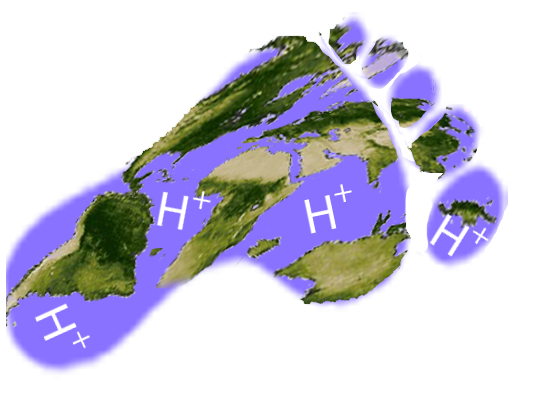
In addition to the famous impacts of atmospheric carbon on global warming, there is an equally worrisome effect of carbon dioxide on the oceans: ocean acidification (or OA for short). Here at I2SEA we have a series of resources about OA, including Our Acidifying Ocean, which is an introductory activity and virtual lab (note: now mobile compatible!).
A student suggested that we start a conversation topic about OA, and here it is! Have you heard about Ocean Acidification? If so, are you worried about it? How do you think we can best raise awareness about it among your fellow students and the general public? Have you seen particularly good links or films about OA that you would like to share? What are you doing to address the problem?
Ocean Acidification
Recent posts:

I am curious to learn about ocean acidification as i know little about it. It doesn't really seem like a problem caused by the increase of greenhouse gasses yet it is and could be just as much of a problem as increased temperatures or water levels. I want to learn more about how carbon dioxide can cause this issue.
I'm willing to adopt an reduce reuse recycle lifestyle by not using so many one time plastics, and picking up food, plastic, cardboard, anything that is on the floor
ocean acidification is something that has to do with carbon dioxide going into the ocean. Its when green house gases rises into the atmosphere but a portion gets sucks up by the ocean.there is a website that you can learn more about just search up ocean acidification. But this is bad for the environment because of the sea life like mostly coral so people who are making all of this carbon dioxide is hurting the ocean and that's why we need to stop making so much.

I wholeheartedly agree with your statement. Ocean acidification is the decrease of the PH level in our oceans, which is caused primarily by the process of carbon dioxide diffusing into the water. This process reduces the availability of carbonate ions, which many shellfish species rely on to form their shells. Shells of organisms like mollusks and other invertebrates will dissolve because of how purely acidic the ocean waters are. This causes widespread negative impacts on the entire food chain- over 3 billion humans rely on seafood as a food source. We as residents of this planet must absolutely strive to lower our collective carbon footprint, because our day-to-day actions and reliance on fossil fuels is highly harming oceans and all beings that call oceans their home.
Reducing waste can be a good action to save oceans. The waste humans make and when they litter, all of it finds its way towards the ocean eventually. This can have a bad affect on the creatures living in the ocean leading to as high as making some go instinct. Recycling and picking up our trash can prevent all of this by making our oceans clean and a good environment for all the creatures on earth.
I agree to this. Bring a reusable bag when you go shopping is a easy way to reduce the use of single use bags; lowering the amount of waste that you produce. Another way that you can reduce waste is trying not to use a new ziplock bag everytime you pack a sandwich or snack. You can use the same Ziplock bag by washing it after you use it. This reduces the amount of plastic you use.
Carbon dioxide emissions affect not only our atmosphere, but also the Ocean and the organisms that call it home. We have already realized what plastic pollution does to the ocean, but the impact greenhouse gases on this aquatic environment seem to have been overlooked. This is another reason why we must make better choices for the environment.
I agree with this. Plastic pollution has a huge negative impact on our environment and if we don't act fast our oceans will get even more acidic.Our oceans have already taken the negative impact of CO2 emissions and it has caused coral bleaching. Coral bleaching is a coral's response to stressful conditions, such as the ocean acidification. This topic is a good reason to make better choices in our day to day life.
I agree with this statement. Since the impact that greenhouse gases have on the ocean doesnt only effect the beings that live in the ocean but also everyone else who relies on the ocean. Since more than 3 billion people rely on the ocean for their main food source greenhouse gases effecting this aquatic environment could greatly impact their lively hood. Also if we do not try to spread awareness to this issue and the effects it can cause the majority of people will not try to change their ways to try and stop this issue before the damage becomes unchangeable.
Ocean acidification is a rising environmental issue that poses a significant threat to marine ecosystems. As carbon dioxide levels rise in the atmosphere,a portion is absorbed by the oceans, leading to a decrease in pH levels. This chemical shift can have devastating effects on marine life, particularly organisms with calcium carbonate shells or skeletons, such as coral reefs and shellfish, which struggle to maintain their structures in more acidic waters. To help this issue, we can take action by reducing our carbon footprints through lifestyle changes. Such as advocating for renewable energy sources, and supporting policies aimed at decreasing greenhouse gas emissions. Promoting awareness and education about ocean health can help communities to engage in conservation efforts to help our oceans.
I have also found a link about more information in ways we can help our oceans and marine life. https://texanbynature.org/2019/08/5-way … our-ocean/
I had no idea that what we put out goes all the way into the oceans...that is really sad to read about. Putting this post up will definitely help with my drive to cut down on carbon emissions.
I agree with this because we need to conserve marine life, because without marine life the water would end up being toxic due to a lack of a diverse ecosystem, and if we reduce the use of fossil fuels and come up with a safer source of energy all will be well for humans and the environment.
I never knew how me playing on the video game is hurting the ocean but I do agree that we need to find a better way to use energy. I think we should use hrydro energy
I agree with this, the Ocean is very important.I also like that it included a link to help the Ocean.
I am worried about the Ocean having less fish. Ocean Acidification is when the Ocean’s PH changes due to a higher amount of carbon dioxide in the atmosphere, it hurts marine life. It also causes Ocean warming. We should stop Ocean Acidification by not using fossil fuels.
Ocean Acidification is when the ocean becomes more acidic due to too much carbon dioxide in the air. The ocean absorbs this and it then mixes with the water which forms an acid. This acid can be harmful towards sea life like clams, oysters, and coral because it makes it harder for them to build their shells. Many sea animals like fish, depend on coral reefs for a place to live and to have shelter. If we continue to pollute the air, ocean acidification can become even more harmful not only to us but to ocean life as well.
this is very useful information, and I agree with you that if we continue to harm the ocean it can become even more harmful towards us. You've proven some very good key factors as to why we should try our best to reduce how much acidity we put into por ocean, but how can reduce how much and what can I do to prevent myself from producing too much carbon?
The Indian Ocean and the Pacific Ocean are both becoming more acidic as they absorb increasing amounts of carbon dioxide, but they acidify for slightly different reasons and at different rates. Studies show that the Indian Ocean’s surface pH has been decreasing at about 0.015 pH units per decade, mainly due to high Carbon dioxide uptake and warming that changes how water mixes. In contrast, the Pacific Ocean experiences strong acidification in regions with upwelling, where deep, Carbon dioxide-rich water rises to the surface and lowers pH even more. Although, according to IPCC modeling, all major ocean basins, including the Indian and Pacific, are expected to continue acidifying. So even though the patterns of the two oceans are different, both of them are growing in acidity levels.
Since 1980, there has been a steady decline in The Indian Ocean's pH level, causing it to be more acidic. Going from 8.2 pH in 1980 to 7.94 in 2025. It has been declining at a rate of 0.015 every decade. This could pose problems in the future to any marine wildlife that will live there. Does anyone have a reason for this?
In the years 1980-2019, pH of the oceans around India has decreased by 0.015. Years after 2019 have notices that the pH is decreasing at speeds higher than they were before annually. This is likely due to the amount of factories running so they can provide for the population. It is a known fact that India has also been taking part in the popular field of AI and AI research, so i was wondering whether the government should stop investing money in AI research and rather focus on finding sustainable solutions for factories.
I think we need to stop putting our factories near or in our oceans to at least slow down the pollution.
Ocean acidification is no joke. So many different sea animals are going extinct, many of these are keystone species. For example coral reefs are a big concern because they are going through mass extinction, this is because of the carbon getting into the ocean and heating it up. This happens because the carbon is reducing the ph levels and making the ocean more acidic which corals react very poorly to because the water is so warm, the coral will expel the algae that lives in their tissues and the coral will turn white, if the algae doesn’t come back the coral will die. This can happen in 4 weeks if the water goes up by 1 degree celsius, if this keeps happening we will have no coral in the future and coral reefs are a keystone ecosystem for so many species.
I completely agree with this. Ocean acidification needs to be talked about more so that a difference can be made. The longer we wait, the harder it would be to come back from our mistakes. Keystone species are a crucial part to our ecosystems and many more species will die if we keep doing what we are doing. Our planet is warming at such an alarming rate, organisms don't have time to evolve and adapt to these new circumstances. The last time the earth's climate changed this much there was a mass extinction. We need to worry about our carbon emissions now, so that in the future coral still exists.
I agree with what you are saying nora. The oceans have never been this warm and I don’t think they will ever go back down. Even if the feature we reduce the amount of carbon we produce we can’t bring the coral back to life. We have to take action now if we want to save our oceans. I’m fortunate enough to have gone snorkelling before and see how beautiful the coral is. I and assume everyone else wants to be able to go snorkelling with their own kids, and not have to tell them about them like we talk about dinosaurs today.
I agree with everything that u guys are saying. There is absolutely no way we can fight a problem most people don’t even know is happening. Most people hear about oceans being polluted by micro plastics but not how the fundamental chemistry of our oceans are being changed. And un like most climate issues where there are a hole bunch of different causes we know that this is being caused by an increased amounts of carbon in the atmosphere. Which causes the ocean to heat up. People say it’s hard to fight for something you can’t feel or see happening. This is why the worming of the planet is being so strongly fought for but you can see the impacts of worming oceans. When you see the news that says we are in a mass extinction event and you go back to your favourite scuba diving or fishing spot and there are no fish and the coral Reeves are bleached. Or u dip you feet in the ocean and don’t feel that familiar numbing cold. Our every impact is shown all around us and if we are going to solve this problem you can’t look away.
I as well agree with what your saying about ocean acidification. It's really sad and disappointing to see how much ocean life is going extinct and is in danger because of it. Coral reefs are very important and its honestly scary that they can die so fast just from the water changing its temperatures. They help and benefit many sea creatures and if this continues it will change the future of of our ocean life. We really need to stop polluting and try to protect our oceans before it gets to late.
Ocean acidification is a worldwide environmental issue mainly resulting from the increase in carbon dioxide (CO₂) levels in the atmosphere due to human activities such as burning fossil fuels and deforestation. When the ocean takes up too much CO₂, it dissolves into seawater to form carbonic acid, which lowers pH and reduces the amount of carbonate ions—a crucial ingredient for sea animals that build shells and skeletons, including corals, mollusks, and some plankton. This chemical process makes it more difficult for these animals to survive, breed, and maintain healthy populations, and threatening entire ocean food webs. The sources of ocean acidification have a lot to do with industrialization and continued reliance on carbon-releasing energy sources. The sea is projected to absorb about 30% of atmospheric CO₂ emissions, buffering global warming but accelerating acidification. Impacts are extensive, penetrating biodiversity, fishery, and marine-based coastal communities relying on the sea for livelihood and food. Coral reefs, which support around 25% of marine life overall, are particularly vulnerable and face increased threats of bleaching and erosion. Ocean acidification also effects the ocean's ability to store carbon, potentially reducing its potential to buffer climate change in the long term. This can be addressed through international cooperation to reduce carbon emissions, advance sustainable development, and tailor efforts to affected communities and ecosystems.
Thanks for sharing this! Ocean acidification is something I didn’t know much about until recently, and your post really helped break it down. It's wild how something like CO₂—something we can't even see—can have such a big impact on sea life.I didn’t realize coral reefs support that much marine life. That really puts into perspective how serious this is, especially for people who rely on fishing or live near the coast. It's kind of scary, but I like how you mentioned that there are solutions, like working together internationally and focusing on sustainability.
I’ve been trying to be more mindful about energy use, like unplugging stuff I’m not using and choosing more eco-friendly products. It feels small, but I think every little bit helps. Thanks again—your post was super informative and made me think more about how connected everything really is. ?
I learned that rising ocean temperatures are making coral reefs bleach and die. Coral reefs are really important because they give shelter and food to tons of sea animals. I read that climate change and pollution are the main causes of this problem. I think we should all try to help the planet by using less plastic and saving energy.\
I had never heard of this phrase until recently, but it is one of the many effects of climate change. So, what is it? Basically, ocean acidification in the phrase used to describe the increasing acidity of the ocean. This is due to the ocean absorbing massive amounts of carbon dioxide from human activities. The more carbon dioxide that is put out into the atmosphere from activities like burning coal for power, the more the ocean absorbs. When that happens, it raises the acidity of the water. While it may not harm humans, it causes lots of harm to the ocean life. For example, the increasing acidity of the water has been harming coral reefs. Because they are unable to adapt quick enough to withstand the sudden changes, the coral die off. This leaves many aquatic species without protection from predators. While this is only one species that is suffering, soon enough all ocean life will be killed off by the raising acidity. This could spell disaster for many societies that rely on ocean life to feed themselves or to keep them employed. That is why it is so important to take climate change seriously, and to start working as a society to reverse the effects of climate change.

I recently learned about ocean acidification, and it really opened my eyes to another dangerous effect of climate change. Ocean acidification happens when the oceans absorb too much carbon dioxide from the atmosphere, mostly due to human activities like burning fossil fuels. This makes the water more acidic and harms marine life.
I think it’s important for all of us to be aware of this issue and support actions that reduce CO₂ emissions. Even small steps can make a difference when done together.
I had a similar experience, recently I learned more about ocean acidification. I had heard of it before but never fully knew what it is until last month during a science research trip to Belize where we read about ocean acidification and the effects of global warming on the ocean's ecosystems. I learned that when the ocean absorbs excess carbon dioxide it lowers the water's pH levels causing the water to become more acidic. This is happening because humans are producing Co2 faster than nature and the ocean can absorb it. Like the previous posts mentioned it is really sad how this is happening. The affects of ocean acidification are tragic for sea corals and animals as it results in a lot of habitat loss.
Combating ocean acidification is crucial for the health of marine ecosystems and the livelihoods that depend on them. As carbon dioxide levels rise, more of this greenhouse gas is absorbed by the oceans, leading to a decrease in pH levels and disrupting the delicate balance of marine life. Coral reefs, shellfish, and various marine organisms struggle to build their calcium carbonate structures in increasingly acidic waters, threatening biodiversity and fisheries. Effective strategies to address ocean acidification include reducing carbon emissions, promoting sustainable practices, and restoring coastal habitats like mangroves and seagrasses, which can help buffer changes in pH. Collaborative global efforts, research, and public awareness are vital to mitigate the impacts of ocean acidification, ensuring the resilience of our oceans for future generations.
Ocean acidification is expected to have negative overall effects on many marine species. This could alter marine food chains and food supply to humans. Ocean acidification occurs when carbon dioxide (CO2) is absorbed rapidly into the ocean. It reacts with water molecules (H2O) to form carbonic acid (H2CO3). This compound then breaks down into a hydrogen ion (H+) and bicarbonate (HCO3-). These hydrogen ions decrease seawater pH.
Ocean acidification is a significant environmental issue caused by excess atmospheric carbon dioxide being absorbed by the oceans. This process lowers the pH of seawater, making it more acidic. According to the National Oceanic and Atmospheric Administration (NOAA), ocean acidification has detrimental effects on marine life, mainly the organisms with calcium carbonate shells and skeletons. These species are vital to the marine food web and their decline can disrupt entire ecosystems, affecting biodiversity and fisheries that we rely on. The NOAA suggests several strategies, reducing CO2 emissions is paramount, which can be achieved by transitioning to renewable energy sources and enhancing energy efficiency. Protecting and restoring marine ecosystems, such as seagrass beds and mangroves, can also help as they absorb CO2. Additionally, improving monitoring and research on ocean chemistry and its impacts can guide effective policy and conservation efforts. We need to work harder on reducing our carbon footprint!
The increase in acidification in the ocean has impacted all sea creatures with shells and or bones that are made of calcium due to the flow of carbonated calcium going from net positive to net negative.
Hi! At my house, I recently downloaded a coding game, and I was planning on coding a video-game focusing on helping creatures that are being harmed from Ocean Acidification. The game would be centered on quests that the player would go on to help ocean creatures--- but that's beside the point. I can't think of any creatures right now!!! Do any of you have any ideas for ocean creatures and some quests to help them? Please spare me the coder's block! :,(
(P.S.) (I wanted to code this game to raise awareness of Ocean Acidification. Just an FYI!)

Protecting the ocean is essential for life on Earth.Oceans are vital sources of oxygen,food and resources,and their conservation is crucial to our health and the health of global ecosystems.
Yes, I agree but how do we protect our ocean from acidification? First, we must understand what causes acidification. Ocean acidification is caused because more carbon dioxide is dissolving into the Ocean than ever before. It is natural for CO2 to dissolve into the ocean because the Ocean is a carbon sink. However, because of the industrial revolution and deforestation a surplus amount is being absorbed by the ocean which lowers the ocean's pH levels. The lower the pH levels are the more harmful it is to certain organisms who depend on the Ocean to survive. We must find ways to lower our carbon emissions as a whole to prevent any further extra acidification.
read this article to learn more on this topic:
https://www.nhm.ac.uk/discover/quick-qu … uses-ocean-
acidification.html#:~:text=Ocean%20acidification%20is%20mainly%20caused,being%20absorbed%20by%20the%20ocean.
I agree, and even little things you can do at home can help protect ocean life. Things such as properly disposing of waste and conserving water are great ways to help even just a small amount. Another great way is to use less energy around the house, ways to do this are using energy efficient appliances and lightbulbs, keeping lights off when your not using them, and trying to limit large appliance usage. Even if these make a small difference if everyone pitches in we can help the bigger picture greatly. Many corporations also help contribute to restoring and conserving ocean life, they do this through many techniques such as rebuilding reefs and salt marshes that guard against storms and flooding, and protecting "Super Reefs" which are reefs which can survive hot temperatures and are used to help grow new generations of coral. We can make a difference by supporting and donating to these corporations which often rely on donations to operate.
I completely agree; oceans are one of the most important contributors to human life. However, humans have caused great damage to the ocean. So how can we protect the ocean, and keep it healthy? Well, according to National Geographic, there are over 5.25 trillion of plastic in the ocean. This plastic kills sea life and is incredibly damaging to the ocean. To fix this, we can try to limit the plastic we use and correctly sort our trash. For example, instead of buying Ziploc bags, you can buy glass containers, which are reusable and don't cause damage to the environment after you dispose of them. Limiting your use of plastic leads to less plastic being put in the ocean. Similarly, we can also protect our ocean from acidification. Ocean acidification is the decrease in the pH of the ocean caused by too much carbon dioxide. The ocean naturally absorbs CO2, but abounding too much can lead to acidificaction, which harms sea plants and animals. To stop this crisis, we can try to limit our carbon footprint. According to I2SEA, the average human produces 3 791 kgs of CO2 per year, and even more in the United States. To reduce this number, we can drive to avoid driving and can use public transportation, biking, or walking instead. We can also try to invest in renewable energy sources, like solar panels, which use energy from the sun for electricity. This not only reduces your carbon footprint but saves you money. You can also try to eat less meat. Animals produce a lot of greenhouse gases, and not eating meat means not giving money to these companies that exploit and harvest animals.
What is ocean acidification? Well, for starters, it is the ongoing decrease in the pH of the Earth's ocean. This is caused by the uptake of carbon dioxide in the atmosphere. This topic is important to the carbon footprint because it’s caused by all the carbon dioxide. When taking the survey, it gave us numbers that show how much carbon dioxide we produce throughout the things that we do. These things include any type of transportation, what kind of food you eat, how often you use energy in your house depending on if it’s gas or electric, and the things you buy. Bad things could happen to our waters if we don’t make an attempt to prevent ocean acidification. For example, the first thing that affects us is that we won’t be able to swim in the ocean. The second example is that these changes can affect seafood supplies and the ocean's ability to store pollutants, including future carbon emissions. You may ask, “what are some ways that we could prevent this though?” Well, even living in the midwest away from oceans, reducing the amount of carbon dioxide emissions at home, at the office, and on the road can still help with the problem. The carbon dioxide that we as humans release comes from burning fossil fuels. When we do that, it increases the acidity in the ocean allowing carbon dioxide to dissolve. The best things to do in a home that helps decrease the amount fossil fuels being burned include, swapping your furnace for a heat pump (many people in Canada rely on fossil fuels to heat homes), replacing your gas water heater with a heat pump water heater, trading your gas stove for an induction stove, and replacing your gas fireplace with an electric one. You can also use LED lights in the house that helps with the amount of energy being used. More things that people can do include turning off lights, computers, televisions, video games and other electrical equipment when you're not using them, limiting the use of air conditioning, and trying to use more things that take electricity instead of gas, like cars or stoves. These are all easy ways that humans can prevent ocean acidification. The hard thing is trying to get multiple people to go to beaches and pick up all the litter and trash people are throwing and letting dissolve into the ocean and atmosphere. For many years, people have been trying to get others to quit littering, lawmakers have even tried to make it illegal, but that doesn’t stop everyone. Although, the less people emitting fossil fuels, the better. Overall, if more people make an effort to do these things, then the ocean will be thriving again and coral reefs will stop fading in color.

Ocean acidification refers to the decrease in the pH level of the world's oceans, it is caused by the carbon dioxide from the atmmosphere. When Co2 dissolves in salt water, it forms carbonic acid, when then dissolve into bicarbonate ions and hydrogen ions, which lowers the pH of the water.
Why is ocean acidification a problem?
First, the lower of the pH level affects the lives of marine animals such as corals, mollusks, and some plankton species especially to build and maintain their shells and skeletons composition which is made out of calcium carbonate. If it is severe enough, it can cause problem in the marine food chain. Second, the coral reef decline. Coral reefs are vulnerable to ocean acidification. As they lose their ability to form and maintain their calcium carbonate structures, they will eventually collapses and die. This will affect the biodiversuty and the habitats supported by the coral reefs. Third, ocean acidification can distrupt the entire marine ecosystem, affecting species diversity and changing the predator prey relationship.
How do we solve ocean acidification?
One way that we can reduce ocean acidification whcih is to reduce the amount of carbon dioxide and other greenhouse gases which means to be conscious of your energy use. Some ways we can do this is to drive less, switch to fluorescent light bulbs, and compost your food waste. To protect the ocean, we must also stabalize the carbon dioxide in the atmosphere.
Ocean acidification is something that could ultimately affect us as well, since coral reefs are part of the ecosystem in the ocean. Each year, world trade in fish and fisheries products in 2023 is estimated at 65 million tonnes, which would also make our economy go down. To make the ocean acidification rate go down, we have to cut down our usage of fossil fuel and carbon emissions. To do this, we could take public transportations such as the metro or instead of driving, we could bike to the destination. That way, not only would you save the Earth, you would be exercising as well. The carbon dioxide in the atmosphere could be reduced by the way we live daily.
What is ocean acidification? It is when the Ph of the ocean is reduced over an extended period of time. Ocean acidification is mainly caused by uptake in carbon dioxide from the atmosphere. Carbon has been increasing over 200 years due to burning fossil fuels and land use change. The ocean absorbs a lot of carbon from the atmosphere, about 30%. When the carbon levels rise in the atmosphere they also rise in the ocean. When the carbon is absorbed by the seawater a chemical reaction happens causing more hydrogen ions. More hydrogen ions means the seawater will become more acidic but the water being more acidic carbonate ions to be less abundant. Certain fish have the ability to detect predators and when the water is acidic this ability decreases. Effects on other marine organisms are the extra acidity make it harder for things like coral and plankton to create their shell and skeleton. If the organism already has its shell it will begin to dissolve. Some things could benefit from the increased carbon. Some algae and seagrass are one of the ones that benefit from the carbon because it increases their photosynthetic and growth rates. More things the acidity can harm are mollusks, their shells could be very weak or dissolving. The marine organisms also can experience other changes such as abundance, changes in growth, development and survival because of ocean acidification. What can coastal decision makers do? Everyone can try to reduce their greenhouse gas admissions but the best way is to use the adaption approach. The adaption approach is changing things in your daily lives that will help produce less carbon into the atmosphere. What can we do to help? The only thing that will help the ocean acidification is lowering carbon admission. Ocean acidification is a serious thing that effects the environment, animals, etc and by reducing it the marine organisms will be able the develop normally.
Ocean acidification is a reduction of pH of the ocean over an extended period of time, caused by the increase of carbon dioxide in the atmosphere. Ocean acidification is not good because this can create conditions that eat away at the minerals used by oysters, clams, lobsters, shrimp, coral reefs, and other marine life to build their shells and skeletons. Not only is this bad for marine life but also human health. This condition can cause harmful algae species to produce more toxins and bloom later in acidified waters. This will only be harmful to humans if this is affected by shellfish or sicken fish consumed by humans. This is not only affecting humans but industries as well. For example, Alaska fisheries are suffering the consequences of ocean acidification. The Great Barrier Reef is being affected as well. There has been a decline of living corals, causing a reduction of habitat for living fish. Now how can we stop this? Helping stop emissions is a way we can help stop this since ocean acidification is caused by an increase of carbon dioxide. By trying to decrease the annual output, for example, cars, we can decrease the amount of carbon dioxide being released into the atmosphere, helping stop ocean acidification. Sure this might be a slow way of stopping ocean acidification but it will help over time. Along with decreasing the output of carbon dioxide we can also help by protecting and restoring marine and coastal ecosystems. Just planting kelp and seaweed forest allows them to absorb the greenhouse gasses and can help restore the oceans environment. In conclusion, if we want to keep out marine life and ecosystems safe we should take part in helping reduce/stop ocean acidification.
https://www.gao.gov/products/gao-24-107 … %20warming.
https://www.epa.gov/ocean-acidification … 0community.
Ocean acidification is the reduction of the earth’s PH. This can create conditions that eat away at the minerals used by oysters, clams, lobsters, shrimp, coral reefs, and other marine life to build their shells and skeletons. This causes a human health concern. Although ocean acidification doesn’t make the water dangerous for swimming, it can upset the balance of the multitude of microscopic life found. This can affect the seafood supplies for us humans while also deteriorating the oceans ability to store pollutants like carbon emission. Ocean Acidification reduces the amount of carbonate, a key building block in seawater. This makes it more difficult for marine organisms, such as coral and plankton when trying to form new shells and skeletons. The oceans have absorbed more than 150 billion metric tons of carbon dioxide emitted from human activities. Those activities include the burning of fossil fuels, agricultural activities, and deforestation. With the increase in those human activities, slow, long-term changes in the carbon cycle can influence ocean acidity over time. Today, more than a billion people worldwide rely on food from the oceans as their primary source of protein. About 20 percent of the world’s population derives at least one-fifth of its animal intake from fish. Since ocean acidification has a negative effect on marine species. This often alters the marine food chains and food supply to humans. As a way to help ocean acidification, humans can start by reducing carbon dioxide emissions at home, at the office, and on the road. Also another way that we can limit ocean acidification and help improve it is by acting on climate change and watching the amount of fossil fuels we use as a community. If we limit the amount of fossil fuels we use right now we can stop future harm to the oceans as well as future warming. Doing this we can significantly reduce the harm towards our marine ecosystem. Overall, Ocean acidification is something that might not be concerning to all but is definitely something that people to look at and try and solve. It won’t just take one person to try and solve the problem of ocean acidification but a whole community to try and solve an issue like this if we want a better future for our ocean.
To halt ocean acidification, we must reduce carbon emissions, promote renewable energy sources, preserve coastal ecosystems, and invest in research. Collective efforts are essential to safeguard the ocean's delicate balance and the biodiversity it sustains.
Yes, I agree that we must reduce carbon emissions to halt ocean acidification (as well as the other solutions you proposed). The ocean absorbs 30% of the carbon dioxide released in the atmosphere, and this CO2 causes the ocean's pH to drop. A lower pH means that the ocean becomes more acidic. This is a huge problem. As many of the ocean's fish depend on specific pH levels to detect predators, a more acidic ocean puts these organisms at risk--and perhaps the entire food web. This butterfly effect puts people at danger as well, especially coastal communities who depend on food from the ocean.
See this article for more: https://oceanservice.noaa.gov/facts/aci … atmosphere.
We have already polluted the ocean too much. We should protect and take care of our ocean. Human beings are spending trillions of dollars for military budgets and also a lot are used for a lot of things that are unnecessary, such as playing golf, drinking beer or burning a cigarette. If we spend more money towards saving the Earth and our precious ocean, we might have a chance of reviving our ocean into a cleaner place for the animals living in the environment.
I totally agree with you. U think very good keep thinking
I agree, people have been exploring the space but human have only explore 5 percent of our ocean and they should stop exploring outside the world and start exploring our own planet.
I also agree, there are too much trashes such as plastics, glasses, and other harmful material that human throw in to the ocean. We should keep researching about the ocean and also care for it to protect our environment.
I agree as well, there are many factors that are contributing to the negative impact on our planet. The ocean is one of the most important parts of the earth. The oceans hold a lot of life on earth, help regulate our climates, and are even very important carbon sinks. The pollution and poisoning of our waters do more than just kill the wildlife, when the trash and plastics decompose they use oxygen to do so, slowly taking away the oxygen that the ocean produces away from the atmosphere. On top of that it is a vital and important part of the water cycle.
To learn more:
https://www.texasdisposal.com/blog/ocea … 0depletion.
https://science.nasa.gov/earth-science/ … vaporation.

I think would more people think like u the ocean were already a cleaner place of our Earth
I'm sure that a lot of our young generation would agree with you, but it's far easier said than done and many people in power right now are selfish, self-centered and don't really care about future generations and their quality of life.
I think your idea could work in a span of many years because it could be complicated to change the habits of humans that’s been going on for years and some parts of your idea has to do with the government. People would have to convince the government to not fund as much money into the military instead into our acidifying ocean. Some of the things you listed as unnecessary are drinking beer and burning a cigarette. These habits of humans may be a problem to just avert away from since the economy gets some benefits from it because of the money they produce. These companies producing beer and cigarettes also benefit people who are in need of jobs. These obstacles may cause problems to stop the use of money in unnecessary activities. We need to make a big organization or get a large following of people who want the ocean acidification to be taken seriously.
I agree, a lot of people are irresponsible with their money and spend it on meaningless objects to receive temporary pleasure. Some people even use it for drugs, smoking, and drinking (stuff that causes addiction in general) which is not only bad for the human, but for the environment as well. You can find so much cigarettes butts on the filthy roads which are just polluted with plastic and glass. If we all combined our money and put it to good use, like collecting plastic form the seas, we can all reduce our carbon footprint, save marine life, and cause less pollution.
I agree, we spend so much money on meaningless things, when we could be spending our money on trying to save our oceans. There is so much junk that gets tossed into our oceans and we should be trying to educate those who dont understand its importance. we need to be putting more money into saving our earth, rather then on things that are a one time use and meaningless.
Hey! You're so right! The biggest contributors to ocean pollution include runoff from human activities (both coastal and further inland) such as septic tanks, farms, and other big machinery. These examples are called nonpoint source pollution, coming from many different sources and much more frequent compared to its counterpart, point source pollution. Point source pollution is pollution with one origin, such as spills or discharge from oil rigs or other factories. When pollution like this happens, it messes with the quality of the water a lot (pH, acidity, temperature, etc.) and causes habitat loss for many sea animals that live somewhat close to land.
Ocean acidification is the reduction in the pH of the Earth’s ocean. This process takes place over periods lasting decades or more. Its main cause is the absorption of carbon dioxide (CO2) from the atmosphere. This, in turn, increases CO2 concentrations in the ocean. Between 23 and 30% of the CO2 that is in the atmosphere dissolves into oceans, rivers and lakes. Acidification is one of several effects of rising CO2 on the ocean. Other chemical changes to the ocean can also cause acidification. As the ocean absorbs CO2, seawater chemistry changes, which changes the living conditions of marine species. Many different species are affected, especially organisms that rely on calcium carbonate shells and skeletons, like mollusks, oysters and corals. Organisms like these struggle to build those parts of their anatomy when ocean waters have increased acidity.
Yes, this is very true and it's sad that it is happening. Although it is natural for the ocean to absorb the CO2 in the atmosphere, it does take a long time for the process to complete. With human activity increasing the CO2 emissions, it makes it hard for the ocean to keep up with all the carbon dioxide and balance it all out. And yes, marine life is getting heavily affected by the chemical change in the ocean, if the organisms you mentioned are affected then so will their predators and so on. Their habitats are also affected by ocean acidification, especially coral reefs. Many species have fled or many have died due to coral reefs being affected. With this, most regions have lost many species of fish and most of their food.
Ocean acidification is something that not that many people know about, but it is a very important thing. First of all, when the ocean is more acidic it weakens the shells of shellfish. Like crabs, clams, mussels, and shrimp. The importance of this is that it makes them vulnerable to predators which will stop them from making it too adulthood. Which could lead to extinction. Another important animal that is at risk is corals. Ocean acidity is causing them to get thinner and thinner each day which will eventually make them extinct as well. Lots of coral reefs are dying out rapidly right now imagine how many will be alive by 2050. Scary right.
Yes, the increase in carbon dioxide in the atmosphere has caused the ocean to absorb more carbon dioxide. Carbon dioxide and water produce carbonic acid, which releases hydrogen ions. The increase in hydrogen ions decreases the ocean's pH. Our ocean has an average pH of 8.1, but some experts say that the pH could drop down to 7.8 in the 21st century. A large cause of this increase of carbon dioxide is from the burning of fossil fuels and deforestation. I agree that ocean acidification will be detrimental to many organisms and if we don't do anything about it, could cause the extinction of these animals. The low pH also degrades the coral reefs, which serve as a home to many organisms. Coral reefs also protect coastal lands from erosion, so it will directly affect communities. The best solution to ocean acidification would be to stop burning fossil fuels! We need to stop producing so much carbon dioxide.
https://www.nrdc.org/stories/ocean-acid … #solutions
Website for info above
The coral reefs are disappearing quickly. Coral reefs make up of most of the fish in the oceans habitats. Coral bleaching is destroying the Great Barrier Reef and other small reefs all over the world. The ocean is loosing it’s biodiversity allow with the fish we humans depend on
I agree, protecting coral reefs is substantial to the environment of ocean life as well as the food chain, not only is the major for ocean life but also humans jobs resources because with out collar reefs there wont be huge attractions for sourest. There will also be less fish for fishing.
I agree, this topic is not discussed as much but I think is equally important. This is extremely important to ocean life and we need to do something to help preserve coral reefs.
I agree if all the coral reefs die there will be nothing to slow down the force of waves and that will cause tsunamis. Not wearing sunscreen in to the ocean will help a lot because the sunscreen kills the corals. If the reefs die, a lot of fishes will lose protection and the food chain will be messed up. Protecting the reefs is very important because it will effect everything from land to sea.
Eu și familia mea ne străduim să nu mai consumam combustibil și energie.Sa folosim biciclete
Ocean acidification is an important environmental issue caused by increased carbon dioxide absorption in oceans. It’s something we all should worry about because it threatens marine ecosystems, particularly coral reefs and shellfish. We need to raise awareness about OA and take action. The documentary “Chasing Coral" might help you understand OA better the effects it has on marine life. We have to reduce carbon emissions and promote sustainability to protect our oceans.
I agree greatly, the ocean over the years has taken in a lot of CO2 which has made things such as wild life and reefs become less dense and started to kill them. I think this is a great idea on showing how to help this and is a very important topic. It is much more then just doing the little things everyone on this earth needs to contribute to help our ouceans.
Agreed living on the coast the effects of the ocean are very important to me. The oceans acidifying is killing off corral and many fish that rely on the reefs. Among killing plants on the ocean floor that kill the bottom feeder sea animals causing the fish population do decrease.
Ocean acidification, caused by rising CO2 levels, endangers marine life and ecosystems. It harms coral reefs, shellfish, and biodiversity, disrupting fisheries and tourism. This issue also impacts climate change, as less CO2 can be absorbed by the ocean. Solutions include reducing CO2 emissions, creating marine protected areas, and raising public awareness about the problem. Addressing ocean acidification is crucial for protecting our oceans and the diverse ecosystems they sustain.
I agree with you rising CO2 levels cause ocean acidification. When there is too much carbon dioxide in the atmosphere, some of it will be taken in by the ocean. This is a problem because the rise of CO2 is lowering the pH level in the ocean. Animals like oysters, scallops, and shellfish need shells to survive in the ocean but cannot form them because ocean acidification breaks down their shells.
I agree that ocean acidification is caused by CO2 because in the past during the great dying. Tons of CO2 we put out in our atmosphere the ocean took in some of the CO2 and this caused the ocean to become very acidic. Just like in the past we are getting more CO2 in our atmosphere. Our ocean is also becoming more acidic, if it’s anything like the past then most likely the ocean is becoming more acidic because of all of the CO2 in the atmosphere. The ocean becoming more and more acidic is very crucial because the acidity in the ocean can break down shellfish and crustations shells, taking away their protection. Eventually the ocean can become so acidic that it won’t be habitable.
Ocean acidification is the lowering of the ocean's pH levels. It is caused by carbon dioxide gas in the atmosphere dissolving into the ocean. The ocean is becoming acidic because of these lowering pH levels which are leading to the death of coral and other aquatic organisms. This is bad because it will not only affect the oceans, but animals on land will be affected too. A large majority of humans find their main source of protein from sea animals, and many humans will be malnourished without healthy fish and other sea food. We need to stop ignoring problems like ocean acidification just because it isn't affecting you, because it is probably affecting billions of others.
I feel like algae aren't talked about as much as they should be. They make up roughly 70% of the oxygen in our atmosphere and many marine creatures eat them, they are essential to our survival. Now, algae is battling ocean acidification and balancing out the CO2 in the water. I know algae are capable of handling a lot of CO2 since it's their food, but I feel the need to bring attention to the fact that if there's too much CO2 in the water for algae to balance out, the change in pH from ocean acidification can possibly reduce algal abundance. Do you guys think that algae and its importance should be talked more about, not just because they produce over half of our oxygen but also because they are balancing out ocean acidification? Also, if pollution increases, overgrowth of algae may harm the ecosystem itself. I feel like this needs to be talked about more.
https://ugc.berkeley.edu/background-con … en-levels/
https://deepblue.lib.umich.edu/bitstrea … y%20thrive.
https://www.epa.gov/nutrientpollution/e … ecosystems.
I think we need to raise awareness for this problem because I've never thought about the algae and I know many others haven't either
Ocean acidification is an increasingly worrying topic. Coral bleaching in particular is concerning, 1 in 4 ocean species rely on coral reefs for habitat. Losing a quarter of the oceans biodiversity would have drastic effects for the remainder of the species in the ocean as well as for humans. Many humans rely on the oceans for food, or they are an integral part of peoples' culture. That brings me to my second point, 1 in 7 people in the world would become extremely malnourished because their main source of protein is sea food. If humans allow ocean acidification to continue the effects will be fatal.
The ocean needs saving. Seafood is 1 in 7 peoples main source of food. If the seas and sealife gets destroyed, around 1 billion people around the world will lose there main source of food. If we keep polluting the seas we will lose thriving coral reef habitats which gives shelter for 1 in 4 ocean species. We can lower ocean polluting and acidification by lowering carbon emissions. If we lower barbon emissions that enter the sea, the reefs can be healthy and stable again. we can do this by cleanjing up beaches that are littered, we can stay away from plastic and only use it if needed. If we do those 2 things reguarly, we can keep the oceans clean for generations to come.
Ocean acidification is a serious issue. Coral reefs, where many ocean animals live, are at risk. If we lose these animals, it's bad for all sea life, including us. Lots of people get their food from the oceans, and for many, seafood is their main source of protein. If we don't fix ocean acidification, it's a big problem for sea life and our food. We must work together to protect our oceans.
I agree, I think that climate change has a big impact on our ocean and the rising sea levels. As when the amount of CO2 in our atmosphere rises, our temperature increases which makes the earth warmer and causes icebergs to melt resulting in sea levels rising. When our sea level rises more land goes into water. Some ways we can reduce CO2 is switching from gas cars to electric cars since gas cars give out CO2.
Ice is increasing the sea level at an alarming rate. Both the International Panel on Climate Change (IPCC) and the US National Climate Assessment say that ice loss was the largest contributor to sea-level rise during the past few decades. They also say that it will continue to be the largest for the next century. The biggest way ice melts is through sea ice, when the ice gets warm it melts and that raises the sea levels. Another way ice melts is through land ice, land ice melts on land and the water travels to the oceans or streams.

El deshielo y el aumento del nivel del mar son sin duda preocupantes y tienen múltiples efectos en nuestros ecosistemas. Uno de los aspectos impactantes es cómo estos fenómenos pueden influir en los sistemas fluviales alrededor del mundo. Por ejemplo, aunque no es un resultado directo del deshielo, es interesante considerar cómo algunos ríos han sido históricamente alimentados y afectados por los glaciares y otras fuentes de agua dulce. Tomando como referencia el Río Amazonas o el Río Nilo, ambos forman parte de los ríos más largos del mundo y han sido vitales para las comunidades a lo largo de la historia. Si te interesa saber más sobre estos impresionantes sistemas fluviales, este artículo ofrece una visión detallada sobre los ríos más largos del planeta y su significado geográfico y cultural.
I agree with what you said, but I would like to add on an emphasis on why ice is rapidly melting at such an alarming rate in the first place. As I'm sure you all know, climate change is the result of increased amounts of greenhouse gases in the atmosphere, which reabsorb the sun's heat when it tries to leave Earth. You may also have known that over the last few decades, specifically the industrial revolution and beyond, greenhouse gases such as carbon dioxide has been released into the atmosphere at faster rate than ever. But what you may not have known is but according to Columbia Climate School, only 0.04% of our atmosphere is made up of Carbon Dioxide. Even this small percentage is enough to drastic changes in our temperature and weather patterns, one of which you mentioned, is the melting of ice, and this includes places like Antarctica. As much as increased sea levels is a problem from people and things that live near shores, there are unfortunately, there are other, stronger ways climate change harms our Earth. Not only is sea level rising, but ocean acification, which is the change in pH of sea water, which harms and kills ecosystems. This is resulting in less food and loss of species. I believe that climate change affects everyone's daily lives and their lifestyles, and that the effects of climate change are not all talked about enough.
Ocean acidification, caused by rising CO2 levels, endangers marine life and ecosystems. It harms coral reefs, shellfish, and biodiversity, disrupting fisheries and tourism. This issue also impacts climate change, as less CO2 can be absorbed by the ocean. Solutions include reducing CO2 emissions, creating marine protected areas, and raising public awareness about the problem. Addressing ocean acidification is crucial for protecting our oceans and the diverse ecosystems they sustain.
Ocean acidification refers to a reduction in the pH of the ocean over an extended period of time, caused primarily by uptake of carbon dioxide (CO2) from the atmosphere. It is directly connected to our carbon footprints and the increase of the greenhouse effect. Ocean acidification is affecting the entire world’s oceans, including coastal estuaries and waterways. Many economies are dependent on fish and shellfish and people worldwide rely on food from the ocean as their primary source of protein. The ocean provides us with invaluable benefits and services such as Renewable Energy and Food; More than 3.5 billion people depend on the ocean for their primary source of food. Fish supply the greatest percentage of the world’s protein consumed by humans. The most effective way to limit ocean acidification is to act on climate change, implementing solutions to dramatically reduce the use of fossil fuels. This includes working on lowering our personal carbon footprints and being more environmentally aware.

as the ocean becomes more acidic we are going to lose the shelled creatures. their shells will dicinigrate and they will parish while we keep driving our cars and burning more carbon. but losing these animals will effect us as food chains fall apart and more sea life goes underfed. 1 in 7 people survive of fish, and if fish become small and underfed, much of our population will too. not only that but many people will lose their jobs. the fish indestry is large and important. i think the first people that will see the first major impacts of climate change will be the fish farmers that work with the ocean.
I agree, ocean acidification has been the cause to mass extinctions in the past and this could very well happen again. Lots of the worlds population rely on fish. The death of our oceans is one of the largest challenges of our generation. People in the fishing industry already are seeing decline in sea life’s health and quantity. For example, in Maine the lobster industry has been suffering greatly because of rising ocean temperatures. If temperature increase continues, 5600 people could lose their jobs.
I completely agree, as the ocean becomes more acidic it is bound to affect our marine life. And with people being dependent on the amount of marine life just to have a full stomach it can cause many problems for us in the future going forwards. Also I agree with fish farmers being the first affected, as with any other job associated with marine life if the marine life continues to deteriorate it will result in many people to be strpped away from their livlihoods. Yet this is also why this problem must be realized by people around the world, that this is a major consequence coming from climate change.
The moment the industrial revolution started and our human population began to skyrocket the total amount of CO2 being launch into the atmosphere has increased but also the excessive CO2 have been being absorbed by the our ocean as well. This absorption has caused the pH levels of our ocean to decrease with a 30% more acidity. With this acidity it has affected marine life and marine ecosystems throughout the ocean. Because ocean Acidification is just one of the effects of climate change the solution remains that same we must find ways to reduce carbon emissions. With solutions such as cutting off our use of fossil fuels and replacing our energy with more natural power sources. Another way to solve this problem is to cultivate and allow more coral reefs, sea grass, seaweed, or any other marine plant that can absorb the CO2 to counteract this increased amount being emitted.
Ever since we began burning fossil fuels for energy, 30% of the carbon dioxide has been absorbed by our oceans. When our seawater absorbs the carbon dioxide it increases the acidity of the ocean. This is very harmful to the sea life, as many fish and marine mammals are very sensitive to changes in pH. Among these are our coral reefs, which already struggle from bleaching caused by temperature change. Because of the dependence of coastal communities on the ocean, if our sea life dies off or becomes endangered, many economies will be at risk. https://oceanservice.noaa.gov/facts/aci … o%20a,CO2)
Ocean acidification happens when there is an increased amount of carbon dioxide in the atmosphere. When this happens, it causes the PH levels of the ocean to drop, meaning that it causes the ocean to be more acidic. What’s more is that ocean acidification causes carbonate ions to decrease, which are used to build shells for many sea creatures. Consequently, this can lead to many organisms to be at risk, and ultimately the food web as a whole. Because of this, all marine life are at risk of extinction if global warming continues. This has great significance because many places rely on the ocean for food. Ocean acidification does not only affect marine life, but us humans as well.
Ocean Acidification harms marine life including reefs and shellfish. As the ocean absorbs more carbon dioxide, it becomes more acidic, making it difficult for organisms to build and maintain their shells or skeletons. This disrupts the marine food chain and can lead to cascading effects on the entire ecosystem. It's important to address ocean acidification to protect the health of our oceans and those that depend on them. We can do so by reducing the fossil fuels that goes into the ocean, using cleaner sources of energy, and protecting/restoring coastal ecosystems such as mangroves and sea grasses to help absorb carbon dioxide.
Ocean acidification harms marine ecosystems by eating away at the minerals used by different types of shellfish to build their shells. Ocean acidification also makes it harder for coral reefs to build their skeletons. This is a problem because many different marine animals find food, protection, shelter, and reproduce in coral reefs. Without these habitats, marine life would cease to exist.
Some ways we can slow down ocean acidification are by dramatically decreasing the amount of fossil fuels being burned and acting on climate change. We can act on climate change by reducing the amount of energy being used and cutting the amount of waste.
Ocean acidification is when the amount of carbonate is reduced in the ocean. Carbonate is a key building block in seawater. Ocean acidification makes it much more difficult for marine organisms, such as coral and some plankton, to form their shells and skeletons, and existing shells may also begin to dissolve. Ocean acidification is caused by increased levels of carbon dioxide in the atmosphere. Ocean acidification can alter marine food chains and food supply to humans.
I really agree with your statement, I think we should protect our ocean by not exploiting them and not hunting almost extinct animals. We don't need to use unnecessary stuffs in our daily life, such as plastics, or anything that might harm our ocean. I really hope that we could help the ocean by spending more money on protecting the ocean. And I really that hope we could succeed in doing so.
I completely agree because ocean acidification is a horrific event that needs to be stopped before it continues to harm our beloved ocean and the creatures that live in it. Since the start of the industrial revolution ocean acidity has already increased by 30 percent! This number will continue to climb rapidly and is estimated to double by the end of this century. It is so sad that our beautiful ocean’s coral reefs are being affected by our careless actions. As CO2 enters the ocean it gets mixed with seawater and something called carbonic acid is produced. This rise in acidification as more carbon enters the oceans interferes with coral forming its skeleton. They cannot form them as quickly as they used to, causing them to disappear. Entire coral reef ecosystems could be destroyed in the next 20 to 30 years. Not only do coral reefs house millions of species that would be negatively affected by this. It would also throw off the food chain that feeds us and leave us without the protection of our coral reefs against storm surges. The results of these events would affect over 400 million people. The only way that we can stop this is if we stop releasing excess amounts of carbon into the atmosphere. But dont worry! There are some ways to help save our oceans such as smarter traveling choices, choosing sustainable seafood, and putting a limit on our plastic use. For more ideas to help: https://oceanservice.noaa.gov/ocean/help-our-ocean.html
For more information on ocean acidification:
https://oceantoday.noaa.gov/theacidtest/welcome.html
https://oceantoday.noaa.gov/oceanasalab_oceanacid/
https://www.awi.de/en/focus/ocean-acidi … ation.html
Ocean acidification also makes the Earth hotter. Affecting the severity of hurricanes and other storms since heat makes more water evaporate then the water in sky is also heated up intensifying them even more.
I agree with you that green house gases don't affect just the animals and the people on land but also the ones sea.Our actions are affecting the marine creatures at sea destroying their habitats food and life forms. We also dump in lakes rivers etc we can put up laws for dumping into the body of waters affecting the live forms that live in them.
Ocean Acidification is a matter worth worrying about because people around the world are relying on food from the ocean as it's their source of protein and it negatively affects wildlife. From the ocean acidification, shellfish develop a bone disease from the low amount of minerals that make it hard for them to survive. Ocean acidification also cause animals like lobsters, shrimps and coral reefs to suffer with developing their shells because it creates conditions where minerals cannot survive. Since people eat sea animals their health could be threatened because the ocean acidification contaminates and sickens sea animals.
I've been wondering about this question because all I knew about ocean acidification before is that it has to do with less pH of the ocean over time, caused by more carbon dioxide (CO2) from the atmosphere. Here's what I found based on my research:
Ocean acidification has the potential to impact human health and well-being in a number of ways, such as reducing food security. Ocean acidification harms marine ecosystems and reduces the abundance of seafood, leading to higher prices and reduced access to seafood, particularly for people in developing countries who rely heavily on seafood for protein. Another thing is the increased risk of food poisoning as ocean acidification can make some harmful algal species more toxic, increasing the risk of food poisoning from eating contaminated seafood. Ocean acidification can release toxins from marine sediments, which could pollute the air and cause respiratory problems for people living near coastal areas. Reduced availability of medicines is another result of ocean acidification as many marine organisms produce compounds that are used in the development of medicines. Ocean acidification could threaten the survival of these organisms, reducing medicine availability.
Learn more:https://www.mdpi.com/1660-4601/17/12/4563
In addition to the above impacts, ocean acidification could also have indirect impacts on human health and well-being through its effects on the economy and social systems. For example, ocean acidification could lead to job losses in the fishing and tourism industries, which could have a negative impact on the health and well-being of people in these industries and their communities.  Overall, the impacts of ocean acidification on human health and well-being are significant so it is important to take action to address ocean acidification and mitigate its impacts, in order to protect the health and well-being of people around the world. What do you think about this?
Since the Industrial Revolution, the amount of carbon dioxide in the atmosphere has been increasing dramatically. The ocean absorbs about 30% of these emissions, which leads to ocean acidification, the worldwide reduction in the oceans pH levels, causing the ocean to become more acidic. This makes it so that lots of underwater life such as coral, shellfish, and plankton, which are all very important to the underwater ecosystem, can't thrive. Coral reefs serve as a home for many underwater creatures. If coral can't grow, lots of creatures will lose their homes. This impacts humans too. Many people and other animals, especially in coastal regions, rely on shellfish as a source of food. A decline in the amount of shellfish will cause a lack of food for other species. This can also impact economies around the world as many of them rely on fish and other seafood as a source of income.
A way to spread awareness as well as see how the acidification of oceans in action is by conducting the following experiment. The materials you will need are water, a kind of acidic substance (lemon juice, baking soda, etc.), some jars, and some kind of shell of a sea creature (oyster shell, clam shell, etc.), make sure no animal is inside! In different the different jars place the shell inside the jar and add water, in different jars you can change the pH level of the water by adding your chosen substance. In the jars with higher pH, the shells will become thinner, reflecting how the high pH levels in our oceans affect the sea life.
Ocean acidification is a grave environmental issue caused by the absorption of excess carbon dioxide (CO2) by the world's oceans, resulting in a decrease in the pH levels of seawater. This phenomenon has far-reaching consequences for marine ecosystems, as outlined in a study published in the journal "Nature" in 2015. The research indicates that rising acidity disrupts the growth and reproduction of many marine species, particularly those with calcium carbonate shells or skeletons, such as corals, mollusks, and some plankton species. As the oceans become more acidic, it becomes increasingly challenging for these organisms to maintain their vital structures, threatening the entire marine food web. Ocean acidification also has broader implications for global fisheries and economies, as it poses risks to the livelihoods of millions who rely on the oceans for sustenance and income. Tackling this issue is essential not only for the preservation of marine biodiversity but also for the well-being of societies dependent on healthy oceans.
We, as humans, release carbon dioxide into the air by burning fossil fuels. Now, most people just assume that all of that carbon dioxide goes into the air and the atmosphere; but that is not the case. Although, yes, some of the carbon dioxide does go into the air and the atmosphere, the other part of it is absorbed into plants and the ocean.
The definition of Ocean Acidification is, “the process in which seawater becomes more acidic because of the excess carbon dioxide from the atmosphere.” The pH, acid, level of the ocean nowadays is 7.8. The pH level of the ocean used to be and is usually 8.1. The higher the pH level, the less acidic. The higher, the more acidic. The acidity of the ocean is an incredibly big problem. The carbon dioxide causes there to be a decrease of an essential resource; carbonate. It helps make the shells of shellfish. With seawater being so acidic, and the increase of that acidity, it could dissolve those shells. It also causes coral reefs to decrease on top of the bioerosion that already happens because of the species that live in those coral reefs. This is bad for us because, not only will it put people out of jobs, it will cause one of human’s major source of food to be reduced. Basically, much less or no more seafood.
The solution to this crises is to stop burning fossil fuels and transfer into using clean energy. Another solution is to separate the shellfish from the carbon dioxide before it can reach them.
Source: https://www.nrdc.org/stories/ocean-acid … ow#what-is
We, as humans, release carbon dioxide into the air by burning fossil fuels. Now, most people just assume that all of that carbon dioxide goes into the air and the atmosphere; but that is not the case. Although, yes, some of the carbon dioxide does go into the air and the atmosphere, the other part of it is absorbed into plants and the ocean.
The definition of Ocean Acidification is, “the process in which seawater becomes more acidic because of the excess carbon dioxide from the atmosphere.” The pH, acid, level of the ocean nowadays is 7.8. The pH level of the ocean used to be and is usually 8.1. The higher the pH level, the less acidic. The higher, the more acidic. The acidity of the ocean is an incredibly big problem. The carbon dioxide causes there to be a decrease of an essential resource; carbonate. It helps make the shells of shellfish. With seawater being so acidic, and the increase of that acidity, it could dissolve those shells. It also causes coral reefs to decrease on top of the bio-erosion that already happens because of the species that live in those coral reefs. This is bad for us because, not only will it put people out of jobs, it will cause one of human’s major source of food to be reduced. Basically, much less or no more seafood.
The solution to this crises is to stop burning fossil fuels and transfer into using clean energy. Another solution is to separate the shellfish from the carbon dioxide before it can reach them.
Source: https://www.nrdc.org/stories/ocean-acid … ow#what-is
Improved Fisheries can decrease fuel usage of fishing to 68.59–95.93 million metric tons by 2050. Also, fishing at the maximum sustainable yield (the maximum level a natural resource can be consistently used without depletion) and letting fish populations regrow could be applied on 6–8 million metric tons of fish brought on shore by 2050. This reduce greenhouse gas emissions by 1.01–1.54 gigatons by 2050. Many fisheries release carbon because of fishing vessel fuel, reduced fish carbon storage, and reduced carbon storage in ocean floor, which gets disturbed by bottom trawls. It’s estimated that the global CO2 emissions from main engine fuel in marine fisheries range from 130 - 207 million metric tons annually. Actions such as purchasing sustainable seafood or working to change government policies that promote overfishing/inefficient use of fishing boats.
Macroalgae forests are among the most productive ecosystems on Earth. Protecting and restoring these habitats could enhance carbon sequestration in the deep sea. Macroalgae can store up to 0.17 gigatons of carbon dioxide equivalent per year. This exceeds the carbon buried in coastal angiosperm environments, such as mangroves, salt marshes, and seagrass beds (0.11–0.13 gigatons of carbon dioxide equivalent per year). Macroalgae forests are broadly distributed throughout the global ocean, especially in temperate subtidal ecosystems. Globally, the area covered by macroalgae is decreasing 1.8 percent annually due to a combination of factors related to anthropogenic activity and climate warming. Actions such as protecting predators, minimizing harvest, and reducing eutrophication due to runoff can improve macroalgae forests’ resistance and resilience to climate change.
The ocean is the biggest carbon sink. Oceans have absorbed at least 90 percent of the excess heat generated by recent climate changes. Water temperatures, marine heat waves, and sea levels are rising. Increased carbon dioxide makes the ocean more acidic because carbon diffuses into water. However, this makes it more difficult for shellfish to build shells and for coral to build their skeletons.
Our ocean has experienced a loss of ph in its waters over time, due to ocean acidification. We can blame the loss of ph in the waters mostly on the carbon dioxide in the atmosphere. There is more carbon in our atmosphere than there was 70 years ago because of our way of life. Humans use a lot of things that have a large carbon admission. These include traveling in planes and buying things from big factories. There are little things you can do to stop your carbon footprint from being so large, such as using less plastic, walking places, solar panels etc. Ocean acidification is an issue for our oceanic eco systems because it makes it harder for marine animals to live their normal lives and survive. Our carbon admissions have a large impact on many things around us, this is an example that many people wouldn't think about. It's important to make sure that you are doing your best to be mindful of your carbon emissions.
work cited:
https://oceanservice.noaa.gov/facts/aci … atmosphere.
https://coastadapt.com.au/ocean-acidifi … 20dissolve.
Ocean acidification is a process that refers to the ongoing decrease in the pH levels of the Earth's oceans. According to the National Oceanic and Atmospheric Administration (NOAA), ocean acidification is caused by the rise in (CO2)into the atmosphere, which dissolves in seawater and forms carbonic acid. This process can lead to the acidification of the ocean, which can have negative impacts on marine life. Such as shellfish to build and maintain their shells and skeletons or coral bleaching. Additionally, ocean acidification can disrupt the food web and alter marine ecosystems, leading to potentially significant economic and environmental consequences.
source
depts.washington.edu
With the ocean's acidification levels rising are there long-term effects we can see that we could reverse? According to Smithsonian's ocean research articles, the main source of CO2 in the ocean is coming from gas particles in the air produced by motor vehicles and factories. Over the last 200 years, carbon dioxide levels have risen 30 percent when measured by scientists. The excess acid in the water causes the decomposition of shells, reefs, and even fish living in this ecosystem. If enough carbon dioxide gets into the ocean we will be seeing irreversible changes to our environment, and the food we get from the ocean.
https://ocean.si.edu/ocean-life/inverte … dification
Ocean Acidification refers to the change in pH in the ocean, caused by the absorption of CO2 from the atmosphere. The carbon dioxide in the atmosphere is made up of mainly fossil fuels, and the ocean absorbs about 30% percent of all that gets released. While the carbon dioxide in the atmosphere increases, that also means that the carbon dioxide in the ocean increases which causes lots of sea life to be killed, especially calcifying organisms (shells, oysters, corals), and animals like fish. The large amounts of CO2 being imported into our oceans make it very hard for animals to form their shells because of the increased amount of acidity which slows the calcium carbonate organisms down, causing a lack of growth. Carbon dioxide absorbs in the water, which makes it more acidic. The acidity of the oceans has grown 26% since 1850, which is a rate change of 10 times faster that anything else seen in the last 55 million years, which are prime examples of how large the impact of ocean acidification is. The major effects of this will not only harm the sea life, but it can also lead up to affecting fisheries, and much more. Throughout many different types of research, it has been found that ocean acidification will have an influence on ocean ecosystems changing in the near future. Some very important things we need to do to stop this from happening are reducing our carbon footprint and reducing ocean pollution.
Sources: https://oceanservice.noaa.gov/facts/acidification.html , https://coastadapt.com.au/ocean-acidifi … ts-effects
Ocean acidification is a pressing concern rising among marine scientists and environmentalists worldwide. Ocean acidification is a process in which the pH of seawater decreases, making it more acidic and harmful to the marine life that relies on it. This phenomenon is mainly due to the increase of carbon dioxide emissions in the atmosphere which are absorbed by the ocean. This causes chemical reactions that lower the pH. The problem is heightened by the ocean's limited capacity to absorb CO2, and as emissions continue to rise, the ocean is becoming more and more acidic. The impact ocean acidification has on marine ecosystems is significant. It affects the ability of marine creatures to form skeletons and shells, and can also affect the behavior and physiology of fish and other marine animals, which makes them more vulnerable to diseases and predators. In addition, ocean acidification can have ripple effects throughout entire ecosystems, like loss of biodiversity and the decline of important habitats, like coral reefs. The problem of ocean acidification is a massive, worldwide problem that needs a massive, worldwide response. Efforts are already being made to reduce carbon dioxide emissions through international agreements like the Paris Agreement, although more needs to be done to address the root cause of ocean acidification and to alleviate its effects on aquatic ecosystems. This can include but is not limited to (mainly) reducing carbon emissions, promoting sustainable fishing practices, and investing in research to better understand the impacts of ocean acidification on marine life. By taking action now, we can help preserve the health and diversity of our oceans for generations to come.
Sources: https://oceanservice.noaa.gov/facts/aci … atmosphere.
https://ocean.si.edu/ocean-life/inverte … dification
https://www.nrdc.org/stories/ocean-acid … -need-know
Ocean acidification is when the ocean has a reduction of pH over a period which is caused by an intake of co2 from the atmosphere. Ocean acidification affects all of the world's oceans and their sea life, even smaller bodies of water like estuaries and waterways. Ocean acidification reduces the amount of carbonate which is a very important part of seawater. With the reduced about of carbonates in the water, it makes it harder for marine animals to form their shells. For example, animals such as mollusks, corals, and some plankton. The shells and even skeletons of these animals become less and less strong and dense. Coral reefs even become weaker and more susceptible to damage from storms which causes them to have a slower recovery time.
https://coastadapt.com.au/ocean-acidifi … 20dissolve.
https://oceanservice.noaa.gov/facts/acidification.html
The ocean's acidity is rapidly rising with the amount of carbon dioxide emissions in our atmosphere. What exactly does this mean you may ask? This means that the pH level or acidity is rising, therefore creating an unsafe and unhealthy environment for marine life; this causes an imbalance in our ecosystem. The pH level has gone down from 8.2 to 8.1. This may not seem like a huge difference right now, but it has already had big impacts and is estimated to increase at a much faster pace. The ocean is like a big pot of water, it is constantly absorbing excess CO₂ from the atmosphere. When it absorbs this, due to water having a high heat retention and the fact that CO₂ is a greenhouse gas, the water acidity and heat level rise. A quote from the website I researched on states: "Ocean acidity has increased about 25% from preindustrial times to the early 21st century, a pace faster than any known in Earth's geologic past". Due to human industries, oceans have absorbed more than 150 billion metric tons of carbon dioxide over the past 200 years. Some ways we can work together to keep our oceans healthy are to reduce our carbon footprints, re-use items, and buy less plastic.
Sources:
https://www.fisheries.noaa.gov/insight/ … %20concern.
Ocean acidification is a topic most don’t know about when it comes to Global Warming, which for the most part, is pretty significant. A good portion of carbon dioxide is absorbed into the ocean. Even though this kind of helps our atmosphere, it is unsuitable for our oceans. The increasing amounts of CO2 in our oceans lead to ocean acidification—the act of the PH of our ocean-going up. Ocean acidification can particularly lead to reefs and shells being unable to form or disintegrate. Ocean acidification has become a severe issue since the oceans increased absorption of CO2 from the atmosphere. As a result, the pH of the water drops, endangering the sort of nearby wildlife and vegetation severely. By making a few easy changes, we can help stop ocean acidification, which is quite significant for all intents and purposes. The amount of carbon in the atmosphere can help be reduced in the first place, which is quite substantial. This generally calls for using less energy and chemicals while also helping to encourage the use of eco-friendly energy sources in a significant way. We can also help by protecting marine life and trying our best not to overfish considerably. We might mostly be able to help our ocean with these steps, or so they thought.
Additionally, it's critical to help lessen ocean pollution and plastic trash because these things could hurt marine life in a preeminent way. Finally, to further improve our oceans' health, we can also help support organizations/groups that help work towards ocean conservation and educate ourselves and others on sustainable routines. By taking these actions, we can ensure a relatively healthier future for our oceans and the diverse species that essentially call them home in a subtle way.
(sources: https://www.noaa.gov/education/resource … dification ,https://www.whoi.edu/know-your-ocean/ocean-topics/how-the-ocean-works/ocean-chemistry/ocean-acidification/ )
To perpetuate the life cycle, oxygen, and carbon dioxide must balance to allow all organisms to thrive. But what if there was too much of one? When humans burn fossil fuels or cause deforestation it changes the amount of carbon dioxide to be absorbed by the ocean. The ocean is known as a 'carbon sink', which means it absorbs a lot of carbon. When excess carbon dioxide is in the air, the ocean has to absorb much more carbon dioxide than it was meant to. This absorption of carbon causes a series of chemical reactions, known as ocean acidification. Water and carbon dioxide combine to form carbonic acid. This raises the pH of the ocean, causing massive stress and imbalance in the ecosystem. The acid chips away at the shells of many creatures such as the 'pteropod', which is a major part of many food webs. This means that because of ocean acidification, many food webs have been disrupted. Besides marine animals, another organism has been heavily affected by ocean acidification: coral. Coral and another organism, zooxanthellae (a type of algae), work together in a symbiotic relationship. Coral gives the zooxanthellae a place to be protected from predators, and the zooxanthellae help the coral get food. However, when ocean acidification occurs, the zooxanthellae leave the coral to find a better environment. The zooxanthellae is what provides color to the coral, so when it leaves, the coral turns white which is where the term 'coral bleaching' comes from. Eventually, without the zooxanthellae, the coral turns white, then dies. In conclusion, ocean acidification is affecting marine life in many ways. In order to preserve our marine life, we need to work towards becoming more carbon negative and reducing our carbon emissions immediately.
Sources:https://www.ncei.noaa.gov/news/quantifying-ocean-carbon-sink
https://floridakeys.noaa.gov/corals/climatethreat.html
https://www.noaa.gov/ocean-acidificatio … ters-ahead
https://oceanservice.noaa.gov/education … ellae.html
Ocean acidification is a process in which the acidity of the oceans are rising due to an increase of carbon dioxide in the water. This carbon dioxide combines with H2O and creates H2CO, which then splits into HCO and H+. This increase in H+ causes the acidity levels to rise. The reason this is detrimental to sea life is because this increase in acidity causes an decrease in carbonate ions, which are an important building block for sea shells and coral skeletons. This decrease in carbonate ions makes it more difficult for animals that create calcium carbonate structures to create and maintain these structures, and the increase in CO2 results in more corrosive water that wears down their shells quicker. Another negative consequence of increased acidity is that some fish's ability to detect predators is decreased in acidic waters, which could not only have an impact on their population, but also on the food web itself.
Sources: https://oceanservice.noaa.gov/facts/aci … atmosphere.
Ocean Acidification is one of the lesser-known side effects of climate change and the output of excess carbon dioxide in the atmosphere, yet is just as threatening to our earth as many other effects. Ocean Acidification refers to the reduction of pH levels in the oceans caused by an excess of carbon dioxide in the air, causing the ocean to become more acidic. Oceanic Acidification is not given justice for the imminent threat and side effects it will bring, and we must work together to find solutions for this pressing issue. Every day, almost 30% of released carbon dioxide in the air is absorbed by the ocean, which adds to millions of tons daily. The carbon dioxide in the water causes a chemical reaction with the water, resulting in an uptake in the acidity levels or a lowering of the pH levels. These higher pH levels can result in harm to many marine creatures but are very harmful to coral reefs. Coral reefs are the base of many oceanic ecosystems and are integral to aquatic life. Coral reefs grow by building a carbon-based skeleton, and when the acidity level is too high they cannot build their skeletons, resulting in smaller coral reefs. When our coral reefs are smaller, there is less marine life due to the many species that rely on the shelter of coral reefs. Oceanic pollution also results in the bleaching of coral and more coral diseases like stony coral tissue loss disease(SCTLD). When you combine the higher rate of death of our coral reefs with the slowed growth rate, it is not impossible to imagine the rapid descent of the reefs of the world. Without the reefs, we would see a significant decrease in all marine life, especially those species that normally rely on the reefs. Coral is a keystone species, and without it, there is no telling the damage it would do to our ecosystems everywhere, all due to the pollution and fossil fuels that are burned every day.
sources: https://oceanservice.noaa.gov/facts/aci … atmosphere.
https://www.coris.noaa.gov/activities/m … ral_decay/
Ocean contain 228,450 known species, the polution of ocean can cause major problem to the habitat and food chain.
Coral bleaching is a process where coral reefs lose their color due to stress caused by environmental factors such as rising ocean temperatures. Climate change, specifically the increase in ocean temperatures, is the primary cause of coral bleaching. When the water is too warm, the symbiotic algae that live within the coral are expelled, leaving the coral weakened and vulnerable to disease. Coral reefs are vital to the health of the ocean, as they support an incredible variety of marine life. The loss of coral reefs due to bleaching can have devastating impacts on marine ecosystems and the people who depend on them. The frequency and severity of coral bleaching events have been increasing, with the Great Barrier Reef experiencing its worst-ever bleaching event in 2016. To combat coral bleaching, it is essential to address the root cause of climate change through reducing greenhouse gas emissions and protecting and restoring coral ecosystems.
I found this interesting because I spend summers on a small island in Adriatic sea called Zlarin - it's known of red corals. I already knew that they are protected species and that Croatia regulates fishing, but your text made me read more about this. I found that even though they are protected, some people can still take them out (but they need to have licences for that), and they also make jewelry out of it. So, not only sea temperature is endangering them but also people, as usual unfortunately. All of these causes are a real problem, because corals are one of the most productive ecosystems on Earth, as we know.
I personally think coral bleaching a major problem that can be prevented. As mentioned above, climate change plays a huge role in why corals are bleaching. Corals are extremely important because many oceanic life call them home. Corals are also a great sight to see when scuba diving. Pollution, climate change, and mankind destruction are all causes for this unfortunate event. I really hope people can realize the major problem they're creating and we should all work towards improving it.
Ocean acidification has become a major issue and has begun to put our planet in grave peril. When the ocean's carbonate content decreases, this occurs. Seawater's primary building block is carbonate. Ocean acidification makes it considerably harder for marine animals to produce their shells and skeletons, such as coral and some plankton, and preexisting shells may also start to erode. Carbon dioxide concentrations in the atmosphere have grown, which has led to ocean acidification. Ocean acidification has begun to have an impact on our marine food webs and has grown to be a significant problem for coral reefs. This has an impact on coral reefs because it decreases the pace at which they produce calcium carbonate, which in turn slows the development of coral skeletons. The coral reef is extremely beneficial to our world since it safeguards coasts from storms and erosion, provides employment for local residents, and gives recreational opportunities.
I personally agree with your statement. The people don't know how damaging the carbon dioxide can be and how much damage it can bring to flora and fauna of the ocean. We need to take action if we want to save the marine life.
I am concerned about ocean acidification because I am an animal lover and want the best for these creatures. Oysters are not the only animals that suffer from ocean acidification. All kinds of animals, from small crabs to whales. It also lowers the pH and makes it more acidic, which is not good for marine animals as their skin and shell become softer and less able to protect themselves from predators.This changes the entire food chain. We also depend on these animals for food and this is difficult for some to change. Also, you will not be able to have extinct sea pets.
I agree with your point that ocean acidification can detrimentally effect the animals that reside inside the waters, though this is accurate, humans are also in grave danger. As you mentioned, humans rely heavily on the ocean as there food source, believe it or not, 3.5 billion humans across the globe depend on the ocean as there primary food source. In just 200 years, our oceans have became 30% more acid then before, if this continues, a collapse of the food chain is imminent in our future. It is important to look at our past to grasp the severity of the issue we are fighting today. 251 million years ago, our planet experienced its largest mass extinction, the great dying. 96% of all marine species, and 70 of terrestrial species were killed off. The leading cause of this mass extinction stemmed from the introduction of large quantities of CO2 into our environment, subsequently causing detrimental ocean acidification and loss of almost all life on the earth. Evidently, we are currently living through a period of time which is mimicking the causes of this horrific event through human intervention. Action has to be taken before the we are engulfed by the earths 6 mass extinction.
I am worried about ocean acidification. I believe over time it will destroy our oceans and make some animals go extinct. It will also affect the food chain and create an imbalance in everything because if those species go extinct the animals that feeds on those animals will no longer have food and decrease that species as well. It would be a very big problem.
English:
hi my name is stella and I origanate from Germany and am currently in a school in USA. I am worried about our ocean.Ocean acidification is a change in the properties of ocean water that can be harmful for plants and animals. Scientists have observed that the ocean is becoming more acidic as its water absorbs carbon dioxide from the atmosphere. Water is needed to live but is something very dangerous. Have you ever been scuba diving or something like that? If yes the you see how pretty the ocean is. Our ocean is dying though. All the animals are endagered and their is so much trash everywhere in the ocean. This problem also makes global warming worse by hindering the oceans' ability to absorb CO2. Also think of all the animals that are dying. Some examples of animals that are dying are corals, crabs, oysters and urchins. Ocean acidifacation is a danger for all marine species.
German:
Hallo, mein Name ist Stella, ich komme aus Deutschland und besuche derzeit eine Schule in den USA. Ich mache mir Sorgen um unsere Ozeane. Die Ozeanversauerung ist eine Veränderung der Eigenschaften des Ozeanwassers, die für Pflanzen und Tiere schädlich sein kann. Wissenschaftler haben beobachtet, dass der Ozean saurer wird, da sein Wasser Kohlendioxid aus der Atmosphäre aufnimmt. Wasser ist zum Leben notwendig, aber etwas sehr Gefährliches. Warst du schon mal tauchen oder so? Wenn ja, sehen Sie, wie schön das Meer ist. Unser Ozean stirbt jedoch. Alle Tiere sind vom Aussterben bedroht und es gibt so viel Müll überall im Ozean. Dieses Problem verschlimmert auch die globale Erwärmung, indem es die Fähigkeit der Ozeane behindert, CO2 zu absorbieren. Denken Sie auch an all die Tiere, die sterben. Einige Beispiele für sterbende Tiere sind Korallen, Krabben, Austern und Seeigel. Die Ozeanversauerung ist eine Gefahr für alle marinen Arten.
Very true, I agree. I liked how you did talked about this in two languages. Well done.
Hello, I am a student in maine who has been raised around water my whole life. My family has a plot of land with a house on a very very small rural island in Abaco Bahamas. My Dad was raised there and his love for the ocean has rubbed off on me. Some of my earliest memories of the ocean are from here. I go snorkeling and scuba diving and admire the beautiful fish and coral. My Dad has said that when he was a kid all the coral was more vibrant.
As I previously said I live in maine; my Mom grew up here also on the water. I spend all the seasons except winter sailing admiring the water it means a lot to me. I also have a lot of concern around it.
Unfortunately Island was hit directly by hurricane Dorian and the people of the island are still greatly affected to this day the economy is torn because so many residents moved away and sadly his childhood home was left in ruins. I’d say that the scale of hurricane Dorian was 100% a result of climate change.
Good morning, my name is Violet and I am also a student from Maine. I come from a family of lobstermen and women, and have been on the water since I was six weeks old. I have also seen the affects of climate change on our oceans. The lobsters are migrating north, for it is too warm here to survive, as are seals, and with them, sharks follow. Consequently, there has been an increase in Great White Shark sightings in Maine, to the surprise and horror of our locals. Additionally, I do not see the diversity of creatures that my grandparents spoke of when they were young, for many species have died out or migrated. All of these events are due to warming oceans and climate change. We need to create policies to prevent global warming, ocean pollution, and to protect our native creatures. We need to save the sea, for it is our home.
I am very worried about ocean acidification. Ocean acidification kills fish, clams and plants. If the ocean gets more acidic everything is going to die. The ocean pH is 8.1. This is still slightly basic but it is getting more acidic. According to the website food52 if the ocean keeps getting more acidic at this rate we will have no more clams in 50 years. You can help make the ocean less acidic by donating money to organizations like ocean hero or The Nature Conservancy or burning less fossil fuels.
I completely agree with you, if we can just get the ocean's pH down to 7.1-ish,even then our ocean will be much more healthy
8.1 is alkaline. 7.1 would be even worse, since it would be more acidic
The ocean is especially key to keeping our planet very safe and healthy. I believe that ocean protection could be one of the worlds best opportunity's to slow the rate of co2 emissions and stop ocean acidification. I live on the coast of maine, so seafood and boating are our biggest industries. The problem of ocean acidification is very important to me, because it could kill my town. All sea life needs this, which is huge for the whole world. We need to protect them, to also protect us against climate change. I also like the idea of donating, but there are things personally you can do too, like pick up trash on beaches, carpool and fly less.
1. Conserve Water
Use less water so excess runoff and wastewater will not flow into the ocean.
2. Reduce Pollutants
Choose nontoxic chemicals and dispose of herbicides, pesticides, and cleaning products properly.
3. Reduce Waste
Cut down on what you throw away.
Around Town
4. Shop Wisely
Choose sustainable seafood. Buy less plastic and bring a reusable bag.
5. Reduce Vehicle Pollution
Use fuel efficient vehicles, carpool or ride a bike.
6. Use Less Energy
Choose energy efficient light bulbs and don't overset your thermostat.
On the Water
7. Fish Responsibly
Follow "catch and release" practices and keep more fish alive.
8. Practice Safe Boating
Anchor in sandy areas far from coral and sea grasses. Adhere to "no wake" zones.
9. Respect Habitat
Healthy habitat and survival go hand in hand. Treat with care.
10. Anytime, Anywhere
Volunteer
Volunteer for cleanups at the beach and in your community. You can get involved in protecting your watershed too!
I really like that you showed me how to help and not just state the problem. Now i know what exactly I can do to reduce my carbon footprint!
Exactly what ODwhitby said! I really like how you say how you solve, instead of just saying the issue and making you unsure how to solve
Thank you for listing those! People can actually come on here and see that there are solutions the world just has to take action and not just here about how its a problem listing no solutions.

I doubt I can tell anything new about ecology. So I'll just leave my thoughts here.
Maybe we should stop mindlessly pollute water? I know that making sewage treatment plants isn't cheap at all, but they absolutely should be at every large indusrial factory. Besides pollution does cost a lot more to clean, so why not?
I agree. I think this is a good idea and we need to come up with more larger scale ideas like this.

Yeah, I agree too. Sharing ideas like this would make this world better
I agree, this is a great iidea, and a little goes a long way
I haven’t thought about before, but that sounds like really good idea. I don’t think a lot people give one thought about how sewage treatment plants could be polute the water, making people aware about this pollution could help big industries lower their carbon footprint.

I live on a paradise island which is Tahiti in French Polynesia but human actions are disrupting our oceans in depth. Everyone has heard of global warming and rising sea levels. but another much lesser-known threat began 40 years ago to change the chemistry of all the oceans : acidification. We must do something to protect our islands before the loss of these.
I'm totally agree with you. I'm an islander too and I think ocean acidification is a real problem for us and for the world too
Yes. It is frightening that we see so many environmental disaster on the web and yet most of us don't realize our impact on the environment, our consequences. It is as if we were oblivious of this issue. It is so nice to see people care.
I'm with you on this point!! Because it is important to preserve our beautiful islands. As a matter of fact, we must act now by eating local products and by stopping buying products from other countries!
I agree with you too because of all new technologies, we pollute the environment. So we must protect our beautiful island.
I agree with you too because we need to protect our ocean. This problem impact more people and we need to react.
That is horrible! This is why we have to act now about ocean pollution
We should really protect our oceans
Yeah, that for a fact. If we don’t act now, it’s our home and islands that are going to desapear.
The best way to raise awareness to the public is to take action. If people see you working against ocean acidification, they are more likely to help out. If your friend asks you to volunteer with them to help the oceans, you’re probably going to say yes. Even if you don’t want to help, saying no would make you seem like you didn’t care about the environment. Ocean acidification is happening because the ocean is absorbing about half of the co2 produced by humans, and is struggling to adjust. The best way to stop this is to try to limit the amount of co2 you contribute. You can do this by limiting your carbon emissions or offsetting your carbon footprint. Offsetting your carbon footprint can be done by supporting organizations that fight global warming.
Right now the earth is being killed but us humans its important that we stop this at all costs because the outcome could be catastrophic to humans and all living organisms on earth but your in luck because there are a couple things we can do to cut down ocean acidification for one we can invest into energy efficient appliances also we can make changes to our lifestyles, such as using public transport instead of driving but there are some outcomes that are terrible such as decrease in the pH of the water, making it more acidic. This has a negative effect on marine life, as it can make it harder for organisms to form shells and skeletons, and can lead to the death of coral reefs.
In conclusion we can do alot to fix ocean acidification and we really should work at the stuff thats in my paragraph and please read it all thanks RTwhitby
I am very worried about ocean acidification. Ocean acidification kills fish, clams and plants. If the ocean gets more acidic everything is going to die. The ocean pH is 8.1. This is still slightly basic but it is getting more acidic. According to the website food52 if the ocean keeps getting more acidic at this rate we will have no more clams in 50 years. You can help make the ocean less acidic by donating money to organizations like ocean hero or The Nature Conservancy or burning less fossil fuels.
Ocean acidification is the reduction in the pH of the Earth’s ocean. Its main cause is the absorption of carbon dioxide from the atmosphere. Ocean acidification is sometimes called "osteoporosis of the sea", because it can create conditions that eat away at the minerals used by oysters, clams, lobsters, shrimps, coral reef, and other marine life to build their shells and skeletons. One way to prevent ocean acidification is by reducing your carbon footprint, meaning being conscious of your energy consumption. Some ways you can do this is by driving less, switching to fluorescent light bulbs, staying away from plastic, composting your food waste and eating locally. All of these examples release less carbon dioxide into the atmosphere, which means less CO2 in the ocean.
More people need to be aware of Ocean Acidification. It's occurring due to the same problem and yet the media only talks about climate change. This could heavily affect everyone around the world. Ocean acidification will lead to the extinction of many aquatic species and might destroy come economies that rely on fishing/boating to make a living. This problem deserves the same attention.
I completely agree with what was said here, I just wanted to add to the connection between carbon dioxide in the atmosphere with CO2 in the ocean. The ocean absorbs CO2 because the CO2 dissolves in the ocean.
Ocean acidification is a huge problem in todays world. We are burning so much fossil fuel and creating so much carbon dioxide and so much of that is going into our ocean. This raises the acidity of the ocean causing marine life to be difficult. Many animals with shells will slowly start to dissolve making them smaller and smaller in each generation. This will create a problem for larger predators to find food and eventually a problem for about 1 in 7 of the humans on this plant that rely on sea food as the main part of their diet. The raising acidity in the oceans will also start to kill coral, shelter from predators for so many sea creatures.
I agree, and I think we can all reduce our carbon footprint by a bit. so we shoud ACT NOW
I found a really good video that explains ocean acidification in a fun way that helps kids understand ocean acidification well. It is by CBS and is part of an entire show called “Hot Mess” which makes different videos about the effects of global warming and I really recommend it.
hi i'm Jacopo,in my opinion, one way to reduce ocean acidification is to reduce co2 emissions and fight the phenomenon of plastic pollution because every year there are millions of marine species that die because of people who don't mind recycling these materials.
Due to the increase in demand of pollution factories, many company saw the vast ocean as a perfect target for them to dumb trash, harmful chemical, and other insanely pollutive items down the ocean. Many people also litter in drains which leads to the ocean too. They all contribute to our ocean's acidic level raising. One day, if we don't stop, the ocean will turn into a skin melting disaster.
As ocean acidification is rising, and it already has an impact on a lot species. The causes of this increase in CO2 has always naturally increased, but it is starting to rise phenomenally rate because of us humans. CO2 is a greenhouse gas, it has become worse because of human activities like burning fossil fuels. When this is happening the calcium in many animals shells are starting to dissolve because of what we are doing to are world and are oceans.
ocean acidification is a huge problem because the excess carbon dioxide that we create doesn't have enough time to go through its cycle in the water. this raises a problem for the shelled species because when the ocean gains acidity their shells dissolve and get smaller and smaller as the generations go forward. this is a problem also for the keystone species in these ecosystems because they aren't provided with enough food to have a steady population and do their job as a keystone species. without keystone species the whole food chain they are apart of would collapse and change the environment as a result. as an example, sea urchins will get smaller and smaller as the PH in the water rises and the water gains acidity resulting in sea otters loosing their main food source. sea otters (the keystone species in this example) will decrease in population meaning that the sea urchins and kelp forests wouldn't be kept in check. this would mean kelp forests would take over the ecosystem allowing for other populations to skyrocket, becoming unbalanced.
Scientists data has shown, that the ocean is being more filled with carbon dioxide caused by man made consequences such as releasing more carbon dioxide into the atmosphere that than dissolves into the ocean making our waters more acidic. Our oceans Ph is currently at an 8.1 but scientists believe that in 2100 it will drop to an 7.8ph. With the predicted acidity, organisms in our oceans are predicted to start dying. Such as our coral reefs, with this acid, they become bleached and loss their colour, and stops them from being able to receive calcium carbonate, which is what keeps them alive and helps maintain their skeleton. Without this, data has shown that our coral has started to perish in staggering numbers and will continue to do so. Another example of how this acid is effecting biotic creatures, are the giant clams, who are also a keystone species meaning they are an extremely important part of their ecosystem and without them their ecosystem wouldn't survive. With the acidification the clams are unable to find their habitats because the acid ruins the calcium carbonate shells. Without space a species can't thrive because its missing one of the key components of a habitat. Causing them also to die. Now with the giants clams being a keystone species without them there would be no-one to remove all the unneeded nutrients in the reefs and filter the waters. With all of this data and information it should be warning for us all to be aware of our carbon footprint and realize the consequences of this and make a difference.
Ocean acidification is rising, and it already has an impact on some species, and is known that it will have a negative impact on others. One of those species would be the pteropod, which had been proven that in 2100, their shells will melt from the amount of CO2 in the ocean. The reason why this specie is so important is that it's a keystone species in many food webs, meaning this guarantees many species to die off. CO2 causes ocean acidification, so how could we decrease the amount of CO2 emitted? First, we need to look at the causes of this increase in CO2. CO2 has always naturally increased, but it had never crossed the concentration of 300 until recently. CO2 is a greenhouse gas, meaning it had been caused by human activities like burning fossil fuels. Little ways that one can help with limiting fossil fuel usage is by turning off lights when they’re not needed, especially during the daytime and the room has a window. Another way is limiting the usage of electronic devices. Doing these little actions will help slightly with delaying the rise of ocean acidification.
Ocean acidification is when the ocean gets more acidic due to pollution. This is something we should be apprehensive about. Our ocean is essential because of its environment. More people need to know about this because it’s very brushed over on the world's problems. More schools can teach about ocean acidification or be known to the students.
What are some ways you suggest we fix this issue? How will we raise awareness? I suggest that we can raise awareness on this issue by showing the public what the effect of excessive ocean acidification is. Such as those marine animals that have passed away due to the unhealthy state of the water caused by ocean acidification. As for reducing ocean acidification, if we cut back on our burning of fossil fuels and start using clean energy we van create a large positive impact on the ocean. What do you suggest?
The large amount of carbon dioxide we produced are being absorb by ocean water which turned into carbonic acid. The carbonic acid can kill life under sea and the coral which some fish live in. Ocean acidification can also damage human health. Ocean acidification damage economy of fisherman because large number of fish are dyeing because ocean acidification. We can solve ocean acidification by limiting our air pollution and reducing our use of fosill fuel. If we don't cut down our use of fossil fuel and air pollution the sea species will start decreasing rapidly.
This is very agreed to by me, and I hope many people can learn to stop polluting water even just by doing something small.
Here are some ways to stop water pollution:
1. Pick up litter and throw it away in a garbage can.
2. Blow or sweep fertilizer back onto the grass if it gets onto paved areas. Don't put fertilizer on the grass right before it rains. The chemicals will wash into storm drains and waterways.
3. Mulch or compost grass or yard waste. Or, leave it in your yard if you can't compost. Don't blow leaves into the street. This clogs and damages storm drains.
4. Wash your car or outdoor equipment where it can flow to a gravel or grassy area instead of a street.
I agree with Wilson, because if we pollute the ocean fish will die. We will run out of seafood and the fishermen will run out of money because they need to sell food.

Our culture and lifestyle depend on the ocean and our natural resources. Pollution not only will affect our ocean life but will also with us as well. Imagine all the microplastics we eat every day. Not only is it sad, it is sickening.
I agree, and I had never heard of carbonic acid, but it makes sense that all of the carbon dioxide that is being produced due to an increase in our population would lead to that. Ocean acidification is a real problem, that we need to do something about, like maybe use electricity whenever possible.
This is a problem that we face but we do need more people to see that the ocean is becoming more acidic. Also, we need to get more renewable energy to take the place of the use of fossil fuels. Without more people seeing this problem there may be no change.
Ocean acidification (pH drops due to the absorbing of carbon dioxide) is being caused by Climate Change. Due to Climate change, sea levels are rising, frequency/intensity is being changed, and the ocean circulation is all over the place. Coral reefs generate calcium carbonate which by ocean acidification is slowed down. What this does is it then slows down the rate of which coral skeletons grow and repair. As you can see, ocean acidification has a negative effect on the reefs. Let’s discuss coral bleaching in simple terms. We know Coral reefs to be vibrant and colorful because of the algae that live in them. When water temperatures rise too high (due to ocean acidification), the algae exits the coral. This results loss of color and them possibly dying. Most of this is all caused by humans. We are the ones that are increasing things like deforestation, burning of fossil fuels for heat and energy which released increased around of greenhouse gases that then goes back to Ocean acidification.
I agree that humans are the primary cause of coral bleaching and increased ocean acidification. Something to consider is how basic things that we incorporate into our lives such as how we generate electricity and emit carbon dioxide into the atmosphere can relate to our heavy impact on nature. It is also difficult to reverse an issue like coral bleaching because how climate change has been an existing issue for centuries. As many people are contributing to coral bleaching, it is possible to restore our coral reefs in the near future if people collectively make an effort to lessen climate change. The solution to preventing further damage to coral reefs can look like spreading awareness to those who have large impacts on climate change, and this goes for all global issues that are caused by climate change.
Ocean Acidification is a very serious problem stemming from carbon emissions. Ocean Acidification happens when excess carbon dioxide is absorbed into the ocean. The water molecules react with the carbon dioxide molecules and create carbonic acids, which in turn increase the acidity and lower the pH of the water. These carbonic acids are extremely detrimental to sea life and are destroying ecosystems around the world. Ocean Acidification is especially harmful to organisms that create shells. The carbonic acids dissolve and weaken these shells, making it hard for these creatures to survive due to loss of protection, a home, and energy. Animals have to exert more energy to build their shells, resulting in less energy being put towards reproduction, leading to a decrease in the species’ population. On top of this, Ocean Acidification makes it difficult for these creatures to build their shells in the first place because of a lack of calcium carbonate. Normally, shelled organisms combine calcium ions with carbonates to make calcium carbonate, a key component of their shells. However, hydrogen ions from the broken-down carbonic acid bond with the carbonate ions to make bicarbonate ions. The organisms cannot extract the necessary carbonate ions from this bicarbonate to make their shells, resulting in weak, thin, and sometimes partial shells.
The average acidity of the ocean, or its concentration of hydrogen ions, has intensified by .1 on the logarithmic pH scale since the start of the industrial revolution, meaning that the ocean’s acidity has raised by 30%. This is due to a phenomenon called ocean acidification, where the ocean absorbs carbon dioxide from the atmosphere (about 30% percent of the total amount of CO2 in the atmosphere), causing the CO2 molecules to react with water to create carbonic acid, which then breaks into bicarbonate ions and acidic hydrogen ions. While the current ocean pH level is 8.1, it is expected to be at 7.8 by the end of the century if no changes to our carbon emissions are made. This will gravely disrupt ocean life and aquatic food chains.
I recently found an article about how growing sea plants can aid in the slowing down of ocean acidification. Marine ecologist George Waldbusser and his crew went on a boat tour in Netarts Bay while planting baby oysters to see how they would survive. Only those shielded by eelgrass beds were able to flourish; the eelgrass appeared to absorb enough carbon dioxide at the height of each day to provide the oysters with a reprieve from the acid and a window of opportunity for growth. Waldbusser claims that "little anything outside of those beds survived." Waldbusser is a member of a small group of researchers that are investigating the possibility that seagrasses, kelps, and shell beds could help suffering creatures by reducing the impact of local hotspots' increasing ocean acidity. This idea is part of a type of Geo-engineering, which has brought about proposals to soak up the ocean’s excess acid by throwing iron, limestone, or olivine into the water, boosting plankton growth, adding the building blocks for shells, or chemically absorbing CO2.
Ocean acidification is already impacting many ocean species, especially organisms like oysters and corals that make hard shells and skeletons by combining calcium and carbonate from seawater.
In French Polynesia, we have 50% of Coral reefs are already dead. And the association name Coral Garden volunteered to save the reef before 2050. Today they plant 15,755 coral and there is 170M people reached.
That is very exciting and hopefully these coral will be able to withstand the current rising temperatures.
Ocean acidification is a change in the pH levels of the ocean water. The change in the ocean water can be detrimental to the species that live in the water. The explanation for ocean acidification is, what scientists have found, the carbon dioxide in the atmosphere is being absorbed by the water, causing it to become more acidic.If the pH level of the ocean decreases by even a little, many species living in the water would be in danger and many organisms would die or go extinct. This is a significant event that is happening in our ocean's water daily, and the entire food chain could be disrupted because of it. Some ways we can help our ecosystem and try to manage the amount of ocean acidification in the water is to decrease the amount of CO2 being emitted into the atmosphere. We can do this by consuming less fossil fuels, producing less waste, and taking more than we can handle, like food or gas. Ocean acidification is a consequential issue in our world, and if we don't try to manage it,the changes will be harmful to everyone.
Our ocean is being destroyed by us and the coral reefs are dying. All this is happening before our eyes and yet people still wear sunblocks in to the ocean eventhough there are new developed swim suits that can protect you from UV. People keep thinking of making money and drills to the bottom of the oceans just to get the oil causing oil spills which leads to thousands of marine lifes death. People should care more about the ocean because they generate most of the oxegen we breath.
Here is an example of the UV protection swim suits.
And a video about the whitening coral reefs
What is ocean acidification? Ocean acidification is the ongoing decrease of the ocean's pH, due to the larger uptake of CO2 in the Earth's atmosphere. Over the last 200 years, the ocean's pH has fallen by 0.1 pH units, which indicates a 30 percent increase in acidity. The ocean is one of the largest factors in CO2 absorption with 30% of CO2 in the atmosphere being absorbed. When CO2 is absorbed by the seawater, a series of chemical reactions happen, due to the increase in hydrogen ions, and make the water more acidic. Oysters, coral, and clams are shell builders, meaning that they need hard shells and skeletons by combining calcium and carbonate that is in the ocean water. As the ocean becomes increasingly more acidic, most available carbonate ions bond with the excess hydrogen leading to less carbonate ions being available to the shell builders to maintain their shells and skeletons. This means that shell builders are more susceptible to dissolving in the acidic seawater. Also caused by the high CO2 levels, not just in the ocean, are warming temperatures. These warming temperatures lead to these shell builders to become 'bleached' and is most often seen in coral. The coral reject their symbiotic algae that live in their tissue and become white. The coral become vulnerable and without a solid way to sustain themselves, ocean acidification takes a larger toll on the coral and shell builders.
I am worried about ocean acidification because I am an animal lover and I want the best for these creatures. Oysters are not the only animals that are suffering from ocean acidification. All kinds of animals from little crabs to whales. The pH level is also decreasing which is becoming acidic and that is not good for sea animals because it makes their skin and their shells softer which means they will not be able to protect themselves from predators . Which will change the whole food chain. We also rely on those animals for food and that will be hard for some people to make that change. We will also not be able to have pets from the ocean because they are extinct. We will also not be able to find new species of animals and there are land animals that hang out in the water so they fight and also get this effect.
I agree with you because sea animals are important in this world. The ocean will no longer be able to perform many of its essential functions, leading to a lower quality of life. People will starve as they lose one of their main food sources. The effects of a world without fish in the sea would be felt by everyone.
I am really worried about the increasing ocean acidification because we know that it was one cause of “The Great Dying” which could mean we are going into the next mass extinction. Overall, we really need to help our oceans and save the lives that inhabit the sea.
I am also very worried about ocean acidification because I live in a costal area and a lot of our money comes from lobstering and fishing and if the ocean becomes too acidic this will really interfere with how my area runs and thrives. I know that this contradicts itself though, we are contributing to ocean acidification by boating all the time but like I said earlier it is a big part of how my town survives.
Why I worry about ocean acidification.
Ocean acidification will affect many creatures and people in many ways. From living on the coast there is a great amount of families whose jobs are on the ocean. With ocean acidification, wildlife would be affected causing our fisherman to lose their jobs.
Yes, I totally agree. The current amounts of ocean acidification happening are a huge problem and huge part of climate change. Ocean acidification occurs because the ocean naturally absorbs carbon dioxide from our atmosphere. However, with the increased carbon dioxide levels humans have been emitting into the air, the ocean is also absorbing even more carbon dioxide. This overall lowers our oceans' pH levels by making the waters more acidic, to an unhealthy extent. So from this knowledge, to me it seems like many of these various negative effects of climate change are linked to one another, many of them having the same root cause. And by helping to mitigate one aspect of climate change, it is possible that many other issues would be stopped or slowed with it. For example, global warming and ocean acidification. Since the ocean is absorbing way too much carbon dioxide from the atmosphere, when we someday find a way to lower CO2 emissions the globe will stop warming so fast. And in addition, these lowered levels of CO2 will stop the ocean's pH levels from dropping any more, towards an even worse toxically acidic zone. And yes, I also worry about ocean acidification because of how much harm we can see it already causing, in so many different ways. The first to be in harm's way is of course all forms of marine life and sea environments, which make up 75% of our planet! But ocean acidification is also heartbreakingly detrimental towards so many ecosystems, forms of wildlife, all humans, and so much natural beauty Earth has to offer.
https://www.noaa.gov/education/resource … dification
I am worried about ocean acidifications.
Indeed ocean acidifications will destroy marine ecosystems, and we need it a lot.
Where I live, marine ecosystems belong to a big part of our daily life, we need it for food and more. We should stop overfishing and reduce our boat travels.
Ocean acidification was caused because of human-driven increased levels of carbon dioxide in the atmosphere. There is more CO2 dissolving into the ocean. The ph levels of the ocean have gone up over time, and it's a problem because carbon is a necessary building block in seawater, and it keeps decreasing over time. I learned about this online from an article I read, and there are 3 main effects of ocean acidification, 1 is it can harm life forms that rely on carbonate-based shells and skeletons. 2 harm organisms sensitive to acidity, and 3 harm organisms with higher up the food chain that feeds on these sensitive organisms.
How does more carbon in the ocean make it harder for animals that need carbon?
Oceans are absorbing large amounts of carbon dioxide from the atmosphere and storing them in the form of carbonic acid. This is causing the oceans to become more acidic. Right now, it's not a big problem, but if it's allowed to continue, it could mess up the whole ocean environment, and therefore, the world environment.
Human activities have raised the concentration of carbon dioxide in the atmosphere in the 200 years since the industrial revolution started. As a result, the pH of surface ocean waters has dropped by 0.1 pH units. This shift may not seem significant, but since the pH scale is logarithmic, it indicates a 30 percent rise in acidity. The ocean absorbs about 30% of the carbon dioxide produced into the atmosphere. The quantity of carbon dioxide absorbed by the ocean rises when atmospheric CO2 levels rise due to human activities such as burning fossil fuels and altering land usage. Chemical processes occur when CO2 is absorbed by saltwater, increasing hydrogen ion concentration. The ocean and the organisms that reside there are affected by this process. More CO2 is dissolving into the water due to higher carbon dioxide levels in the atmosphere caused by humans. The average pH of the ocean is presently at 8.1, which is ideal, but as more CO2 is absorbed, the pH drops, and the ocean gets more acidic. Many ocean species are already being impacted by ocean acidification, particularly organisms like oysters and corals that make hard shells and skeletons by combining calcium and carbonate from seawater; however, as ocean acidification rises, available carbonate ions bond with excess hydrogen, leaving fewer carbonate ions available for calcifying organisms to build and maintain their shells, skeletons, and other calcium carbonate structures. Shells and skeletons may disintegrate if the pH becomes too low. Non-calcifying species may also be affected by changes in ocean chemistry. In more acidic environments, certain fish, such as clownfish, can detect predators is reduced. Reduced pH levels have been proven to influence the capacity of larval clownfish to find appropriate homes in studies. When these species are threatened, the whole food chain may also be threatened. While certain species will be hurt by ocean acidification, algae and seagrasses may benefit from greater CO2 levels in the water since they, like plants on land, need CO2 for photosynthesis. Furthermore, some current research looks at whether growing seaweed might help prevent ocean acidification.
What is ocean acidification? Ocean acidification is the ongoing decrease of the ocean's pH, due to the larger uptake of CO2 in the Earth's atmosphere. Over the last 200 years, the ocean's pH has fallen by 0.1 pH units, which indicates a 30 percent increase in acidity. The ocean is one of the largest factors in CO2 absorption with 30% of CO2 in the atmosphere being absorbed. When CO2 is absorbed by the seawater, a series of chemical reactions happen, due to the increase in hydrogen ions, and make the water more acidic. Oysters, coral, and clams are shell builders, meaning that they need hard shells and skeletons by combining calcium and carbonate that is in the ocean water. As the ocean becomes increasingly more acidic, most available carbonate ions bond with the excess hydrogen leading to less carbonate ions being available to the shell builders to maintain their shells and skeletons. This means that shell builders are more susceptible to dissolving in the acidic seawater. Also caused by the high CO2 levels, not just in the ocean, are warming temperatures. These warming temperatures lead to these shell builders to become 'bleached' and is most often seen in coral. The coral reject their symbiotic algae that live in their tissue and become white. The coral become vulnerable and without a solid way to sustain themselves, ocean acidification takes a larger toll on the coral and shell builders.
Links referenced: https://www.noaa.gov/education/resource … e%20acidic.
https://www.aims.gov.au/docs/research/c … ching.html
An action that I could take is to have my family get an electric car, which we are doing, and also to hang clothes to dry rather than dry them in the dryer. Another thing is to not use my dads car (fully gas) as much, and use my moms car (Tesla, so fully electric) when we can. We can also bring reusable shopping bags everywhere we go. We can also take shorter showers. Some measures the school could take, and is taking is that there are no plastic water bottles, and just refil stations above the water fountains, so that nobody needs to get a plastic one. Another thing is that the school has a no idling policy, and that is helping less gas go into the air.
Another thing You could do is get solar panels or invest in a solar farm, I have solar panels which produce about 70% of our electric power.
The ocean is a source of oxygen, water, food, and most importantly a habitat for over 236,878 marine species. If we keep increasing our CO2 emissions our oceans pH level will decrease and it will lead to major acidification of our oceans causing many marine species to go extinct. One of the biggest problems of ocean acidification is what will, and is, happening to phytoplankton, corals, and shelled marine organisms. Phytoplankton ( also known as microalgae ) are microscopic organisms that through photosynthesis produce oxygen and nutrients for other organisms. Scientists say that phytoplankton produce 50%-80% of the worlds oxygen. Without phytoplankton our oxygen levels will decrease drastically and carbon levels in the air would increase which would accelerate climate change and make it quite difficult for humans to breathe. Another thing that will happen if our oceans keep acidifying is that shelled organisms will have weaker shells which will make them more vulnerable to predators. Therefore many would not make it to adulthood which will lead to less reproduction causing them to slowly go extinct. Some of these shell organisms include shellfish, crabs, oysters, urchins, corals, and many more. In conclusion it is really important that we lower our CO2 emissions to protect the ocean from acidification.
Ocean acidification is truly a terrible thing to happen to such a huge part of the world's ecosystem and it is extremely important that we lower our carbon dioxide emissions to reduce the effects of acidification. The increase of pH in the ocean's waters reduces the ability of coral to reproduce. Corals house the majority of marine species so if the reefs cannot reproduce, this would cause the other majority to also go extinct.
Hello, I do agree that we need to reduce our footprints for our beloved ocean as we only get one. As being a surfer and fisherman i do all i can to clean up and respect our water. Many benefits that come from our ocean that many do not realize and the acidification of it will be catastrophic.
Hello, Cel.D.Canada,
I agree with everything you had to say in this article, I think that there is so much context in this post that I could confidently say that you would know more about ocean acidification than half of the world. You pointed out many good things like how if we keep increasing our CO2 emissions our oceans will one day be so low in their pH level that the marine life will all die. In having such a tragic ending with the ocean I think that many students that think alike on these terms could possibly stop the ocean acidification or at least lower the levels at which the oceans pH level is decreasing and help the rest of the world by starting little and going bigger. I like how you also mentioned how the phytoplankton produce 50-80nof the world's oxygen, and they tie in perfectly with this article because without the ocean there are no phytoplankton and without the phytoplankton, the oxygen levels are going to be so low making it much harder for humans to breathe.
What you said i agree with 100%. Me being someone that’s been on the ocean for the majority of her life, i have a strong feeling about what’s been going on with the ocean lately and the poor reports on it. The acidification of the ocean is not something at should be taken lightly and i feel like there should be more light shown on it. Not only will it be really bad for the marine life in the ocean who will be greatly effected by the rising acid levels, but like you said, humans too. And if anything scares humans the most, its when they are being threatened. We’re selfish creatures unfortunately and that’s really what it comes down to. Save ourselves will be saving the rest of the creatures we share the world with.
Ocean acidification should absolutely be a topic that people should be informed about. This is an issue plaguing the world's oceanic populations and ecosystems. Due to human’s large amounts of carbon dioxide emissions, we have raised the ocean’s acidity level and negatively impacted the wildlife and environment of marine life. The hard shells of these marine creatures are becoming thinner and thinner with time. The animals with increasingly thinner shells are direct food sources for larger animals, which in turn disrupts the entire ecosystem. The ocean has had roughly around a 30 percent increase in acidification due to harmful emissions of greenhouse gasses.

I agree with your opinion about Ocean Acidifications. More people should definitely be aware of the mass CO2 emission that humans are generating each year, and how the incitement has escalated hazardously to the condition of the ocean. Prior to the causes of which humans have provoked contemporary, are saddening consequences. Particularly within the organism that lies below the surface of the ocean and reefs. Unfortunately, most don't realize how much this erupts collateral obstruction towards the radical equilibrium, food chain, and the biodiversity's initial way of life.
I think that the best way to raise awareness is social media and posters. A lot of students have social media like TikTok, YouTube, Snapchat, Instagram, and Pinterest. If someone made an account and bought lots of followers, people would be more likely to follow them. They could also buy ads. Using posters is also a good idea. Students move classrooms and you can hang them up anywhere.
I am worried about Ocean Acidification. The acidification increases the growth of algae blooms. “Human respiratory issues can be triggered by the aerosolization of natural toxins produced in harmful algal blooms.”(1). Also, seafoods like shellfish “accumulate” (1) toxins from the algae. This is harmful when the toxins they accumulate have poisons, such as paralytic shellfish poisoning. Ocean acidification is also a huge threat to marine life. “Organisms' shells and skeletons made from calcium carbonate to dissolve.” (2). Calcium carbonate helps marine life grow. One animal it’s affecting is oysters, as they can’t grow in these conditions. However, many more animals are affected. “Animals able to survive and reproduce in more acidic waters are likely to become smaller, potentially affecting the food chain that relies on them.” (2). If we immediately stop burning gasoline and oil, in 30-50 years, the carbon at the bottom of the ocean will reach the surface. Ocean acidification may not be a big problem now, but when all of the carbon reaches the surface, it will be.
I am worried about ocean acidification. According to Smithsonian, “during the last great acidification event 55 million years ago, there were mass extinctions in some species including deep sea invertebrates.” (1) For example, animals in Antarctica are so used to being in the cold water. Since the oceans are getting warmer, the animals have no place to go. The animals are already so used to being in the cold waters it could take 100s even thousands of years according to NBC News (2). The clams shells are getting destroyed. This doesn’t sound like a big problem but according to Action for the Climate Emergency 1 in 7 people get most of their protein from fish. (3)
I am worried about ocean acidification because many people could die. For example, there are many people who live on the coast of the ocean whose lives depend on oysters. And because of this ocean acidification it makes oysters stop growing which makes them die. Therefore these people will not have enough food to survive. So then since their main source of food is gone they will eventually die. Making all these people who depend on them to make stuff not be able to get those things and so on. So in the end if we stop making all this carbon and putting it in the ocean we will save not only many ocean creatures lives but humans lives just the same. According to this article“If you ignore it, it’s only going to get worse. Plain and simple: It will get worse.”
[Quote 1] https://newsela.com/read/ocean-acidific … 9e98ad87f5
Ocean acidification is decreasing the pH level in the ocean, making it more acidic. This comes from CO2 pollution. The CO2 comes from burning fossil fuels, like gasoline. This acidification is breaking the shells, skin and scales of sea creatures. If the pH gets even lower, it might start killing sea creatures in mass amounts. The people who go in the ocean a lot will start getting really hurt from the acidic water. Ocean acidification also impacts the economy, because a lot of people in the world sell fish as a job. This is why I am worried about ocean acidification.
I am worried about ocean acidification because if the pH keeps on getting lower then a lot of fish wouldn't be able to adapt and then many people would lose their jobs for example people that harvest sea urchins.
This video is helpful because it talks about how the ocean is getting affected from the low amount of pH and how it is going to be affected in the future.
Ocean acidification is killing off populations in the marine environment. Many animals are dying because of the ocean's high acidity rates. The acidity levels dissolve shells and skeletons, making it more difficult for things like sea snails and crabs to live. If the populations begin to decrease, the species could begin to extinct eventually.
Carbon Dioxide produced by humans and burning fossil fuels not only is a greenhouse gas which is one of the leading reasons for global warming but it also is raising the ph of ocean water. This is because when the carbon dioxide mixes with the ocean water it reacts and lowers the ph of the water which is why it becomes acidic. 1/4 of the carbon dioxide that is currently being produced is being absorbed into the ocean water making it more acidic which is negatively impacting ocean life such as corals, crabs, oysters, and urchins which is killing them but also taking away food sources from predators that eat these animals.
I agree with your statements and would like to add that the animals, such as corals, crabs, oysters, and urchins, are affected very badly by more acidic ocean water. The more acidic water causes their shells and skeletons made from calcium carbonate to dissolve. Their shells will dissolve faster with the more acidic ocean water.
The ocean is a beautiful part of the planet, but we destroyed it by dumping plastic into it. The ocean has been ruined, and the number of creatures in the water has decreased over time. We should have a solution to protect our ocean from the trash.
In our life we eat a lot of cows. Consuming organisms like these will greatly contribute to the natural gases present in the atmosphere. The greater the amoutn of carbon dioxide the more the carbon dioxide is being absorbed by the ocean. When the ocean eats up the carbon dioxide chemical stuff happens and it turns acid. Therefore eating cows will lead to ocean organisms dying in the ocean.
The ocean is a main part in many aspects of the earth. We are damaging it in many ways, which in turn damages us. Through air pollution, plastic, and water pollution we are making the ocean more acidic. This is not only harming our corals and fish but also us when we eat the fish and the amount of money it is taking to avoid this problem. Many people are trying different ways to fix this problem and they need to be taken into thought seriously and more widespread.
WE should do something!!
Yes, lots of Marine animals are killed due to human interference.
Yes, I agree.
The oceans are affected by pollution too
A lot of people don’t know that air pollution affects marine animals just as much as it does land animals because it makes the ocean more acidic which obviously hurts the animals making it a bigger threat than most realise.
The main cause of ocean acidification is the burning of fossil fuels. Ocean acidification is one of several effects of climate change on oceans. And I think This makes it more difficult for marine organisms, such as coral and some plankton, to form their shells and skeletons, and existing shells may begin to dissolve.
Ocean Acidification is the decrease of the pH in oceans. It is caused by fossil fuels and carbon dioxide. Ocean Acidification is one of the causes of climate change. This also makes it harder for some aquatic animals to live, such as coral and shellfish.
The obvious forms of water pollution is sewage, fertiliser runoff, and plastic/trash. One that not many people know about is noise pollution. Since humans have been advancing, we’ve created more noise (airplanes, factories, stores, boats, sonar, etc.)
This noise harms animals who use echolocation and also stresses out marine life. Most marine animals use sound as their main way of communication and seeing because it’s difficult to see visually in the ocean. Extra noise confuses them and can even cause baby marine animals to get lost from their group.
Ocean Acidification dissolves the shell of the organism that is made from calcium bicarbonate. These animals include crabs, corals, oysters, and shells.
Carbon dioxide in the atmosphere is increasing. That is because of fossil fuel being burnt. So, more carbon dioxide diffuses into the ocean and then produces carbonic acid. With carbonic acid in the water, corals will grow slower and shelled creatures will not get enough calcium to make their shells grow properly. Their shells are starting to dissolve and sooner or later they will go extinct. We really need to stop increasing the emission of carbon dioxide into the atmosphere. To increase awareness about ocean acidification to students, schools can give more talks about it, and to increase the public’s awareness, programs can host workshops about this topic.
The ocean makes up about 71% of our earth. It’s a major carbon sink that absorbs the carbon in the air. With the major increase of industries that make Co2, we are making our ocean more acidic. We need to act now to save our ocean because all the life in both land and water are affected. What can we do? Stop emitting high amounts of Co2! We can also conserve our water by taking shorter showers and turning off the water when not in use. Lastly, we need to stop throwing away things like plastic and sewage in oceans.
I agree with most of your statements like taking shorter showers and turning off the water when not in us, will at least do something but will barely do anything. We need to focus on the bigger stuff like animal agriculture and the burning of fossil fuels that GREATLY increase our CO2 levels. It will take a while to stop fossil fuels and animal agriculture since they're very important to the daily cycle of life, so we will need to slowly transfer over to an organic alternative. So we will need to start soon before we kill our oceans and the living sources in it. When we kill out oceans it will include fish which is very important to lot of wild animals which will cause a domino effect and will maybe even cause multiple species to go extinct. So as you mentioned some actions we can start, it will be a good start to lower the amount of CO2 we put into our oceans.
I 100% agree with your statement about how we are the cause of our oceans acidifying. I feel that when we throw our garbage in the proper places and or go zero-waste. That can do so much for our oceans to stop being so acidic and for our earth to not be so dirty/polluted. I also believe that if we stop driving our cars to work, school every day we can make the carbon in our earth go way lower than it is right now. Instead we can carpool, take transit and walk and that can make a huge difference for our oceans to be more clean and less acidic. In addition, if we stop throwing garbage in the wrong places (littering in parks and the streets) that can have massive impacts on our earth and environment today.
I agree and disagree with that statement. I agree with most of what you are saying, but if we kill our oceans (which is what we are slowly doing now) it will do much greater than just make a few ocean species go extinct. The ocean is the life support system for the planet, providing 50% of the oxygen we breathe. Some of this oxygen is produced by seaweeds and seagrasses, but the majority of the oxygen is produced by phytoplankton. Phytoplankton is microscopic celled organisms that have the ability to photosynthesize. These tiny organisms live at the surface of the ocean and form the very base of the aquatic food chain. During photosynthesis, phytoplankton remove carbon dioxide from seawater and release oxygen. The carbon becomes part of their bodies. Providing oxygen and isolating carbon dioxide. So they are very important. Another thing that could potentially make us loose phytoplankton is ocean acidification. Many ocean phytos build calcium carbonate or other hard “tests” (like shells). They require these structures to survive and without them, they don’t do well. As the ocean becomes more acidic as the result of CO2 levels rising. Phytoplanktons are at great risk. Another very important organism that lives in the ocean is plankton. Plankton is the most important group of plants and animal species on the planet (excluding bacteria). Plankton populations have been made smaller by 40% since 1950. Norwegian and Japanese fishing corporations have been extracting millions of tons of plankton to convert to protein-rich animal feed. Every year 65 billion animals are slaughtered to feed humans and some 40% of all the fish caught are converted to fishmeal to feed pigs, chickens, domestic salmon, fur-bearing animals and cat food. With fish populations diminishing, the corporations are looking to replace fishmeal with a plankton paste. "The fish and animal-killing industries are robbing the seas of oxygen production for short-term profits". Other factors diminishing plankton is again ocean acidification, from excessive carbon dioxide, pollution, habitat destruction and the major decrease of whale populations. whales are the primary species that fertilize phytoplankton. For example, one blue whale defecates three tons of nitrogen and iron-rich feces a day, providing nutrients to the phytoplankton. In return, the phytoplankton feed the zooplankton, the fishes, and ultimately everything that lives in the sea. In order to restore phytoplankton populations we need to restore whale populations and we need to get rid of the industrialized exploitation of biodiversity in the ocean. We also need to have governments end all subsidization of commercial fishing operations.” Plankton is the base of the marine food web, without them all larger organisms will probably die. “No plankton=no fish= no food for millions of people” Without ocean life, millions (if not billions) of people will start to starve to death as some lower wealth countries significantly rely on fish as a primary food source. The reality is that there are simply not enough fish in the sea to continue to feed an “ever-expanding human population”. It is a simple concept to understand more humans eating fish, directly or indirectly, contributes to further decrease of fish. We need to return whale and fish populations to pre-exploitation levels. The focus must be on revitalizing bio-diversity in the sea in order to address climate change and the diminishment of phytoplankton oxygen production. “Will it cost profits? Absolutely. Will it costs jobs? Absolutely”. “But are jobs and profits really worth destroying the planet’s life support system?” The collapse of ocean bio-diversity and the catastrophic collapse of phytoplankton and zooplankton populations in the sea will cause the collapse of civilization, and most likely the extinction of the human species. The humankind is getting selfish. Even if we loose sharks the ecosystem in the ocean will collapse. At the rate we are killing sharks it's not looking good. To summarize we need are oceans.
We need to reduce as much as possible our emission of CO2 in order to fight against the pollution of the ocean. Because if we keep polluting as of today, corals will die sooner or later and fish will be less and less present and we will not be able to eat fish whenever we want.
Living on an island, I felt more concerned about this serious problem.
I definitely agree with this post. The carbon dioxide polluting the atmosphere is making the ocean more acidic and killing many marine animals and the coral. Marine animals with shells are being heavily affected by the acidity of the ocean. Pteropods are an example of this and they can no longer make their shells as solid because of the carbon in the ocean. This means that they are more likely to be killed before they can have kids so there are less pteropods. If pteropods go extinct animals that eat them will no longer have anything to eat and will also go extinct. This could lead to the whole collapse of the food chain. Carbon in the atmosphere is also causing sea level to rise and many of our costal cities and islands are excepted to be underwater by 2050 or sooner.
I totally agree with you. Us humans have caused so much damage to our planet in such a short period of time. The increase of Co2 and because our ocean takes up most of the earths surface, it has became more acidic for the past years and many sea creatures are endangered and are slowly going to be extinct and die if we don't do something about it and fast. Sea creatures that builds shells and skeletons like sea urchins, crabs, coral, scallops and mussels are the ones that are affected the most as they wont have the enough nutrients to build the shells because of how acidic the ocean is. If one species gets extinct, it may affect the food chain. Us humans have all contributed to damaging our planet. Therefore in my opinion, us humans as a community should come up with a good, reasonable and efficient way to save our planet together.
Ocean suffers because of our bad deeds. We need to rethink about our way of lifestyle.
Nowadays, you can be sure that during your surf session you’ll have to collect more than 5 scraps on the beach and also in the water and that isn’t normal
Preserving the ocean it’s preserving our future.
Water pollution occurs when harmful substances, often chemicals or microorganisms, contaminate a stream, river, lake, ocean, aquifer, or other body of water, degrading water quality and rendering it toxic to humans or the environment. Water is uniquely vulnerable to pollution. Known as a “universal solvent,” water can dissolve more substances than any other liquid on earth. It’s the reason our world is so abundant with water, but it is also why water is so easily polluted. Toxic substances from farms, towns, and factories readily dissolve into and mix with it, causing water pollution. There are many categories of water pollution including, groundwater, surface water, ocean water, agriculture, and wastewater. There are also several ways we can reduce water pollution. One of them is to reuse the water that we have used daily and we use fresh water for cooking purposes, drinking purposes, and even for washing purposes. Using recycled or clean water is also a very important part of environmentally friendly water management. According to, https://www.water-pollution.org.uk/prev … pollution/, reducing water waste at home is not as hard as some make it out to be. Conserve water by turning off the tap when running water is not necessary. This helps prevent water shortages and reduces the amount of contaminated water that needs treatment. Take great care, not to overuse pesticides and fertilizers, this will prevent runoffs of the material into nearby water sources. Don’t throw litter into rivers, lakes, or oceans. Help clean up any litter you see on beaches or in rivers and lakes, make sure it is safe to collect the litter, and put it in a nearby trash bin. Although water covers almost all of the Earth, safe drinking water is scarce, so we need to do our best to protect the amount we have.
Very very very good !
Love this, water pollution also leads to animal extinction and habitat extinction.
Love this so much, it's very informative. Water pollution also effects our food sources. Way more fish are dying, and that leads to big fishing companies over fishing in normally protected areas, and once all those fish are gone, we'll have an even bigger fish shortage than we already have.
Ocean Acidification is a big problem as many of the resources come from Oceans. This phenomenon is killing biodiversity and therefor many of our food sources. With ocean acidification, over half of earth's coral reefs have died and its estimated that another 40% will die in the next 30 years. We must act now.
Hello everyone.
Today, our world and our mother nature have changed enormously. Our oceans are the first victims of global warming. We, Polynesians, live on islands and of course, the ocean is our first source of life, whether for leisure, relaxation or food. But the acidification of the oceans exists and we must take an action before it's too late and we can't even set foot in them anymore due to this acidification. It is therefore important that we first become aware of this emergency and share this message with as many people as possible to find a way to remedy it.
And thank you to ISCFC for letting us take part in this environmental project.
We need to take an action for ourselves.
If we do nothing, we will no longer be able to eat our good fish.
If we do nothing, we won’t be able to go surfing anymore.
And finally, If we do nothing, our children will not be able to enjoy our beautiful ocean.
So, be careful of our ocean !
ciao sono pienamente d'accordo con te. non dobbiamo inquinare l'ambiente e gli oceani
ciao sono pienamente d'accordo con te. Non dobbiamo inquinare l'ambiente e gli oceani
Corals reefs are dying here in Tahiti because of pollution and global warming , as a consequence the water in the ocean is becoming more acid , the biodiversity is in danger. In a couple years our islands will be below sea level .
Our generation is on the front line , we have to stand for our futur because there is no planet B.
Grown your own food , stop using plastic bags , consume local.
Let's gooo!
The concentration of CO2 in the atmosphere has increased greatly since the Industrial Revolution due to human actions, and the surface ocean has had a 30% increase in acidity.
The ocean absorbs 30% of the CO2 found in the atmosphere, which has been increasing in recent years due to deforestation and fossil fuel use. Carbon dioxide dissolves into seawater and forms carbonic acid, making the ocean more acidic. Plants and animals are being greatly affected by this acidification, resulting in trophic cascades and the destruction of ecosystems. In addition, ocean plants are being negatively impacted by the acidic water and as a result, they are unable to decrease atmospheric CO2 through photosynthesis (noaa.gov, britannica.com).
Hello I think that the more acidic the ocean becomes, the less plankton develops and the less oxygen it produces, which is necessary for the oceanic and atmospheric balance
Bye
The concentration of CO2 in the atmosphere has increased greatly since the Industrial Revolution due to human actions, and the surface ocean has had a 30% increase in acidity.
The ocean absorbs 30% of the CO2 found in the atmosphere, which has been increasing in recent years due to deforestation and fossil fuel use. Carbon dioxide dissolves into seawater and forms carbonic acid, making the ocean more acidic. Plants and animals are being greatly affected by this acidification, resulting in trophic cascades and the destruction of ecosystems. In addition, ocean plants are being negatively impacted by the acidic water and as a result, they are unable to decrease atmospheric CO2 through photosynthesis.
Ocean acidification is the rising levels of acidic compounds in the ocean. Ocean acidification is primarily caused by rising levels of carbon dioxide in the atmosphere. Ocean acidification causes a reduction of carbonate ions, which are most marine animals' primary source of nutrients when developing body parts such as shells. Ocean acidification can affect humans in that it leads to the lack of sea-life development in the water, therefore impacting the fishing and trapping industry.
Ocean acidification is the name for the ocean becoming increasingly acidic, due to the increase of carbon dioxide in the atmosphere. The main cause of this is the burning of fossil fuels. Acidification reduces the availability of carbonate ions in ocean water, which provide the building blocks marine organisms need to make their shells and skeletons, significantly reducing the chances for their offspring to survive. This affects humans because ocean acidification has the potential to impact many ocean-related benefits to society such as coastal protection, food, and income.
Ocean acidification has become a very important and worrisome issue that needs to be addressed. According to a study performed by the Union of Concerned Scientists, the ocean has absorbed approximately 29% of the world's CO2 emissions since industrialization began. In the last 150 years humans have been burning increasing amounts of fossil fuel, which releases large amounts of greenhouse gasses into the atmosphere, one being CO2. This additional CO2 released in the atmosphere is the root of ocean acidification. Ocean acidification is the reaction between the large amounts of CO2 being absorbed and the sea water. When the CO2 first makes contact with sea water it dissolves, becoming carbonic acid, which later turns into bicarbonate ions and hydrogen ions. Ocean acidification occurs due to the lack of carbonate ions and an increase in hydrogen ions. Carbonate ions are responsible for maintaining the health of many species, including clams, muscles, phytoplankton, corals and crabs, who rely on it to build their hard skeletons. This is why ocean acidification has an incredibly negative effect on such species. Corals, one of the species affected, are one of the most biodiverse habitats in the ocean and because of this their destruction not only affects them, but also the large amount of marine species that are reliant on them. This issue not only affects marine life but also humans, so often we humans forget how much we truly rely on the ocean. We use the ocean as a constant source of food, transportation, medicine and enjoyable attractions that help better our economy. Since we are reliant on the ocean for so many things we can begin to see the extent of our connection to it. One of our largest connections is our reliance on it for food. The species being affected by ocean acidification are the basis of the marine food chain and if we allow this issue to continue to develop, it could have catastrophic effects on all species, including humans. Additionally, fishing and shellfishing from the ocean is a multimillion industry that so many people rely for employment. When ocean acidification begins to deplete the amount of shellfish and corals that house fish, the companies that rely on them will be forced to shut down, creating mass unemployment and more hunger. Not to mention that ocean acidification is responsible for a rise in the blooming of toxic algae, which has also contributed to fish and shellfishing companies having to shut down in order to prevent reactions to the contaminated fish and shellfish. These many effects are some of the reasons why bringing awareness to the issue of ocean acidification is so important. We need to begin to have conversations about this issue and ways we can create a more sustainable world to prevent ocean acidification from creating more damage. One way that we can address this issue is by supporting policies that go against the mass burning of fossil fuels. By doing this we get to the root of the issue so we can prevent the issues that stem from burning fossil fuels, one being ocean acidification, and their effects.
How much will electric cars help the enviroment?
Electric cars are way better than non-electric cars and are shown to have a lower carbon emission.
I agree that electric cars are shown to have a lower carbon emission and on top of that, there are many more ways of environmentally producing electricity such as solar panels and windmills.
Electric cars will help ocean acidification. The has absorbed between a third and one-half of the CO2 humans have released into the atmosphere since 1850. The average car produces 4.6 metric tons of CO2 per year, and each gallon produces 8,887 grams of CO2. Electric cars will really help slow ocean acidification, which makes it difficult for calcifying organisms (organisms that use calcium to make their shells/exoskeletons) to make their shells/exoskeletons. Electric cars are a great way to slow ocean acidification as long as they stay affordable to the public.
While electric cars have lower direct co2 emissions it does not mean that they do not emit carbon. According to the IHS, the average car ownership length was 79.3. according to the EPA "A typical passenger vehicle emits about 4.6 metric tons of carbon dioxide per year." so the average car owner emits ~30.4 metric tons of co2 over the time period they own a car. According to a study done by the Swedish environmental institute "17.5 tons of carbon dioxide is emitted by the making of the average electric car battery" or 15.87 metric tons. Which is equivalent to driving the average car for 3.45 years. According to vivint solar the average Ev takes 30kwh per 100 miles. 1kwh emits ~0.92 pounds of carbon dioxide(this verys on where you are for example france has 75% nuclear which is clean,) with the average driver in california driving 12524 miles a year, the average ev driver will emmit 1.7 metric tons of co2 which is significantly less than that of a car. Using y=mx+b where y equals 30.4 metric tones and m is 1.7, x is the number of years a person drives a car and b is the co2 emissions in making the battery(a battery is the equivalent of a gas tank in a normal car which does not emmit much co2 to make). 30.4=1.7x + 15.87, 14.53= 1.7x, 8.54 equals x, so on average if you buy a new electric car you have to drive it for around 8 years before the co2 emissions become equal(this is a very rough estimate so take it with a grain of salt). To save emitting carbon on transportation either buy used cars to eliminate production co2 emissions (also they are a ton cheaper) or try taking public transportation as the extra fuel taken to move your extra mass is negligible.
Ocean Acidification has gotten very bad in the recent years and soon because of all the co2 in the ocean we may not have a source of seafood. Many people depend on seafood and so do many jobs so this could greatly affect our communities and society as a whole. Many people could go starving, many species could go extinct, many people could loose their jobs and all of these may reduce the population of humanity.
I agree that Ocean Acidification is very harmful to the planet and many species. It also kills a lot of coral reefs therefore, killing the fish like you said. Like a domino effect.
I have personally never heard of ocean acidification. I am not that worried because I have never heard of it but I do know how polluted our rivers and lakes are. The best way to bring awareness about it is to just educate them. I don't have any good links about it to share.

If you don’t know a problem, that’s doesn’t mean that this problem doesn’t exists!
Instead «important people» don’t say the problems if they can earn something from these problems!
I agree with your opinion on the rivers but ocean acidification is a very serious and important problem as well. It's alright if you don't know, but it is important to learn about problems like this. Ocean acidification is when the pH level in the ocean decreases because of a large amount of extra CO2. That makes the ocean more acidic after carbonate ions get defeated by hydrogen ions. Less carbonate ions mean organisms with shells are unable to build their shells, but without shells the organisms would die.
It would be great if you could join and educate others about the rivers, lakes and ocean. 
Though ocean acidification may not be currently impacting many lives directly, its impact on marine life can cause several issues for humans in the future! When there's increased carbon dioxide in the environment from the burning of fossil fuels, the pH of the ocean decreases. Thus, carbonate ions in the water are less available, and organisms that have shells and skeletons can't fully develop. As these organisms decrease, the ecosystems will be unbalanced. In addition, coral reefs that are great habitats for organisms will decline as well. Seafood consumption for humans would be scarce, and many of the marine organisms will become extinct.
Here's a great website!
https://oceanconservancy.org/climate/wh … ification/
Ocean acidification is a huge problem for many reasons, so the first thing in order to change is to spread this topic and talk about it more often. Ocean acidification weakens shells on animals like sea urchins, crabs, clams, and many more. This means that not only will that animal become weaker and more vulnerable but it also creates less of a food source for other animals depending on those creatures to survive. Humans also depend on these animals for both consumption and for many people making a living from fisheries, which would also be hugely impacted by this.
I also agree that ocean acidification is a huge problem. If we don't address this situation right now the ocean might be lifeless in a few decades! Ocean acidification harms a ton of animals like you said and combined with tons of trash that gets thrown into the ocean things would only get worse as time passes by. Somethings we can do to help keep the ocean less acidic is to simply release less carbon dioxide. But how can we do that? There are many things we can do to release less carbon, simply by walking to school, eating less meat and taking colder showers.
I also agree that ocean acidification is a huge problem. If we don't address this situation right now the ocean might be lifeless in a few decades! Ocean acidification harms a ton of animals like you said and combined with tons of trash that gets thrown into the ocean things would only get worse as time passes by. Somethings we can do to help keep the ocean less acidic is to simply release less carbon dioxide. But how can we do that? There are many things we can do to release less carbon, simply by walking to school, eating less meat and taking colder showers.
If nothing is done, that will cause even more problems. But I agree, we can help release carbon by doing our part. Walking or even biking is a great idea, and also taking shorter showers would definitely help as well.
If nothing is done, that will cause even more problems. But I agree, we can help release carbon by doing our part. Walking or even biking is a great idea, and also taking shorter showers would definitely help as well.
If nothing is done, the problem will just get worse. There might not be any life left in the ocean and the animals and wildlife in the ocean are very valuable food for humans and other animals. If there is no more wildlife in the ocean than this could be bad for not just the ocean but for the animals on land.
If nothing is done, things like ocean acidification will occur. Ocean acidification can weaken shells on animals like clams and crabs. This would create a much less food source for other animals that depend on these creatures to survive.
No, I haven´t heard about Ocean Acidification
Ocean acidification is basically the decrease of the ph levels in the ocean, caused by the uptake of carbon dioxide in the atmosphere. This makes the water more acidic which reduces the availability of carbonate ions in the ocean which are important building blocks for organisms to make shells and skeletons.
Ocean acidification is important to raise awareness about! It is important because the coral reefs are dying and the sea animals are ending up in places they don't belong (ex. washed up on shores, in foreign waters, etc.) I know that the Oakland Museum in Oakland, CA has a great exhibit about ocean pollutants and the affects of it. Keep raising awareness!
I agree that ocean acidification is so important but so little people know much about it. If it continues, we could be on the brink of another mass extinction, losing a lot of biodiversity in the oceans because coral bleaching occurs and animals are losing their habitats and dying. Keeping the oceans and the life in them healthy is necessary for humanity, therefore we need to start taking more action.
Exactly. I agree with the both of you, ocean acidification is something more people really need to be educated on. I read a book written by a marine biologist and it talked about coral reef bleaching and the effects of ocean acidification.
Exactly. I agree with the both of you, ocean acidification is something more people really need to be educated on. I read a book written by a marine biologist and it talked about coral reef bleaching and the effects of ocean acidification.
Why is this happening? What is the cause?
Today millions of creatures in the ocean is being largely affected by eating plastics, glass pieces, barb wires etc. This factor also makes the population of especially endangered animals decrease. There are many causes however, the cause is mainly us, human. We should reflect on producing too much plastics and trash and how wrong that was. We should help living creatures ,especially those living in the ocean, and we should also do it for the better good also of the environment that we live in.

If you don't do anyth8ng fish are going to die
I agree. We also need whales because they provide at least half of our oxygen we breath and provide nutrients (poop) for phytoplankton, the base of the marine food web. The phytoplankton also help fight climate change by taking in CO2 and are food for other species of fish. But harmful rays from the sun and pollutants from the ocean can kill them, so we need to take action to stop climate change, or else many ocean species will become extinct due to ocean acidification or not enough phytoplankton.
Yes we have to take action on this issue as soon as we can because the lower ph levels of the ocean are destroying the homes of the marine species and killing the species themselves. This will not only affect marine life but us in the future if we don't try to change.
Not only will fish die but it will weaken many underwater animals scales which will affect food chains.
First of all, we need to make industrial fishing lower. Endangered species must be save in their natural home, we need to protect them from illegal hunting. The temperature is increasing due to irresponsible people. We must keep our Earth clean and everyone on our planet will be living well.
You mean you are saying that leaving an endangered species in the wild is okay. If left as they are, there is something to be afraid of in the wild, for example, these species may be eaten by other species or they will not have enough food.
Yes, we need to do everything we can to reduce pollution in bodies of water to protect the fish. Fish will eat literally anything and they frequently end up eating trash and getting sick.
I would also say that fish are dying from all the fishing, all the plastic waste and from Co2 emissions.
I think that we need to create wildlife reserves at coral reefs to help protect the wildlife that lives there.
ya
Ocean acidification (OA) levels have already started to rise, although the concern isn’t as high as CO2 in the atmosphere, OA will like many scenarios will circle back to affect humans. CO2 gets trapped into the ocean and bleaches coral reefs, which kills them, killing some sea creatures safe spaces, and even killing some animals. Easily predicted the higher the acid levels in the ocean get the more species will die or lose their reefs etc. A solution that i saw and looked into would be restoring sea grass that will photosynthesize and act as a buffer to other species, during photosynthesis, plants take CO2 out of the water. To do this, sea grasses would have to be planted in estuary type setting of the oceans, meaning it would be really hard to plant it in the deep sea or no fertile ground. This is the only solution i found that sounds remotely promising, either ocean acidification is a big threat on the rise. Reducing CO2 emission would fix a lot fo our problems.
One potential solution is to restore/protect sea grasses and other vegetation. While this might not work as well in areas like the deep sea, in more shallow coastal environments this could help a lot. During the day, the sea plants undergo photosynthesis, and part of that process involves removing CO2 from the water. The plants kind of act as a buffer for the organisms which need a higher pH. One bigger objection to this might be the cost, but if we don't do something soon, the cost will just get bigger and bigger, both economically and environmentally.
I like this solution, but confused on how it would work. Would you imagine that the sea grass would be planted in an estuary setting, or just on a beach?
Yes i do agree ,i also believe that wetlands are a better than planting trees due to the fact that once it collects co2 and stores it better giving it the title of a powerhouse when it comes to storage.The preservation of the ecosystem in the ocean and wetlands are incredibly important to the reduction of co2.
I learned just this year what ocean acidification is and I am glad I now know about this issue. I am worried as this issue harms marine life and their environment. To raise awareness on this issue, we can share any information we have about this issue to our friends and family to spread the word around, post on social medias, or even asks your teachers to dedicate one class to talk about ocean acidification. I have yet to discover any good links or films about ocean acidification but if anyone has any suggestions please share!
I learned just this year what ocean acidification is and I am glad I now know about this issue. I am worried as this issue harms marine life and their environment. To raise awareness on this issue, we can share any information we have about this issue to our friends and family to spread the word around, post on social medias, or even asks your teachers to dedicate one class to talk about ocean acidification. I have yet to discover any good links or films about ocean acidification but if anyone has any suggestions please share!
Ocean acidification is all the trash thrown and pollution is taken to the Ocean and animals in the ocean are eating it and then ocean acidification is happening.
actually, it's a bit more than that. Ocean acidification is mostly caused by co2 going into the ocean and causing a chemical reaction, creating a new chemical called carbonic acid. This acid mixes into the sea water and lowers the pH level of the ocean, causing it to become more acidic. This impacts many things in the ocean, such as corals, pteropods, any seashell creatures, crabs, and many others. All of these creatures build hard shells using calcium carbonate, but if the oceans are more acidic, it makes them spend more energy on building their shells, instead of using that energy to find food or reproduce. These creatures being affected also affects everything that eats them, and so on and so on.
Ocean acidification is all the trash thrown and pollution is taken to the Ocean and animals in the ocean are eating it and then ocean acidification is happening.
As far as I am concerned ocean acidification is not caused by fish and other organisms eating plastic. Instead it is caused by a chemical reaction that occurs when CO2 gets the into the ocean. When the H2O bonds with the CO2 it creates carbonic acid which lowers the pH of the ocean. This increase in acidity deteriorates the shells of ocean animals while the lack of carbonate due to the reaction disables them from rebuilding their shell.
Ocean acidification can affect many underwater animals specifically sharks. OCean acidification can weaken their scales causing them to be slower. When they swim slower they starve and cant catch their food. Tuna for example is what sharks are more commonly eating. If ocean acidification continues Sharks will go instinct and the will be a tuna over population. And whatever the tuna eat will go instinct because there is too much tuna and not enough small fish (what tuna eat). Not only does it make sharks slower but it also weakens their teeth. You can look at is this way or many other perspectives because it doesn't make only shark scales weaker it makes fish scales weaker too!
Very true, the most effective way to limit ocean acidification is to act on climate change implementing solutions to dramatically reduce the use of fossil fuels. If dramatically cut our global warming emissions and limit future warming we can significantly reduce the harm to marine ecosystems.
Definately agree, ocean acidification is already posing major risks to organisms such as shellfish that use carbonate to make their shells. This carbonate is dissolving, harming young shell and leaving them underdeveloped and more likely to perish. This is not only posing a major threat to oceanic biodiversity but also industries that rely on it, like the shellfish industry in places such as Canada, Washington, and Maine. If something isn't done soon, this problem will only get worse with time
I agree. Ocean acidification also affects the organisms at the bottom of the food chain because many marine animals rely on small shelled organisms for food. Those shells are made from calcium carbonate and can break down when the ocean becomes to acidic. In fact, this is already happening. For example, pteropods are small ocean snails that many other marine animals eat. Researchers have taken samples of their shells and it is obvious they have become thinner and sometimes beginning to melt at the edges. This shortage of food eventually ripples all the way up the marine food chain, and even for terrestrial food chains.
Indeed, the most successful way to minimize the acidification of the seas is to adapt to climate change by introducing strategies to significantly reduce the use of fossil fuels. We will drastically reduce the damage to aquatic habitats by substantially lowering our global warming emissions and reducing potential warming. The rising amount of carbon dioxide we create is causing ocean acidification.
Increasing carbon will increase our see levels and pH values in the ocean because the sun strikes the water and then reflects to the atmosphere and the molecules heat up and fall into the ocean and it heats up the ocean
i agree.
That is one solid point, but a very vague one. It's not as simple as purely reflection and falling, you aren't wrong but there's a bit more to it. It's all caused by different parts of climate change. Two of the contributors to the harm we cause on marine life are the oil spills we cause, and the deep sea coal mining that's conducted. But the biggest cause to the negative effects in the ocean, is most definitely the agriculture and deforestation.
Ocean acidification is caused by all the different toxic chemicals that are in the pollution in our waters. The amount of trash in the ocean is itself a big issue, but also because it intoxicates the water and sea life in it.
Ocean acidification is caused by the increasing amount of carbon dioxide we make. This happens because the carbon dioxide becomes carbonic acid and then increases the pH level of the ocean. Coral will be affected by coral bleaching, coral is home to 25% of the ocean's fish species. If the coral die, many fish will be vulnerable to predators. Species with shells will also be affected, their shells will be melted due to the acidity. We humans will also be affected, about 1 billion of us depend on the ocean as a food source. In order to stop ocean acidification, we need to decrease our carbon emissions.
If we continue with ocean acidifacation we will weaken our sea food and end up without being able to eat it.
Ocean Acidification weakens our seafood because it makes fish and shark scales weak and causes the organism to go slower which can also affect food chains.=D
Ocean acidification is a huge issue we are faced with at the moment. Since oceans are really important to our environment. it is also destroying our coral reefs which is taking lots of homes away from small fish and other animals. We need to do our part to lower our CO2 emissions to save what's left of our oceans and its inhabitants.
I agree
If we continue with ocean acidifacation we will weaken our sea food and end up without being able to eat it.
I've heard about ocean acidification, but I think it's impact on our environment is often under-looked. Acidification has a major effect on marine life, and in turn, impacts humans through the food chain. Lower pH levels in the ocean make it far harder for species to survive. In my opinion, there should be a larger focus on climate change in general in regards to the education system, but ocean acidification especially because it's rarely talked about, even outside of school.
Ocean acidification is when carbon dioxide gets absorbed by the ocean, the ocean pH levels go down into a more acidic pH. The carbon dioxide that goes into the ocean is made by burning fossil fuels. The animals inside the ocean can start to get weaker, such as sharks. Shark skin will start to corrode and make it harder for the sharks to move, which initially stops their ability to hunt for food. Ocean acidification not only has a huge impact on sea pH levels, but it is also affecting the sea life and the animals that live in the ocean. We must do something to lower the amount of burning fossil fuels, or the pH levels in the ocean will continue going into a more acidic pH and the animals will continue being harmed, such as the sharks and clams are going through right now.
I am worried about ocean acidification because the rising acidity of the water impacts every marine environment. Coral reefs are impacted especially because coral is very delicate and can die if exposed to too extreme of a climate.
Ocean acidification is the process in which our ocean is slowly being poisoned to the point where it could permanently destroy life for all ocean creatures. A majority of life is in the ocean, and not only will it commit a mass genocide on all ocean life, but it will tarnish it to the point where it would have savage effects on every area of our life. We need to defend the ocean starting right now, before it's too late.
Ocean acidification comes from the carbon dioxide gas that dissolves in the ocean. This poisoning process is directly connected to global warming and how much fossil fuels we burn. The more carbon we emit the more we poison our ocean and the life that lives within the ocean. This is a very big threat because the more we put it off the less time we have to completely turn around the rest of the world.
It is important to note of other ways we poison our ocean such as:
- Chemical sunscreen
- Oil/chemical spills
- Rainfall bringing harmful chemicals into the ocean
- General trash
However, I think that bringing up ocean acidification is important as many people do not know about it. I think it is easier for consumers to control what they wear and bring to the beach instead of focussing on the bigger picture of their carbon footprint when it comes to helping the ocean/ocean life. Interesting topic though!

The most effective way of reducing ocean acidification is to solve climate change and to reduce the use of fossil fuel. Ocean acidification will affect humans eventually mostly on the food source. The ocean acidification will also influence the build of shells and skeletons of marine organisms in a bad way.
When we burn fossil fuels, carbon dioxide is emitted into the air. About 30% of this carbon dioxide is absorbed by our oceans and this can cause a lot of harm to organisms living in our blue waters. So what exactly is this carbon dioxide doing to the ocean? This carbon dioxide causes a change in the ocean's acidity levels, it makes the ocean more acidic. This change can lead to difficulty for animals like clams and mussels to build themselves strong shells. It can also make it more difficult for some animals to detect predators and find suitable habitats for themselves. It sounds terrible, but why should we care? Ocean acidification actually affects the entire world's oceans and costal waters, this means that animals all over the globe are being affected, so the next time you go scuba diving you should think about your carbon footprint and how it's affecting the very animals you are observing. We should start caring more about this topic because it isn't talked about very much, what are some things that we could do to help this important cause?
(More on Ocean Acidification) Many people think that the acidity increase is not much of a problem because it only affects animals with shells, but they fail to realize that one change in an ecosystem affects everything. In the case of Ocean Acidification, the decline of coral and shelled animals are devastating ecosystems so the focous on our Carbon Footprint is crucial!
Ocean acidification is a topic that I began researching two years ago and this is a very concerning topic and I believe that we must take action as soon as possible. The lowered ph levels in our ocean cause so much damage in the marine life because not only does it make it hard for them to live in these conditions but ocean acidification also destroys the homes of these species. Coral bleaching is one other result of this issue and its destroying the wonders of our oceans and the homes of much of the marine life. Sooner or later if we don’t do something about this our future generations won’t have the opportunity to see the beautiful and colorful oceans some of us have been lucky enough to experience.
ocean acidification is the change of the oceans chemistry. The ph of our oceans are rapidly decreasing due to the reaction between carbon dioxide and our sea water. The burning of fossil fuels is increasing the amount of CO2 in the atmosphere which is reacting with our oceans, making our oceans more acidic. This is dangerous because the acidity in the oceans are causing animals with carbonate shells like coral, oysters and muscles to weaken. It also makes it difficult to make new shells and destroys habitat for fish and other marine animals.
As you mentioned, ocean acidification is definitely a huge issue we are faced with at the moment. Since oceans are really important to our environment, we need to do our part to lower our CO2 emissions to save what's left of our oceans and its inhabitants. Overall, great points.
Ocean acidification is caused by all the different toxic chemicals that are in the pollution in our waters. The amount trash in the ocean is itself a big issue, but also because it intoxicates the water and sea life in it.
I think that ocean acidification is very bad and I am very much worried for our environment if this continues to increase. Ocean acidification has a widespread effect on the marine life and air quality around it. The ocean produces about 50-80% of our oxygen meaning that without all the smaller organisms, plants, corals, etc., there might not be life on Earth at all. Global warming in general is increasing the temperature of our waters by a lot and this makes the coral reefs much more difficult to survive. The rising temperature of the water can stress the coral causing it to die off and become white almost as if it was bleached. Dead corals cannot properly produce oxygen or provide suitable life for many creatures. Our ocean will eventually not be able to withstand the amount of carbon dioxide in the air, and will start to not produce as much oxygen. We should raise awareness on these topics by creating different curriculum throughout many schools that challenges kids to think about their oceans and ocean acidification in ways similar to what this ISCFC project is about.
Now more than ever we need to be aware of the impact of CO2 emissions on the entire terrestrial ecosystem. Even the ocean, the source of all life, is seriously affected. In fact, about 30% of the CO2 emitted dissolves in our oceans, causing chemical reactions that reduce the pH of seawater. This affects shell organisms and by domino effect the entire food chain. And who is at the top of the food chain: Man. Many nations are at the mercy of the oceans to survive, with economies based on fishing or tourism. Thus, the food security of these populations, as well as the biodiversity of many ecosystems are threatened by the acidification of the oceans. Let's be responsible, let's reduce our CO2 emissions.
Watch out for ocean acidification!
Corals and various shell organisms could be severely affected.
They make up about a quarter of ocean life!
Ocean acidification is the ongoing decrease of pH as a result of the increase of CO2 in the ocean. Once carbon dioxide diffuses into the water, carbon dioxide and water molecules combine with calcium carbonate to produce bicarbonate molecules. This poses a problem to all sea life that relies on seawater’s calcium carbonate to create shells or skeletons. Without their protective shells, these animals will die or be eaten in greater numbers. If we want to protect sea life, we need to reduce our carbon footprint.

What can we do to fix the problem?
Ocean acidification can be reduced by reducing the use of fossil fuels and watching our own actions as well. This has to do with our carbon footprint, which is increased by factors such as the amount of energy we use, using plastic, failure to reuuse or recycle, and driving vehicles that produce large portions of CO2.
Citations:
http://therevolutionmovie.com/index.php … solutions/
https://www.ucsusa.org/resources/co2-an … ecosystems.
Ocean acidification is a huge problem although many may not know of this issue. Ocean acidification is when Carbon dioxide diffuses into our ocean. The cause to the amount of CO2 released into the ocean is the burnings of fossil fuels as well as the methane gas that is released into the air because of cows. when water (H2o) and carbon dioxide (co2) mix they combine to form carbonic acid. Carbonic acid breaks down coral reefs and Shells which is a home to many ocean animals.
I think that ocean acidification is a huge problem today because this phenomenon has many consequences : it impact the grow of corals and plankton wich are the base of our marine biodiversity, moreover, it also impact the grow of fish which is a big issue when we know that a lot of countries are feed by these fishs. We have to change that, the environnent is in danger.
The ocean acidification is a topical issue. For my island home, it represents a huge problem because we live close to ocean , apart from being an international honeymoon destination, my tiny island is also home to thousands types of fish. Coral reefs are some of our richest and most complex eco systems on the planet and its actually threatened by climate change, overfishing, careless actions and pollution.
Ocean Acidification shows the continuous decrease in the pH of the earths oceans. The uprising of carbon dioxide from the atmosphere is what causes this decrease. The ocean absorbs about 1/3 of the CO2 that goes into the atmosphere, meaning that they both rise and fall. When the CO2 levels rise in the ocean a chemical reaction is created which can affect the lives of sea animals and plants.
Ocean acidification could affect marine food webs and lead to changes in commercial fish businesses, which threatens supply of protein and food security for millions of people as well as the multi-billion dollar global fishing industry. By the mid-century ocean regions may be unable to support coral growth and reefs will begin to die faster than they can grow. Lots of places dependent on healthy coral reefs for fisheries, income and tourism. Without these corals reefs we could lose more than just our oceans.
Rising CO 2 in our atmosphere has caused our oceans to become more acidified. Due to a chemical reaction between calcium carbonate and hydrogen acidified oceans cause shell dwelling creature's shells to weaken. The hydrogen also effects the growth and color of coral, causing many coral reefs to die. The primary cause of CO 2 rise in our atmosphere is due to the burning of fossil fuels. Coal and various oils burned from factories, jet fuel emissions from planes, and gas from cars all contribute to the acidifcation of the ocean. To stop the the CO 2 level from rising wee humans need to take measures to make sure our habitat does not alter negatively. A simple act of walking to the park, or riding a bike to school would help the environment.
https://www.science.org.au/curious/eart … dification
https://www.annualreviews.org/doi/abs/1 … 908.163834
Ocean Acidification is something that I was usually researching with my Ecology class. So far, we have discussed that ocean acidification effects marine organisms with calcite shells and how might this impact when the oceans become more acidic. For example, the rising acidity of the oceans threatens coral reefs by making it harder for corals to build their skeletons. Animals that produce calcium carbonate spend extra repairing their damaging shells or thickening, this could impact the animal’s abilities to grow and reproduce.
When carbon dioxide (CO2) is absorbed by seawater, chemical reactions occur that reduce seawater pH. These chemical reactions are termed "ocean acidification". Calcium carbonate minerals are the building blocks for the skeletons and shells of many marine organisms. In areas where most life is in the oceans, the seawater is saturated with calcium carbonate minerals. This means they are building blocks for calcifying organisms to build their skeletons and shells. However, continued ocean acidification is causing many parts of the ocean to become undersaturated with these minerals, which is likely to affect the ability of some organisms to produce and maintain their shells.
https://www.noaa.gov/education/resource … dification
The ocean absorbs one-third of the CO2 that goes into the atmosphere. That means that they both rise and fall. So when the CO2 levels rise in the ocean it created a chemical reaction that can affect the lives of sea animals and plants. An example of this is coral reefs, coral around the world is dying because it can handle the acidification of the ocean.
i agree with what you say CO2 is affecting the ocean pretty bad in this time line it also is hurting sea life that have shells the shells are getting weaker because acid in the water some shells are turning transparent as well
I also agree. When the ocean absorbs this carbon dioxide, a chemical reaction makes the water more acidic. This affects every stage of the food chain. It is particularly difficult for animals that need calcium to grow their shells to do so. Most of these are at the bottom of the food chain therefore if they cannot survive, the next one up the chain has less food and so it continues. Humans are ultimately affected as well both in their livelihoods (fishing communities) and in loss of these animals and the long term affect on the overall environment.
Ocean acidification is not always something we hear about when talking about climate change. I had never though much about it until my class talked about it. It turns out that this issue is extremely important, considering it effects nearly all ocean life. When CO2 enters the ocean it creates carbonic acid, which makes the oceans ph levels decrease. When the oceans ph levels decrease, the shells of marine organisms start to dissolve, giving them almost no protection against predators. Ocean acidification effects marine food webs as well as humans, so we should do everything possible to stop it. The main way you can help is to reduce your carbon footprint. Eating less animal products, taking sustainable forms of transportation, and conserving energy are all great options.
Ocean acidification is a scary topic I didn't know about until just a bit ago. I have known for a while that the ocean temperature is rising. I have also known that our corals are bleaching and therefore dying off. But I didn't realise that these two things are so closely related and caused by the same thing, Co2 getting stuck in the ocean. This process starts when carbon gets into the tissues of sea plants such as algae, then that algae gets eaten and whatever eats it releases the carbon back into the ocean generally through breathing. This normally releases the carbon back into the atmosphere but since more Co2 has been released by humans the carbon is getting stuck in the oceans which is warming them. When the oceans warm this affects the coral and causes them to bleach or to die. Scientists even predict that by 2045 we will lose 95% of our coral.
Before learning about ocean acidification I never actually heard much about it, it was probably mentioned a few times in science class but I never paid much attention to the topic. I am worried about ocean acidification because one of our main food sources is the ocean, if ocean acidification is damaging homes, weakening, and killing marine animals, food chains and food webs would be impacted that could possibly create a mass extinction of our marine life which would also greatly affect us. I think that because we don’t often see what’s happening in our oceans people don’t think much about it, but if we were taught about ocean acidification earlier on and had more visuals about the impact of ocean acidification this topic would be a bigger concern to more people.
I think ocean acidification would be more of a problem for humans. Ocean Acidification arises once the sea extracts CO2 from the environment that causes that seawater more acidic. Through small increments, each one will through carbon emissions and stop ocean acidification. For instance, they leak emissions such as methane and CO2 into the atmosphere each moment our relatives drive.That acidification of the water is highly hazardous for calcifiers as it reduces the carbonate ions. The release of CO2 increases the pH of water that allows the ocean acid. Ocean acidification will lead the oceanic species that focus on calcium to vanish.
Ocean Acidification is one of the most prevalent problems facing our world today. The Ocean, which acts as a carbon sink, is overwhelmed by human's output of fossil fuels, as the ocean itself is responsible for the absorption of 30% of the world's emissions. Because it is overwhelmed by the amount of Co2, the Ph of the ocean's water is being altered, causing it to go down and raise in acidity. As stated by NOAA, "During this time, the pH of surface ocean waters has fallen by 0.1 pH units. The pH scale, like the Richter scale, is logarithmic, so this change represents approximately a 30 percent increase in acidity". These changes are beginning to affect the life within the ocean, as acidic waters is causing the dissolving of calcifying animal's shells. This then endangers the livelihood of many ocean animal species, essentially endangering all ocean life by eliminating a key factor in the food chain. As one can see, the drastic changes in the ocean's environment, caused by the harmful gasses made by humans, is endangering all oceanic life.
According to the Smithsonian, ocean acidification is very similar to climate change. Ocean acidification is the consequence of excess carbon dioxide. One-fourth of the carbon dioxide dissolves into the ocean rather than the air. The ocean absorbs around 22 million tons of carbon dioxide every day. At first, many scientists believed that this was a good thing because it reduces pollution into the atmosphere, however, all the carbon dioxide that was being absorbed started to have harmful effects on the ocean. For example, the ocean has become 30% more acidic and this a major problem for wildlife. Shell-building organisms are most impacted by this change. Since these organisms are very sensitive to acidity, ocean acidification impacts them the most. The new acidity significantly slows down shell-building leaving vulnerable to attack. Also, because they have to spend so much energy building a shell, they are too weak to do other critical tasks, such as reproduction. Another organism that has taken hit, are coral reefs. Similarly to the shell building organisms, the new acidity slows down reef-building. However, ocean acidification also damages pre-existing reefs. The acidity starts to corrode the reefs, which results in them being especially weak to erosion. In conclusion, ocean acidification should be taken just as seriously, if not more, as climate change because they are very similar.
Source: https://ocean.si.edu/ocean-life/inverte … dification
The effects of CO2 back in the early 1800s were very positive to calcifying animals due to the lower levels of CO2 which had a neutral level of pH. This level of pH had a great production of calcium in the water. The high amounts of calcium caused the calcifying animals to have hard and strong shells with a good amount of growth for the animal. However, because of the rising levels of CO2, we see a decrease in the pH levels and that will cause an acidic ocean. This lowering in pH will also decrease the amounts of calcium produced and have a very negative impact on the calcifying animals. This can stunt their growth and cause their shells to weaken over time. The main cause of high CO2 is fossil fuels produced and pollution of plastics in the ocean.
According to noaa.gov, in the two-hundred plus years since the industrial revolution, our carbon dioxide emission footprint has increased dramatically due to the burning of fossil fuels, by humans. Concurrently, our oceans pH balance has fallen 0.1 pH units. This drop can also be written as a thirty percent increase in our oceans acidity. This rise in acid makes it much harder for calcifying organisms, such as oysters and sea urchins, to survive. This is because it causes a decrease in carbonate ions which makes maintaining a strong shell much more challenging causing the organisms to be much more vulnerable and weak. Not only does this rise in acid affect all sea life, but it also affects us as humans. People who depend solely on sea life as a source of food could be in great danger of losing their only source of protein.
Sources used - https://www.noaa.gov/education/resource … dification
How does the Co2 make the calcifying organisms weak?
According to noaa.gov, in the two-hundred plus years since the industrial revolution, our carbon dioxide emission footprint has increased dramatically due to the burning of fossil fuels, by humans. Concurrently, our oceans pH balance has fallen 0.1 pH units. This drop can also be written as a thirty percent increase in our oceans acidity. This rise in acid makes it much harder for calcifying organisms, such as oysters and sea urchins, to survive. This is because it causes a decrease in carbonate ions which makes maintaining a strong shell much more challenging causing the organisms to be much more vulnerable and weak. Not only does this rise in acid affect all sea life, but it also affects us as humans. People who depend solely on sea life as a source of food could be in great danger of losing their only source of protein.
Sources used - https://www.noaa.gov/education/resource … dification
The central cause of ocean acidification is climate change and the rise of carbon dioxide. When carbon dioxide levels rise in the atmosphere, more carbon is taken into the ocean, reacting with water and creatic carbonic acid, which lowers the pH of the ocean.
A major effect of ocean acidification was on ocean animals such as coral, shellfish, and mollusks. They used calcium carbonate to strengthen their shells and outer coatings. With a dropping pH, there are less carbonate ions, meaning that the animals began to suffer with weak shells that are less protected and prone to breakage.
Even animals that don't utilize calcium carbonate suffer from lower metabolism because they are not used to the dramatic decrease in pH. Their functions are slowed, and the ecosystems become less cohesive and enforced.
The most impactful think people can do to stop this from happening is to lower carbon emissions, which will not only stop these ecosystems from falling apart, but will also lower the harmful effects of climate change for people, animals, and the environment.
Everything on earth was directly engineered to suit the needs of all of the organisms. The burning of fossil fuels is changing the chemistry of our Atmosphere and Oceans. At first, scientists were happy that the Oceans were absorbing 26 percent of our carbon emissions because it was decreasing the climate crisis. Then we realized that the carbon is actually making our Ocean more acidic. It's a very simple process when carbon mixes with seawater it forms a substance called Carbonic acid. This acid has slowly spread throughout the Oceans and decrease the Acidity of the Ocean by 0.1. Many people might think that this is not a big change. However, on a large scale, this can do some extreme damage. Shelled Organisms rely on calcium carbonate to make their shells, but carbonic acid is decreasing the ability for Calcium to bond with Carbonate meaning that these organisms need to spend more time making shells. This creates a rift where instead of finding food, shells are being made so the organisms become weaker and die off. As the shelled organisms population decreases then the food chain gets messed up as the organisms that eat the shelled ones have to work harder to find them meaning their population decreases. This cycle continues until up to the top of the food chain with a massive population decrease for everyone. Overall, the carbon emissions into the Ocean are changing its chemistry meaning that Organisms have to adapt to be able to survive. No problem right, organisms adapt all the time, in fact we are champions at adapting. The problem is that it takes time to adapt and because Ocean Acidification is happening so drastically there is not enough time. In our capitalistic society, Ocean Acidification cannot be stopped, however, one thing we can do is do our best to slow the process giving the Organisms time to adapt. Small acts like composting or turning off the lights, even using a reusable water bottle can help. Remember, don't think that it is not your problem and someone else can do this because if everyone has that attitude no change will be made.
https://scripps.ucsd.edu/programs/keeli … s-take-up/
https://www.noaa.gov/education/resource … dification
Over 200 years the pH of the ocean has fallen by 0.1 which is a thirty percent decrease in pH. This is due to the increase in the concentration of carbon dioxide in the atmosphere when humans burn fossil fuels and deforest our planet. Estimates suggest that by the end of the century the pH level of the ocean's surface will be 150 percent more acidic than what it is now. This is an indication that we have to find a solution to this problem quickly or there could be very serious consequences.
I have heard about ocean acidification a lot, only because my science teacher in middle school was very passionate about climate change and wanted us to be as well. Ocean acidification is a huge pandemic that needs to be controlled. A lot of our food comes from the ocean, so destroying it is greatly affecting us too. I think that most people don't talk about ocean acidification because you can't see it and we don't live in it. We see all the trash on land and the smog in the air but we are unable to see what is happening in the ocean. I think that it is important to remember that the ocean is another world for thousands of living organisms who are just trying to survive. The change is our new generation, so I believe that ocean acidification should be taught in every middle school, high school, and even college. We need to know what we are doing to our oceans before it is too late.
I have heard about ocean acidification a lot, only because my science teacher in middle school was very passionate about climate change and wanted us to be as well. Ocean acidification is a huge pandemic that needs to be controlled. A lot of our food comes from the ocean, so destroying it is greatly affecting us too. I think that most people don't talk about ocean acidification because you can't see it and we don't live in it. We see all the trash on land and the smog in the air but we are unable to see what is happening in the ocean. I think that it is important to remember that the ocean is another world for thousands of living organisms who are just trying to survive. The change is our new generation, so I believe that ocean acidification should be taught in every middle school, high school, and even college. We need to know what we are doing to our oceans before it is too late.
I have heard about ocean acidification a lot, only because my science teacher in middle school was very passionate about climate change and wanted us to be as well. Ocean acidification is a huge pandemic that needs to be controlled. A lot of our food comes from the ocean, so destroying it is greatly affecting us too. I think that most people don't talk about ocean acidification because you can't see it and we don't live in it. We see all the trash on land and the smog in the air but we are unable to see what is happening in the ocean. I think that it is important to remember that the ocean is another world for thousands of living organisms who are just trying to survive. The change is our new generation, so I believe that ocean acidification should be taught in every middle school, high school, and even college. We need to know what we are doing to our oceans before it is too late.
I think humans should be more concerned with ocean acidification. Ocean Acidification is when the ocean absorbs CO2 from the atmosphere causing the ocean water to become more acidic. Everyone can reduce greenhouse emissions and prevent ocean acidification through small steps. For example, whenever our family members drive, they release greenhouse gases such as methane and CO2 into the atmosphere. Ocean acidification is extremely dangerous to calcifiers because it lessens carbonate ions. The release of CO2 lessens the pH of water making the ocean more acidic. Ocean Acidification can lead to the extinction of the oceanic creatures that depend on calcium carbonate.
I have heard quite a bit on ocean acidification. I took part in completely and understanding several questions based on its effects and lab observations on how the ocean becomes more acidic and how marine organisms with calcite shells are affected by ocean acidification. I am worried about ocean acidification because as the ocean becomes more acidic, it threatens coral reefs by making it harder for coral to build their skeletons. This impacts the animal’s abilities to grow and reproduce and this is caused by the animals the produce calcium carbonate.

The coral reefs are such an important ecosystem.
I also agree the coral reefs are such an important aspect of our ecosystem. In my post that I made I also how the coral reefs are greatly effected by Ocean Acidification. In my research, I found that coral skeletons are made out of calcium carbonate and with acidity rising the dissolve and that is what is happening in many coral reefs around the world. Many animals depend on the coral reefs for food and shelter. Without coral reefs, this also disrupts the food chain. Fishes dying causes seals and bigger fish to not get food then they die, and when the seals and big fish die orcas and sharks aren't going to have. Ocean Acidification has been going on for so long it is finally time that we try to stop it as much as we can.
I think that we as people really need to start worrying more about Ocean Acidification and start to do something about it. Ocean Acidification is when CO2 from fossil fuels get into the ocean and when it mixes with the seawater it makes a carbonic acid. As the CO2 in the atmosphere has risen the ocean has gotten 30% more acidic in the last 150 years. Ocean Acidification has been having a great effect on ecosystems in the sea, sea animals, and people that rely on animals in the ocean. A major part of the sea that we all know is coral reefs. Coral reefs build up their colorful selections over time that makes a home for some marine life. Coral reefs provide homes and food for fishes, sea urchins, starfish, and more. Coral reefs need calcium carbonate to grow their skeletons. High acidity does not help the growth of their skeletons and with high acidity, it dissolves. This is what we see happening the Great Barrier Reef. Other animals that don’t depend on coral reefs also are being affected because their food chain is being disrupted. The food web is all connected with each other no matter what animal it is. For example, if fishes aren’t getting their food from coral reefs how are bigger fish and seals supposed to get their food. Then if the seals die the sharks and orcas can’t get their food and they will die. Another effect on Ocean Acidification is sea businesses like fishermen and stores that rely on seafood. Some of these people rely on fishing for their lively hood. If there are no fish in the sea, fishermen are going to lose money. All of these effects are happening now but there are still some ways to reduce them from happening so fast. Some things we can do is to use fewer fossil fuels (use public transit and carpool), conserve energy, reduce the use of plastic and recycle your waste! Also, a way to check all of these things is to test your carbon footprint!
https://www.epa.gov/ocean-acidification … ecosystems
http://therevolutionmovie.com/index.php … solutions/
I think that we as people really need to start worrying more about Ocean Acidification and start to do something about it. Ocean Acidification is when CO2 from fossil fuels get into the ocean and when it mixes with the seawater it makes a carbonic acid. As the CO2 in the atmosphere has risen the ocean has gotten 30% more acidic in the last 150 years. Ocean Acidification has been having a great effect on ecosystems in the sea, sea animals, and people that rely on animals in the ocean. A major part of the sea that we all know is coral reefs. Coral reefs build up their colorful selections over time that makes a home for some marine life. Coral reefs provide homes and food for fishes, sea urchins, starfish, and more. Coral reefs need calcium carbonate to grow their skeletons. High acidity does not help the growth of their skeletons and with high acidity, it dissolves. This is what we see happening the Great Barrier Reef. Other animals that don’t depend on coral reefs also are being affected because their food chain is being disrupted. The food web is all connected with each other no matter what animal it is. For example, if fishes aren’t getting their food from coral reefs how are bigger fish and seals supposed to get their food. Then if the seals die the sharks and orcas can’t get their food and they will die. Another effect on Ocean Acidification is sea businesses like fishermen and stores that rely on seafood. Some of these people rely on fishing for their lively hood. If there are no fish in the sea, fishermen are going to lose money. All of these effects are happening now but there are still some ways to reduce them from happening so fast. Some things we can do is to use fewer fossil fuels (use public transit and carpool), conserve energy, reduce the use of plastic and recycle your waste! Also, a way to check all of these things is to test your carbon footprint!
https://www.epa.gov/ocean-acidification … ecosystems
http://therevolutionmovie.com/index.php … solutions/
In my opinion, ocean acidification is a very big issue that affects every organism on the planet. The pH of our ocean as it acidifies can cause many problems for marine life. The National Oceanic and Atmospheric Administration says, "The photos below show that a pteropod’s shell dissolves over 45 day when placed in sea water with pH and carbonate levels projected for the year 2100" (NOAA 1). This piece of evidence shows the effect that the ocean acidification has on vital organisms like the pteropods, which are necessary to organisms like whales's diets. This messes up the ecosystem, affecting a lot more life. I think that this proves just how bad the impact of ocean acidification because it is dissolving and killing an organism, and it can be inferred that more than just the pteropod are being harmed from this. Overall, I think that ocean acidification is a serious issue that harms a lot of wildlife.
source: https://www.pmel.noaa.gov/co2/story/Wha … ication%3F
Ocean acidification is a very big issue. There has been a very big increase in acidity in the ocean which is very worrying. Ocean acidification can also effect animals because it can throw off their ability to detect predators and can weaken some of their shells. This shows that ocean acidifications can really effect ocean life and can also effect others if it keeps getting worse.
I also feel ocean acidification is a negative abiotic factor that effects the marine life in our oceans and we as humans as well. The main contributor to the acidification in the first place is the carbon dioxide we emit in to the atmosphere. That carbon dioxide goes into the oceans and combines with the calcium already in the ocean creating a "carbonic acid". This acid has been shown to weaken certain ocean life such as calcifiers. Calcifiers are ocean organism that rely on the mineral calcuim to build and create shells and coral. The acid is causing more issues for calcifiers to create and build their shells and causes difficulty for coral to survive. "The results, Ries said, suggest that the predicted rise in CO2 over the coming centuries could cause changes in marine ecosystems—particularly those composed largely of shell-builders, such as tropical coral reefs. Moreover, even organisms that appear to benefit from the elevated CO2 may suffer from the decline of less tolerant species upon which they depend for food or habitat."I think we can reduce this issue by trying to produce less carbon dioxide. Finding better habits such as choosing to bike instead of driving or to use less electricity and gas in your home could make a big difference.
source: https://www.whoi.edu/oceanus/feature/oc … hell-game/
I think ocean acidification is a serious threat that has not gotten much attention in the media, but needs to be addressed. Calcifiers (ocean animals with calcium shells) are at risk, because when the pH of the ocean goes down, their shells will be ruined and it will leave them vulnerable. When humans release CO2, some of it goes into the ocean, making it more acidic. Over time, this will seriously hurt sea-life and the ecosystems these animals live in.
Ocean acidification is a very big problem and is very dangerous for our marine organisms, such as coral, plankton and much more. Their shells and skeletons will start to dissolve in the oceans. Soon there will be no sea shells or any marine organisms. Ocean acidification is caused by carbon dioxide. Which means the more carbon dioxide the oceans absorb the more acidic the oceans get.
Hi! What you said was very interesting, I did not know all this about the ocean acidification. We really have to do something about this!!
Ocean acidification has emerged over the last two decades as one of the largest threats to marine organisms and ecosystems. However, most research efforts on ocean acidification have so far neglected management and related policy issues to focus instead on understanding its ecological and biogeochemical implications. While reducing CO2 emissions is confirmed as the key action that must be taken against acidification, some of the other options appear to have the potential to buy time, e.g. by relieving the pressure of other stressors, and help marine life face unavoidable acidification. Although the existing legal basis to take action shows few gaps, policy challenges are significant: tackling them will mean succeeding in various areas of environmental management where we failed to a large extent so far.
https://link.springer.com/article/10.10 … 013-0132-7
For the past 60 years, our atmospheric CO2 levels have been steadily increasing. Some of this CO2 gets into our oceans, and the byproduct, calcium carbonate, thins the shells of sea life. As well as creating calcium carbonate, the CO2 turns the ocean more acidic. The pH scale also happens to be logarithmic, much like the Richter scale. Stanford estimates that the ocean's pH level will drop to a bit under 8.0 in 30 years, an increase of almost 150%! The increase is occurring much faster than I had previously thought, and I'm hoping that awareness can be spread.
References:
http://i2sea.stanford.edu/AcidOcean/AcidOcean.htm
https://www.whoi.edu/oceanus/feature/sm … n-acidity/
I agree with you guys, Ocean Acidification is a huge problem that my generation, Gen Z needs to put our heads together to fight against the progression of this epidemic. I will be discussing this topic in two separate posts, the first is to explain the problem, and the second is to try and form a plan of attack. To start, let's answer the question of, "What even is Ocean Acidification?". Ocean acidification occurs when CO2 from the atmosphere is absorbed into the ocean. At first glance, scientist thought that this occurrence is a good solution to the greenhouse effect because at least one less greenhouse gas is being emitted into the atmosphere. In actuality this is a danger to the marine life in such oceans because when CO2 is absorbed into water it turns into acid. This acid pollutes the water harming sea life such as oysters, coral, clown fish and sea urchins. The acid dissolves the calcium in the shells of the shellfish and it damages the senses of some of the marine animals. This fatal for marine life because it is making many shellfish vulnerable to their predators. This results in the foodchain being disrupted. We have to make a move!(1/2)
https://oceanservice.noaa.gov/facts/acidification.html
Ocean Acidification is becoming an increasingly huge problem. In the years since the begin of the Industrial Revolution, according to National Oceanic and Atmospheric Administration, surface ocean waters have had a 30% increase in acidity. Due to the increase of carbon dioxide, mainly coming from the burning of fossil fuels, more of this carbon dioxide is getting trapped in the ocean leading to a higher amount of hydrogen ions. From the online lab, "Our Acidifying Ocean," these hydrogen atoms bonding with the carbon dioxide creates carbonic acids which break down carbonate- something necessary for calcifying organisms (organisms that have shells or exoskeleton) to make their shells. This makes it increasingly hard for these organisms that rely on it to make their shells as carbonate is getting harder and harder to find. This is so detrimental to our ocean life as many of them do need to use this carbonate to make their shells, leading to weaker shells and slower growth for them. It was said by the National Oceanic and Atmospheric Administration, "by the end of this century the surface waters of the ocean could be nearly 150% more acidic." Clearly, change needs to start as soon as possible as this is such a huge problem and is absolutely terrible for the organisms living in our oceans.
Sources:
https://www.noaa.gov/education/resource … dification
https://depts.washington.edu/vurchin/?view=acidocean
In addition to the explanation of Ocean Acidification, here is my plan of attack. Let's start of with naming the 3 most common human causes of Ocean Acidification. The main things humans do that result in CO2 emission into the atmosphere include, deforestation, the burning of fossil fuels, and car gas pollution. We can attack these problems by first finding an alternative to deforestation, enforcing a law/movement where people are required to recycle their paper, which could then be taken to a treatment plant to be recycled into newer paper. Another solution to this could be creating dedicated tree farms for paper so that we could manage how much is being cut down and try to lower it with fewer problems. The next problem includes the burning of fossil fuel. An example of fossil fuels being burned would be them being used to create power for your home or driving your car. An alternative to these things could be converting to solar power. Another alternative could be taking the city bus, riding a bike to school, or carpooling. All of these options lower the emission of CO2 by either sharing with each other to lower or completely eliminating the use of fossil fuels in the first place. Finally, the last problems is car gas pollution. To Americans, especially in my community, the Bay Area, cars are essential to life by getting around. The problem with this is that cars release bas gases such as CO2 into the atmosphere. An alternative to gas burning cars could purchase electrical cars such as a Tesla or a less pricey, BMW i3. By doing this, one is still able to use a car, just subtracting the dangerous and harmful CO2 emissions that come along with it. Thank you so much for reading and allowing me to post my ideas on this discussion. Don't be afraid to join too! We can all join hands together in helping stop Ocean Acidification!
https://cars.usnews.com/cars-trucks/che … ctric-cars
https://climateinterpreter.org/content/ … dification
Ocean acidification is a worldwide issue that needs to be addressed in order to prevent loss in species diversity. In order to prevent the acidification of the ocean to increase, action must be made to stop the source of the increasing acidity: carbon emissions. According to I2Sea's "Our Acidifying Ocean", when carbon dioxide increases in the atmosphere, the ocean absorbs the excess, causing the water molecules to create carbonic acid. As carbonic acid breaks down, this leads to an increase in hydrogen ions, which causes and increase in pH, and that is the acidification. Ocean acidification relates to decreased species diversity due to the fact that when there is more carbonic acid in the ocean, there is a decrease in carbonate, and without carbonate, calcium carbonate cannot be formed. This is a dire situation for calcifiers, because it causes them to have weaker shells and slower growth. In the end, Ocean acidification must be prevented in order to save species from becoming extinct in the oceans.
What I'm worried about on the topic ocean acidification is how my children might never get to see the beauty that is in our oceans. Nobody has yet to explore all of our oceans, which is amazing to me because we have all this beauty and life in our waters that is still out there! If we continue to emit CO2 scientists predict that by 2050 we may lose 95% of our coral reefs. This will happen because when the oceans get warmer it leads to more carbon dioxide absorption and therefore more acidity which can lead to coral bleaching,and death.
I agree with you, it is sad that the next generations will not be able to witness the coral reefs in their true healthy forms, due to ocean acidification. Writers for Oceana claim that ocean acidification leads to corals not only growing slower but also make them weaker. Corals already try to grow as fast as possible because they endure harsh conditions when growing. Reef dwellers break coral skeletons to eat or to build a shelter. However, the high amounts of carbon dioxide in the ocean cause the coral skeletons to be weaker and therefore, they would not be able to recover from the reef dweller's destruction. This causes the coral to shrink. Additionally, writers for Climate Interpreter state that warmer ocean temperatures cause coral bleaching, which makes corals more likely to face diseases. Also, coral reefs have structures made of calcium carbonate. In other words, they need a steady pH in the water for them to extract the calcium. However, ocean acidification threatens this process.
https://usa.oceana.org/effects-ocean-ac … ion-corals
https://climateinterpreter.org/content/ … oral-reefs
When carbon dioxide is absorbed by seawater, chemical reactions occur causing that reduce seawater pH. This is known as ocean acidification. Ocean acidification affects different species in different ways and some aren't affected at all. One example of a group of species that it affects detrimentally are shellfish. Ocean acidification results in a huge oyster reproduction failure.
Reference link:
https://www.pmel.noaa.gov/co2/story/Wha … ication%3F
Shellfish are part of a group of organisms called calcifiers. They rely on carbonate to combine with calcium to make their shells, bones, limbs, etc. However, when the ocean absorbs carbon dioxide, carbonate levels go down. This is due to carbon dioxide reacting with it making the ocean more acidic. The lack of carbonate prevents calcifiers from growing at standard rates and making shells normally. This lack of growth will often result in premature deaths for these marine animals. This could set off a reaction up the food chain eventually reaching us.
Ocean acidification affects fish, their ecosystem, and those who rely on them as a food source. The oceans are steadily acidifying at an alarming rate and the corals are dying. If the coral dies, animals inhabiting them will die. After those fish die, the animals that depend on them for food will die as well. This will be a chain reaction of death. A mass extinction is upon us, and if we don't do anything to stop us, the affects could be permanent.
i agree with this statement because it is important to try and stop ocean acidification.
When carbon dioxide is absorbed by seawater, chemical reactions occur causing that reduce seawater pH. This is known as ocean acidification. Ocean acidification affects different species in different ways and some aren't affected at all. One example of a group of species that it affects detrimentally are shellfish. Ocean acidification results in a huge oyster reproduction failure.
Reference link:
https://www.pmel.noaa.gov/co2/story/Wha … ication%3F
Is plastic ruining the ocean
of course it is! Plastic is ruining the sea life, it is killing life in the ocean. It is so simple to not use as much plastic as we do but somehow people are not willing to just buy a reusable straw or buy a reusable bag for groceries.
yes and it is also killing animals witch we eat and need to live
As a lot of us may know, our oceans are starting to acidify. This is because of our water absorbing Carbon Dioxide, which becomes Carbonic acid, which lowers the pH level to be more acidic in water. Now, what does it do on animals? Well you see, this excess carbon dioxide, changes the waters chemistry quickly, not giving marine live time for adaptation. Now, how does this correlate with us humans? Well, acidification makes carbonate ions less abundant, ions that corals, oysters, mussels, and other shelled organisms need to build shells and skeletons. This in turn is causing massive oyster deaths along with other shelled organisms, which we humans eat and is going to affect what we eat, the economy, and oyster businesses.
In my ecology class, we discussed ocean acidification and how it affects not only our lives but the marine species. When CO2 is released into the atmosphere by various reasons such as combustion, land use changes, deforestation and many more, most of that CO2 is diffused into the ocean. This can produce carbonic acid which causes the ocean to become more acidic. When that occurs, it reduces the amount of carbonate into the ocean. Carbonate is an essential part of seawater and without it, many marine species with shells struggle to form their shells. Without those species many food webs could collapse.
Our ocean is increasing in acidity, and that is because carbon dioxide is entering our waters. When that carbon dioxide enters the ocean, it creates carbonic acid. The carbonic acid leads to a decrease in pH and an increase in acidity. This has a huge impact on shelled marine organisms, as they grow slower and develop weaker shells. Animals, such as coral and mussels die off faster, or are more vulnerable to predators when still alive. We also eat shellfish too, which could affect people's jobs and diets. Its a sad truth but by reducing our carbon emissions, it'll help our shelled friends grow and thrive.
I never realized how bad of a conditions our oceans were until learning about it in class and reading up on the topic. The main issue of ocean acidification is burning of the fossil fuels. However, it is very difficult to get the corporations to burn less. So what can we do? In the article I read, it said growing sea plants can help slow down the process. While it doesn't completely fix the problem, it does buy us some time until we can fix it.
https://e360.yale.edu/features/kelp_sea … on_netarts
Apart from growing sea plants to slow down the process of ocean acidification, I feel that we need to get the corporations to burn less fossil fuel. The number one goal of any corporation is to make money, and I believe that if we can somehow make it less profitable for corporations to burn fossil fuels, then they will burn less fossil fuel. We can either do this by levying an additional tax on corporations that burn fossil fuel, or by giving tax breaks to corporations that use renewable energy.
Even though there are many solutions to help the coral reefs, they are already dying. The fossil fuels aren’t going to stop so easily because of the huge demand for products made by burning fossil fuels. We need to somehow raise coral and place it in the ocean so they can reproduce. However, I just read about a machine who just delivered 100,000 baby coral to the Great Barrier Reef which is great. However, we need to reduce the use of carbon emissions to prevent the new baby coral from dying.
Ocean acidification is a major problem and it is effects many marine organisms. Ocean acidification is caused due to the co2 we release and it ends up making our waters more acidic. This is a huge problem because it can end up dissolving the organisms shells making them endangered. Not only that, but it also has a huge impact on our corals and the acidity dissolves the corals and their skeleton. We should try to produce as little co2 as possible and raise awareness about this problem, because if the marine organisms become extinct then our entire food chain will collapse.
if we ever “fix” climate change, how long will it change to bring ocean acidification back to normal?
It depends on how soon we take to fix climate change
It could take a long time, if we don't do anything about it, and just fix the atmosphere, the ocean would cause it again. If we want to fox climate change we have to fix the ocean too!!
It would take quick action
Analysts are discovering that kelp, eelgrass, and other vegetation can successfully assimilate CO2 and decrease acidity within the sea. Developing these plants in waters, researchers say, may offer assistance to relieve the harming impacts of acidification on marine life. Another way to reduce ocean acidification could be to use less plastic and encourage others too. Not only do corporations release so many fossil fuels but when we use plastic it ends up in the ocean which in turn effect causes ocean acidification. So we don't need to wait on the atmosphere to become healthy again to decrease ocean acidification. We can encourage others to use less plastic and start planting vegetation in the oceans to reduce acidification.
im suprised that a large portion of ocean life is still alive, i would of thought we would of killed most to all already.
Ocean Acidification is not a small problem for local seas and parts of oceans anymore, since the issue has expanded and is now a global problem. However corals are suffering the most. They are home to many of the animals that live in the marine bioms and should therefore not be destroyed because otherwise that will effect the life on earth as we know it right now! We all have to do something against it and standing around not caring won't help.
For more Information check the following link:
https://www.smithsonianmag.com/smithson … 180973231/
If interested in donating to an organization that tries to protect our oceans, visit this link:
https://oceanconservancy.org/
True, coral reefs are dying and nobody is doing anything about it. Act now!!
I think that this is a huge issue that could cause the extinction of many species of fish and other sealife. This is because if one or two species goes extinct it would disrupt the food chain killing many other species too.
This is really true and it could end up killing almost all of our species and ruin our planet
You are right. In Washington we are starting to see those changes
I agree it sucks that our oceans are dying. One way we can help it is by using coral safety sunblock so that it doesn’t kill the coral when we swim in the oceans
This also is directly connected to climate change. Because of the warming waters, corals struggle to continue to maintain life. These things are so significant due too how important coral is to the ocean environment.
what causes ocean acidification? what can we do to prevent it?
Ocean acidification is cause by the absorption of carbon from the air into the ocean water. With the increase in carbon dioxide in the atmosphere from our carbon emissions, the acidification levels of our oceans are reaching dangerous and detrimental highs. Furthermore, other dangerous substances (including many GHG’s) are being absorbed into the ocean, threatening ecosystems and ocean life.
Ocean acidification is caused by carbon emissions in the atmosphere mixing with rain particles. When rain falls, the emissions fall with it and this results in the increase of not only carbon dioxide particles, but also acidity in the things it falls on, which results in the increase of acidity in the ocean. This results in the decrease of many marine species, big and small. It also affects plants, microorganisms, and even fish that humans rely on as food.
Co2 won't just affect the climate to change one thing that we are ignoring is ocean acidification. This will affect our ocean in many ways, but mainly the organisms living in it. when the ocean water absorbs carbon dioxide it reduces the Ph in the seawater in some cases this may seem normal. Except it's absorbing a lot causing its Calcium to reduce which many sea animals depend on it.
This is a topic that is often overlooked, however, it is very important and may have very serious consequences. It is becoming increasingly harder for many marine organisms to form their exoskeletons and shells due to the lack of calcium, which can seriously harm these populations.
Ocean acidification is a huge problem that kills many marine animals everyday. They have found islands of trash that are larger than Hawaii, and when scuba diving, the sea floors are almost covered in plastic.
In this article talks about the ocean acidity rising in our oceans and the marine life is being affected by the carbon dioxide due to humans burning fossil fuels. The article also talks about how us humans should monitor the acidity levels, so it can be possible to identify the vulnerable areas in the ocean.
https://www.nrdc.org/experts/lisa-speer … dification
That is a very interesting article with a lot of cool facts! However it was published in June in the year 2011 therefore it is out of date and the facts are not that reliable. Nevertheless it is interesting to see that the problems described in an article which is over 8 years old are still pressuring us today and it seems like we humans have done nothing to change the issue.
For some more recent news check out the following article:
https://www.smithsonianmag.com/smithson … 180973231/

This is an interesting article which talks about how ocean acidity is being caused by carbon dioxide emissions. The article had a map which had indications that showed possible areas where ocean acidification can occur. In the map, the Gulf of Thailand was indicated as a possible area for ocean acidity. And as I live in Thailand, it can affect the people living here, including me. The solution that the article provides is drastically minimizing carbon emissions which is very challenging but it can be done by monitoring the acidity levels.
This article opened my mind to a lot of different things that I was previously unaware of prior to taking this class. Unfortunately, due to the large amount of carbon dioxide being emitted each day, it is continuing to take a toll on our beautiful oceans. This article goes into depth about organisms that are being affected as well as programs that help repair damaged ecosystems. An interesting fact that I found in this article is that the ocean absorbs thirty percent of the carbon dioxide that is released in the atmosphere.
Thank you so much for sharing this article! It is really important to know about programs and other different ways we can help reduce the affects that ocean acidification has on marine life.
This article gives great ideas on what we can personally do on a local level to help raise awareness about ocean acidification and includes easy and simple ways to reduce your carbon footprint!
Ocean acidification is becoming worse and worse over the years with more coral reefs dying and there won't be coral reefs for the fish to live in. ocean acidification makes it harder for marine animals to form shells and skeletons
Coral reefs are one of many prominent issues that needs attention immediately especially with natural disasters such as earthquakes, volcanos, and hurricanes putting them at risk as well
The oceans are currently absorbing heat that would otherwise contribute to unsustainable land temperatures. However, reports are saying that the oceans will soon not be able to continue to do so.
Ocean acidification is the reduction in the pH in the ocean over an extended period of time, mostly caused by an increase in carbon dioxide emissions.
Ocean acidification can cause some aquatic species to experience mutations, as well as decreased growth rates. In addition, it also leads to a disruption of marine ecosystems by shifting the competitive advantage among species.
World´s biggest garbage dumb is the Pacific Ocean.
I agree that the Pacific Ocean is a main source of pollution. But there is also many other oceans with the same issue that we need to inform.
Due to climate change, the coast, ocean, and fisheries have all been negatively impacted. Due to an increase in average surface temperature and an increase in carbon in the ocean, the ocean pH has been decreasing. This trend is likely to worsen unless we start to do something to save our planet. Marine ecosystems have been dying, and an example is the coral reef. And because of this change in the marine food web, fisheries are impacted because there is less fish. This will indirectly affect the human population as well, so we really do need to start take actions.
It's hard to think about how much the marine ecosystems and biodiversity have been affected due to climate change. I agree that we need to take action, as humans depend on the aquatic life for many resources as well.
Ocean Acidification is becoming increasingly worse as time goes on. Coral reefs are dying off left and right, fish are being affected, and pteropods are losing their shells. Ocean acidification is when carbon dioxide is absorbed by seawater, in which reduces the seawater pH and saturation states of important calcium carbonate minerals. These calcium minerals help build the skeletons of many marine organisms, such as pteropods, which are bait for bigger fish. So, ocean life revolves around these bait fish. When they begin to die off or there's no more bait, it's not going to be good. Also, coral reefs are affected by this. They're already dying off due to the excessive amount of co2 in the ocean in some areas. According to some, by 2100 most of the coral reefs will have died off if we don't do something to change it.
It is scary to think that the coral bleaching could eliminate the majority of marine biodiversity. Without aquatic life, humanity would struggle to survive because we depend on it so much.
I agree, this is very concerning because our oceans are a key function of society, and ocean acidification is an imminent threat posed by climate change.
I’ve heard about ocean acidification a little bit. I’m a bit concerned because in a few years, if ocean acidification gets continually worse, species can be almost wiped out because they won’t be used to the changing environment. Their prey can die, leading them to starvation. Then predators will also die off. We can raise awareness by educating people through school.
Ocean acidification is the ongoing decrease in the pH of the Earth's oceans, caused by the increase of carbon dioxide from the atmosphere. This leads to higher acidity, mainly near the surface, which has been proven to inhibit shell growth in marine animals, such as oysters, clams, sea urchins, shallow water corals, deep sea corals, and calcareous plankton. It is also suspected as a cause of reproductive disorders in some fish. Changes in ocean chemistry can affect the behavior of non-calcifying organisms as well. The ability of certain fish, like pollock, to detect predators is decreased in more acidic waters. Decreased pH levels also affect the ability of larval clownfish to locate suitable habit. Ocean acidification is damaging the ocean's habitats and wildlife, and since humans created this problem by emitting increased amounts of Carbon Dioxide, it is up to humans to fix it.
I agree with the fact that humans need to fix this and also think this is important for many reasons. Not only is this bad for the fish, but it is bad for us. The absence of fish can and will affect the fish industry greatly causing even more economic issues around the world. Until this economic issue gets worse, we will just be eating more and more fish that contain higher amounts of CO2 and we will be breathing more CO2 into the atmosphere all because of ocean acidification.
I agree ocean acidification needs to be balanced for living organisms to continue to survive and produce. It affects many marine organisms that produce calcium carbonate shells or skeletons are negatively impacted by increasing CO2 levels and decreasing pH in seawater. For example, increasing ocean acidification has been shown to significantly reduce the ability of reef-building corals to produce their skeletons. It is important to know about acidification because it is known to be the direct result of the increasing amount of greenhouse gas emissions. As billions of molecules combine and go through this process, the overall pH of the oceans decreases.
Gail, I totally agree with you. I think that the ocean needs to be helped, and I think that this should be one of our top priorities. I think this because, as you said, when the balance of the pH in the ocean is thrown off, certain species of fish cannot survive. This would not only affect the overall food chain in the ocean, it would also affect costal towns who rely on the ocean as a source of income. Certain species of marine wildlife that used to reside in a certain are may be moving either more north or more south, and that would interrupt the fisheries in costal towns. I think that they should be fishing more sustainably, so that when/if the wildlife migrates somewhere else, they have backups and they haven't destroyed the environment as it is.
Gail, I agree with you 100%. Ocean acidification is a problem that needs to be fixed, it decreases the ph levels of the earths oceans making it more acidic. Though the water is still basic, it's continuously dropping. Ocean acidification needs stability to keep the abundant marine life, with it affecting some of the fishes reproductive systems. Ocean acidification effects the aquatic life's production of calcium negatively impacting their shells and skeletons. We all need to decrease our carbon footprint, to help lower the ph levels in our earth's oceans. It is our duty to help our earth, because who else will do it!
The ocean is destroyed. There is trash and pollutants in the ocean and it is killing animals. Guess what, it is all because of people and machines. People dump the trash and they don;t realize that it goes in the ocean or the know and they just don;t care. Boats are the reason why there is sometimes oil in the ocean because the boats break or sink and it releases all of the ships oil. People need to understand that their trash is destroying the ocean that the are so much about. Animals lives are at stake, everyone is always wondering why ocean animals are going extinct and it is a simple answer, its because of THEM!!!
Personally, I believe that this is a very important issue that could potentially really harm our Earth. The oceans are just as important as the atmosphere, and they should get equal attention. In addition to the impacts of atmospheric carbon on global warming, there is an equal effect of carbon dioxide on our oceans. Ocean acidification is the ongoing decrease in the pH of the Earth's oceans, caused by carbon dioxide from the atmosphere. An estimated 30–40% of the carbon dioxide from human activity released into the atmosphere dissolves into oceans, rivers and lakes.
I think julia has some interesting thoughts
I agree with the fact that Ocean pollution could harm our Earth, i think that you have very good points.
I agree with this very much nice job!
I have heard about Ocean Acidification and I am pretty worried about it. Ocean Acidification happens when the ocean absorbs Co2 from the atmosphere ( mostly from burning fossil fuels), and it can really hurt sea animals. The acidification can weaken animals shells and can harm coral skeletons.
I agree, the constant acidification of the ocean is a huge problem in today's world. If the acidification keeps us then we will not be able to sustain the aquatic life in the ocean as well the coral reefs.
Although many people know about the direct effects of excess carbon emissions, such as global warming, it is easy to forget that it has indirect consequences too. One example of this is ocean acidification. Scientists thought that it was beneficial for the ocean to remove a greenhouse gas from the atmosphere. According to NOAA, the ocean absorbs about a quarter of the CO2 we release into the atmosphere every year. But in actuality, carbon can be harmful to the ocean.
When carbon is released into the environment, it is absorbed into oceans. So when we release too much carbon by burning fossil fuels, a lot of it is absorbed into the oceans. The oceans need carbon to support life in some amounts, but too much makes imbalances. One example of this is the impact on the skeletons of some marine life. Some animals use carbon to form their skeletons. The carbon levels increase ocean acidity. Weak skeletons in coral or animals can make for problems in the ecosystem; if one part of the environment is off balance they all are, as each aspect relies on another.
The Earth works in cycles, so if one thing in the ocean is affected by carbon, we will be too. This is why it is important that we do not rely on Earth to "fix itself," and solve the problems we have created. Assuming it will find ways to manage our excess carbon is irresponsible because our planet is not equipped to solve problems it did not cause. According to an article in Smithsonian Ocean, in the past 200 years, ocean water has become 30 percent more acidic. This is the fastest change in ocean chemistry in the last 50 million years, showing we must act now to fix the planet.
Wow, what an informative post about ocean acidification. I have never looked into that before, maybe a video or short film maybe be more informative? I would greatly appreciate if you could provide me with one. The Smithsonian wrote an article explaining ocean acidification more in depth and stated that "A more acidic ocean won’t destroy all marine life in the sea, but the rise in seawater acidity of 30 percent that we have already seen is already affecting some ocean organisms." meaning that soon the everyday population will be able to tell that the oceans are greatly affected. Another reason our carbon footprint is because of the stunted coral growth happening right now. The article implied that in the year 2080, coral will be eroded because of the acidity faster than it can regrow. Lastly, a more acidic water can "mess with fishes minds" meaning their health and balance will be off, resulting in a lower fish population.
https://ocean.si.edu/ocean-life/inverte … dification
You bring up great points and I agree with everything you say. Ocean acidification is a giant problem that goes mostly overlooked. Only recently have people discussed the issue. The ocean provides us with so many things we need for life, such as oxygen and food. To harm to ocean through acidification is to harm ourselves. People need to raise awareness regarding ocean acidification to show people how large of a problem it is.
The answer is very simple. First of all, people must no longer dispose of domestic water, they must use biodegradable objects, learn to recycle and love everything that surrounds them, love animals, and not think higher.
Ocean Acidification is a big issue. According to an article by NOAA (https://www.noaa.gov/education/resource … dification), over that last 150 years the ocean has decreased in pH by 0.1. While this may not seem like a lot, it is. This is because the pH scale is logarithmic so this 0.1 increase in acidity is really a 30% increase in acidity. This relates to climate change because our carbon emissions are eventually absorbed into the ocean. While this takes CO2 out of our atmosphere, it creates an even bigger problem for marine life. The CO2 being absorbed in the water creates acid that especially harms calcium-creating organism's ability to create shells, which are necessary to their survival. Ocean acidification is also impacting humans. About 20% of the world's population rely on fish for 1/5 of their animal protein. Our carbon footprint has a bigger impact than just our atmosphere, which is why we need to work to reduce it.
In "The Ocean’s Carbon Balance" https://earthobservatory.nasa.gov/features/OceanCarbon, it talks about how the ocean traps the carbon. By burning fossil fuels, carbon is being increased into the atmosphere, which causes temperatures to rise and ocean levels to rise. As the ocean warms up, the circulation of the water slows down and the water at the surface of the ocean becomes more saturated. The ocean takes up carbon dioxide through photosynthesis by plant-like organisms like plankton. Carbonic acid release hydrogen ions, which combine with carbonate in water to form bicarbonate, which is a form of carbon that doesn’t escape the ocean easily.
1. Eat sustainable seafood -- "Three-quarters of the world’s fisheries are now overexploited, fully exploited, significantly depleted or recovering from overexploitation."
2. Reduce your energy use or switch to solar energy.
3. Use reusable plastic products like straws and water bottles!
4. Properly throw away materials (recycle and compost when you can).
5. Pick up garbage and litter
6. Buy ocean-friendly products that have not abused or exploited animals.
I agree with these points that you bring up. Switching to solar energy is a much more efficient way of using energy than the use of fossil fuels which releases carbon dioxide into our atmosphere. Also, using reusable plastic products like straws and water bottles are a good idea too because plastics essentially don't decompose or go away. They become microscopic but are here forever when thrown out. Picking up garbage is a good way to help our ocean also because a lot of the garbage thrown on the side of the road or in parks eventually end up in the ocean some way or another.
Ocean Acidification is the continuing decrease of the ocean's ph. Usually, sea water is towards the basic side of the ph scale, above 7, but the ocean's ph is slowly lowering over time due to increased carbon in the atmosphere from climate change. Ocean Acidification can be harmful to fish because they do not thrive in more acidic water, it can also block the development for shelled animals and coral reefs (https://www.noaa.gov/education/resource … dification). To counter ocean acidification, we can do things that cut carbon emissions which will also help prevent other parts of climate change. Ways to reduce your carbon footprint include eating less meat, using less energy at home, conserving water, not using disposable plastic items, using public transit, buying less unnecessary stuff, and most importantly educating others on the situation at hand so we can all change our habits (http://therevolutionmovie.com/index.php … solutions/). I think that seeing the negative effects that ocean acidification is having on our oceans should be alarming to people and inspire us to reform the way we treat the earth.
Ocean acidification is the on going decrease in the pH of the Earth's oceans, caused by the rise of carbon dioxide CO2 from the atmosphere. Seawater is slightly basic meaning pH > 7, and ocean acidification involves a shift towards pH-neutral conditions rather than a transition to acidic conditions pH < 7. arm life forms that rely on carbonate-based shells and skeletons, 2) harm organisms sensitive to acidity and 3) harm organisms higher up the food chain that feed on these sensitive organisms. However, it is not yet know exactly how ecosystems will be impacted.
I learned about ocean acidification in my science class this semester and used the Our Acidifying Ocean virtual lab. I am definitely worried about ocean acidification since our carbon dioxide levels are rising so fast and contributing to ocean acidification. In the lab, it had a chart of sea life that would be impacted after ocean acidification. This means that the rising amount of carbon dioxide will hurt lots of animals.
https://depts.washington.edu/i2sea/AcidOcean/
Exactly. Lots of animals are already being harmed. Lots of people don't see ocean acidification as a real and serious issue, so a lot is not being done about it and it is a real issue. I think that people need to spread this information and try to convince people that this is a serious problem for the earth.
I have heard of Ocean Acidification or the rising levels of carbon Dioxide in our ocean and I am very concerned about its effects on our ocean. Ocean Acidification has many effects on our ocean's ecosystem but one in particular is the bleaching of coral. The rising CO2 levels in the ocean are beginning to bleach and kill the coral. The coral is a habitat and hideaway for many small animals, as the coral dies they loss their habitat and protection from predators. This process throws off the cycle of the ecosystem. We can help better raise awareness by putting up posters and making short films about the causes of the increasing levels of CO2 on our oceans. In these posters and films we can explain the direct effect on the animals and habitats. I'm disappointed with the lack of sufficient films on Ocean Acidification and sadly have no links to share! Let's work together to better raise awareness of this crisis effecting our oceans!
That is a great argument! I never realized how much coral protected fish and other creatures until you just now mentioned it. It is important to think about the plants just as it is important to think about the animals. I do agree that without plants the animals will suffer, therefore we need to do all that we can to stop ocean acidification.
I agree, Ocean Acidification is a huge problem. It affects not only coral reefs but also crustaceans and other invertebrates, and this problem cannot be ignored any longer. When people think about Global Warming they usually don't think about how it affects our oceans, and if we continue to ignore the problem it will become too late for the oceans and the millions of organisms that rely on them.
i agree, ocean acidification is a very big problem around the world right now. It is affecting all sorts of life in the sea, and is also affecting us. I think the idea of putting of posters and signs in large locations would be smart. It could help people become aware of the situation to help figure out these problems ad some them for good.
Lowering ocean acidification should be a high priority for our world, it’s almost a chain if the oceans begin to die out it will continue into our world.
I do believe that ocean acidification is a significant issue and that there should be much more accomplished to raise awareness of this crisis. Although there may be many various methods to educate the general public, I believe that not enough is actually being done to assist this very detrimental situation.
Natalei 14,
North Carolina
If I speak about a new continent, I speak about plastic’s continent! Plastic’s continent is all plastic in ocean that create an island!! And all this Plastic is BAD!!! for animals and climate of world and sea! We need to be 0Waste and stop make Trash, because we don’t have space for it!!!! OCEAN ISN’T A RUBBISH BIN!
and you, what do you think about it?

I think you're right because all the trash in the oceans is dangerous for the animals and their ecosistem. The oceans are very important for our planet, so we have to protect them and stop wasting things!
I definitely agree. The amount of trash in the ocean is wayy too much. Its a big problem
For me it's impossible to stop making trash. A solution might be replacing the plastic with containers made of glass and alluminium or replace the plastic bag with a cotton bag. Until we don't invent a 100% plastic biodegradable.
As we continue to polute our atmosphere with more carbon dioxide. Our ocean continue to collect more carbon dioxide causing it to slowly rise in ph. With the pH levels rising the oceans are becoming more acidic. The increasing acidification of the water creates coral bleaching as I experienced when I went to Portugal. When I went to Portugal I went to Port Douglas and from there I took a boat to the coral reef. The reef wasn't like many of the older pictures, this is because the ocean is continuously being filled with carbon dioxide and is continuing to acidify bleaching the coral making it colorless. In an ocean acidification article by the Australian Institute of Marine Science it says that in the next century the ph in our oceans will lower by about 1.2. All these things point to show that soon our ocean will be to acidic to even be in so it shows that we need to change something.
Ocean acidification is the process in which carbon dioxide is absorbed into ocean water. CO2 decreases the pH levels of the water, meaning it makes the ocean more acidic than basic. An effect of ocean acidification is a reduced carbonate ion concentration and calcium carbonate minerals. According to the PMEL Carbon Program, those calcium carbonate minerals are essential for building the shells and skeletons of many organisms. One of the organisms harmed are corals. Research shows that if ocean acidification continues, coral reefs would be less likely to recover from disruptions in their environment. Coral reef biologists also declare that, at the end of this century, coral reefs will deteriorate faster than they can be restored. If ocean acidification furthers, the water will become deprived of calcium carbonate minerals and will make it more difficult for new coral reefs to form.
I agree with you the primary cause of ocean acidification is increases in atmospheric Co2. The average Co2 level is 408 ppm which is way more than before industrial times.
I agree with you I think the high levels of Co2 being absorbed is a big problem. I think we need to figure out a solution fast because this will be disastrous.
Ocean acidification also affects many other animals. Calcifiers, which you can identify by their shells, are greatly affected. When the ocean is too acidic they develop slowly and can not completely develop their shells. This can lead to effects on the whole food chain.
Ocean Acidification is serious problem; here are some ways to reduce our carbon footprint in order to slow/ stop the process:
- we can reduce our carbon footprint by using less energy at home (setting timers, turning lights, not running excess water, etc.)
- we can buy less things (become less materialistic, OR buy things that last for long periods of time)
- we can buy things that are disposable/recyclable and will not pollute the enviroment
- calculate and try to reduce our carbon footprints
I have learned about Ocean acidification in science but I didn't know much about it. After reading about and learning about it I have realized how dire the situation is. The acidification of the ocean will eventually lead to the death of animals living in the ocean, this needs to be stopped.
This is a sad truth that we are killing the ocean. We really need the oceans to survive and we are going to harm our selves because we are destroying the oceans. It is important that we stop hurting the ocean so we can save the most important part of Earth survival.
I agree with this because we are in big trouble. According to the Ocean Conservancy Program, “Acidification has massive implications for the delicate ecosystems that rely on shellfish and the role they play in the environment.” This is important to know because if more and more small ecosystems are destroyed, it will have a lasting impact on our ocean’s chemistry. The higher the acidity level in a body of water, the worse it is for the animals that live in it. Acidifying oceans effect shells of shellfish, making them weaker and deteriorate. The website adds “fishing and disease outbreaks have reduced oysters to just 1% of their historic population.” So, if we continue to acidify the ocean, we will lose a lot of wildlife.
There are many sad things happening to these animals and you guys have realized this. According to the PMEL, the ocean absorbs 1/4 of the earth's carbon which is very bad because carbon changes the chemistry of the oceans a lot. What it does is destroy the animal's habitat because it makes cold water warm making it uninhabitable and killing animals. In addition, it melts the ice caps killing polar bears and many other animals living on the ice. Also, the ocean rises taking away even more habitats for animals.
It's really sad that we are doing this to our oceans. We are ruining the water for our use and destroying the animals' habitats. By adding CO2 into the atmosphere, it then gets dissolved into the water causing the ocean to get more acidic. This acidity is killing the coral, a place where many fish live. It is also dissolving the shells of crabs and other animals. This is really bad because their shells are their only form of protection. If the water gets too acidic, it will start making it too hard for the animals to breathe and survive in the water. The acidity is also making it so we cant use the water. It becomes too acidic for our intake, let alone to water plants and to use around the house. We need to stop the oceans from getting any more acidic before it's too late.
Hi my name is Alex, I am 15 years old and I am from California. A theme today to discuss is Ocean Acidification. Sea Acidification is the ceaseless reduction of pH levels in the sea brought about by CO2 in the environment. pH is the dimension of corrosive in water 1 being the most minimal and 10 being not all that acidic. The motivation behind why Ocean Acidification is terrible is on the grounds that as the CO2 breaks up in the air it will go to the sea and it will influence creature life and may even reason abandoned animal or even demise
Hello my name is Judy, I am 16 years old and I am from North Carolina. A controversial topic today to talk about is Ocean Acidification. Ocean Acidification is the continuous decrease of pH levels in the ocean caused by CO2 in the atmosphere. pH is the level of acid in water 1 being the lowest and 10 being not so acidic. The reason why Ocean Acidification is bad is because as the CO2 dissolves in the atmosphere it will go to the ocean and it will affect animal life and may even cause defected creature or even death
Yes, unfortunately, this is the sad truth involved in the society of our world. Ocean acidification is a very real and sad event due to climate change. The extra CO2 in our atmosphere is causing ocean acidification. While participating in a beach clean up, the leader explained to me that ocean acidification leads to marine life taking a turn for the worse. The marine life makes up about 50% of the oxygen we breathe, so if they die, we die. Human civilization is very dependent on marine life which is why we should try to make a turn for the better and limit the amount of CO2 we produce.
Ocean acidification is a topic that is rarely brought up outside of websites and events dedicated to it, but it is a very important subject! It is destroying our coral reefs, as well as many other marine organisms with a calcium carbonate skeleton, which can take a huge impact on the food chains involving them, as well as businesses based on them. This is already affecting multiple oyster industries. To raise more awareness of it, we should invest into more advertisements on ocean acidification, and broadcast it on Youtube and other social media platforms. Many young adults, teenagers, and children watch videos on Youtube and spend their time on the internet, and this can educate them on the topic.
I absolutely agree. Ocean acidification should be a topic that is commonly talked about in our communities today. Many people don't even know the harm that this is causing. It is not only destroying marine organisms and coral reefs but it is also affecting our human societies. The coral reefs prevent loss of life, property damage, and erosion, but since these reefs are being destroyed it reduces our protection in the ocean. Ocean acidification can also cause loss of employment. Marine parks gain tourists by the use of the marine ecosystem. These marine ecosystems help many people stay employed, but unfortunately because of the ocean acidification it kills marine organisms. Which will cause Marine parks to go out of business and jobs to be lost. These loss of jobs can affect many people and their families. Ocean acidification should be something that people talk about more so that we can find ways to prevent it.
https://coastadapt.com.au/ocean-acidifi … ts-effects
Awareness for ocean should be a topic incorporated into our daily lives. So much is going on surrounding our oceans, yet ocean acidification is so important, but easily forgotten about. To save our oceans and the vital factors of their ecosystems, we need to focus on all aspects of ocean deterioration.
I agree and this is a big issue. I believe that ocean acidification is a big problem that comes along with increased carbon emissions and it essential to spread the word about this problem.
Carbon emissions have detrimental affects on our oceans. Since the beginning of the industrial revolution, the concentration of carbon dioxide in our atmosphere has increased dramatically. The burning of fossil fuels, car emissions, and deforestation have all contributed to ocean acidification. According to NOAA, around 30% of the carbon dioxide released into the atmosphere is absorbed by the ocean. As the carbon dioxide concentration in our atmosphere increases, so does the carbon in our oceans. An increase in carbon causes our ocean to become more acidic. Calcification is the process in which organisms form calcium carbonate shells and other structures. Ocean acidification harms this process, and consequently certain species are struggling to survive. For example, Coral's ability to form skeleton-like homes are damaged by ocean acidification, causing it to die off. Certain coral reefs all around the world are dying because of ocean acidification. When the coral dies, fish and other organisms no longer have a reliable home and food source. Species that rely on coral are now at risk of dying. Other organisms that depend on carbonate ions include clams, mussels, and sea urchins. Ocean acidification is a result of the mass amounts of carbon dioxide emissions being released into our atmosphere every day. The faster we can create a more sustainable earth and environment, the better chance the species in our ocean have at survival.
This whole process is very scary and you put it into words very well. We need to start doing something in our own lives to lower our carbon footprint. This whole activity is very useful because it has opened my eyes to all the different ways we release carbon into our atmosphere. With this information, now I can hopefully take the next steps to change how much I produce even if just slightly. If we all change by a slight amount then that will add up to a large impact. By doing this we will not only be saving ourselves but also saving the animals and the Earth we live on and with.
I have heard about ocean acidification and I am scared of its effects. Our coral reefs and calcite shells organisms are dying already and who knows what will be next. If we don't take action against this issue we will feel its effects. 1/7 people rely on the ocean for their main food source and by 2050 scientists predict that 95% of marine organisms will disappear at the rate the ocean is acidifying. You can raise awareness on this subject by telling everyone you know to lower their carbon consumption so we have a chance of bring our oceans back to the way that the were.
I am also scared of our acidifying ocean. How do you suppose we take action against the threat of our ocean acidification. Have you also lowered your carbon consumption?
Ocean Acidification occurs when the ocean absorbs some of the CO2 from our atmosphere. This CO2 causes the chemistry of the water to change. The increase in hydrogen ions causes the water to become more acidic and causes there to be fewer carbonate ions. This can be worrying because carbonate ions are essential for the building of shells and coral. If Ocean Acidification continues, the coral and seashells will decrease in abundance. Many animals use coral and seashells to hide from predators, and a loss of this can disrupt the ecosystem.
I never realized how much of an impact this had on our oceans. It is so interesting that fish and creatures needed the corals and plants so much apart from just being food.
Yes, ocean acidification is a huge problem and it is all due to the amount of CO2 in our atmosphere. This directly corresponds with global warming. in the past 300 million years, ocean pH has been slightly basic, averaging about 8.2. Today, it is around 8.1, a drop of 0.1 pH units, shows a 25-percent increase in acidity over the past two centuries. If we keep polluting at the rate we are then our oceans pH will become more and more acidic.
I found this photo and I think it’s sad! [A6022D6F-FD9A-47B4-B0B2-F2FA15396121](//muut.com/u/footprint/s1/:footprint:Grc8:a6022d6ffd9a47b4b0b2f2fa15396121.jpeg.jpg)
Ever since the industrial revolution, the amount of carbon dioxide in the atmosphere has increased by a huge amount. The ocean absorbs about 30 percent of the CO2 in the atmosphere, and because if this, levels of atmospheric CO2 increase, so do the levels in the ocean. When CO2 is absorbed by ocean water, some chemical reactions happen which makes the concentration of hydrogen ions increase. This increase makes the ocean water become more acidic and causes carbonate ions to be less abundant.
Carbonate ions are essential to sea shells and coral skeletons. These changes can harm them and non-calcifying organisms as well.
The lowered ph of the water will Erode the creatures shells.
This will greatly effect places with huge lobstering industries like the coast of Maine. The lobsters will have to move to places with colder water where the effect of ocean acidification is not as great. Ultimately the lobsterman and lobstering industries will struggle.
Boi i live in Maine and my teach talks about this constantly
This will greatly affect the ph levels of the water. This will also start to erode.
As the pH level began to decrease the animal life in the ocean will become more endangered
All life on Earth relies on the oceans, and if they go away we will be in real trouble. Oceans support a lot of economies and they provide healthy, sustainable ways of life for many people. We should be devoting more energy to saving the oceans because they are a very important part of our world.
With the ocean acidification, not only shells and coralls are at risk, also phytoplanktons are hit. The acidity melt the calcium carbonate on the plancton. Phytoplancton are the base of the ocean food chain; if they are in danger , also all the aquatic ecosystem will be! Half of the oxygen in the earth is made by these photosynthetic organisms, so they are very important for all the biological system!
What can we do to stop ocean acidification¿
I think that the ocean acidification is a huge problem. Not just for sea shells and coral skeletons, but in general for the sealife.
And I think that we don't speak enough about this topic and how we can prevent this acidication.
I must admit that I discovered that there's the problem of ocean acidification just a couple days ago.
What's more important, saving the coral or saving the organisms living in the coral. I think there is some validity on both sides, but if one can figure out which is more important or the one at greater risk I think that the world can make an effort together to prioritize on one problem at a time.
awareness needs to be raised for this topic because we need our oceans. Coral reefs are already being wiped out because of this. Its crazy to think that we might be the last generation to see a coral reef. We need to start making commercials and billboards to inform everybody about what is happening.
i agree, some species are already destroying algaes
As CO2 levels rise, the levels of acid in the ocean, negatively affecting millions of organisms living in the ocean. Ocean Acidification especially affects certain organisms called Calcifiers. Calcifiers are organisms that have an outer shell made of calcium as protection. The most abundant Calcifiers are shellfish. Ocean Acidification is killing millions of Shellfish by dissolving the calcium shell they depend on for protection. Due to Ocean Acidification, the population of Shellfish has seen a steep decline over the past ten years.
I agree, that the calcium in the water is dissolving calcifiers shells. This is important because calcifiers are important organisms and the increase of carbon dioxide in the waters is killing them at a very fast rate.
I agree with what you say, this is a huge problem. With all of this CO2 in the water lots of animals are having to migrate and many will increase to die.
Not only will it affect the population of shellfish, the predators that consume shellfish will have problems. Birds, otters, seals, whatever eats shellfish will starve, and predators who eat birds and seals, like orcas, will run out of a food supply. Ocean acidification affects whole ecosystems of animals, whether directly or indirectly.
I agree that as the amounts of CO2 levels rise it does affect the oceans, in a negative way. I also agree that this is very negative for calcifiers, as the CO2 is dissolving the calcium, which they need to survive.
I agree, as more CO2 gets absorbed by the ocean, more and more animals will be harmed. The calcifiers need calcium and with the increasing levels of CO2, it is being dissolved. This affects not only the calcifiers and shellfish but their predators that eat them, throwing off the whole food web and ecosystem.
I agree that the more the CO2 rises the more animals will be affected. When it enters the water the calcium in them goes down and the shells start to dissolve and this then messes up the whole system.
That is why we really need to make more efforts to slow down ocean acidification. It will not only affect the food chain in the ocean but also fishing industries, markets, jobs, and people's welfare.
Wow, Claude, this is very interesting. How does the number of shellfish correlate to the amount of carbon we emit? And what can we do to lessen our footprint? The ocean is a huge CO2 sink, but at what cost? and lastly, how does this affect all life in the ocean, as well as on land?
I can't believe how bad ocean acidification is. It is killing so many of the ocean's wildlife. CO2 levels rising isn't just happening, it has to be from human causation. I agree with everything this post says about the horrible process caused from carbon.
I agree there is a negative impact on the organisms and ocean If nothing is done different species will suffer and decrease in population and head closer to extinction. I just hope that everyone realizes this and take action before any of the existing species face extinction.
I agree that this is a negative impact on this species. If this keeps happening this species could become extinct which is why we should do something about this.
In the news there's always a big concern for global warming, but not ocean acidification. I'm extremely worried about the health of our oceans because that shows us overall how healthy our water on earth is and how much we have polluted it. I think that educating and bringing more awareness to the issue would help. I really think there needs to be laws and effort to protect the oceans, just like there were/are for the atmosphere. There are many good, but sad videos on youtube about this horrible problem. This is an issue that needs to be stopped.
I also agree that we should also pay more attention to our oceans because the CO2 is causing many types of coral and shells to decrease which mess up the ecosystem.
I agree with you that we should be worried about the co2 levels in the ocean. If we don't watch the levels, the ocean could really have some troubles.
I agree that ocean acidification is a massive problem living on coast of Maine you can see that the shellfish are starting to suffer because of the lack of calcium carbonate in the water.
Over the past 300 million years, ocean pH has been slightly basic, averaging about 8.2. Today, it is around 8.1, a drop of 0.1 pH units, representing a 25-percent increase in acidity over the past two centuries. If we keep polluting at the rate we are then our oceans will turn into acid.
After all, our waters make up most of the planet. We should be trying to protect it much more seriously than we are now.
How could we enforce these laws when we share oceans with other countries?
What major problems are related to ocean acidification?
what causes our oceans to become more acidic and how can we prevent it?
I think that ocean acidification is a huge problem and we need to solve it quickly. I think we can raise awareness by spreading the word through websites, social media, etc. I haven't seen too much about ocean acidification.
The issue of ocean acidification is not portrayed as a big problem nearly as much as it should be. If you have not heard, the Great Barrier Reef (In Australia) is in great danger of being wiped out of its animals because of ocean acidification. The Great Barrier Reef is the biggest living structure on the planet still standing, and it covers over 344,400 km squared! If the Great Barrier Reef dies because of ocean acidification, many of the 1,500 species of living organisms will die along with. I think this issue is hard to ignore because if all these animals die it will have a massive effect on the food chain for other oceanic creatures and for our own species. It could end many restaurants that depend on seafood, and we need to fix this for the better of our world!
Good job of explaining ocean acidification and what it does to the environment. This is definitely something that needs to be taken care of. In most of the Earth's environmental problems, we are causes of the problems and we can fix what we do to keep the Earth clean and healthy.
Is Ocean Acidification bad? What is Ocean Acidification? Ocean Acidification is when the pH levels of the Oceans decrease ongoing which is caused by the uptake of carbon dioxide from the atmosphere. So is Ocean Acidification bad still? The answer is yes, the reason is that when carbon dioxide dissolves it forms an acid. This acid is bad because it causes the ocean to have higher acidity and this is suspected by scientists to cause reproductive disorders in some fish.
Due to human activity, the carbon levels in the atmosphere are especially high. The ocean is a natural CO2 sink, where it will absorb CO2 into its waters. However, this increased amount of CO2 absorption has caused severe problems in ocean life, more specifically organisms with calcium carbonate.
When CO2 combines with water, it forms carbonic acids. This acid is what causes the acidification of the oceans. The increase of acid in the ocean is due to carbonic acids breaking down into bicarbonate and carbonate molecules, releasing more Hydrogen positive molecules into the ocean. Carbonate is a lot weaker than bicarbonate, causing the excess hydrogen atoms to bond more with carbonate to form bicarbonate.
This is harmful to the oceans because animals that need calcium carbonate to thicken shells or skeletons aren't getting enough carbonate. Ocean acidification is extremely harmful to the life, since without sufficient carbonate, animals will have weaker shells and weaker skeletons.
Ocean acidification is bad. It is negatively impacting our ocean and hurting our earth. When CO2 is entered in the water it hurts organisms called Calcifiers. These organisms have an outer shell made out of calcium and CO2 is eating away at their shell. When this happens the animals die off and then the animals that eat them won't have any food and they will start to die as well. This also harms other plants and animals in the ocean and this will cause a lot of them to die.
Let's talk straight facts. According to the website Global Climate Change, the ocean surface acidity has increased by 30% . I say with more emission of carbon dioxide by people, the ocean just absorbs it more along with increasing how much it takes in. This is very alarming, considering our food and some of the ingredients put into our food come from the deep waters. For awareness about ocean acidification to sky rocket among school students and their families, I think people should try to reach out to companies that help the economy and global issues. Along with saving marine life or getting rid of some things in the ocean that help it consume the carbon dioxide. Please let me know what you think!
Hi Naomi. I completely agree with your argument that states more carbon dioxide being released causes the ocean to become more acidic. The PMEL carbon program has an article that talks about the effects of ocean acidification. One of the main effects is the calcium carbonate saturation levels in the ocean are dropping. This will have a major effect on calcifying creatures. I also agree that trying to notify major companies about this issue could work. I also believe if we reduce our carbon dioxide emissions as a community it would make a difference as well. My question to you is... Do you believe that planting carbon dioxide dependent plants in the ocean may be a step towards fixing this problem?
Sources
https://www.pmel.noaa.gov/co2/story/Wha … ication%3F
Hello Naomi. I absolutely agree with your argument and say that with our carbon dioxide pollution the effect of ocean acidification is unimaginable. The effects of carbon dioxide on the ocean would affect all animals in the water like crustaceans, fishes, etc. If we continue to give out more carbon dioxide the ocean could have 150 percent higher in acidity levels. If we reduce our carbon dioxide then it will make a difference in the ocean and life on Earth.
Ocean Acidification is a very real and scary repercussion that is caused by human activity. Do you know that the ocean is a greenhouse sink? This means that the ocean absorbs the greenhouse gases that are in the atmosphere. "National Oceanic and Atmospheric Administration" states that the ocean absorbs 30% of carbon dioxide and while the amount of greenhouse gases in the atmosphere goes up so do the levels of the greenhouse gases in the ocean. Because the ocean is absorbing so much carbon dioxide, the pH level is decreasing immensely. Thus, it is acidifying the ocean and the water is becoming extremely warm. Another database known as "Teach Ocean Science" reports that the coral reefs (home for fish) in the ocean are being "bleached" because the zooxanthellae on the coral leaves if the temperature is too hot. The coral depends on the zooxanthellae for food and when it leaves the coral becomes weaker. As you can see it is time to make a change - life in the oceans are dying and with the corals dying this can only become a domino effect and soon other life will die in the o ceans as well.
National Oceanic and Atmospheric Administration-
http://www.noaa.gov/resource-collection … dification
Teach Ocean Science-
http://www.teachoceanscience.net/teachi … ral_reefs/
The ocean is becoming more acidic. That's bad. After a long time, the CO2 dissolves into the ocean. That's good. For the land things. Kind of. It affects many creatures, one of which is coral. It makes the temperature rise. This makes some coral food, the zooxanthellae (say that 5 times quickly) leave and/or die. This causes the coral to become white and fragile. Eventually, if the acidification gets bad enough, the coral reefs will fall apart completely. That's bad. But we can stop it by decreasing our carbon footprint. That would be good.
source: http://www.teachoceanscience.net/teachi … ral_reefs/
Ocean acidification is mainly caused by carbon pollution released by burning fossil fuels. The increase of CO2 concentrate in the ocean can interfere with the food web which is incredibly important to keep animal life and even human life on Earth. In order to save our ocean, we need to pass laws involving waste handling and we need to control pollution-risk activities. To reduce ocean acidification we have to put in a lot of effort, but it will be worth it in the end.
Did you know that our ocean absorbs a quarter of the CO2 we release into the atmosphere every year? As CO2 levels within our lives continuously increase, so does the C02 in our ocean. As a result, the oceans PH significantly lowers throughout time, making life for certain marine organisms more difficult. Especially coral reefs, which house and feed many of creatures within the ocean. Acidification also affects the organisms that help build these reefs due to its effect on calcification rates and PH. This actually affects the creatures skeletal growth as well.
Thanks Selkie, that's very interesting! Did you know that there are some positive things that come from the CO2 levels increasing in the ocean. More carbon dioxide makes the growth rates photosynthesisers higher.
http://www.rationaloptimist.com/blog/th … n-dioxide/
Climate change is caused by greenhouse gases ,like CO2, being "dumped" into the atmosphere. CO2 in the atmosphere traps a lot of the suns heat, which is why climate change is happening. Plants help the situation by absorbing some of this CO2 and releasing oxygen. The ocean also helps by absorbing some of the CO2 and dissolves it, but too much CO2 being released means the ocean has to absorb more. And now that it's absorbing more, it can't dissolve such a huge amount at such a fast rate. This means that with more CO2 release ocean water will be too acidic for marine life, and too acidic for us. The drop in marine life will affect our diets because we won't have fish too eat and other animals won't have fish to eat. All of these reasons are why we have to act fast before we're all doomed.
I completely agree with your statement that CO2 release is rapidly accelerating the acidity of the ocean. One example that supports this statement is the decline in growth of crustaceans. Dissolving atmospheric CO2 in the water is lowering the pH (thus entailing that the water is more acidic). When CO2 dissolves into the water it turns into carbonic acid. When a hydrogen atom splits off from H2CO3 it turn into bicarbonate. When the process repeats (hydrogen splitting) the molecule turns into carbonate. When carbonate fuses with calcium it form calcium carbonate. Calcium carbonate is what makes coral, sea urchins, and crustacean shells. More CO2 means less carbonate and more bicarbonate. Less carbonate means underdeveloped sea urchins and crustaceans. Let’s act fast.
I agree completely. Marine life is being harmed by our everyday life. Many people do not realize the effects that it will soon have on us. An example of a catastrophe is the Great Barrier Reef. It is the largest living thing on Earth and is home to thousands of organisms. This is one of the world's greatest natural wonders, and now it is dying. According to the Washington Post, ocean temperatures have raised, causing a "bleaching" event across vast sections of the reef. The coral is turning white and all the animals in the bleached area have left. Scientists think that the reef will never be the same. The Great Barrier Reef is showing us the impact we have on the world. If we let this continue, the whole reef would die, and later all marine life. Just like you said, the ocean affects everyone, including our diet. If it gets worse, all life will start to die. We have to acknowledge how serious our circumstances have become, and start to make a change.
www.washingtonpost.com
I completely agree. Many crustaceans and some fish rely on calcification in order to build their shells and survive. When the pH of water goes down, certain sea creatures such as sea urchins can not grow their shells due to the lack of calcium carbonate.
Calcium carbonate becomes less abundant as a result of co2 emissions. When carbonic acid increases in the oceans, bicarbonate is formed much more as well. As a result, carbonate can’t form, which doesn’t let calcium carbonate form either. Without calcium carbonate abundant in oceans, all calcifying creatures are in danger of going endangered or extinct.
Did you know that there are two garbage patches in the Pacific over twice the size of Texas? Yeah, it's messed up; and they keep on growing. These are formed by what is called the Pacific Trash Vortex. Over many years, according to National Geographic, trash has been collecting in the vortex, but also forms of greenhouse gases and carbon, in forms like oil and gasoline. This is one example of how our oceans are dying from carbon dioxide acidification.
Wow, I knew there was a lot of trash in the ocean, but I didn't know that there was that much. All that trash is really bad for the animals in the ocean and I can't believe that the people on are earth are the ones responsible for that.
It is not only that, humans are messing with the nitrogen cycle in the ocean too. https://www.epa.gov/nutrientpollution/problem
Personally, when I think of ocean acidification, the quintessential example out of its devastating effects that I think of is the destruction acidifying oceans have caused on coral reals. However, after researching ocean acidification, I learned from the National Oceanic and Atmospheric Administration (NOAA) that ocean acidification affects more than just coral reefs, nevertheless, organisms with shells. Ocean acidification is caused when atmospheric CO2 levels increase, thus creating more H+ ions in the oceans, which absorb 30% of the CO2 in the atmosphere. Because of the increase in H+ ions, carbonate ions, which marine organisms use to build shells, become less abundant. As a result, polyps (organisms that join together in colonies to make coral), crabs, oysters, and several other shell-building (calcifying) marine species die. However, even non-calcifying organisms are directly affected by ocean acidification. According to NOAA, increases in ocean acidity hinder the ability for larval clownfish to find habitat and for pollock fish to detect predators. These ar e only examples of the large amount of non-calcifying organisms that ocean acidification effects. Because oceans are some of the most complex ecosystems in the world, significant changes to the population size of any species, calcifying or not, can have an extreme effect on organisms in other trophic levels, including humans. For example, according to the Alaska Pollock Fishery, 30% of seafood in the US is pollock, thus, if ocean acidification continues to threaten the pollock population, it could pose an extreme threat to humans. Overall, my research on ocean acidification has taught me to broaden my view of ocean acidification and has made me seem ocean acidification as even more of a problem than I thought before. What did you previously know about the issue and what else have you learned?
Sources for research:
http://www.noaa.gov/resource-collection … dification
http://www.alaskapollock.org/pdf/Sustai … ollock.pdf
Ocean Acidification is becoming very more serious in our world today. The CO2 is contracting with the water which causes it to be so acidic. Also, oil leaks can be a factor of why the ocean is so dirty. There is seaweed and corals and many other things under the water that will die to the water being polluted. Living organisms will die in the ocean and they can't do nothing about it too. The living organisms can die by eating glass or other bad and not edible things that are in the ocean today. I am asking the people to stop throwing trash in the ocean and to just throw it in the actual trash or compost. Avoiding to litter can keep our ocean clean and make our environment healthy.
To add on, when oceans take in CO2, this CO2 combines with water molecules to form carbonic acid, which causes oceans to become more acidic. The water molecules are then released, soon binding with carbonate to form bicarbonate. This causes marine organisms, like coral or sea urchins, to not be able to form their shells out of calcium carbonate, since there wouldn’t be as much carbonate in the ocean. There are many graphs that show the effects of ocean acidification, one of which is linked below. By 2100, the pH of ocean water is estimated to be 7.85, which is a dramatic decrease from what the current pH levels of oceans are today (8.05). What you said about oil spills and putting trash in the ocean is totally right. We should definitely be aware of these actions. It causes marine organisms to suffer and possibly die. We should also be aware of our CO2 emissions because a lot of CO2 would lead to much more acidic oceans, which would cause a lot of marine organism s to not be able to form their calcium shells and possibly die.
Graph: [0A7464CD-A4E9-41BD-8035-12ECA6381BCC](//muut.com/u/footprint/s1/:footprint:4hAL:0a7464cda4e941bd803512eca6381bcc.jpeg.jpg)
Our own oceans absorb massive amounts of carbon dioxide which is causing acidification and pH levels to decrease. One major effect of ocean acidification is many organisms are unable to build there shells. Calcium carbonate is the what the organisms use to build their shells, but unfortunately ocean acidification causes areas of the ocean to lack these calcium carbonate minerals. Organisms like oysters have trouble to reproduce as well. NOAA's article on ocean acidification says, "Increasing ocean acidification has been shown to significantly reduce the ability of reef-building corals to produce their skeletons." Coral are being negatively effected by this change in pH, which means the hundreds of species that depend on coral reefs will also be negatively effected. We need to make a change so our oceans can be saved!
The primary cause of ocean acidification would be increases in atmospheric CO2 leading to increased amounts of CO2 dissolving in the oceans and the oceans becoming more acidic. There is no potential benefit of, or positive outcome from, ocean acidification, so how can we stop this ongoing threat?
I agree with you the primary cause of ocean acidification is increases in atmospheric Co2. The average Co2 level is 408 ppm which is way more than before industrial times. Many things contribute to this the development of factories, automobiles, and other uses of burning fossil fuels for things like electricity. I believe that to stop this ongoing threat we must use renewable energy like the sun, rain, wind, and wave tides to generate electricity which can be used in our homes and in our cars. This will reduce Co2 emissions which should decrease the amount of ocean acidification. But how would we power factories that rely on fossil fuels?
Jermaine, thank you for your feedback! To answer your question, "How would we power factories that rely on fossil fuels?", I think it would be difficult but not unachievable. Fossil fuel power plants burn carbon fuels such coal, oil or gas to generate steam that drives large turbines that produce electricity, we can substitute coal, oil, and gas with Biofuel, Hydropower, Solar power, Tidal power, and or Wind power. But, a disadvantage with renewable energy is that it is difficult to generate the quantities of electricity that are as large as those produced by traditional fossil fuel generators also each type of Renewable Energy has it's own needs to properly collect heat and make electricity. So, in order for the world to run on renewable energy we would need to build lots of these power plants to produce the same amount of energy we use today.
As carbon dioxide levels rise, the ocean is becoming acidic. Over time, the ocean absorbs the carbon dioxide in the air. This leads to many organisms dying. Organisms have shells, but when the water becomes more acidic, they become unable to survive. The shells are not able to form properly and become weak. Animals become unable to protect themselves. This also means that corals are also dying. They are unable to exist with such high acidic levels. This is the reason why the Great Barrier Reef is dying. Huge amounts of the reef are inhabited because the coral died. Our carbon dioxide output has a big impact we have on the Earth. Global warming is destroying such an amazing ecosystem and we need to acknowledge that to make a change.
I agree completely. The issue of ocean acidification is not talked about nearly enough, especially considering that an increase in this acidification could cause a major collapse in biodiversity. Furthermore, the loss of the Great Barrier Reef is a massive disaster on its own. The Great Barrier Reef is the largest living structure on the planet--covering 344,400 km squared. According to the Australian government's Great Barrier Marine Park Authority, "The breathtaking array of marine creatures includes 600 types of soft and hard corals, more than 100 species of jellyfish, 3000 varieties of molluscs, 500 species of worms, 1625 types of fish, 133 varieties of sharks and rays, and more than 30 species of whales and dolphins." If the Great Barrier Reef dies , many marine animals which call it their home will die with it. I believe it is naive to ignore this issue because a disruption of the food chain on such a scale will have massive effects on every aspect of life for people all over the globe.
I also very strongly agree that Ocean Acidification is a very important topic to discuss. Ocean Acidification is often overlooked and people do not realize the negative affects of our oceans dying. Ever since the Industrial Revolution, the amount of carbon in our oceans has drastically increased. The carbon from refineries and our world is released into the air and the ocean absorbs about a quarter of the CO2 that is in the air. Therefore, whenever the CO2 levels in the air rise, the CO2 levels in the ocean rise as well. The changing chemistry in the ocean has a huge impact on the marine life and the ecosystems. Due to the increasing amounts of carbon in our atmosphere, ecosystems have to learn to adapt to the ocean acidification. If the marine life can not keep up with the fast rate of chemical changes in the ocean, this could be a worldwide problem. Food webs could be disrupted, ultimately leading to a lack of food in the oceans for humans and for all animals. O verall, one may not think the ideas of ocean acidification are serious, but if we keep the rate of our CO2 emissions on Earth, the ocean will be in terrible condition.
I agree that the Ocean acidification is extremely dangerous and harmful. You strengthen your case when you mention the Great Barrier reef and that the CO2 is harming it. I also agree with you talking about the acidification harming the animals. I think that this is the dangerous part of ocean acidification because we are affecting the evolution of other animals. The CO2 levels right now are crazy high and if we don't lower them we are looking at an Earth that is in serious trouble.
With the increase of products being manufactured and the population's growth, the CO2 levels have increased. This is not only bad for Humans but also for our oceans and the animals that live within them. If we keep emitting massive amounts of CO2 then our ocean acidity level 80 years from now will have a pH level of 7.8. In 2010 the pH level was 8.0, the significance of this is that a change of .1 in the pH makes the ocean 30% more acidic. If we apply this to the pH level of 7.8 that will be in 2100 compared to the pH level of 8.0 in 2010 then there would be a 60% increase in acidity int he ocean. A direct result of a more acidic ocean is the animals that live in the ocean will have to evolve to survive the new water or they will die. This is bad for humans because that will create a huge imbalance in ecosystems and food chains and we won't have a healthy ocean.
Our ocean is acidifying and tearing apart life in the ocean. Reefs are slowly dying and sea life is being damaged tremendously, especially in crustaceans. Reefs such as the Great Barrier Reef will probably be destroyed if our ocean continues acidifying from carbon dioxide. To stop this from happening, people should aim to be more eco-friendly.
I agree with you. According to NOAA, the ocean absorbs about 30% of the carbon dioxide in the atmosphere. When CO2 is absorbed by seawater, a series of chemical reactions occur resulting in the increased concentration of hydrogen ions. This increase causes the seawater to become more acidic and causes carbonate ions to be relatively less abundant. Carbonate ions are an important building block of structures such as seashells and coral skeletons. Decreases in carbonate ions can make building and maintaining shells and other calcium carbonate structures difficult for calcifying organisms such as oysters, clams, sea urchins, shallow water corals, deep sea corals, and calcareous plankton. These changes in ocean chemistry can affect the behavior of non-calcifying organisms as well. Certain fish's ability to detect predators is decreased in more acidic waters. When these organisms are at risk, the entire food web may also be at risk.
I agree with this completely. One extremely obvious example of this is in the decoloration of corals. Corals are losing their outer shells which are essentially melting off due to the higher acidity levels, and this outer shell contains the pigment that gives the corals color. As we see corals in places like the great barrier reef decolor, we can see clearly just how effective the ocean acidification is. The best way is for us to burn fewer fossil fuels, as those would help reduce carbon emissions the most.
I agree with you completely. Ocean acidification is caused by the decrease in pH, and it is caused but the increase in carbon dioxide. The majority of the carbon going into the oceans is from humans. If we continue on this path then crustations or any shell adorning creatures in the ocean, along with coral reefs will have their populations decrease effecting many ecosystems in and out of the water.
The ocean serves as a large CO2 sink for the entire planet. According to Science Daily large bodies of water can absorb up to 50% more CO2 than vegetation on land in the same amount of time. Human life and industry releases a ton of CO2 in to the atmosphere, which the ocean is constantly absorbing. The CO2 in the ocean releases carbonic acid leading ocean to acidify. Ocean acidification makes many sea animals environments a hostile place to live and it affects the entire food chain. The CO2 in our ocean causes animals and plants to die, creating a domino effect and disrupting entire ecosystems. The destruction of the food change not only affects sea animals, but also humans.
As our ocean's pH level decreases and it becomes more acidic, hundreds of aquatic organisms are affected and weakened. Lots of aquatic organisms have a kind of shell or exoskeleton such as sea urchins, starfish, shellfish, coral, etc. These shells are made of calcium carbonate, but what does this have to do with ocean acidification? As the ocean becomes more acidic these organism's shells are being dissolved making it harder for them to protect themselves. If our oceans pH levels can return to what they once were then these organisms will be able to protect themselves and survive. You can find more information at http://ocean.si.edu/ocean-acidification
The acidifying ocean is a huge problem that is slowly wiping out certain aquatic species due to their lack of protection from their weak fragile shells. In order to restore the pH we need to first help reduce the amount of carbon dioxide that is being produced by us, humans. The ocean is working too hard it absorbs around 30% of human made CO2 which is estimated to quickly reach 85% in the long run. Before the industrial era the pH was 8.1, now it is 8.2 and this small change has big consequences that can effect our planet forever.
Hi Hello What are your lifestyles and family's activities? Also Where you from?
I totally agree with you, there is a huge problem with the acidifying ocean. We are a huge contributor to this problem and this will and already has hurt the marine life in deadly ways. This is unfair to the fish because they have not enough time to evolve to this acidic ocean because we have only been producing extreme amounts of CO2 for less than 200 years. Finally, we are unfairly destroying the habitat and exoskeleton of innocent fish.
This is an area in our society that we need to dress immediately. Roughly 3/4 of our earth is covered in water, if we destroy this natural resource then we will be left without many of the processes that we rely on. The ocean acts as a sink for many terrible emissions that we create, but we can not rely on it to clean up our mess. The more gases that the ocean absorb the more detrimental the effect is on it. The animals and plants in the ocean are suffering because of our poor decisions. If we can drastically change our ways of life we may have a chance at saving our ocean.
Ocean acidification is the process of changing the chemistry of the ocean through the ocean absorbing CO2 from the atmosphere. According to the PEML Carbon Program, Ocean acidification doesn't just make the water rich in CO2 but the CO2 taken in has man effects on the ocean. In CO2 rich water the amount of dissolved oxygen goes down and so does the pH which makes the water more acidic. For example on the US West Coast, based off of the research of PEML Carbon Program, the deep water in the ocean is starting to become more CO2 rich because the water along the coast is very high in CO2 concentration. Furthermore they tested the growth of certain animals in the ocean to see if they were affected and oysters were barley developed. Based off of my research in my science and the environment class using resources provided by my teacher, animals with calcium carbonate are very much so effected by the lowering in pH. When the water becomes more acidic then the shells made out of calcium become very hard to develop and the animal has trouble developing. This will also effect coral reefs as they are made out of calcium too. They also serve as homes for many sea creatures so by them dying these sea creatures are left vulnerable. So yes, ocean acidification is hurting our sea by lowering the pH which hurts sea creatures.
Resources:
https://www.pmel.noaa.gov/co2/story/OA+Research
I would also like to point out that Ocean Acidification does not only hurt aquatic food chain or environment. If animals in our oceans begin to die off or change that could effect food chains on land and even what us humans eat. Seafood is not only eaten by sea creatures which I am sure most people know and I feel that Ocean Acidification is just as important and concerning as Global Warming., because we could be facing a food crisis and the extinction of many animals who depend on these sea animals for nutrients. We need to find a way to reduce the amount of Carbon Dioxide getting into our oceans just as much as we need less Carbon Dioxide in our atmosphere.
From all the CO2 in the atmosphere, the ocean absorbs an excessive amount, causing coal reefs to be bleached and many animals to die because of the extremely warm waters and lack of food. I think this is a big problem the world is facing now and we need to do a better job trying to protect our environment and the things that live in it.
I agree with this post as the higher of CO2 in the atmosphere, more and more variables in Earth will be affected. The most significant and most controversial topic is Climate Change. As the Earth is heating up from CO2 or other greenhouse gases, things such as sea level will rise. Global warming can warm the water up as you said. We need to rise as a community and face this problem rather than doing nothing. The Earth is just going to get worse the more humans do nothing.
I agree with what you said about the ocean absorbing large amounts of CO2 - this should not excused because it puts Earth's organisms at risk. Initiatives we can take are watching what we put down our drains at home, and reducing our uses of plastic. Also, worrying about how we release fossil fuels in general needs to be considered as well, whether it is by controlling our transportation or food intake. Humans need to take action instead of continuing bad habits.
I agree with you about this topic; it is very odd how none of these long-term problems are mentioned on the news or anywhere outside of the classroom; we'd have to search for it. People don't realize the fact that ocean acidification as well as other long-term problems in the Earth will indeed come to haunt us in the future if not aware of. If the majority seven billion people in the world contribute to the protection to our environment, for example by participating in volunteer work on weekends or times that a lot of people are available, we can turn that pessimism into optimism.
I totally agree, I feel that if the news could talk about these very important issues it will bring it to the attention of many more people and that could be the kickstart humankind needs to take care of the environment. Humans are only one out of 8.7+ million species of animals that live on Earth (according to bbc) yet we are the ones that are hurting the environment and putting all the other species in the world at risk. If we don't change soon humans will be responsible for the extinction of many species. Humans are currently responsible for about 322 extinct species within the last 500 years (according to seeker.com) and humans will become responsible for many more if we don't change.
I agree as well. As a community, we need to come together and figure this problem out because the longer we go without fixing this the worst the CO2 concentration will. Many humans don't realize what this CO2 concentration does to our Earth. It causes global warming and it affects our living organisms. The longer we go with this problem we won't be able to fix it in time. This is a major problem in our society and it needs to get fix soon.
I agree with you. Human produces an excessive amount of CO2 n different ways would affect our Earth. Since the CO2 is increasing, the global warming would be a problem for all of us, not only the coral reefs are bleached, but it will affect the whole biosphere. This is a potential problem in our society that would have great impact.
I totally agree with everything you guys said. I believe a big problem today is the education about our environment. Not enough people are learning about one of the world's biggest problems, which means many people will continue what they are doing, polluting the earth, and not knowing that what they are doing is wrong and hurtful for the environment. Some people don't even believe climate change exists! This is a very big problem, especially because there is so much evidence to back it up. People need to learn why throwing your trash is bad, or why even washing your car with soap is hurtful for the environment.
Ocean acidification has become a commonly discussed topic as the issue of climate change has made its way into our daily lives. One of the largest issues of ocean acidification is the distruption of the ocean food chain. As the acidity of our ocean rises, the animals living there are dying. This starts with the plants that can't live in the new environment, and progresses down the food chain causing a domino effect. As key stone species die due to the affects on shells and skeletons, the entire food chain of the habitat is destroyed. This issue moves onto land as we see human food sources being effected by the rising issue of ocean acidification. According to Brian Bienkowski of dailyclimate.org, ocean acidification is now impacting the shellfish industry, thus causing a shortage of not only jobs in the industry, but food coming from the industry. The lack of a shellfish population will begin to impact the rest of the food chain, moving the problem out of the water and onto the jobs of humans. Raising awarness of this problem is essential because we need to stop it from progressing more to the point of complete extinction of many water animals and plants. Hopefully now that the issue of climate change is taking human's jobs more people will open their eyes to the problem and take action to slow the process of climate change.
https://www.scientificamerican.com/arti … n-impacts/
This is not the only problem that our world faces, but it is one worth talking about. The huge reason why ocean acidification is so horrible is because it causes the coral in our oceans to calcify, or bleach. The ocean becomes more acidic because, since the polar ice caps are melting (another big issue), the ocean can't reflect as much sunlight. So inevitably, the ocean absorbs the sunlight, this making the ocean more acidic. When the ocean water becomes more acidic, the coral begin to dissolve because they are made of calcium carbonate. Coral are a huge part of ocean ecosystems. They provide food and habitat for other marine organisms. So marine organisms that we eat, rely on the coral. And if the coral are dying, the marine animals will also die, and our seafood, will no longer exist.
Yes, I totally agree with you. They can be decomposers and break down dead organisms, they can provide food and housing for other animals, and more importantly, it will help keep the ocean ecosystem balanced. Coral is a very big part of the ocean ecosystem, removing it from the ocean food web will cause major ecological collapse and have a significant impact on not just the rest of the marine organisms, but also us humans. Millions of people live on the coast, and about 1/7 of the world’s population are dependents on fish and seafood as their main source of protein. Many ocean organisms are dependent on coral, so if there’s no coral, then there will little or no fish/seafood left. This may lead to food insecurity and millions of people will be left starving. We must figure ways to stop this, but I believe that the main thing that’s causing this problem is the amount people that understand or know about this topic and how the corals and shellfishes are actually so important to us.
Ocean Acidification is happening when the CO2 that we release into the atmosphere enters our oceans and produces carbonic acid. Carbonic acid can have massive effects on our oceans and all the organisms living in it. It can cause coral bleaching and death. Many organisms use these corals for shelter and could affect entire food webs and ecosystems, which in the long term, can affect us as well. Over 50% of the coral that existed in our oceans have been lost in 30 years. Corals are a very important part of our ecosystems, and they are being wiped out at a very fast rate. Our world is slowly coming to an end, and something needs to be done about this.
As the earth gets warmer and more CO2 is released the ocean is taking some of the carbon dioxide but since there is so much of it the ocean is starting to get more acidic. Meaning that all of the shellfish that we have in the ocean, there shells are starting to degrade and disappear and that could cause a lot of jobs lost in the shellfish industry and it will hugely affect the ocean's ecosystem. Also coral is another big thing we might lose because of ocean acidification. A Lot of fish and other sea life rely on the coral as there home and if they don't have that they are so much more vulnerable to the larger predators. That is why we should put and end to this and change the lives of all these growing and living thing in the ocean before they are all gone.
All animals of the sea have a higher chance of being harmed everyday because of the gases and CO2 we are releasing. The unfortunate consequence, however has been the emission of billions of tons of carbon dioxide and other greenhouse gases into the ocean from earth's atmosphere. Researchers say the ocean will be 150% more acidic than just a little over 200 years ago. The animals that are being sentenced to death thanks to the acidity we create are at the bottom of the food chain and if scientist are correct in the next few years the food chain will be all unsettled.
If you take a closer look into the sea one of the main parts of the ocean's ecosystems in it is coral reefs. Coral reefs are a huge part of the ecosystem and between one and nine million marine species live on or around coral reefs, and there is no reproducing without a home to lay eggs. This affects not only small critters on the ocean floor but big fish won't be able to eat either. So let's do our p art to save the ocean from all its acidity, and lower our footprint
Source: National Geographic “The Acid Sea”
This is a horrible thing happening to ocean life because the ocean absorbs about
half of all the Co2 emissions admitted into the atmosphere. Clearly in recent years we are just adding to the amount of carbon the oceans are absorbing. Although many people do not think of this when they first think of the affects of climate change, it is a big deal. In 2007 NOAA researched waters on the West Coast and found that the CO2 levels increased drastically,and because of this there was an almost certain failure of growing oysters in hatcheries. Source: https://pmel.noaa.gov/co2/story/OA+Research
To reduce this horrible impact on marine life we must use cleaner, renewable resources and all try to reduce our carbon footprint, even if it is as little as walking instead of taking a car.
It disgusts me to hear what's happening to the animals. Humans are sacrificing Earth's diverse marine life without even knowing it. I knew carbon emissions were bad , but I did not know it was to the point that acid levels are rapidly rising!
The coral reef problem also is something that I cannot fathom. The reefs were once vibrant and colorful, now, their turning white and diminishing away.
I think if people can put theirselves in the shoes of the animals that are loosing their habits , maybe we could generate change now!
I totally agree with sea creatures being harmed everyday with the CO2 in the ocean. It is also sad that corals and being bleached by the CO2 and some sea creatures use those as shelter. I can't imagine my home being slowly destroyed everyday.
Carbon dioxide plays an important role in the ocean. Impacts in the atmosphere are causing the increase of it. The excess of carbon dioxide that humans are producing is making the ocean more acidic. This not only affects all the marine species, also affects us. The marine environment provide us many resources, basically we depend on it. People should be aware of what is happening to the oceans, so they can start reducing their carbon footprint.
According to http://www.noaa.gov/resource-collection … dification , “The ocean absorbs about 30% of the CO2 that is released in the atmosphere, and as levels of atmospheric CO2 increase, so do the levels in the ocean. This has resulted in an increased concentration of hydrogen ions, which causes the seawater to become more acidic and carbonate ions to be less abundant. Carbonate ions are an important building block of structures such as sea shells and coral skeletons. Decreases in carbonate ions can make building and maintaining shells and other calcium carbonate structures difficult for calcifying organisms such as oysters, clams, sea urchins, shallow water corals, deep sea corals, and calcareous plankton. It can affect the behavior of non-calcifying organisms as well due to changes in ocean chemistry. The ability of certain fish, like pollock, to detect predators is decreased in more acidic waters. Additionally, greater acidity impairs their ability to distinguish between the "smell" of their own species and that of predators. These two factors create an incre ased risk of predation. The entire food web may also be at risk, when these organisms are at risk.” We can stop ocean acidification by cutting carbon pollution drastically and immediately. Today, more than a billion people worldwide rely on food from the ocean as their primary source of protein. If we continue to pollute there will be catastrophic consequences. You can find many solutions to help stop or reduce ocean acidification on this website: http://therevolutionmovie.com/index.php … solutions/
The effects of ocean acidification is causing major harm to marine organisms. According to http://ocean.si.edu/ocean-acidification, the chemical balance of the ocean has shifted to a more acidic state. The chemical balance has shifted because of CO2 dissolving into the water forming an acid. This is causing harm to some marine organisms because the acid in the water is dissolving their shells. We need to work on reducing our carbon footprint, because the population of certain marine organisms could majorly decline as a result of the increase in acidity.
I do agree that we need to decrease our carbon footprint to help the ocean, and all the marine organisms in it.
I have been aware about the threat of Ocean acidification against all sea life. It's a very big problem that many people aren't aware of. Ocean acidification is when the acidity of the ocean water gets to a point where it is difficult to sustain life. This occurs from high amounts of CO2 pollution into the atmosphere. Acidification is starting to put many different species at risk by causing mutations and death. The best way to provide exposure for this problem is by showing people what the effect is on sea life. I would think that most people admire and enjoy sea life so by showing that the sea life is dying through videos or pictures so that they would want to take action.
Sources:
https://www.pmel.noaa.gov/co2/story/Wha … ication%3F
I agree with you on your opinion on acidifications because so many pollutants are being released into the atmosphere, so it is harming sea life.
I personally couldn't agree more. Co2 in the ocean is causing one third of marine life to die and prevents reproduction of some. Co2 also affects the coral reefs, a big part of the ocean life. The acidic ocean breaks down the basic structure of coral causing it to crumble. This isn't just a problem for Marine life, but also for us. So many humans live on the ocean, and on a day to day basis their diets are practically containing all seafood. If the oceans spread and become more Acidic, it will kill more wild life causing those people to starve, and creating conflicts and disturbance on the earth.
At this point in time there is so much CO2 and acid that it is irriversable
Adding on to Co2 affecting oceans, marine life is also affected by the oceans absorbing Co2 from the atmosphere. As the levels of Co2 are rising organisms will not be able to adapt to the acidic oceans. The acidification process is too far to be countered so it’s basically irreversible. Even though chemicals could be added to the sea to counter the acidification the process would take tens of thousands of years to return to its pre-industrial condition according to National Geographic: The Acid Sea article.
Acidification interferes with reproduction in some species from the energy expended in balancing the acidity, according to “Acid In The Oceans: A Growing Threat To Sea Life” by Richard Harris. The question is, “Is it even possible to lower enough Co2 emission to prevent the endangerment of marine life?” Marine life affected by Co2 is a pretty big deal because the food from the ocean will be decreasing as Co2 levels are rising and the delayed reproduction of species are in the food chain. As of now, the acidic ocean is a problem because it can affect humans. The acidi fication is basically irreversible so the best humans can do is to lower Co2 emissions to decrease the amount of Co2 being absorbed into the Oceans.
I agree with what you are saying about how marine life is affected by the amount of carbon dioxide in the ocean and atmosphere. The animals that are impacted the most are corals, oysters, lobsters, and crabs. These animals are so heavily impacted because the increase of carbon dioxide in the ocean reduces the number of carbonate ions. These animals need carbonate ions to help create their shells. The shortage will affect their population because reproducing and surviving will become harder. What can we do as humans to help stop or slow ocean acidification? Is it our job to fix what we started?
SOURCES:
http://www.theecologist.org/News/news_r … facts.html
I totally agree with you on this! Ocean acidification is a big thing and I think that it is super important for people to know about it and what they are putting into their bodies when it comes to eating the marine life that is being harmed by the acidification levels rising.
According to http://www.biologicaldiversity.org, twenty-two million tons of carbon dioxide is absorbed into the ocean. This is making the ocean very acidic with will harm the marine life and the humans who eat marine life. The oceans have become thirty percent more acidic because of the
carbon pollution in the atmosphere. Some species are already being harmed from ocean acidification.
I recently read this article about a marine biologist named Ruth Gates. She is the leader of a project to create a new and improved coral to Hawaii and Australia. According to this article, "I'm creating supercharged corals to beat climate change," stress on corals is what causes them to expend their microalgae or food. This causes coral to bleach and not survive, causing animals in the environment to die out. This stress is caused by warming waters and ocean acidification. I think people should be concerned about ocean acidification because of paling coral. Coral is necessary for the communities around reefs to survive. When corals die, they are unable to defend the coast from strong storm waves, so eventually the land loses mass. Locals should especially be worried because they will "lose their main food source - 70 per cent of the protein eaten in the Pacific coming from the reef" (Schiffman). As recently stated, OA and warm waters is the cause of all of this. This is why we need to be aware of climate change and be worried about ocean acidification.
Great post! It is very interesting to me how little the acidification of the ocean is known by most people when I talk about it with some most times people do not know what I am talking about. It is also interesting how the CO2 emissions from other parts of the world such as the car industry or the livestock industry are affecting the reefs and the oceans. The article I read (linked down below) talks about adding sensors to detect pH and oxygen levels which could help them understand what is really going on under the sea.
Resource: https://www.pmel.noaa.gov/co2/story/Ocean+Acidification
Hello, Fernanda. I have also read Richard Schiffman's article, "I'm creating supercharged corals to beat climate change," and I agree with your points. Corals are a necessity for coastal environments because they support numerous aquatic species. According to the NOAA National Ocean Service Education website, "This biodiversity is considered key to finding new medicines for the 21st century. Many drugs are now being developed from coral reef animals and plants as possible cures for cancer, arthritis, human bacterial infections, viruses, and other diseases." I found this information to be very interesting and applicable to our present situation. Thus, I agree with your position on the need to be aware of the harmful effects of climate change and ocean acidification on coral reefs.
Link to NOAA National Ocean Service Education website: https://oceanservice.noaa.gov/education … tance.html
I read an article from National Geographic about ocean acidification, in the article, it defined ocean acidification and described the effects. The article started off by telling me about the pH levels in the ocean. I learned that the average pH level in the ocean was 8.2, so slightly basic, for the past 300 million years. Now, the pH level is 8.1 and the acidity in the ocean is growing. By the end of the century, the pH level should drop an additional 0.5 units. The pH levels are dropping are because of the carbon dioxide in the ocean. The ocean absorbs about one-third of all human-created carbon dioxide, which is around 22 million tons a day. The carbon dioxide in the water turns into carbonic acid, which lowers the pH level as well as refrains shellfish from maintaining a healthy shell. Once the carbonic acid affects the shellfish, the entire ocean ecosystem has been offset. With the raising carbonic acid, the entire ocean is in danger.
Our oceans are being polluted with harmful plastic and other toxins as well as absorbing more carbon because of how much is in the atmosphere. The ocean normally absorbs carbon from the atmosphere but with such high levels right now on earth, the ocean is absorbing more than it should be. The ocean is now absorbing 22 million tons of carbon each day which has resulted in the ocean becoming 30 percent more acidic than it was in the 18th century. This is lessening the pH number in the ocean and affecting life within it. Coral reefs are being damaged and killed which is dangerous as they are a home for 4,000 species. Reducing energy is one way to help prevent further damage. Using public transportation a few times a week too can also limit the carbon emissions which will help.
Prior to learning about ocean acidification today, I viewed the concept daunting to comprehend. However, I soon found that the concept is fairly clear: as atmospheric CO2 increases, they also increase in the water. This leads to a decrease in carbonate levels, making it difficult for calcifiers to form strong shells/skeletons. I feel as though many people are unaware about ocean acidification and its effects because most people do not interact with the ocean in their everyday lives. I think it is imperative to spread awareness about ocean acidification because many people rely on new technologies to rehabilitate the earth by removing carbon dioxide from the atmosphere. However, according to this article https://insideclimatenews.org/news/0508 … l-warming, even if carbon dioxide could be removed from the atmosphere, ocean acidification already spurred by CO2 will persist for centuries. This could cause mass extinctions of marine species. The virtually irreversible nature of ocean acidification proves that it is imper ative for all humans to find out what his/her carbon footprint is then adjust their lifestyle so that they are as environmentally sustainable as possible.
Bernice I totally agree with you that spreading awareness about the damaging effect of ocean acidification is imperative in saving certain species. I think being on land so much can cause us to forget what is going on in the ocean. We don't realize what is going on in the vastness blue of the ocean. People need to be educated about this not well known issue. Thank you for your information because I just learned from reading your text about how C02 sequestration will not change ocean acidification. I agree that this is a major sign for others to change their lifestyle to not further this issue more. Science can't solve all our problems, we have to by changing our lifestyle to better suit a healthier Earth.
Recently I read in an article that coral reefs are undergoing stress primarily caused my not only ocean acidification, but warmer waters. This adds a whole other reason to be aware of your own footprint: Global Warming. Carbon Dioxide is the main producer of these two central conflicts. It all comes down to science and technology. How far do you drive to school/work every day? Do you recycle when you get the chance? How long are your showers? A project I am working on right now includes a reflection on how the smallest change in your daily routine can change your carbon footprint along with relieving part of climate change.
I recently read an article about this woman named Ruth Gates, she intends create supercharged corals and how she wants to help prevent the decrease of amount of coral. I completely agree with Ruth and her helpful ways to better the environment. I think she gave the right amount of data on the article. One thing that I recently saw and enjoyed in this document was her consideration into not moving any super corals to Australia. In biology class, we have been learning for the past couple of days what invasive species are and what they do to the environment. I find it very wise for Ruth to consider that by placing super corals in Australia would not be a smart decision because Hawaiian corals have a very different species than the coral species that lives in Australia. Overall I completely agree with Ruth Gates, and the way she intends to help the environment and make it stronger.
Although increased temperatures and weather conditions are seen as the main effects of climate change, ocean acidification is an equally concerning effect that threatens to harm sea life so drastically it can have repercussions in the global food production.
Ocean acidification occurs when carbon enters the ocean, creating a chemical reaction that eventually results in two bicarbonate ions or increased acidity. Due to our drastic incline of carbon emissions over the past two centuries, the ocean has so far increased its acidity by 30% (a 0.1 drop on the pH scale). Continuing on this trend, scientists know that there will be drastic changes in the ecosystem if the sea’s rising acidity does not stop soon. For example, coral is greatly impacted. Rising acidity makes it harder for coral to get the nutrients it needs and its reproduction is put at risk. Since coral hosts about 25% of sea life, the risk of this one creature puts many other species in danger.
One thing I found during research on ocean acidification is that the ways of chemically counteracting the acidity (such as adding lime, chemically absorbing, and boosting plankton growth) are generally met with concern for ecological side effects. However, one solution (found in a study by Yale) is of lower-cost and lower-risk and utilizes a naturally occurring process: seagrass or kelp. These plants amount to 0.05 of the land’s biomass, however, each day they effective enough to cycle the same amount of carbon as all land-based plants. However, seagrass has been wiped out due to water pollution and diseases, making it a threatened ecosystem. Additionally, kelp is known for absorbing excess nutrients and cleaning waters. In fact, one of the biggest challenges of land based nurseries is that they have too high of a pH (meaning they are more alkaline) because they consume too much CO2.
By using these plants to fight ocean acidification, there many be an eco-friendly, cost-effective, and natural way to counteract ocean acidification while using natural processes. Please give me your opinion: Do you think these plants are a viable solution? Are there other processes that can help stop the increasing acidity?
Sources: http://e360.yale.edu/features/kelp_seag … on_netarts
I recently read an article about Iron Fertilization - A process in which iron is dumped into parts of the ocean that are lacking, which stimulates the growth of Phytoplankton.
Phytoplankton are a crucial part of the marine ecosystem - they self-feed, and are the base for every food web in the ocean. Their growth contributes to both oceanic productivity in population growth, and carbon dioxide removal from the atmosphere.
[read more](http://www.slate.com/articles/technolog … hange.html):
When there is a major problem that affects the entire world, like ocean acidification, there are many ways that the government and major corporations are trying to fix them. Even though doing these things are very important, only very wealthy and powerful groups can do them. Only the government can facilitate the mass addition of iron to the water. Then there is the rest of the population. What can the individuals do to help? Can efforts made by regular citizens make the real difference? Individuals are the ones who started all these problems. Everyday citizens are the ones asking for plastic products and driving personal cars across city lines. Individuals are the ones who don't think about all the effects of their activities. Maybe problems can start getting solved if people make their own personal efforts to reduce their carbon footprint. Although this may be a slow process, the efforts will build up and make a real difference. In fact, that slow build up of carbon dioxide is what caused these problems in the first place.
Read this article to find out what individua l citizens can do to change the amount of carbon being released into the air, and ultimately, into the water: http://climateinterpreter.org/content/h … dification